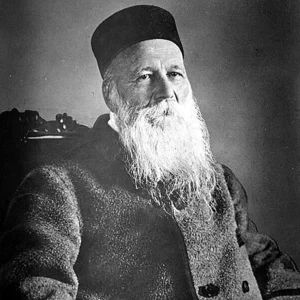

Founder of the Red Cross, first Nobel Peace Prize laureate
Henri Dunant(1828 — 1910)
Henri Dunant
Suisse
8 min read
Frequently asked questions
Key Facts
- En 1859, il est témoin de la bataille de Solférino et organise les secours aux blessés des deux camps avec l'aide de la population civile
- En 1862, il publie 'Un souvenir de Solférino', ouvrage qui inspire la création d'organismes de secours neutres
- En 1863, il cofonde le Comité international de secours aux blessés, qui deviendra le Comité international de la Croix-Rouge (CICR)
- La Convention de Genève de 1864, directement inspirée par ses idées, établit les règles internationales de protection des blessés de guerre
- En 1901, il reçoit le tout premier prix Nobel de la paix, partagé avec Frédéric Passy
Works & Achievements
An autobiographical account and humanitarian plea describing the horror of the Battle of Solferino and proposing the creation of national relief societies. This book directly led to the founding of the Red Cross and the Geneva Convention.
Together with four other Genevans (the 'Committee of Five'), Dunant created the forerunner of the International Committee of the Red Cross. It was the first international humanitarian organization with a universal mandate.
The first international humanitarian law treaty, signed by 16 states in Geneva. It established the principle of neutrality for the wounded, military doctors and hospitals, and authorized the Red Cross emblem.
An essay in which Dunant reflects on ways to reduce the violence of war and protect civilian populations, anticipating debates that would shape humanitarian law throughout the twentieth century.
A pamphlet distributed at the Geneva conference to persuade states to sign the Convention. Dunant sets out the principles of humanity, impartiality and neutrality that would become the foundations of the Red Cross.
Anecdotes
In June 1859, Henri Dunant traveled to northern Italy to meet Napoleon III and defend commercial interests in Algeria. He arrived by chance at Solferino the day after a bloody battle between the Franco-Piedmontese armies and the Austrians: nearly 40,000 wounded soldiers lay abandoned on the battlefield. With no medical training whatsoever, he spontaneously organized relief efforts with the village inhabitants, telling volunteers: 'Tutti fratelli' (all brothers), regardless of nationality.
After Solferino, Dunant returned to Geneva deeply traumatized. He wrote 'A Memory of Solferino' in 1862, financing and printing it at his own expense. He sent the book to sovereigns, generals, and philanthropists across Europe. The work provoked an immediate wave of emotion and triggered an international mobilization that would lead to the founding of the Red Cross the following year.
In 1867, Dunant went bankrupt due to his Algerian business affairs, which he had neglected during his humanitarian activities. Ruined and discredited, he was forced to leave the Red Cross he had founded and fell into near-total obscurity for more than twenty years. He lived in deep poverty, sleeping in night shelters in Paris and London, completely forgotten by the world.
In 1895, a Swiss journalist happened upon Dunant in a hospice in the village of Heiden, in Appenzell. The article published in the European press triggered an astonished rediscovery: the founder of the Red Cross had been living in destitution for decades. This revelation prompted a wave of international recognition, and in 1901, Dunant received the very first Nobel Peace Prize, which he shared with the economist Frédéric Passy.
Dunant used nearly all of the Nobel Prize money to repay debts and make donations to Norwegian and Swiss charitable organizations. He died in 1910 in that same hospice in Heiden, without a fortune but laden with belated honors. In his will, he bequeathed the remainder of his savings to humanitarian causes, faithful to the last to the ideal that had guided his entire life.
Primary Sources
The plain was strewn with human corpses and dead horses; the roads, ditches, and ravines were scattered with the dead and dying, and the ground was covered with debris of every kind.
Wounded or sick soldiers shall be collected and cared for, to whatever nation they may belong. The generals of the belligerent Powers shall make it their duty to notify the inhabitants of the appeals to their humanity and of the neutrality which will be its consequence.
In times of peace and calm, relief societies should be formed whose purpose would be to have the wounded cared for in times of war by zealous, devoted, and well-qualified volunteers suited to such work.
Without Henri Dunant, the Red Cross, the greatest humanitarian movement of our time, would in all likelihood never have been founded, or at least would not have been founded so quickly.
I was, so to speak, an instrument in the hands of God. My only merit was being in the right place at the right time, and not having fled in the face of horror.
Key Places
Italian town where the battle of June 24, 1859 took place, which traumatized Dunant and inspired the creation of the Red Cross. The Solferino Museum today preserves testimonies of this founding episode.
Dunant's birthplace and cradle of the International Red Cross. It was here that in 1863 the Committee of Five was founded and that in 1864 the first Geneva Convention was signed.
Small Swiss village where Dunant spent the last twenty years of his life in a modest hospice. It was here that he was rediscovered in 1895 and where he died in 1910.
Museum dedicated to the history of the humanitarian movement founded by Dunant, located in Geneva, permanent headquarters of the ICRC. It holds the archives and objects related to Dunant's work.
Dunant stayed there at length after his bankruptcy, living in poverty while continuing to campaign for peace and disarmament. He witnessed the Paris Commune (1871) and its atrocities.
Typical Objects

Dunant took detailed notes on what he observed during the Battle of Solferino. These meticulous observations directly fed into the writing of A Memory of Solferino and formed the documentary basis of his advocacy.

The emblem chosen by the movement founded by Dunant, in tribute to Swiss neutrality. This distinctive sign made it possible to identify on the battlefields the medical personnel protected by the Geneva Convention.

The international legal text that Dunant had called for in his book. Signed by 16 states, this document is the first treaty of international humanitarian law in modern history.

The book that Dunant personally financed and printed in 1862 to alert European public opinion. He personally distributed hundreds of copies to crowned heads, generals, and influential figures across Europe.

Presented to Dunant at the very first Nobel ceremony, it symbolized the belated yet worldwide recognition of his work. Dunant devoted most of the associated prize money to charitable causes.

A central instrument of aid to the wounded on 19th-century battlefields. Dunant had organized their use at Solferino with local volunteers, before the Red Cross codified these first-aid practices.
School Curriculum
Vocabulary & Tags
Key Vocabulary
Daily Life
Morning
Dunant rises early, in keeping with his strict Calvinist upbringing. He begins his day with prayer and Bible reading, a habit inherited from his devout Genevan family. He has a modest breakfast — bread, cheese, coffee — before turning to his correspondence, which was already voluminous by the 1860s.
Afternoon
His afternoons are spent in meetings with philanthropists, diplomats, and politicians whom he seeks to win over to his cause. He travels across Europe by train and stagecoach to advocate for international conventions, always carrying copies of his book to distribute.
Evening
In the evenings, Dunant writes letters, articles, or chapters of his essays by oil lamp. During his prosperous years, he frequents Genevan intellectual and philanthropic circles. Later, in poverty, his evenings are spent alone in modest rooms or in the Heiden hospice, where he continues to write well into old age.
Food
His diet is simple and frugal, in keeping with the Protestant bourgeois habits of Geneva: bread, soup, seasonal vegetables, and quality meat during his prosperous years. After his financial ruin, he makes do with very modest hospice meals. He does not drink alcohol, out of religious conviction and temperance.
Clothing
Dunant wears the European bourgeois dress of the mid-nineteenth century: a dark frock coat, waistcoat, cravat, top hat, and gloves for official occasions. His appearance is well-kept during his years of public activity, but deteriorates after his bankruptcy, to the point where he must accept second-hand clothing in his final decades.
Housing
In Geneva, during his youth and active years, he lives in comfortable bourgeois apartments in the city centre. After his ruin, he endures precarious lodgings in several European capitals. He spends the last twenty years of his life in a simple but dignified room in the Protestant hospice of Heiden, in the Appenzell Alps.
Historical Timeline
Period Vocabulary
Visual Style
Réalisme européen du milieu du XIXe siècle, entre la rigueur bourgeoise genevoise et les scènes de champ de bataille dramatiques, avec la croix rouge comme symbole graphique central.
Sound Ambience
Sons du champ de bataille de Solférino (canons, blessés, cloches) et du cabinet de travail genevois où Dunant rédigea son témoignage fondateur.
Liens externes & ressources
Références
Œuvres
Un souvenir de Solférino
1862
Fondation du Comité international de secours aux militaires blessés (futur CICR)
1863
Convention de Genève pour l'amélioration du sort des blessés dans les armées en campagne
1864
L'Avenir du sang (essai)
1863
Fraternité et charité internationales en temps de guerre
1864