 flip
flipAuszogene (Knieküchle) — Kirchweih Doughnuts
Auszogene (Knieküchle) — Kirchweih Doughnuts
Why this dish? Kirchweih, the village's patronal festival, punctuated the year in Franconia. There, Auszogene were sold—"stretched" doughnuts with a thin center and thick edge, fried in lard right on the market square—the taste of celebration from all of Emmy Noether's Bavarian childhood.
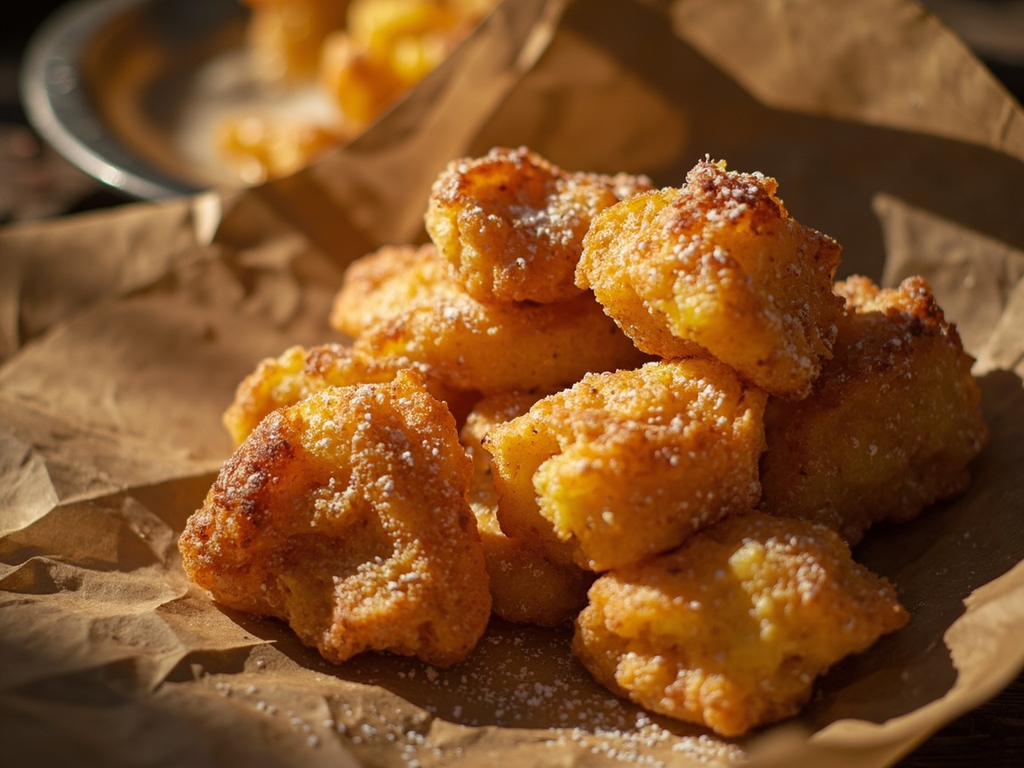
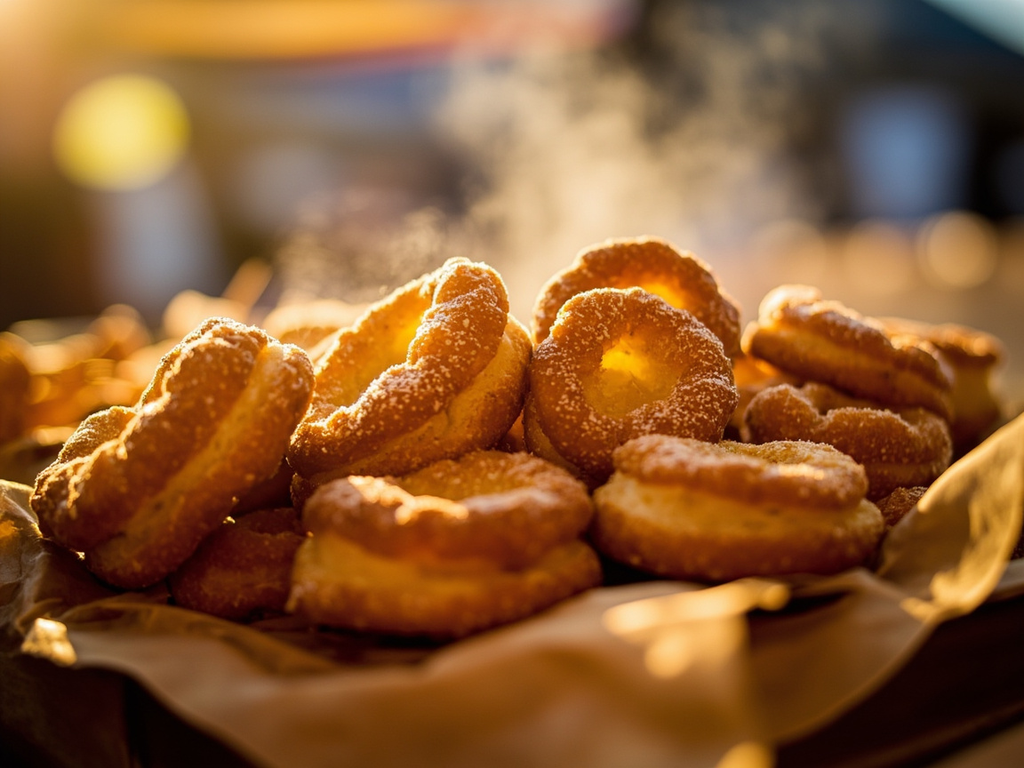
A round, golden doughnut, soft in texture, hand-stretched until translucent in the middle and puffy at the edges, fried then rolled in sugar. Eaten hot, standing up, at the fair.
At Kirchweih, all the dignity of the university stayed home! You stretch the dough with your fingers, on your knee say the old folks, until the center becomes as thin as a sheet of calculation paper. Plunged into hot fat, they puff up into a golden crown. You eat them burning hot, sugar all over your fingers, and for a moment you forget you are a professor—that too is joy: simple, round, and requiring no proof.
- •Flour — enough for a batch (yeast dough)
- •Fresh yeast — a piece (leavening)
- •Warm milk — a bowl (liquid)
- •Butter — a knob (softness)
- •Eggs — two (binder)
- •Lard — a large pot (frying fat)
- •Sugar — for rolling (finish)
Auszogene (Knieküchle) — Kirchweih Doughnuts
A round, golden doughnut, soft in texture, hand-stretched until translucent in the middle and puffy at the edges, fried then rolled in sugar. Eaten hot, standing up, at the fair.
Why this dish? Kirchweih, the village's patronal festival, punctuated the year in Franconia. There, Auszogene were sold—"stretched" doughnuts with a thin center and thick edge, fried in lard right on the market square—the taste of celebration from all of Emmy Noether's Bavarian childhood.
At Kirchweih, all the dignity of the university stayed home! You stretch the dough with your fingers, on your knee say the old folks, until the center becomes as thin as a sheet of calculation paper. Plunged into hot fat, they puff up into a golden crown. You eat them burning hot, sugar all over your fingers, and for a moment you forget you are a professor—that too is joy: simple, round, and requiring no proof.
Ingredients (period version)
- Flour — enough for a batch (yeast dough)
- Fresh yeast — a piece (leavening)
- Warm milk — a bowl (liquid)
- Butter — a knob (softness)
- Eggs — two (binder)
- Lard — a large pot (frying fat)
- Sugar — for rolling (finish)
Ingredients
- All-purpose flour — 400 g (yeast dough)
- Fresh baker's yeast — 20 g (leavening)
- Warm milk — 150 ml (liquid)
- Melted butter — 60 g (softness)
- Eggs — 2 (binder)
- Sugar — 40 g + sugar for finish (sweetness)
- Lard or neutral oil — 1 liter (frying bath)
Method
- Activate the yeast in warm sweetened milk for 10 minutes.
- Knead flour, eggs, butter, sugar, and yeast into a soft dough; let double in size for 1 hour.
- Shape into balls, let rise for 20 minutes.
- Stretch each ball by hand into a disk, thinning the center while keeping a thick edge.
- Fry in fat at 170 °C, about 1 minute per side, until a beautiful golden color.
- Drain on paper, roll in sugar, and enjoy while still warm.
How it was made : Schmalzgebäck (lard-fried pastry) was a festive luxury: fat was expensive, so frying was reserved for special occasions like Kirchweih or carnival. The "stretched" shape with a thin center allowed quick and even cooking.
The contemporary twist : A spoonful of plum compote in the center of the doughnut and vanilla sugar: Franconian Kirchweih as a Christmas market street-food version.
Emmy Noether · Charactorium