 flip
flipLancashire hotpot
Lancashire hotpot
Why this dish? Marsden was born in Rishton, Lancashire, where the hotpot is THE domestic dish: a casserole of lamb and potatoes slipped into the oven and forgotten while you work. For a student and later researcher caught up in his scintillations under the microscope, it was the ideal meal: it cooked itself.
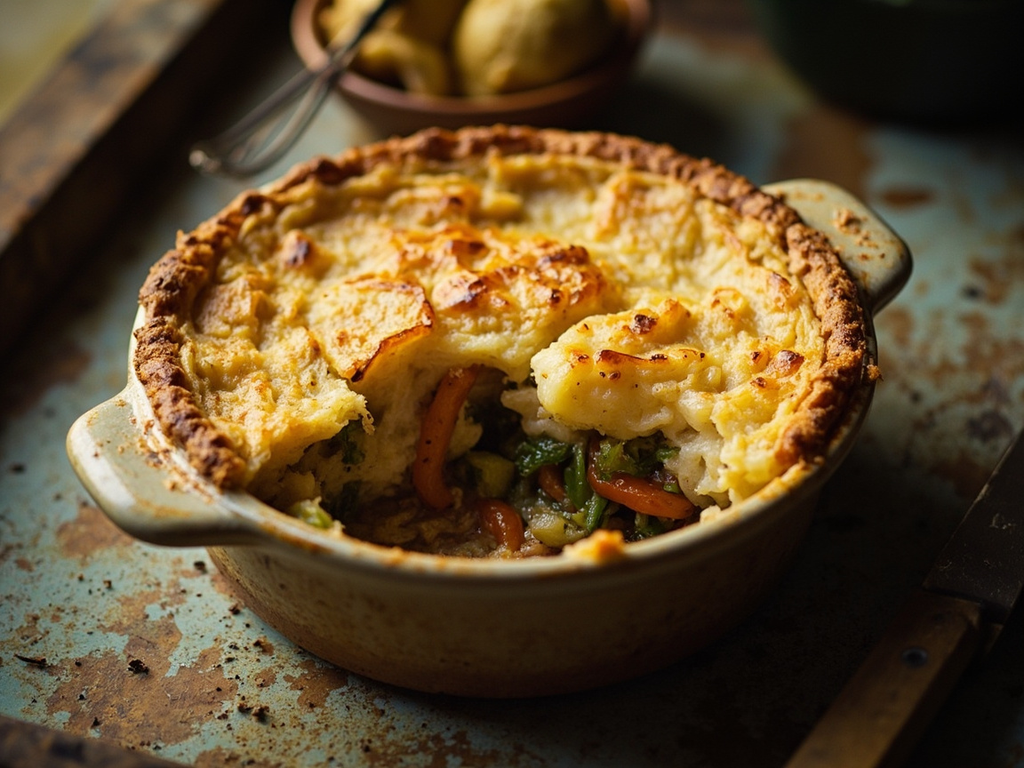
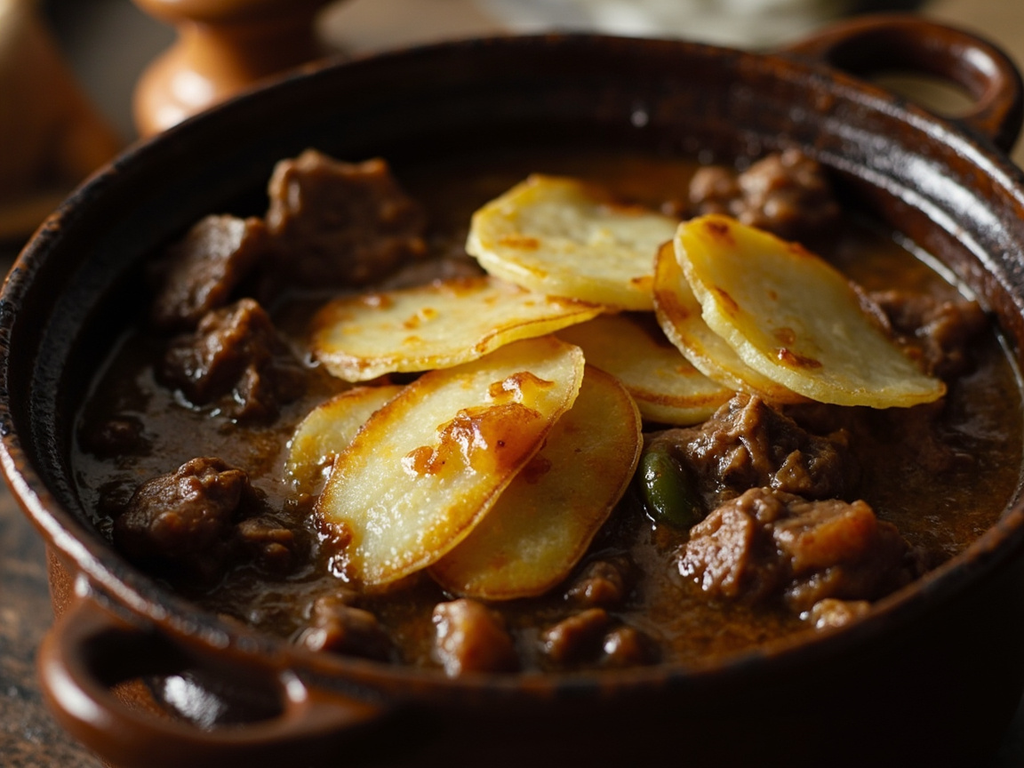
A rustic stew of lamb, onions and kidneys, crowned with a roof of thin potato slices that brown in the oven. The emblematic dish of the northern counties, economical and nourishing.
You see, back home in Rishton, my mother would put the pot in the oven in the morning and never touch it again: the slow heat did all the work, like an experiment left to reach its own conclusion. The secret lies in two things—arranging the potato slices in tight overlapping scales on top, and not skimping on the onion. When the potato lid took on its fine golden-brown color, we knew dinner was ready. It is an unpretentious dish, but one that keeps a man warm all afternoon in the laboratory.
- •Lamb neck or shoulder, in pieces — a good pound (base meat)
- •Lamb kidneys — two or three (depth of flavor)
- •Onions — two large (aromatic base)
- •Firm potatoes — as needed (golden lid and binder)
- •Flour — one spoonful (thicken the juice)
- •Mutton broth — enough to cover (cooking liquid)
- •Lard or suet — a knob (fat)
- •Salt, pepper, bay leaf — to taste (seasoning)
Lancashire hotpot
A rustic stew of lamb, onions and kidneys, crowned with a roof of thin potato slices that brown in the oven. The emblematic dish of the northern counties, economical and nourishing.
Why this dish? Marsden was born in Rishton, Lancashire, where the hotpot is THE domestic dish: a casserole of lamb and potatoes slipped into the oven and forgotten while you work. For a student and later researcher caught up in his scintillations under the microscope, it was the ideal meal: it cooked itself.
You see, back home in Rishton, my mother would put the pot in the oven in the morning and never touch it again: the slow heat did all the work, like an experiment left to reach its own conclusion. The secret lies in two things—arranging the potato slices in tight overlapping scales on top, and not skimping on the onion. When the potato lid took on its fine golden-brown color, we knew dinner was ready. It is an unpretentious dish, but one that keeps a man warm all afternoon in the laboratory.
Ingredients (period version)
- Lamb neck or shoulder, in pieces — a good pound (base meat)
- Lamb kidneys — two or three (depth of flavor)
- Onions — two large (aromatic base)
- Firm potatoes — as needed (golden lid and binder)
- Flour — one spoonful (thicken the juice)
- Mutton broth — enough to cover (cooking liquid)
- Lard or suet — a knob (fat)
- Salt, pepper, bay leaf — to taste (seasoning)
Ingredients
- Boneless lamb shoulder — 600 g, cubed (base meat)
- Lamb kidneys (optional) — 2 (depth of flavor)
- Onions — 2 large, sliced (aromatic base)
- Firm-fleshed potatoes — 700 g (overlapping lid)
- Flour — 1 tbsp (thickener)
- Lamb or beef broth — 400 ml (cooking liquid)
- Butter — 30 g (fat and glaze)
- Bay leaf, thyme, salt, pepper — to taste (seasoning)
Method
- Preheat oven to 160 °C. Sear the lamb cubes (and cut kidneys) in a little butter, in batches, to brown.
- Reserve the meat, sweat the onions in the same pot, sprinkle with flour and add the broth, stirring.
- Return the meat, add bay leaf and thyme, season with salt and pepper.
- Slice potatoes thinly and arrange in tight overlapping tiles on top. Brush with melted butter and season with salt.
- Cover and bake for 1.5 hours, then remove the lid and increase to 200 °C for 30 minutes to brown the potatoes.
How it was made : The hotpot takes its name and shape from the tall stoneware jar in which it was baked. In Lancashire's textile towns, it was taken to the baker who cooked it in his still-warm oven after the morning batch—popular cuisine sharing heat.
The contemporary twist : Serve the pot straight to the table with pickled red cabbage on the side: the tangy contrast enlivens the lamb's richness.
Ernest Marsden · Charactorium