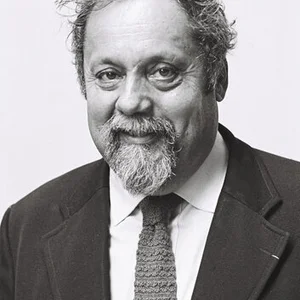
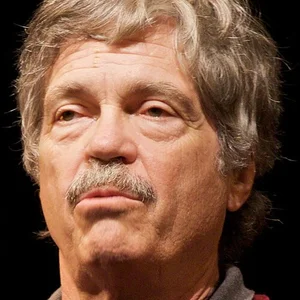
An Austrian-American biochemist of Jewish origin, in the 1950s he established the rules governing the composition of DNA bases. His work provided a decisive clue for the discovery of the double helix structure by Watson and Crick.
Erwin Chargaff(1905 — 2002)
Erwin Chargaff
États-Unis, Autriche
6 min read
Frequently asked questions
Key Facts
- Born in 1905 in Czernowitz (Austria-Hungary), he emigrated to the United States in 1935 to flee Nazism.
- In 1950 he formulated the “Chargaff rules”: in DNA, the amount of adenine (A) equals that of thymine (T), and guanine (G) equals cytosine (C).
- His analyses showed that the composition of DNA varies between species, contradicting the “tetranucleotide” hypothesis.
- In 1953 his results provided an essential key to Watson and Crick's double helix model.
- A professor of biochemistry at Columbia University, he died in 2002 in New York.
Works & Achievements
Discovery that in DNA A=T and G=C, a decisive clue that guided the understanding of base pairing in the double helix.
A series of chromatographic analyses showing that DNA composition varies between species, refuting the idea of a uniform DNA.
Foundational paper setting out his observations on the ratios between the nitrogenous bases of DNA.
A three-volume reference treatise that summed up the state of nucleic acid chemistry in the mid-20th century.
An autobiography in a much-noted literary style, blending scientific memories with critical reflections on modern science.
Texts in which Chargaff warns against the excesses of genetic engineering and the commercialization of research.
Anecdotes
In 1944, Erwin Chargaff read Oswald Avery's paper proving that DNA, not proteins, carries hereditary information. He later said that this discovery moved him so deeply that he immediately redirected his entire laboratory toward the study of DNA.
While analyzing the DNA of many species, Chargaff made a striking observation: the amount of adenine always equals that of thymine, and guanine equals cytosine. These “Chargaff's rules” would become a crucial clue for understanding base pairing in the double helix.
In 1952, Chargaff met two young researchers in Cambridge, James Watson and Francis Crick. He found them rather unserious and was hardly impressed, yet it was partly thanks to his own rules that they solved the structure of DNA the following year.
Having become famous, Chargaff grew increasingly critical of the molecular biology he had helped to found. He compared the sorcerer's apprentices of genetic engineering to those who play with forces they cannot control, and he wrote essays in which he cited Goethe and the poets rather than formulas.
Born in Czernowitz, on the eastern edge of the Austro-Hungarian Empire, Chargaff spoke several languages and was a refined writer. His flight from Nazism, from Vienna to Paris and then to New York, deeply marked a man who felt himself an exile all his life.
Primary Sources
The ratio of total purines to total pyrimidines, and also of adenine to thymine and of guanine to cytosine, was close to unity in all the deoxyribonucleic acids studied.
I saw before me, in dark letters, a glimpse of the future: we stood at the threshold of a new science, the chemistry of heredity.
Molecular biology is practiced by men who know less and less about more and more, until they know everything about nothing.
Key Places
Chargaff's native city, then capital of Bukovina in the Austro-Hungarian Empire, renowned for its cosmopolitanism and intellectual life.
Chargaff studied chemistry here and earned his doctorate in 1928, in a capital then bustling with scientific and cultural energy.
The site of most of Chargaff's career from 1935 onward; it was here that he established his rules on the composition of DNA.
Chargaff met Watson and Crick here in 1952 at the Cavendish Laboratory, shortly before they solved the structure of DNA.
A stop on his exile in the 1930s, where Chargaff worked at the Pasteur Institute before moving on to the United States.
The city where Chargaff lived for most of his adult life and where he died in 2002.
Typical Objects

Strip of blotting paper used to separate the chemical components of a mixture according to their rate of migration. It was the key tool that allowed Chargaff to measure the proportions of the bases in DNA.

Instrument that measures how much ultraviolet light a substance absorbs. Chargaff used it to precisely quantify each nitrogenous base in DNA.

Graduated glass vessels used to draw up and measure out small volumes of solution. Indispensable to the daily work of a biochemist analysing cell extracts.

Ball-and-stick model representing how the atoms of a molecule are linked together. A symbol of the era when the structure of DNA was worked out from clues such as Chargaff's.

Notebook in which a researcher records protocols, measurements and results day by day. It guarantees the traceability and reproducibility of experiments.

Machine that spins tubes at high speed to separate the components of a mixture according to their density. It was used to isolate DNA from the rest of the cell's contents.
School Curriculum
Vocabulary & Tags
Key Vocabulary
Tags
Daily Life
Morning
Chargaff arrived early at his laboratory at Columbia, where he discussed protocols with his students and prepared the DNA extracts. Mornings were devoted to the delicate work of chromatography and assay measurements.
Afternoon
Afternoons were spent measuring absorptions with the spectrophotometer and patiently recording the figures in his notebook. He placed great importance on rigor and on repeating experiments.
Evening
In the evening, a great scholar, Chargaff read in several languages, wrote essays, and kept up an abundant correspondence. He moved in New York's intellectual circles and nurtured a passion for literature.
Food
A man of Mitteleuropa transplanted to New York, he enjoyed the Viennese cuisine of his childhood as much as American habits. For him, meals were moments of cultivated conversation.
Clothing
A twentieth-century academic, he wore the suit and tie expected in the academic world, with a white coat in the laboratory. His neat attire reflected the Viennese culture from which he came.
Housing
He lived in a New York apartment, near Columbia, surrounded by books. His home reflected his status as a university professor and an exiled European intellectual.
Historical Timeline
Period Vocabulary
Liens externes & ressources
Références
Œuvres
Règles de Chargaff (équivalence des bases)
1950
Études sur la composition des acides nucléiques
1948-1952
« Chemical specificity of nucleic acids » (Experientia)
1950
« The Nucleic Acids » (ouvrage collectif dirigé avec J. N. Davidson)
1955
« Heraclitean Fire: Sketches from a Life Before Nature »
1978
Essais critiques sur la biologie moléculaire
1971-1990