Character Catalog

Historical Library

CollectionGalaxy
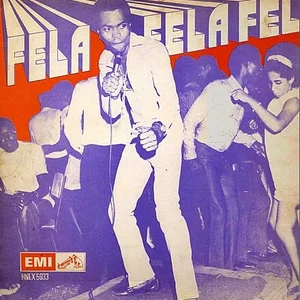
Portrait de Fela Kuti

Fela Kuti

Fela Kuti

1938 — 1997

Nigeria

MusicSocietyMusicien(ne)Activiste20th CenturyInventor of Afrobeat, Nigerian political dissident

Nigerian musician and activist

Émotions disponibles (6)

N

Neutre

par défaut

I

Inspiré

P

Pensif

S

Surpris

T

Triste

F

Fier

Key Facts

    Works & Achievements

    Zombie (1977)

    Cult album criticizing the blind obedience of Nigerian soldiers to their superiors. So popular it triggered the military raid on the Kalakuta Republic.

    Coffin for Head of State (1981)

    Protest song composed after the death of his mother Funmilayo: Fela had carried her coffin to the gates of the presidential palace, a gesture that became legendary.

    Lady (1972)

    Iconic track questioning gender relations in Africa and the place of women in Yoruba society, with provocative and nuanced lyrics.

    Expensive Shit (1975)

    Fela recounts how the police forced him to eat his own excrement to recover cannabis he allegedly had swallowed. The album denounces police harassment with humor.

    International Thief Thief (ITT) (1979)

    A direct attack against the multinational ITT and the corruption of African elites who collaborate with major foreign corporations at the expense of the people.

    Beast of No Nation (1989)

    Album targeting international politics and Western complicity with authoritarian African regimes, recorded at the height of his militant activism.

    Africa Centre of the World (1981)

    Pan-African musical manifesto asserting that Africa is the cradle of humanity and must reclaim its dignity after centuries of colonization and exploitation.

    Anecdotes

    In 1977, Nigerian soldiers attacked Fela's commune, the Kalakuta Republic, killing his mother Funmilayo and burning everything to the ground. Fela deposited his mother's coffin in front of the Ministry of Defence as a protest. This act of courage in the face of military dictatorship made him legendary in Nigeria and around the world.

    Fela married 27 women in a single ceremony in 1978, all dancers and musicians in his band Egypt 80. He declared it was to protect them from government reprisals. This spectacular decision reflected his political vision and his communal conception of life.

    During a tour of the United States in the early 1970s, Fela met Black Panther activists and discovered the writings of Malcolm X. This encounter profoundly transformed his political and musical consciousness: he returned to Nigeria convinced that his music must become a weapon of resistance against corruption and oppression.

    Fela was arrested more than 200 times by Nigerian authorities throughout his life. In 1984, he spent 20 months in prison under a military regime on false charges of currency fraud. He continued writing songs in prison, refusing to be silenced.

    Fela created his own independent state called the Kalakuta Republic at his home in Lagos, declaring its walls outside the jurisdiction of the Nigerian government. He printed his own business cards bearing the title 'Chief, Kalakuta Republic' and welcomed dozens of people into this utopian community.

    Primary Sources

    Fela: This Bitch of a Life (autobiography) (1982)
    I use music as a weapon. Music is the only weapon I have. People don't understand what I'm doing, but I know what I'm doing. I'm fighting for Africa.
    Statement during his military trial, Lagos (1984)
    I am not a criminal. I am a man who has been fighting for the rights of my people. The government is the criminal, not me.
    Interview with Punch Nigeria newspaper (1975)
    Kalakuta Republic is a free territory. Here, we live by our own laws, our own rules. Africa must free itself from within before freeing itself from without.
    Open letter to General Olusegun Obasanjo after the Kalakuta raid (1977)
    You killed my mother. You burned my house. But you did not kill my music, and you did not kill my people. I will continue to fight for as long as I live.

    Key Places

    Abeokuta, Ogun State, Nigeria

    Fela's hometown, cradle of his family and convictions. His mother Funmilayo led feminist and anti-colonial movements there.

    The Shrine (Africa Shrine), Lagos

    Legendary club founded by Fela in 1974 in Ikeja, Lagos. Each concert lasted for hours, blending music, political speeches, and spiritual ceremonies.

    Kalakuta Republic, Lagos

    Self-governed commune founded by Fela in his Lagos home, declared an independent territory. Destroyed by the army in 1977, it became a symbol of resistance.

    Trinity College of Music, London

    School where Fela studied composition and jazz between 1958 and 1963, a decisive period in the development of his musical language.

    Los Angeles, California, United States

    City where Fela stayed in 1969 and met activist Sandra Smith, a Black Panthers member, who introduced him to African-American struggles and transformed his worldview.
    Typical Objects

    Alto saxophone

    Fela's instrument of choice, inherited from his studies in London. His powerful and melodious playing was the sonic signature of afrobeat.

    Cannabis cigarette (gbo)

    Fela openly consumed cannabis at his concerts, turning it into a political act of civil disobedience against the colonial laws he considered unjust.

    Traditional Yoruba stage costume

    On stage, Fela often wore outfits inspired by traditional Yoruba dress, asserting his African pride in contrast to the Western suits worn by the Nigerian elite.

    Microphone and makeshift sound system

    At the Shrine, the sound equipment was often rudimentary but the volume always at maximum, symbolizing the raw force of Fela's political message.

    Kora and African percussion instruments

    The Egypt 80 band featured dozens of traditional African instruments that formed the pan-African identity of afrobeat.

    Political tracts and newspapers

    Fela regularly produced tracts in Pidgin English distributed in the working-class neighborhoods of Lagos to spread his anti-corruption political ideas.

    School Curriculum

    Vocabulary & Tags

    Key Vocabulary

    Tags

    societemusicienactiviste

    Daily Life

    Morning

    Fela would wake up late in the morning, after concerts that often lasted until dawn. He began his day with spiritual rituals inspired by Yoruba traditions and the OgĂşn cult, his religious practice. The Kalakuta Republic was already buzzing with activity: musicians rehearsing, visitors waiting for an audience.

    Afternoon

    Afternoons were devoted to rehearsals with his orchestra — up to 30 musicians —, writing lyrics for his new songs in Pidgin English, and political discussions with activists, journalists, and intellectuals who frequented his commune. Fela also drafted manifestos and pamphlets distributed throughout the working-class neighborhoods of Lagos.

    Evening

    Concerts at the Shrine began in the evening and went on through the night, several times a week. Fela took the stage dressed in minimal African attire, saxophone in hand, alternating 20- to 45-minute tracks with long political speeches in Pidgin English, haranguing the audience about corruption, imperialism, and African pride.

    Food

    Fela followed a diet influenced by his spiritual beliefs and Pan-African philosophy, favoring traditional Yoruba foods. He ate dishes such as jollof rice, pounded yam (iyan), and egusi soup. He regularly smoked cannabis (gbo), which he regarded as a sacred African plant unjustly criminalized by colonial laws.

    Clothing

    On stage, Fela wore a minimalist outfit: a simple piece of cloth around his waist, leaving his torso bare, sometimes complemented by traditional Yoruba beads and bracelets. In daily life, he alternated between colorful African garments in aso-oke and more casual attire, systematically refusing the Western suit and tie, which he associated with the colonized mindset of the Nigerian elite.

    Housing

    Fela lived in the Kalakuta Republic, a large house in Ikeja, Lagos, transformed into a commune housing his wives, musicians, collaborators, and a free clinic open to the people. The walls were covered in political murals. After the 1977 fire, he rebuilt a new commune still in the spirit of Kalakuta: communal, self-managed, and deliberately opposed to Nigerian bourgeois values.

    Historical Timeline

    1938Naissance de Fela Anikulapo Kuti à Abeokuta, Nigeria, dans une famille de résistants : sa mère Funmilayo est une militante féministe pionnière.
    1960Indépendance du Nigeria vis-à-vis du Royaume-Uni. Fela étudie la musique à Londres au Trinity College of Music.
    1963Fela fonde son premier groupe, Koola Lobitos, Ă  Lagos, fusionnant highlife, jazz et traditions yoruba.
    1969Séjour aux États-Unis : Fela rencontre le mouvement Black Power et les Black Panthers, ce qui révolutionne sa conscience politique et sa musique.
    1970Fela crée l'afrobeat, synthèse de jazz, funk américain, highlife ghanéen et musiques traditionnelles yoruba, avec des textes politiques en pidgin english.
    1974Fela ouvre le Shrine, son club mythique à Lagos, qui devient un espace de liberté, de musique et de contestation politique.
    1977Raid de l'armée nigériane sur le Kalakuta Republic : sa mère Funmilayo est défenestrée et mourra de ses blessures. Fela compose 'Coffin for Head of State' en protestation.
    1978Fela épouse 27 femmes lors d'une cérémonie collective et sort l'album 'Zombie', critique virulente de l'armée nigériane.
    1979Retour à la démocratie civile au Nigeria. Fela se présente à l'élection présidentielle sous le parti MOP (Movement of the People).
    1984Emprisonnement de Fela pendant 20 mois par le régime militaire du général Buhari, sous accusations de fraude considérées comme politiquement motivées.
    1986Libération de Fela grâce à une campagne internationale menée par Amnesty International et de nombreux artistes.
    1993Fela crée le parti politique MASS (Movement Against Second Slavery) et milite contre l'annulation des élections nigérianes par l'armée.
    1997Décès de Fela Kuti le 2 août à Lagos, des suites du sida. Ses funérailles rassemblent plus d'un million de personnes dans les rues de Lagos.
    2009Création de la comédie musicale 'Fela!' à Broadway, qui remporte trois Tony Awards et consacre sa légende internationale.

    Period Vocabulary

    Afrobeat — Musical genre invented by Fela Kuti blending American jazz, James Brown's funk, Ghanaian highlife, and traditional Yoruba rhythms, with political lyrics in Pidgin English.
    Pidgin English — Creole language mixing English and African languages, spoken in West Africa as a lingua franca. Fela used it so that his political lyrics could be understood by all Nigerians, beyond ethnic divides.
    Kalakuta Republic — Name given by Fela to his self-governed commune in Lagos, declared an independent territory from Nigeria. 'Kalakuta' is said to derive from a slang term for a prison cell.
    Zombie — Term used by Fela to criticize Nigerian soldiers who blindly follow orders without thinking, dehumanized by military discipline.
    Pan-Africanism — Political and cultural movement advocating the unity of all African peoples and the African diaspora in the face of colonialism and racism. Fela was an ardent champion of it.
    Highlife — West African musical genre (Ghana, Nigeria) born in the 1920s, blending traditional African music with Western instruments. A major foundation of Fela's afrobeat.
    The Shrine — Name of Fela's club in Lagos, deliberately religious in tone to underscore that his music was a form of spirituality and total commitment, not mere entertainment.
    Egypt 80 — Name of Fela's band from 1979 onward (succeeding Africa 70), made up of around thirty musicians. The choice of 'Egypt' asserted the connection between Black Africa and ancient Egyptian civilization.
    Suffering and Smiling — A key expression in Fela's philosophy, describing the passive resignation of Africans in the face of oppression: suffering while smiling instead of revolting — something he fought against through his music.
    MOP (Movement of the People) — Political party founded by Fela Kuti in 1979 to run in the Nigerian presidential election, a symbol of his commitment to bringing the struggle of the popular classes into the political arena.

    Gallery

    
Portrait of Antoni Wodzicki.label QS:Len,"Portrait of Antoni Wodzicki."label QS:Lpl,"Portret Antoniego Wodzickiego."

    Portrait of Antoni Wodzicki.label QS:Len,"Portrait of Antoni Wodzicki."label QS:Lpl,"Portret Antoniego Wodzickiego."

    Fela Kuti (cropped)

    Fela Kuti (cropped)

    Family Ransome Kuti c1940

    Family Ransome Kuti c1940

    Abeokuta Grammar School Old School Hall

    Abeokuta Grammar School Old School Hall

    Fela Kuti record

    Fela Kuti record

    Desktop improvements, Wikimania 2019 research report

    Desktop improvements, Wikimania 2019 research report

    Wikinews Print Edition October 12, 2019 mockup

    Wikinews Print Edition October 12, 2019 mockup

    African studies in Wikimedia projects - Ursula Oberst - WikiIndaba 2019

    African studies in Wikimedia projects - Ursula Oberst - WikiIndaba 2019

    Verbinden van bibliotheekcollecties met Wikimedia-projecten Ursula Oberst KNVI 2019

    Verbinden van bibliotheekcollecties met Wikimedia-projecten Ursula Oberst KNVI 2019

    Wikinews Print Edition October 12, 2019

    Wikinews Print Edition October 12, 2019

    Visual Style

    Le style visuel de Fela s'inspire de l'esthétique panafricaine des années 1970 : couleurs chaudes de Lagos, corps en mouvement, murales politiques aux couleurs vives, alliant fierté culturelle yoruba et engagement militant.

    #C8731A
    #1A6B3A
    #D4202C
    #F5C842
    #2C1A0E
    AI Prompt
    Vibrant afrofuturist visual style set in 1970s Lagos, Nigeria. Warm golden and ochre tones of harmattan dust. A tall, muscular man in minimalist traditional yoruba attire — sparse fabric wrapped at the waist, chest bare, face painted with tribal markings. A saxophone gleams in harsh tropical sun. Behind him: corrugated iron walls painted with bold political murals in red, green and black (Pan-African colors). Crowds of people in bright aso-oke fabrics. Photography style: high-contrast documentary photography mixing with graphic poster aesthetics of the Black Power movement. Dynamic compositions, strong diagonals, raw energy.

    Sound Ambience

    L'univers sonore de Fela mêle la densité vibrante des rues de Lagos — cris de marchands, percussions yoruba — et l'énergie électrique du Shrine avec ses cuivres tonitruants et ses rythmes afrobeat hypnotiques.

    AI Prompt
    Dense Lagos street ambience in the 1970s: street vendors calling out in Yoruba and pidgin English, distant traffic horns, kora and talking drum rhythms from a nearby compound. Inside the Shrine club: a massive afrobeat band warming up — bass guitar groove, interlocking brass section riffs, polyrhythmic percussion with shekere and conga, electric organ swells. Crowd murmur growing louder, women dancers' anklet bells, the hiss of a microphone being switched on. Outside, tropical night insects, palm trees rustling, a generator humming, the smell of street food and incense drifting through warm humid air.

    Portrait Source

    Wikimedia Commons