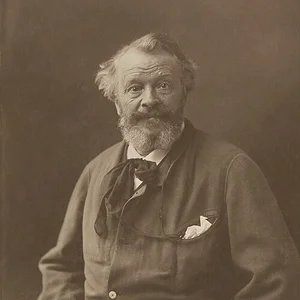

Félix Nadar (1820–1910) was a French photographer, caricaturist, and aeronaut. A pioneer of photography, he produced the first photographic portraits of the artists and intellectuals of his time, and took the first aerial photographs from a balloon.
Félix Nadar(1820 — 1910)
Nadar
France
9 min read
Frequently asked questions
Famous Quotes
« Photography is a marvelous discovery, a science that has attracted the greatest intellects, an art that has excited the most skilled minds.»
Key Facts
- 1820: Born in Paris (or Lyon, depending on the sources)
- 1853: Opens his first photography studio in Paris
- 1858: Takes the first aerial photographs from a tethered balloon
- 1874: Lends his studio on the Boulevard des Capucines for the first Impressionist exhibition
- 1910: Dies in Paris
Works & Achievements
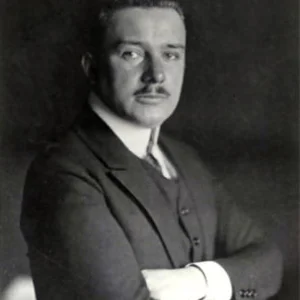
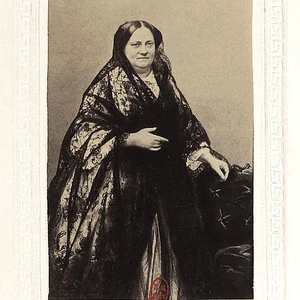
Nadar photographed nearly all the major intellectual and artistic figures of his era: Victor Hugo, George Sand, Charles Baudelaire, Sarah Bernhardt, Hector Berlioz, Alexandre Dumas. These photographs are an irreplaceable record of the faces of 19th-century cultural France.
Taken from a tethered balloon above the outskirts of Paris, this photograph is the first view of the ground captured from the air. It paved the way for aerial cartography, military reconnaissance, and ultimately satellite photography.
To take these underground photographs, Nadar used artificial magnesium lighting in photography for the first time. The images revealed Paris's hidden infrastructure to the general public and established Nadar as a pioneer of photography in challenging environments.
Nadar commissioned a 6,000-cubic-metre airship fitted with a two-storey habitable gondola to demonstrate the potential of aerial navigation. Despite an accident on its second flight, the venture contributed to public debate about the future of air travel.
By making his studio available free of charge to Monet, Renoir, Degas, Pissarro, and their friends, Nadar played a decisive role in the official birth of the Impressionist movement. The exhibition drew around 3,500 visitors and sparked a revolution in the history of modern art.
In this autobiographical book, Nadar recounts his experiences as a photographer, his encounters with the great minds of his time, and reflects on the artistic nature of photography. The work is a valuable historical source on Parisian intellectual and cultural life in the 19th century.
Anecdotes
In 1858, Nadar boarded a tethered balloon above the outskirts of Paris and triggered his camera from the air. In doing so, he captured the very first aerial photograph in history — a technical feat that earned him an international reputation. This invention paved the way for aerial cartography and, much later, satellite photography.
In 1874, Nadar offered his large studio on the Boulevard des Capucines, free of charge, to a group of painters rejected by the official Salon. This exhibition, which brought together Monet, Renoir, Pissarro, and Degas, was mockingly dubbed the "exhibition of the Impressionists" by a critic — a name the artists would ultimately embrace with pride.
In 1863, Nadar had a giant balloon built, christened "Le Géant
fitted with a two-story gondola capable of carrying around ten passengers. On its second flight, the balloon ran out of control and dragged its passengers across several kilometers in Germany: Nadar and his wife were injured but survived. The adventure directly inspired Jules Verne in his tales of aerial exploration.
In 1861, Nadar descended into the catacombs and sewers of Paris with heavy photographic equipment. To compensate for the complete absence of natural light, he used magnesium lamps — a new and dangerous technique — thereby producing the first photographs ever taken by artificial light.
Jules Verne, a close friend of Nadar, drew on him to create the character of Michel Ardan in *From the Earth to the Moon* (1865). The name "Ardan" is, in fact, an anagram of "Nadar." This friendship between the pioneer of aerial photography and the father of science fiction illustrates the adventurous and visionary spirit that animated both men.
Primary Sources
What cannot be learned [...] is the feeling for light, the artistic appreciation of effects produced by different and combined sources of light, visible or not; it is the intelligent use of these effects according to the nature of each face that chance presents to you.
We had wanted to prove that the aerostat could serve a purpose beyond mere curiosity ascents. The future of human communication lay, I was convinced, in the conquest of the air.
I knew him in every sense of the word — in good times and bad, in hours of enthusiasm and in hours of doubt. No face has taught me more about the human soul than his.
Balloons are our only means of communication with the provinces. I place at the government's disposal my knowledge of aeronautics and my experience with ascents, to help organize the aerial postal service.
Key Places
Nadar's grand photography studio, opened in 1860 and recognizable by its giant sign in red letters. This is where he produced his most celebrated portraits and hosted the first Impressionist exhibition in 1874.
The underground network of bones and tunnels beneath Paris where Nadar descended in 1861 with his photographic equipment and magnesium lamps to produce the first photographs ever taken by artificial light.
It was above this village south of Paris that Nadar took the first aerial photograph in history in 1858, from a tethered balloon hovering just a few dozen meters above the ground.
The site where the balloon *Le Géant* crashed on October 18, 1863, dragging its passengers clinging to the gondola for several kilometers. Nadar and his wife were injured; the accident was reported across the European press.
Nadar was born and died in Paris, a city that served throughout his life as his laboratory: its bustling streets, mysterious underground, and open skies formed the backdrop for his photographic and aeronautical adventures.
Typical Objects

Large tripod-mounted photographic camera using glass plates coated with wet collodion. Nadar used it in his studio to create his celebrated portraits of prominent figures, with exposure times of several seconds that required the subject to remain perfectly still.

Hydrogen-filled silk envelope attached to a wicker gondola. Nadar used both captive and free-flying balloons for his aerial expeditions and his pioneering photographs taken from the sky, including the two-storey gondola of the famous *Le Géant*.

Artificial lighting device producing an intense white light by burning magnesium powder. Nadar was among the first to use it for photography, employing it during his underground sessions in the Paris catacombs in 1861.

A solution of pyrogallol and sodium thiosulfate used in the darkroom to bring out the latent image on the glass plate. This laboratory work demanded both speed and precision, as wet collodion plates dried within minutes.

The tools of the caricaturist that Nadar was before he became a photographer. With these instruments he created hundreds of satirical portraits for Parisian satirical newspapers, developing a keen eye for physiognomy that would later enrich his work as a portrait photographer.

Small print in a standardised format (6 × 9 cm) mounted on card stock, invented by Disdéri in 1854. This social craze of the Second Empire accounted for a significant share of the commercial output of Nadar's studio, which produced thousands of them for celebrities and Parisian bourgeois alike.
School Curriculum
Vocabulary & Tags
Key Vocabulary
Daily Life
Morning
Nadar begins his day early in his studio on the Boulevard des Capucines, where the morning light is most favorable for portraits. He welcomes his clients — writers, actors, politicians — and carefully prepares the wet collodion glass plates before each sitting.
Afternoon
The afternoon is devoted to developing the plates in the darkroom, a painstaking task carried out in darkness using chemicals such as pyrogallol and sodium thiosulfate. Nadar oversees the printing on albumen paper and the retouching, while receiving the many visitors who turn his studio into a genuine society salon.
Evening
In the evenings, Nadar frequents the cafés and literary salons of bohemian Paris, where he meets up with his friends — painters, writers, and journalists. Passionate about discussions on art, technique, and travel, he keeps up an active correspondence and plans his next photographic or aeronautical adventures.
Food
Like many well-to-do Parisians of the Second Empire, Nadar enjoys traditional French cuisine served in the bistros and restaurants of the Grands Boulevards neighborhood. Meals are often shared with artist and intellectual friends, the table serving as a natural extension of café debates.
Clothing
Nadar wears the bourgeois dress of his era: a frock coat or dark jacket, waistcoat, and a tie or *lavallière* knotted in the bohemian fashion. In his studio, he adopts more practical attire, often wearing a dark apron to protect himself from the photographic chemicals that permanently stain clothing.
Housing
Nadar lives and works in large Parisian apartments adjoining his successive studios. His Boulevard des Capucines studio featured high, north-facing glazed ceilings designed to capture soft, constant light — essential for portrait photography before the age of controlled artificial lighting.
Historical Timeline
Period Vocabulary
Liens externes & ressources
Références
Œuvres
Galerie des portraits de célébrités parisiennes
1853–1886
Première photographie aérienne
1858
Photographies des catacombes et égouts de Paris
1861
Construction et vols du ballon « Le Géant »
1863
Organisation de la première exposition impressionniste
1874
Quand j'étais photographe (mémoires)
1900