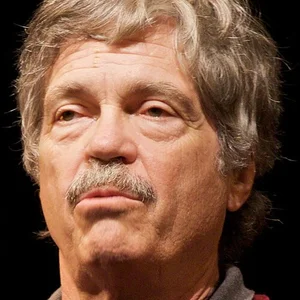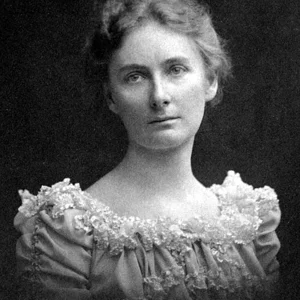

Florence Bascom (1862-1945) was an American geologist and a pioneer of the Earth sciences. The first woman to earn a doctorate from Johns Hopkins University (1893) and the first woman hired by the US Geological Survey, she was a recognized specialist in mineralogy and petrography.
Florence Bascom(1862 — 1945)
Florence Bascom
États-Unis
5 min read
Frequently asked questions
Famous Quotes
« The fascination of any search after truth lies not in the attainment, which at best is found to be very relative, but in the pursuit, where all the powers of the mind and character are brought into play.»
Key Facts
- Born on July 14, 1862, in Williamstown, Massachusetts; died on June 18, 1945.
- In 1893, the first woman to earn a doctorate from Johns Hopkins University (in geology).
- In 1896, the first woman hired as a geologist by the US Geological Survey.
- Founded and led the geology department at Bryn Mawr College, training a generation of geologists.
- First woman elected to the council of the Geological Society of America (1924) and later vice-president (1930).
Works & Achievements
Research work establishing that these rocks are ancient metamorphosed lavas; it earned her the first doctorate ever awarded to a woman by Johns Hopkins.
She built a geology program from the ground up, training a generation of leading women scientists.
Detailed maps and descriptions of the crystalline rocks of the Appalachian Piedmont (Philadelphia, Trenton, and Quakertown-Doylestown folios).
For nearly a decade, she took part in selecting and reviewing the articles of this leading scientific journal.
A body of fieldwork and petrography that made her a recognized authority on the geology of the American east coast.
Anecdotes
At Johns Hopkins University, which did not officially admit women, Florence Bascom had to attend certain classes seated behind a screen, so as not to “distract” the male students. Despite this affront, in 1893 she became the first woman there to earn a doctorate.
She grew up in a committed family: her father, John Bascom, was president of the University of Wisconsin and championed the education of women, while her mother campaigned for women's suffrage. This unusual environment encouraged her to pursue scientific studies at a time when very few women had access to them.
In 1896, she became the first woman hired as a geologist by the US Geological Survey, the official body for geological mapping in the United States. She roamed the Appalachians to map the rocks of the Piedmont, sometimes with a pack on her back across steep terrain.
At Bryn Mawr College, she built the geology department from scratch and trained an entire generation of women geologists. Several of her students went on to become respected scientists in their own right, so much so that people spoke of a true “Bascom school.”
To identify minerals, she cut rocks into “thin sections” about three hundredths of a millimeter thick, so fine that light passed through them, then examined them under a polarizing microscope — a cutting-edge technique for her time.
Primary Sources
“The fascination of any search after truth lies not in the attainment, which at best is found to be very limited, but in the pursuit, where all the powers of the mind and character are brought into play.”
In it, Bascom demonstrates that the rocks of South Mountain, long taken for sediments, are in fact ancient lava flows transformed by metamorphism.
These installments map in detail the crystalline rocks of the Appalachian Piedmont; Bascom authored several of the field surveys and descriptions.
Key Places
Town in northwestern Massachusetts where Florence Bascom was born in 1862, into an academic and progressive household.
University where she pursued her first higher studies and earned several degrees; her father served as its president.
This is where she earned her doctorate in geology in 1893, becoming the first woman to graduate from this university.
Women's college where she founded and led the geology department and trained many women geologists.
Town where Florence Bascom spent her final years and died in 1945.
Typical Objects
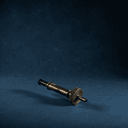
Microscope fitted with polarizing filters that make it possible to identify the minerals in a rock from the way they bend light. This was the central tool of Bascom's work.
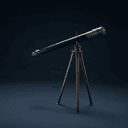
A hammer with a flat head and a pick or chisel end, used to break loose and split rock samples in the field.
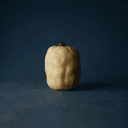
A slice of rock about 0.03 mm thick mounted on a glass slide, transparent enough to be studied under a microscope.
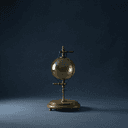
A precision compass (Brunton type) used to measure the orientation and dip of rock layers while also navigating in the field.
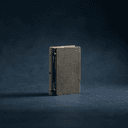
A notebook in which the geologist records observations, sketches, and cross-sections over the course of field trips.

A document that uses colors and symbols to represent the nature and age of the rocks of a region; the culmination of fieldwork mapping.
School Curriculum
Vocabulary & Tags
Key Vocabulary
Tags
Daily Life
Morning
In the morning, at Bryn Mawr, she taught mineralogy and crystallography to her students, then spent long hours bent over her polarizing microscope examining thin sections of rock.
Afternoon
The afternoon was devoted to grading work, preparing samples or, during the warmer months, to fieldwork in the Piedmont to map the rocks and collect specimens.
Evening
In the evening, she wrote up her scientific reports, drew geological cross-sections and, for years, reviewed the articles submitted to the journal of which she was an associate editor.
Food
Her diet was that of the late-nineteenth-century North American middle class: bread, meats, vegetables, dairy products and home-canned goods. In the field, meals were often reduced to simple provisions carried in a bag.
Clothing
Like the women of her time, she wore long skirts, a buttoned blouse and a hat — an outfit ill-suited to climbing over rock outcrops. On expeditions, she adopted sturdier clothing and good walking shoes.
Housing
She lived near the Bryn Mawr campus, in Pennsylvania, in a house piled high with books, rock samples and scientific instruments — the very image of a life entirely devoted to research.
Historical Timeline
Period Vocabulary
Liens externes & ressources
Références
Œuvres
Thèse de doctorat sur les roches volcaniques de South Mountain
1893
Création du département de géologie de Bryn Mawr College
1895
Folios géologiques de l'US Geological Survey
1909-1931
Rédactrice associée de la revue American Geologist
1896-1905
Études des roches cristallines du Piémont
1890s-1930s