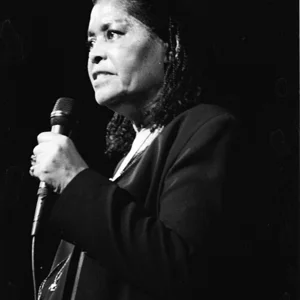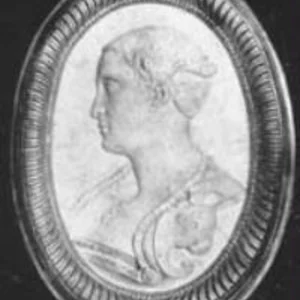

Italian composer, singer, and instrumentalist (1587–c.1641), Francesca Caccini is the first known woman to have composed an opera, La liberazione di Ruggiero (1625). Daughter of composer Giulio Caccini, she was the highest-paid musician at the Medici court in Florence.
Francesca Caccini(1587 — 1641)
Francesca Caccini
grand-duché de Toscane
8 min read
Frequently asked questions
Key Facts
- 1587: born in Florence, daughter of composer Giulio Caccini
- 1607: entered the service of the Medici court as a singer and composer
- 1618: publication of Il primo libro delle musiche, one of the most important collections of her era
- 1625: composition of La liberazione di Ruggiero dall'isola d'Alcina, the first known opera composed by a woman
- Recognized in her lifetime as the highest-paid musician at the Medici court
Works & Achievements
A collection of 36 vocal pieces (solos and duets) for voice and basso continuo, published in Florence. It is one of the first major musical publications signed by a woman and a precious testament to the nascent Baroque style.
The earliest known opera composed by a woman, created to entertain Prince Władysław of Poland in Florence. Based on Ariosto's *Orlando Furioso*, the opera was later staged in Warsaw, making it one of the first Italian operas performed outside Italy.
A musical and choreographic entertainment composed for the Medici court festivities. It illustrates Francesca's role as a designer of court spectacles, extending far beyond performance alone.
Scores composed to accompany a spoken comedy performed at the Medici court. They reflect the breadth of her commissions: Francesca composed for both theater and opera alike.
Many of Francesca Caccini's compositions survive only as manuscripts in the Medici archives. They attest to a continuous and varied output throughout her thirty-year career at court.
Anecdotes
Nicknamed “La Cecchina” (the little canary) from childhood for the beauty of her voice, Francesca Caccini made an impression from her very first appearances at the Medici court. In 1604, an English diplomat passing through Florence described her as “the best singer in Italy,” and her father Giulio proudly introduced her as his living masterpiece.
In 1625, Francesca Caccini premiered *La liberazione di Ruggiero dall’isola d’Alcina*, the first known opera composed by a woman. The work was commissioned to entertain Prince Władysław Sigismund of Poland during his visit to Florence, and was later performed in Warsaw — one of the very first times an Italian opera was staged outside Italy.
Francesca Caccini was the highest-paid musician at the Medici court, earning an annual salary of around 180 scudi — roughly twice as much as most of her male colleagues. Medici archives show that Grand Duchess Christine of Lorraine was determined to keep her in service, turning away offers from other European courts eager to lure her away.
Her collection *Il primo libro delle musiche* (1618) contains 36 vocal pieces, mixing sacred and secular airs. It is one of the first major musical publications signed by a woman, and in it she demonstrates a masterful command of the new monodic style — solo voice with accompaniment — that was then revolutionizing European music.
Francesca was not content simply to sing and compose: she also taught music to young aristocrats at the Medici court, including at times members of the grand-ducal family itself. This teaching role earned her an exceptional social standing and additional income — both exceedingly rare for a woman musician in the seventeenth century.
Primary Sources
A collection of 36 vocal pieces — madrigals, sacred and secular airs — published in Florence in 1618. Francesca dedicates several pieces to her Medici patrons and demonstrates her mastery of the monodic style (solo voice accompanied by basso continuo).
The first known opera composed by a woman. The score printed in Florence in 1625 bears the name of Francesca Caccini as composer. The libretto is by Ferdinando Saracinelli, based on Ariosto's *Orlando Furioso*.
The Medici archives preserve Francesca's salary records, letters from Grand Duchess Christine of Lorraine praising her talents, and the refusals sent to foreign courts that sought to engage her.
The diplomat describes having heard Francesca Caccini sing at the Medici court and calls her “the most excellent musician, perhaps, in all Europe,” highlighting her mastery of singing, lute, and harpsichord.
Key Places
Birthplace of Francesca Caccini and the center of her entire career. Florence was then one of the musical capitals of Europe, under the artistic and financial patronage of the Medici family.
The principal residence of the Grand Dukes of Tuscany, where Francesca worked on a daily basis. It was here that she performed during the great Medici festivities and taught music to the nobility.
A Medici suburban villa where *La liberazione di Ruggiero* was premiered in 1625 — the first opera composed by a woman — performed for the official visit of Prince Władysław Sigismund of Poland.
The city where Francesca settled after her second marriage to the nobleman Tommaso Raffaelli in 1627. She lived there for several years before returning permanently to Florence.
*La liberazione di Ruggiero* was performed at the Polish court shortly after its Florentine premiere, making it one of the first Italian operas to be exported and staged outside Italy.
Typical Objects

An essential plucked-string instrument at Baroque courts, Francesca Caccini used it to accompany her singing and to compose. She was renowned for her virtuosity on the harpsichord as much as for her voice.
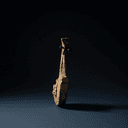
The favored instrument of musicians in the early Baroque period, the lute allowed Francesca to accompany herself during intimate court performances. Diplomats who heard her often remarked on her mastery of the instrument.
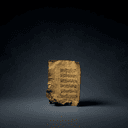
Before printing became widespread, compositions circulated as carefully hand-copied manuscripts. Francesca wrote out her scores by hand, often dedicating them to her Medici patrons, and some of these manuscripts survive in Florentine archives.
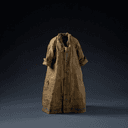
A silk gown embroidered in the colors of the Medici household, worn during official performances. The garment signaled rank and court affiliation, distinguishing musicians of the grand-ducal house from other craftspeople.

Madrigals — secular vocal pieces for one or more voices — were the quintessential fashionable musical form of the era. Francesca regularly composed and performed them, notably in her Il primo libro delle musiche (1618).
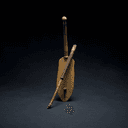
Composition and music copying were done by candlelight, on a tilting stand that kept the score at eye level. These tools were indispensable for the long hours of night work that were common when preparing court spectacles.
School Curriculum
Vocabulary & Tags
Key Vocabulary
Daily Life
Morning
Francesca began her day with vocal warm-ups and instrumental exercises on the harpsichord or lute, essential for maintaining her technique. She then oversaw rehearsals with the other court musicians, preparing performances commissioned by the Grand Dukes of Tuscany.
Afternoon
Afternoons were devoted to composition and teaching. Francesca gave singing and music lessons to young nobles and ladies of the court — a role for which she was officially paid. She also worked on writing scores for upcoming Medicean entertainments, often under the pressure of royal commissions.
Evening
Evenings at the Medici court were filled with musical performances, banquets, and festivities. Francesca might sing madrigals intimately for the grand-ducal family, or take part in grand theatrical and lyric productions before distinguished guests from across Europe.
Food
Like high-ranking musicians, Francesca enjoyed meals from the grand-ducal household: roasted meats, fish, vegetables, white breads, and Tuscan wines. Seventeenth-century Florentine cuisine was celebrated for its refinement, heir to the famous Medicean banquets of the Renaissance.
Clothing
As a court musician, Francesca wore silk or velvet gowns suited to the occasion, in colors chosen according to Medicean livery. For official performances, she sometimes donned elaborate stage costumes, particularly in the intermezzi and operas in which she also performed acting roles.
Housing
Francesca lodged in or near the Palazzo Pitti, the grand dukes' residence. High-ranking musicians were given comfortable quarters within the palace or its adjoining buildings — a privilege that underscored their exceptional standing within the hierarchy of the Florentine court.