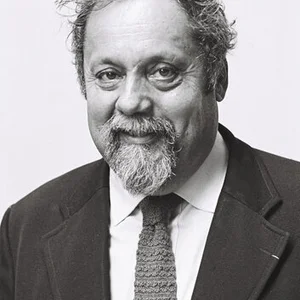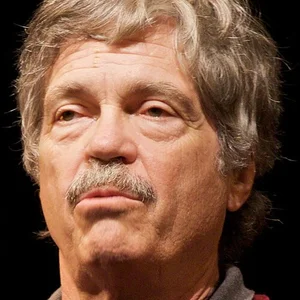

Franklin Stahl is an American molecular biologist and geneticist. With Matthew Meselson, in 1958 he carried out a decisive experiment demonstrating that DNA replication is semiconservative, confirming the model proposed by Watson and Crick.
Franklin Stahl(1929 — 2025)
Franklin Stahl
États-Unis
6 min read
Frequently asked questions
Key Facts
- Born on October 8, 1929 in Boston, died on April 2, 2025
- In 1958, with Matthew Meselson, carried out the Meselson-Stahl experiment demonstrating the semiconservative replication of DNA
- Used heavy nitrogen (nitrogen-15) and density gradient centrifugation to distinguish DNA strands
- Professor at the University of Oregon, member of the National Academy of Sciences
- His experiment is often described as “the most beautiful experiment in biology”
Works & Achievements
Experimental demonstration that DNA replication is semi-conservative; often called “the most beautiful experiment in biology.”
An analytical technique, developed with Meselson and Jerome Vinograd, that separates DNA by its density with unprecedented precision.
Long-running research into how DNA strands break and recombine, shedding light on a fundamental mechanism of heredity.
A genetics teaching text through which Stahl passed on the molecular basis of heredity to students.
A book gathering recollections and essays about Alfred Hershey and the origins of molecular biology.
Anecdotes
In 1957, Matthew Meselson and Franklin Stahl had the idea of growing E. coli bacteria in a medium containing heavy nitrogen (nitrogen-15), then transferring them into normal nitrogen (nitrogen-14). By measuring the density of the DNA at each generation, they were able to "weigh" the molecules and track how the DNA copied itself: an experiment nicknamed "the most beautiful experiment in biology.
The idea for the experiment is said to have been born from a relaxed conversation: Meselson and Stahl reportedly met and became friends during a summer course at Woods Hole, sharing discussions about a concrete way to test DNA replication, a problem that many considered impossible to settle at the time.
To separate the DNA strands by weight, the two researchers used a then-new technique: cesium chloride density gradient centrifugation. Spinning at very high speed, the centrifuge created an invisible gradient where each type of DNA settled at its own height, like layers in a glass.
The result was undeniable: after one generation, all the DNA had an intermediate density, proving that each new molecule contained one old strand and one new strand. This model, called "semi-conservative
confirmed exactly the prediction made by Watson and Crick when they described the double helix in 1953.
Later in his career at the University of Oregon, Stahl became passionate about genetic recombination, particularly in bacteriophage lambda, a virus that infects bacteria. He liked to repeat that understanding how DNA strands break and rejoin was one of the great riddles of genetics.
Primary Sources
The results of this experiment show that the nitrogen in a bacterium's DNA is distributed equally between two subunits that remain intact across many generations, with each daughter molecule receiving one of these parental subunits.
It has not escaped our notice that the specific pairing we have postulated immediately suggests a possible copying mechanism for the genetic material.
A collection of testimonies and texts devoted to the birth of molecular biology and the role of bacteriophages as experimental models.
Key Places
Franklin Stahl's birthplace, on the east coast of the United States.
The institution where Stahl completed his undergraduate studies, finished in 1953.
Where Stahl earned his doctorate in 1956 by studying bacteriophages.
This is where Stahl met Meselson and where, together, they carried out the famous 1958 experiment.
The university where Stahl spent most of his career from 1959 onward, studying genetic recombination.
Typical Objects

A device spinning at tens of thousands of revolutions per minute, capable of separating DNA molecules according to their density. It is the key instrument that made it possible to “weigh” the old and new strands.

A heavy salt dissolved in water that, under centrifugation, forms a density gradient. The DNA settles precisely at the level corresponding to its weight.

A heavy form of nitrogen used to “tag” the DNA of the parent bacteria. It was this invisible label that made the sharing of strands between generations visible.

A harmless intestinal bacterium, grown by the millions in flasks of nutrient medium. Its simple DNA and rapid division made it the ideal organism for studying replication.

A UV light source used to photograph the DNA inside the centrifuge cell, since DNA absorbs these rays. It revealed the dark bands corresponding to the molecules.

A virus that infects bacteria, which became Stahl's favorite subject of study for understanding genetic recombination. A tiny but powerful tool for deciphering the exchanges between DNA strands.
School Curriculum
Vocabulary & Tags
Key Vocabulary
Tags
Daily Life
Morning
At the laboratory of the University of Oregon, the day often began with checking the bacterial or phage cultures prepared the day before. Stahl recorded his observations in his experiment notebook and discussed the results with his students over coffee.
Afternoon
Afternoons were spent at the heart of the experiments: starting a centrifugation, photographing DNA bands, analyzing the images. A good part of the time was also devoted to reading scientific journals and exchanging letters with other researchers such as Meselson.
Evening
In the evening, Stahl wrote articles, graded papers, or prepared his classes. Known for his humor and his outspokenness, he loved to keep scientific discussions going well after the laboratory had closed — hence the title of his book, “We Can Sleep Later.”
Food
Like most twentieth-century American academics, his diet was simple and practical: quick meals at the campus cafeteria, sandwiches between two procedures, and plenty of coffee to keep going through long experimental sessions.
Clothing
In the laboratory, Stahl wore the traditional white coat over casual attire typical of American campuses: a shirt and cotton trousers. Far from the image of the stiff scholar, he cultivated a direct and unpretentious style.
Housing
He lived in an ordinary house in the university town of Eugene, Oregon, a lush region of the West Coast, close to his laboratory and to the nature he so enjoyed.
Historical Timeline
Period Vocabulary
Liens externes & ressources
Références
Œuvres
Expérience de Meselson-Stahl
1958
Mise au point de la centrifugation en gradient de densité de chlorure de césium
1957
Travaux sur la recombinaison génétique du bactériophage lambda
années 1960-1990
« The Mechanics of Inheritance » (manuel)
1964
« We Can Sleep Later » (recueil dirigé par Stahl)
2000