 flip
flipCoconut Candy from Fort-de-France
Coconut Candy from Fort-de-France
Why this dish? Before Blida, before Tunis, there was Fanon's Martinican childhood in Fort-de-France. The coconut candies caramelized with cane sugar are the treat children bought from street vendors, the very taste of his native Antilles. It is the sweet thread that connects the great thinker of decolonization to the Creole boy he once was.
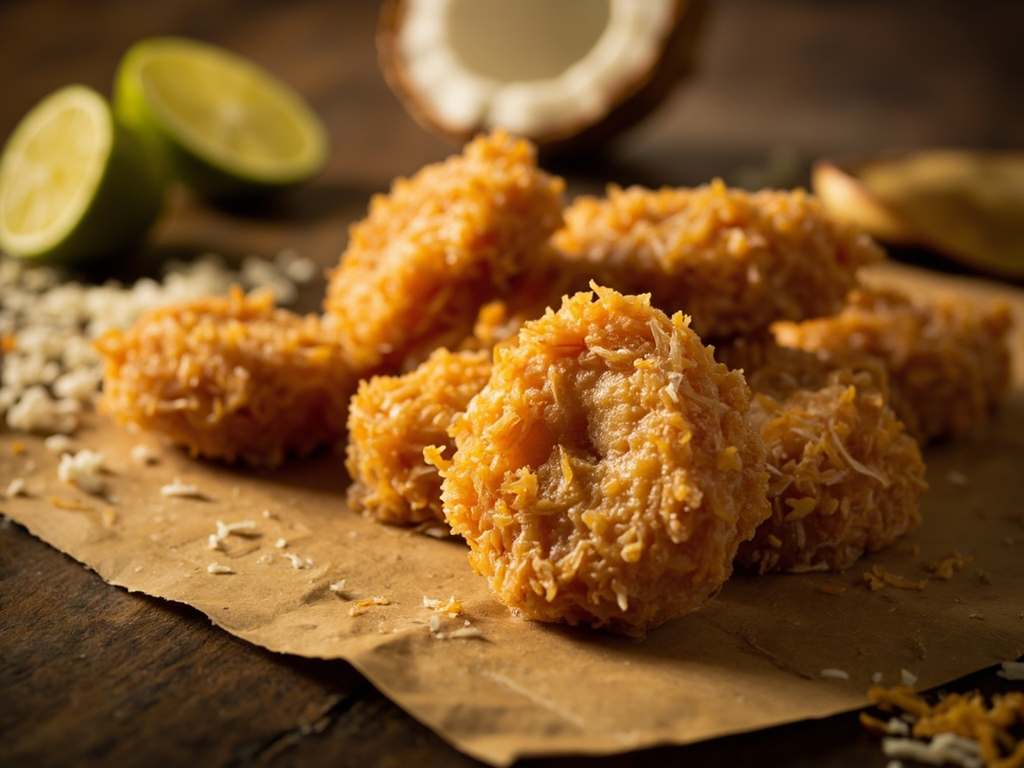
Paving stones of freshly grated coconut set in a cane sugar caramel, perfumed with vanilla and lime zest. Crunchy, golden, melting: the treat of Antillean markets.
Before the theories and the exiles, there was a child of Fort-de-France running to the vendor, two sous clutched in his hand, for a coconut candy. The caramelized cane sugar, the coconut grated that very morning, that scent of vanilla — that is my island in my mouth. They were sold warm, sticky on the paper, and it was all the sweetness of a country you only measure once you are far from it. Taste one, and you will know where I come from.
- •Freshly grated coconut — one large (base)
- •Cane sugar — about twice the volume of coconut (caramel)
- •Vanilla bean — 1 (aroma)
- •Lime zest — a little (freshness)
Coconut Candy from Fort-de-France
Paving stones of freshly grated coconut set in a cane sugar caramel, perfumed with vanilla and lime zest. Crunchy, golden, melting: the treat of Antillean markets.
Why this dish? Before Blida, before Tunis, there was Fanon's Martinican childhood in Fort-de-France. The coconut candies caramelized with cane sugar are the treat children bought from street vendors, the very taste of his native Antilles. It is the sweet thread that connects the great thinker of decolonization to the Creole boy he once was.
Before the theories and the exiles, there was a child of Fort-de-France running to the vendor, two sous clutched in his hand, for a coconut candy. The caramelized cane sugar, the coconut grated that very morning, that scent of vanilla — that is my island in my mouth. They were sold warm, sticky on the paper, and it was all the sweetness of a country you only measure once you are far from it. Taste one, and you will know where I come from.
Ingredients (period version)
- Freshly grated coconut — one large (base)
- Cane sugar — about twice the volume of coconut (caramel)
- Vanilla bean — 1 (aroma)
- Lime zest — a little (freshness)
Ingredients
- Freshly grated coconut (or unsweetened dried, rehydrated) — 250 g (base)
- Cane sugar (brown) — 300 g (caramel)
- Water — 8 cl (dissolving sugar)
- Vanilla (bean or extract) — 1 bean (aroma)
- Lime zest — 1 (freshness)
- Salt — 1 pinch (balance)
Method
- Melt the sugar with water and vanilla until an amber syrup (light caramel).
- Off the heat, add the grated coconut, lime zest, and pinch of salt; mix vigorously.
- Return to low heat for 3-4 min, stirring, until the mass dries out and clings together.
- Spread to 1.5 cm thickness on oiled parchment paper, smooth out.
- Let cool slightly, pre-cut into rectangles ('tablets'), let harden completely before separating.
How it was made : In the Martinique of Fanon's childhood, cane sugar was abundant — it was the sugar island par excellence — and street vendors transformed local coconut into a thousand sweets sold by the piece. The coconut candy was cooked in a cauldron, by eye, the caramel degree judged by color and smell.
The contemporary twist : Dip a corner of each tablet in a little lime juice just before serving: the acidity that snaps against the sugar, a nod to the Antilles of today.
Frantz Fanon · Charactorium