 flip
flipSate ayam, sauce cacahuète
Sate ayam, sauce cacahuète
Why this dish? Sate is the king of Indonesian street food, sold from mobile carts all over Jakarta. For Anggun, a daughter of the capital turned stage artist, it is the taste of city evenings, the smoke of the brazier, and the tinkle of the sate vendor's bell.
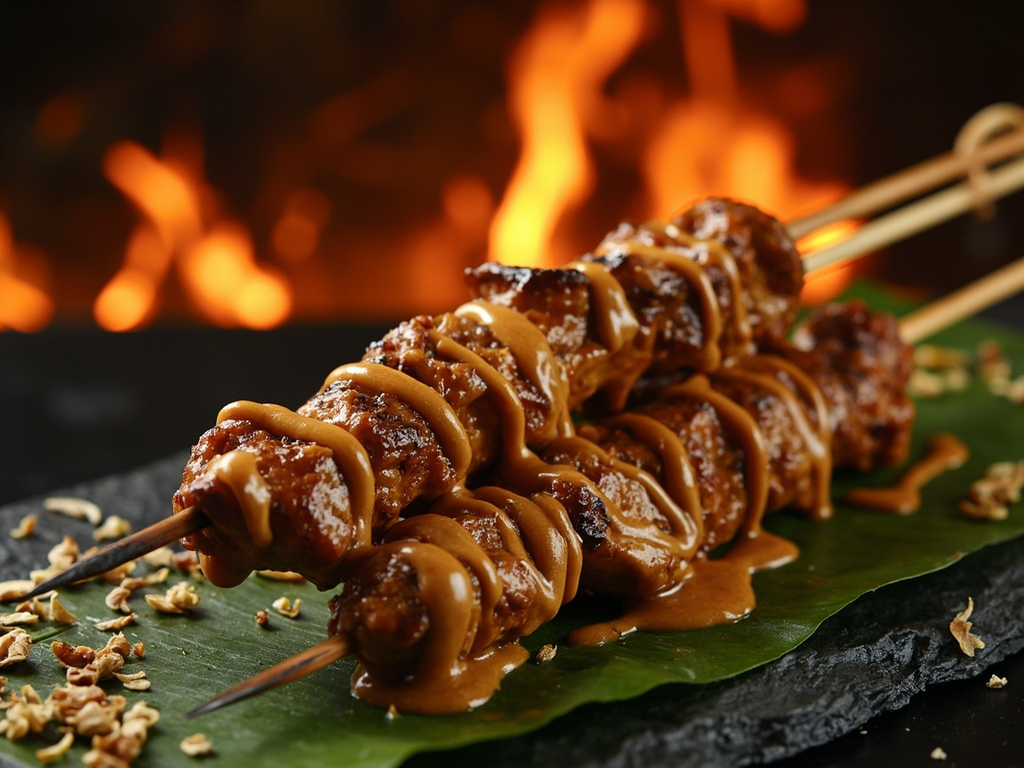
Small chicken skewers marinated in kecap manis, grilled over coals, and coated with a creamy peanut sauce. Eaten standing, burning hot, counted by the dozen.
In the evening in Jakarta, you recognize the sate vendor by the smell before you see him — the sweet smoke of kecap burning on the coals. We marinate the chicken pieces, thread them onto bamboo sticks, and the vendor fans them with a big arm movement to stoke the fire. The pounded peanut sauce, I could drink it! You dip, you bite, you burn your fingers a little — and you ask for more, ten, twenty skewers, that's the simple happiness of home.
- •Chicken thigh — cut into cubes (meat)
- •Kecap manis — for the marinade (sweet-salty, glaze)
- •Roasted peanuts — a good handful, pounded (sauce base)
- •Garlic, shallot, chili — pounded (aromatics)
- •Palm sugar (gula jawa) — a piece (roundness of sauce)
- •Tamarind juice — a splash (acidity)
Sate ayam, sauce cacahuète
Small chicken skewers marinated in kecap manis, grilled over coals, and coated with a creamy peanut sauce. Eaten standing, burning hot, counted by the dozen.
Why this dish? Sate is the king of Indonesian street food, sold from mobile carts all over Jakarta. For Anggun, a daughter of the capital turned stage artist, it is the taste of city evenings, the smoke of the brazier, and the tinkle of the sate vendor's bell.
In the evening in Jakarta, you recognize the sate vendor by the smell before you see him — the sweet smoke of kecap burning on the coals. We marinate the chicken pieces, thread them onto bamboo sticks, and the vendor fans them with a big arm movement to stoke the fire. The pounded peanut sauce, I could drink it! You dip, you bite, you burn your fingers a little — and you ask for more, ten, twenty skewers, that's the simple happiness of home.
Ingredients (period version)
- Chicken thigh — cut into cubes (meat)
- Kecap manis — for the marinade (sweet-salty, glaze)
- Roasted peanuts — a good handful, pounded (sauce base)
- Garlic, shallot, chili — pounded (aromatics)
- Palm sugar (gula jawa) — a piece (roundness of sauce)
- Tamarind juice — a splash (acidity)
Ingredients
- Boneless chicken thighs — 500 g (meat)
- Kecap manis — 3 tbsp (marinade and glaze)
- Peanut butter + crushed peanuts — 150 g + 2 tbsp (sauce)
- Garlic — 2 cloves (aromatic)
- Shallot — 1 (aromatic)
- Palm sugar or brown sugar — 1 tbsp (roundness)
- Tamarind paste — 1 tsp (acidity)
- Chili powder — 1/2 tsp (heat)
- Bamboo skewers — 12 (support)
Method
- Cut chicken into cubes and marinate 30 min in half the kecap manis with some garlic.
- Prepare sauce: sauté garlic and shallot, add peanut butter, palm sugar, tamarind, chili, and thin with hot water to a coating cream.
- Thread chicken onto bamboo skewers that have been soaked in water.
- Grill on a very hot griddle or barbecue, brushing with kecap manis, until edges caramelize.
- Serve skewers drizzled with sauce, sprinkled with crushed peanuts and fried shallots.
How it was made : Sate, imported and then reinvented in the archipelago, was sold from gerobak, mobile carts with a brazier of coals. The vendor fanned the fire by hand and announced his passage with a bell or a cry. The peanut sauce varies from Java (sweet) to Madura (spicier).
The contemporary twist : Presented in a fan on a slate, with sauce in a small bowl and a lime wedge — a nod to the sate now grilled on Parisian food trucks.
Anggun · Charactorium