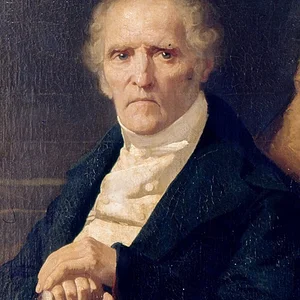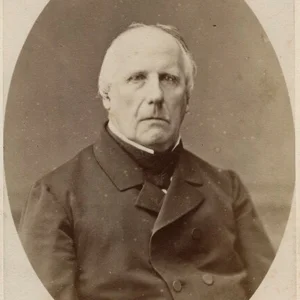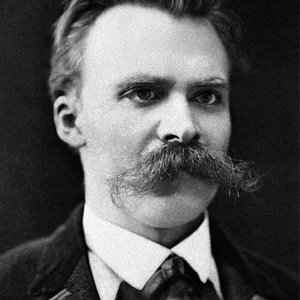

A 19th-century German philosopher, Nietzsche revolutionized Western thought by challenging traditional morality and metaphysics. A central figure in high school philosophy curricula, his concepts of the will to power and the Übermensch remain foundational in the teaching of philosophy.
Frequently asked questions
Famous Quotes
« He who has a why to live can bear almost any how.»
« I am dynamite.»
« God is dead.»
Key Facts
- 1869: Appointed professor of classical philology at the University of Basel at just 24 years old
- 1872: Publication of The Birth of Tragedy, his first major work
- 1883–1885: Writing of Thus Spoke Zarathustra, his magnum opus introducing the concept of the Übermensch
- 1886: Publication of Beyond Good and Evil, a manifesto of his critical philosophy
- 1889: Mental breakdown in Turin; isolation and silence until his death in 1900
Works & Achievements
Nietzsche's first major work, opposing the Apollonian and Dionysian principles in Greek art. The book caused an academic scandal but laid the foundations of his aesthetics.
A collection of aphorisms marking his break with Wagner and Romanticism. Nietzsche adopts a critical and scientific method applied to morality.
The work in which the phrase 'God is dead' appears for the first time. The book blends poetry, aphorisms, and philosophical reflection in a jubilant style.
Nietzsche's masterwork, a philosophical poem introducing the concepts of the Übermensch and eternal recurrence. Written in a prophetic style unique in philosophy.
A radical critique of traditional philosophy and morality. Nietzsche develops his notion of master morality and slave morality.
An analysis of the origins of Western moral values across three essays. Nietzsche introduces the concepts of ressentiment and bad conscience.
A critical survey of Western philosophy from Socrates to modernity. Nietzsche summarizes his main theses with incisive concision.
An intellectual autobiography written shortly before his breakdown. Nietzsche revisits each of his works with a mixture of lucidity and megalomania.
Anecdotes
In 1889, in Turin, Nietzsche collapsed weeping in the street after seeing a coachman violently whipping his horse. He threw his arms around the animal to protect it. This episode marked the beginning of his descent into madness, from which he never recovered.
Nietzsche sent the manuscript of Thus Spoke Zarathustra to his publisher in several installments, like urgent deliveries. He wrote the first part in only ten days, in a kind of creative trance, during a stay in Rapallo, Italy, in February 1883.
Nietzsche and the composer Richard Wagner were at first very close friends. Nietzsche deeply admired Wagner, but their friendship broke apart violently when Nietzsche reproached Wagner for his German nationalism and his Christian turn with the opera Parsifal.
Despite his reputation as a radical thinker, Nietzsche was extremely shy in everyday life. His students at the University of Basel, where he was appointed professor at only 24 years old, described him as a polite, reserved man of extreme courtesy.
Nietzsche suffered throughout his life from terrible migraines and eye problems that left him nearly blind at times. He often dictated his texts or wrote with a Malling-Hansen writing ball, one of the first commercially available typewriters.
Primary Sources
God is dead! God remains dead! And we have killed him! How shall we comfort ourselves, the murderers of all murderers?
Whoever fights monsters should see to it that in the process he does not become a monster. And if you gaze long enough into an abyss, the abyss will gaze back into you.
That which does not kill me makes me stronger.
I am not a man, I am dynamite. I know my fate. One day my name will be associated with the memory of something tremendous.
Existence and the world are eternally justified only as an aesthetic phenomenon.
Key Places
Nietzsche's birthplace, where his father was a Lutheran pastor. He spent his early years there before his father's death in 1849.
The city where Nietzsche was a professor of classical philology from 1869 to 1879, and where he met the historian Jacob Burckhardt.
A Swiss alpine village where Nietzsche spent seven consecutive summers. It was during a walk along Lake Silvaplana that he had the intuition of the eternal return.
The city where Nietzsche spent his last months of lucidity in 1888–1889, a period of intense creativity. It was there that he suffered a mental breakdown in January 1889.
The city where Nietzsche spent his final years, cared for by his mother and then his sister Elisabeth. He died there in 1900.
Nietzsche spent several winters in Nice between 1883 and 1888, appreciating the mild climate for his fragile health. He wrote several of his major works there.
Typical Objects

Nietzsche used this Danish typewriter from 1882 onwards to compensate for his failing eyesight. He is one of the first philosophers to have written on a typewriter.

Nietzsche always carried notebooks during his long walks to jot down his thoughts. Many of his aphorisms were first scribbled while walking.

His severe myopia rendered him nearly blind at times. His thick glasses were an inseparable feature of his appearance.

Nietzsche lived as a nomad for ten years, moving between boarding houses in Switzerland, Italy and France with a few trunks containing books and manuscripts.

Nietzsche was an accomplished pianist and amateur composer. He wrote several pieces for piano and considered music the supreme art form.

To protect himself from the Mediterranean sun during his stays in the south, Nietzsche wore a wide-brimmed hat and sometimes used a parasol, as his eyes were very sensitive to light.
School Curriculum
Vocabulary & Tags
Key Vocabulary
Daily Life
Morning
Nietzsche rose very early, often around five in the morning, and had a frugal breakfast. He devoted his mornings to writing, making the most of the early hours of clarity before his headaches grew too intense. It was his most productive period of work.
Afternoon
The afternoon was dedicated to long solitary walks in the mountains or along the Mediterranean coast, depending on the season. These walks lasting several hours were essential to his philosophical reflection. He would jot down his ideas in notebooks he always carried with him.
Evening
In the evening, Nietzsche retired early to his boarding house room, often exhausted by his migraines. He would sometimes reread his notes from the day or play the piano when his health allowed. He had a light meal and went to bed around eight or nine o'clock.
Food
Nietzsche followed a very sober, almost ascetic diet. He suffered from serious digestive problems and avoided alcohol, coffee, and heavy dishes. He subsisted mainly on fruit, vegetables, bread, and lean meat, adhering to strict dietary regimens recommended by his doctors.
Clothing
Nietzsche dressed neatly but austerely, in the dark suit of a German professor. He invariably wore his thick nearsighted glasses and sported an imposing mustache that became his distinctive hallmark. On walks, he wore a wide-brimmed hat to protect his sensitive eyes.
Housing
Nietzsche spent most of his adult life in modest boarding houses and furnished rooms. In Sils-Maria, he rented a small room from the Durisch family. In Turin, he occupied a room on the fourth floor of a building on Via Carlo Alberto, furnished simply with a bed, a writing table, and stacks of books.
Historical Timeline
Period Vocabulary
Visual Style
Un style romantique sombre inspiré de Caspar David Friedrich, avec des paysages alpins brumeux, des clairs-obscurs dramatiques et une figure solitaire face à l'immensité de la nature.
Sound Ambience
L'atmosphère sonore d'une pension alpine à Sils-Maria, entre silence montagnard, cloches de vaches, craquements du plancher sous les pas d'un penseur solitaire et notes de piano éparses.
Liens externes & ressources
Références
Œuvres
La Naissance de la tragédie
1872
Humain, trop humain
1878
Le Gai Savoir
1882
Ainsi parlait Zarathoustra
1883-1885
Par-delà bien et mal
1886
La Généalogie de la morale
1887
Le Crépuscule des idoles
1889