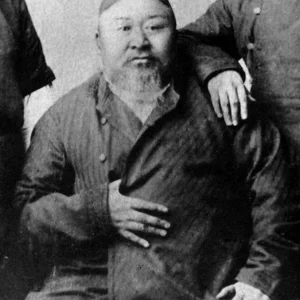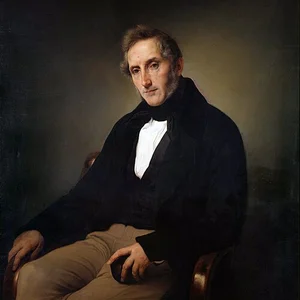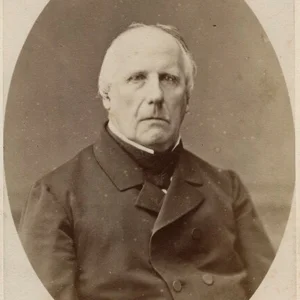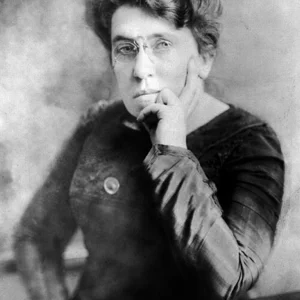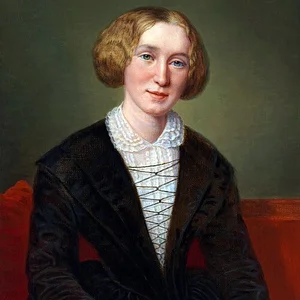

Pen name of Mary Ann Evans (1819–1880), one of the leading Victorian novelists. Author of Middlemarch and The Mill on the Floss, she explores the female condition and social morality with rare philosophical depth.
George Eliot(1819 — 1880)
George Eliot
Royaume-Uni de Grande-Bretagne et d'Irlande
7 min read
Frequently asked questions
Famous Quotes
« It is never too late to be what you might have been.»
« What we call our despair is often only the painful eagerness of unfed hope.»
Key Facts
- Born Mary Ann Evans on 22 November 1819 in Nuneaton, England
- Adopted the male pen name George Eliot to be taken seriously as a writer (1857)
- Published Middlemarch (1871–1872), considered one of the greatest novels in the English language
- Translator of Spinoza and Feuerbach, deeply influenced by positivist philosophy
- Died on 22 December 1880 in London
Works & Achievements
Her first collection of stories, published under the pen name George Eliot. It introduces the central themes of her work: moral sympathy, English provincial life, and the complexity of ordinary destinies.
Her first major novel, inspired by a true story told by her aunt. It immediately established her reputation and realistically portrays rural English life in the 18th century.
A partly autobiographical novel following Maggie Tulliver, an intelligent young woman stifled by social and family constraints. One of the first major explorations of the conflict between female ambition and Victorian society.
A short novel about redemption and community, considered a masterpiece of concision. It showcases George Eliot's ability to transform a moral tale into a psychologically rich work.
Her undisputed masterpiece, a sweeping portrait of English provincial society at the time of electoral reform. Virginia Woolf considered it one of the very few truly adult English novels, praising its moral depth and mastery of free indirect style.
Her final novel — bold and complex, addressing Jewish identity, nationalism, and female emancipation. Ahead of its time, it was better understood in the 20th century than when it was first published.
Anecdotes
Mary Ann Evans chose the male pen name "George Eliot" to be taken seriously as a novelist at a time when women writers were mostly associated with sentimental fiction considered minor literary work. She wanted her writing to be judged solely on its literary and philosophical merit, free from the prejudice attached to her sex.
George Eliot maintained a relationship for twenty-four years with the philosopher George Henry Lewes, a married man who could not obtain a divorce under Victorian law. This scandalous choice led to her being ostracized by respectable British society, yet she fully embraced their common-law union, regarding it as a true moral marriage.
A self-taught polyglot, Mary Ann Evans was fluent in German, Latin, Greek, Italian, and French. She translated, among other works, Strauss's The Life of Jesus and Feuerbach's The Essence of Christianity — major philosophical texts that profoundly transformed her religious and moral thinking.
At the age of 60, just a few months after Lewes's death, she married John Walter Cross, a long-time friend twenty years her junior. This late marriage restored her social respectability, but she died seven months later, in December 1880.
Middlemarch, published in 1871–1872, first appeared in affordable monthly installments — a new commercial technique at the time. Virginia Woolf would later call it "one of the few English novels written for grown-up people," praising its moral and psychological maturity as unmatched in Victorian literature.
Primary Sources
Who that cares much to know the history of man, and how the mysterious mixture behaves under the varying experiments of Time, has not dwelt, at least briefly, on the life of Saint Theresa?
I have suffered much from the want of being able to write with the same freedom about myself as about other people. I have always felt myself as a person whose life is in some sense problematic.
A wide plain, where the broadening Floss hurries on between its green banks to the sea, and the loving tide, rushing to meet it, checks its passage with an impetuous embrace.
I have set myself many tasks for the year — I wonder how many will be accomplished? — A Novel called Middlemarch is one of them, a long poem on Timoleon is another.
Key Places
Mary Ann Evans's birthplace in the English Midlands. The rural landscapes and strict Protestant community of her childhood directly inspired the settings and characters of her early novels.
The city where she lived from 1841 to 1849 and met freethinker Charles Bray and his wife. This radical intellectual circle fundamentally transformed her religious and philosophical outlook.
George Eliot and George Henry Lewes's London residence from 1863, which became a celebrated literary and intellectual salon frequented by Herbert Spencer, Henry James, and Ivan Turgenev.
In 1854–1855, George Eliot and Lewes stayed there to work on a biography of Goethe. This journey proved pivotal to her philosophical development and intellectual emancipation.
She visited Florence in 1861 to research her historical novel Romola, immersing herself in Renaissance archives and painting. This stay embodied her rigorous research method.
Typical Objects

George Eliot wrote her novels with a steel pen, a technology that replaced the quill in the 19th century. She would write for long hours each morning, often producing several drafts before reaching the final version.

Her library contained works in five languages — Greek, Latin, German, French, and Italian. These books were her daily tools for intellectual work and philosophical translation.

This liberal and progressive journal, of which she served as assistant editor, was at the heart of her intellectual life. Through it she rubbed shoulders with the greatest thinkers of her era and published her first literary criticism.

George Eliot kept personal diaries and research notebooks for her novels. For Romola, she travelled to Florence and took detailed notes on Renaissance Italy.

A passionate music lover, she played the piano with considerable talent and was a regular at London concerts. Music enriches many scenes in her novels, most notably in Daniel Deronda.

George Eliot maintained a rich correspondence with intellectuals, artists, and readers from around the world. These letters, now published in nine volumes, reveal the depth of her philosophical thinking and her wit.
School Curriculum
Vocabulary & Tags
Key Vocabulary
Tags
Daily Life
Morning
George Eliot rose early, often after a poor night's sleep — she suffered from chronic migraines and anxiety. She devoted her mornings to writing her novels, working for several hours at her desk before receiving any visitors or allowing distractions.
Afternoon
Afternoons were reserved for research reading, extensive correspondence, and walks with George Henry Lewes through London's parks or the countryside. She occasionally received intellectual visitors in the drawing room at The Priory.
Evening
Evenings, especially Sundays, were dedicated to the literary salon she hosted with Lewes, welcoming philosophers, writers, and scientists. She played the piano and took part in readings aloud of classical works.
Food
George Eliot had a delicate appetite linked to her fragile health. She enjoyed simple English fare — soups, roast meats, boiled vegetables — and tea, the indispensable social ritual of Victorian society.
Clothing
She wore plain Victorian dresses in dark silk or wool, without the sartorial excesses of high society. Little concerned with vanity, she preferred comfort over fashion, often draping a shawl over her shoulders during her writing sessions.
Housing
From 1863 until her death, she lived at The Priory, a genteel villa in Regent's Park, London, furnished with taste but without ostentation. Bookshelves lined the walls of the drawing room and study, reflecting the central place of intellectual work in her life.
Historical Timeline
Period Vocabulary
Visual Style
Le style visuel de l'univers de George Eliot s'inspire du réalisme victorien et des préraphaélites : tons ambrés et sépia, intérieurs studieux baignés de lumière tamisée, paysages ruraux anglais brumeux, portraits de femmes pensives au regard intense.
Sound Ambience
L'atmosphère sonore de George Eliot mêle le silence studieux d'un intérieur victorien cultivé — feu de cheminée, piano, plume sur le papier — au murmure du salon littéraire londonien et aux bruits de la ville du XIXe siècle filtrés par les fenêtres.
Liens externes & ressources
Références
Œuvres
Scenes of Clerical Life
1857
Le Moulin sur la Floss (The Mill on the Floss)
1860
Silas Marner
1861
Middlemarch
1871-1872
Daniel Deronda
1876