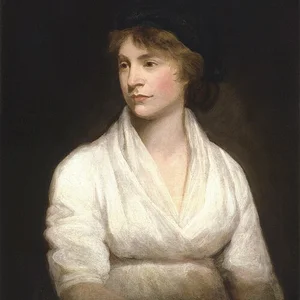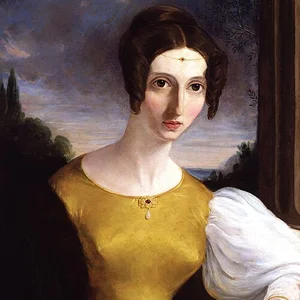

Harriet Taylor Mill (1807-1858) was a British philosopher and feminist, a major figure in 19th-century liberal thought. A collaborator and wife of John Stuart Mill, she profoundly influenced his works, particularly on individual liberty and the emancipation of women.
Harriet Taylor Mill(1807 — 1858)
Harriet Taylor Mill
Royaume-Uni de Grande-Bretagne et d'Irlande
8 min read
Frequently asked questions
Famous Quotes
« The subordination of women is one of the main causes of the imperfection of human civilization.»
Key Facts
- Born in 1807 in London, she published an essay on marriage and divorce as early as 1832, calling for legal equality between spouses.
- She worked closely with John Stuart Mill for twenty years before marrying him in 1851, following the death of her first husband.
- Her essay 'The Enfranchisement of Women' (1851) anticipates the arguments developed in Mill's 'The Subjection of Women' (1869).
- She exerted a decisive influence on *On Liberty* (1859), to which Mill attributed co-authorship.
- She died in Avignon in 1858, before seeing the major works born of their collaboration published.
Works & Achievements
Published in the Westminster Review, this essay demands the right to vote and civil and economic equality for women. It is considered one of the earliest radical feminist texts in English-language literature.
Written in dialogue with J.S. Mill, this text — unpublished during her lifetime — argues for the freedom to divorce and equal rights within marriage. It attests to the precocity and radicalism of her thought.
Harriet contributed substantially to the writing of the chapters on labour and the working classes in this foundational work. Mill attributed a large share of the book's social reflection to her.
Although published after her death, Mill asserted that it was the fruit of their joint work and dedicated the book to her. This foundational text of political liberalism bears a deep imprint of Harriet's thought.
Mill explicitly acknowledged in this work that Harriet's thought was the primary source of his analysis of the oppression of women. The text is regarded as the couple's shared posthumous work.
Anecdotes
Harriet Taylor met John Stuart Mill in 1830 at a London dinner party. Although she was already married to John Taylor, the two intellectuals formed an intense intellectual friendship that scandalized Victorian high society. For twenty years, they exchanged manuscripts, met to work together, and resisted the conventions of their time.
After the death of her first husband in 1849, Harriet Taylor married John Stuart Mill in 1851. This marriage, anticipated for two decades, was celebrated quietly. Mill solemnly declared that he renounced all the legal privileges that English law granted him over his wife's person and property — a rare and symbolic political gesture for the era.
In 1851, Harriet Taylor published 'The Enfranchisement of Women' in the Westminster Review, a text demanding voting rights and civil equality for women. The article, of unprecedented radicalism, caused a stir in London's intellectual circles. John Stuart Mill publicly acknowledged that his wife's thinking had profoundly influenced his own ideas on liberty.
Harriet Taylor Mill died in Avignon in 1858, during a trip to France undertaken to restore her fragile health. John Stuart Mill, inconsolable, purchased a house near the cemetery where she was buried so that he could spend the rest of his life close to her. He regarded her as the greatest philosophical mind of their generation.
Primary Sources
Were we writing merely to express our own opinions, we should say plainly that we do not think that the suffrage, or any other of the recognized marks of citizenship, ought to be withheld from women.
She is a woman of remarkable endowments both of feeling and of intellect, united in a degree very seldom found.
The chief of my obligations, as is natural, to her to whom I dedicated the work, is not confined to its execution, but extends to the thought itself.
To the beloved and deplored memory of her who was the inspirer, and in part the author, of all that is best in my writings.
Key Places
Harriet Taylor Mill spent much of her life in the bourgeois neighbourhoods of London, frequenting the utilitarian and liberal intellectual circles of the British capital.
The villa of Harriet and John Taylor at Walton often served as a retreat and place of intellectual work for Harriet and Mill, sheltered from London gossip.
Harriet Taylor Mill died in Avignon in November 1858 during a therapeutic journey. Mill purchased a house there to remain close to her tomb at the Saint-Véran cemetery.
Headquarters of the East India Company, where John Stuart Mill worked as a civil servant; Harriet often debated the great political and economic questions there that fed into their joint writings.
The burial place of Harriet Taylor Mill, which became a place of pilgrimage for John Stuart Mill, who settled nearby to work during the final years of his life.
Typical Objects

Harriet Taylor Mill wrote her essays and correspondence with a quill pen, the central tool of every Victorian intellectual woman. It was with this instrument that she committed her reflections on sexual equality to paper.

This London liberal journal was the main publication outlet for Taylor Mill's radical ideas. It was in its pages that 'The Enfranchisement of Women' appeared in 1851.

Harriet and Mill exchanged annotated manuscripts, each correcting the other's texts. These pages covered in crossings-out and marginal notes bear witness to an exceptional intellectual collaboration.

Harriet wore the austere, structured attire of 19th-century English bourgeois women, often in dark tones. Her outward appearance stood in sharp contrast to the radicalism of her ideas.

Her library included the major texts of the Enlightenment and early liberalism, notably the works of Jeremy Bentham and contemporary economic writings. These readings nourished her feminist and libertarian thinking.

Harriet regularly travelled to France and Italy to care for her fragile health. Her travel letters, preserved in the Mill-Taylor archives, reveal a woman with a keen eye for European societies.
School Curriculum
Vocabulary & Tags
Key Vocabulary
Tags
Daily Life
Morning
Harriet rose early, often weakened by a persistent cough linked to her fragile health. She ate a light breakfast — tea, toast, jam — before devoting the best morning hours to reading and correspondence. She annotated Mill's texts and drafted her own philosophical notes while the household came to life.
Afternoon
The afternoon was devoted to visits or carriage rides, the social obligations of the Victorian bourgeoisie that Harriet endured with impatience. When she could, she met with Mill to work on their shared projects, discussing philosophy, political economy, and women's rights for hours on end. She also received a few intellectuals close to the utilitarian circle in her drawing room.
Evening
Evenings were often reserved for reading aloud together with Mill or writing letters. Harriet also took an interest in music and theatre, common pastimes among the London middle classes. She retired early, exhausted by a health that continued to deteriorate over the years.
Food
Harriet followed a convalescent diet dictated by her health: broths, boiled lean meats, cooked vegetables, and plentiful tea. Like most Englishwomen of her class, she consumed little alcohol, preferring herbal infusions. Her diet was plain and lacking in variety compared to the rich cuisine enjoyed by the prosperous Victorian classes.
Clothing
Harriet wore the structured, full-skirted dresses of Victorian fashion: corset, lightly crinoline-supported skirts in the 1850s, button-up bodices fastened to the neck with a white lace collar. Her outfits were understated, in dark tones — black, slate grey, deep burgundy — reflecting both social convention and her austere temperament.
Housing
Harriet lived in comfortable bourgeois London houses, and later in Walton-on-Thames. Her interiors were typically Victorian: dark wood panelling, book-lined shelves, patterned wallpapers, thick carpets, and coal fireplaces in every room. Her personal study, laden with manuscripts and annotated books, was the heart of her domestic life.
Historical Timeline
Period Vocabulary
Visual Style
Portrait victorien sobre et austère, lumière chaude de bougie sur un bureau chargé de manuscrits, tons acajou et bordeaux profond évoquant les salons intellectuels londoniens du milieu du XIXe siècle.
Sound Ambience
L'ambiance sonore d'un salon bourgeois londonien des années 1840-1850 : feu de charbon, plumes qui grattent, carrosses dans la rue et pluie sur les fenêtres à guillotine.
Liens externes & ressources
Références
Œuvres
The Enfranchisement of Women
1851
Essay on Marriage and Divorce (manuscrit)
vers 1832
Principles of Political Economy (co-élaboration avec J.S. Mill)
1848
On Liberty (co-auteure reconnue par Mill)
1859
The Subjection of Women (influence déterminante)
1869