 flip
flipAfternoon Tea and Caraway Seed Cake
Afternoon Tea and Caraway Seed Cake
Why this dish? Afternoon tea structured the day of every Cambridge don: it was around a teapot, among colleagues, that mathematics was discussed. Hardy took part daily, and it was in this climate of tea and conversation that his famous collaboration with Littlewood matured.
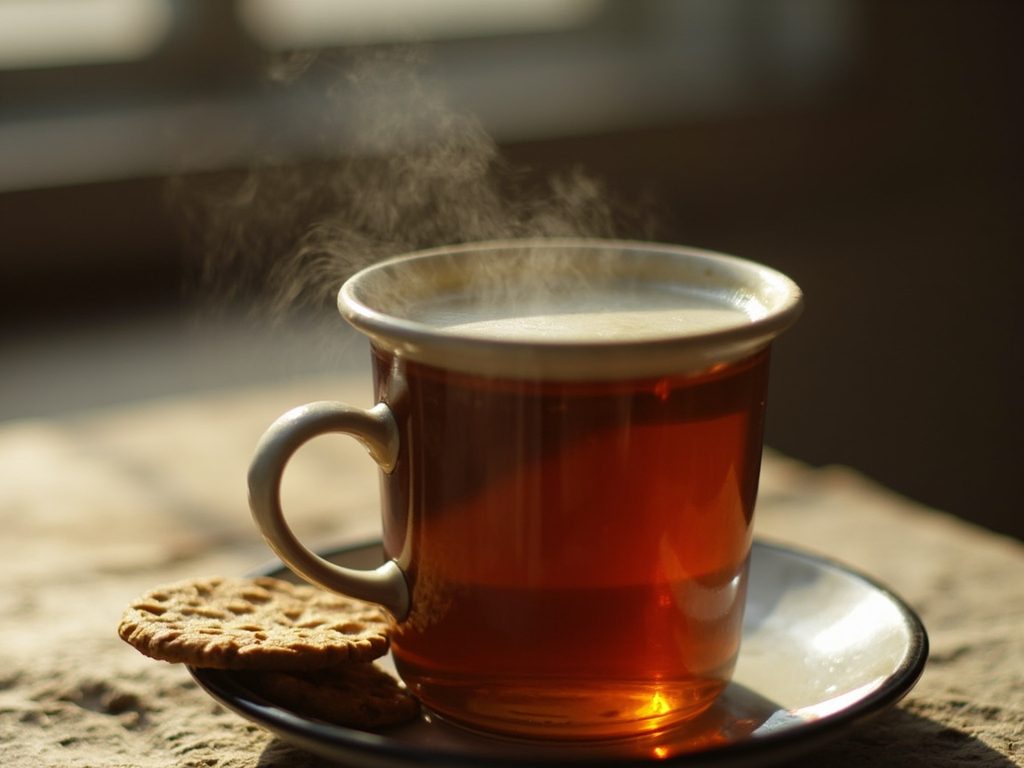
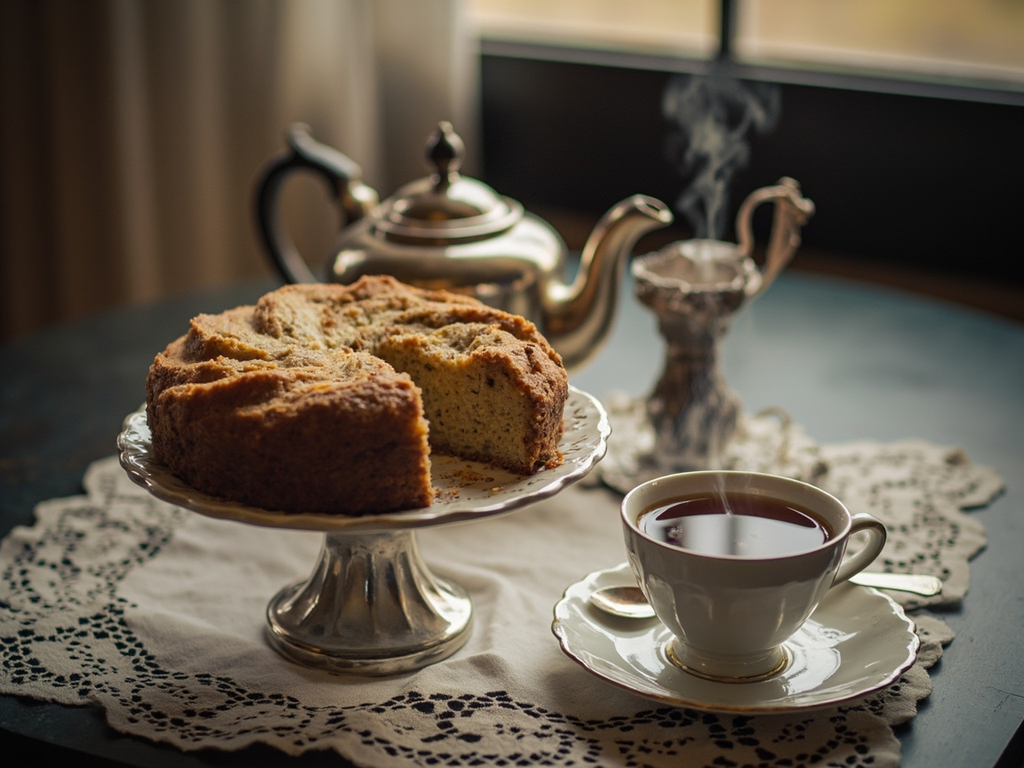
A strong black tea, served plain or with a splash of milk, accompanied by a seed cake — a pound cake perfumed with caraway seeds, dry and perfect for dunking, a classic of English drawing rooms and common rooms.
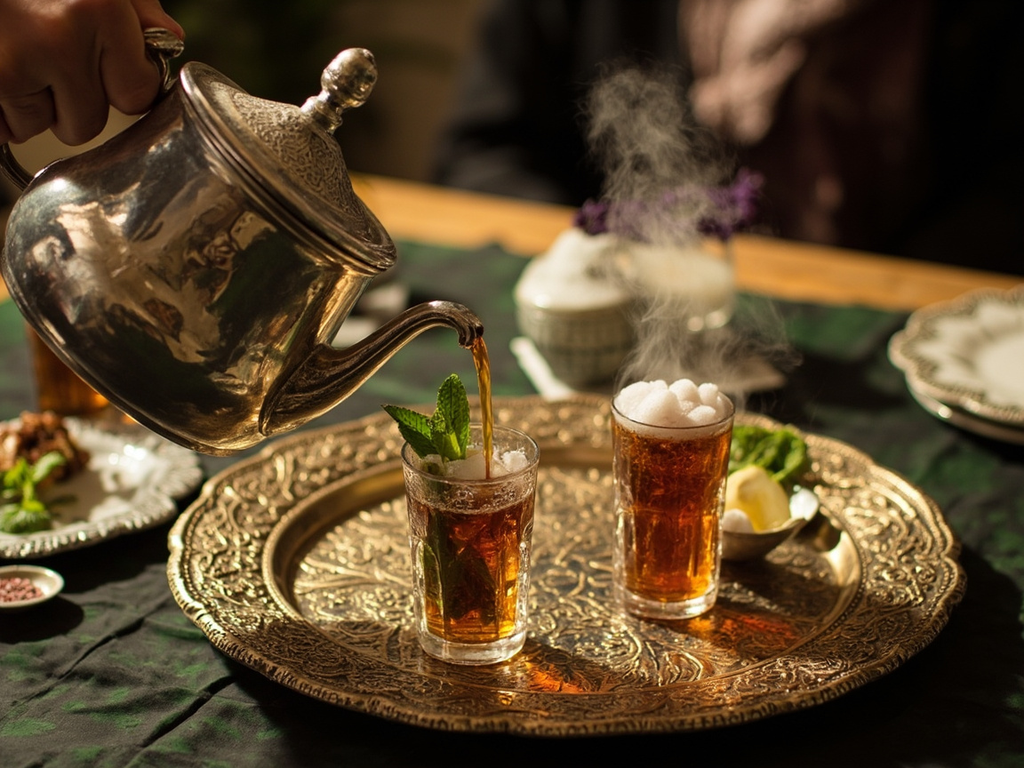
Four o'clock tea is, I maintain, the most civilized institution that England has produced — far more than its Parliament. It was there, teapot between us, that Littlewood and I solved more problems than at our desks: a good tea clears the mind like nothing else. Cut yourself a slice of this seed cake; the caraway will surprise you at first, then you will return to it; only be careful never to dunk it too long, lest it sink like a poorly supported proof.
- •Black tea (Assam or Ceylon) — one spoonful per cup (beverage)
- •Milk — a splash (softener)
- •Butter — equal weight to sugar (cake richness)
- •Sugar — equal weight (sweetener)
- •Flour — same weight (structure)
- •Eggs — a few (binder)
- •Caraway seeds — a spoonful (signature aroma)
Afternoon Tea and Caraway Seed Cake
A strong black tea, served plain or with a splash of milk, accompanied by a seed cake — a pound cake perfumed with caraway seeds, dry and perfect for dunking, a classic of English drawing rooms and common rooms.
Why this dish? Afternoon tea structured the day of every Cambridge don: it was around a teapot, among colleagues, that mathematics was discussed. Hardy took part daily, and it was in this climate of tea and conversation that his famous collaboration with Littlewood matured.
Four o'clock tea is, I maintain, the most civilized institution that England has produced — far more than its Parliament. It was there, teapot between us, that Littlewood and I solved more problems than at our desks: a good tea clears the mind like nothing else. Cut yourself a slice of this seed cake; the caraway will surprise you at first, then you will return to it; only be careful never to dunk it too long, lest it sink like a poorly supported proof.
Ingredients (period version)
- Black tea (Assam or Ceylon) — one spoonful per cup (beverage)
- Milk — a splash (softener)
- Butter — equal weight to sugar (cake richness)
- Sugar — equal weight (sweetener)
- Flour — same weight (structure)
- Eggs — a few (binder)
- Caraway seeds — a spoonful (signature aroma)
Ingredients
- Loose black tea — 1 tsp per cup + 1 for the pot (beverage)
- Milk (optional) — to taste (softener)
- Softened butter — 175 g (richness)
- Sugar — 175 g (sweetener)
- Self-raising flour — 175 g (structure)
- Eggs — 3 (binder)
- Caraway seeds — 2 tsp (signature aroma)
Method
- Preheat the oven to 170°C and line a loaf tin.
- Beat the softened butter and sugar until pale and creamy.
- Add the eggs one by one, then fold in the sifted flour and caraway seeds.
- Pour into the tin and bake for 45–55 minutes, until a skewer comes out clean.
- For the tea: scald the teapot, add the leaves, pour in just-boiled water, and steep for 3–5 minutes.
- Serve the steaming tea with a slice of seed cake.
How it was made : Afternoon tea is said to have been introduced around 1840 by Anna, Duchess of Bedford, to bridge the gap between lunch and a late dinner. Caraway seed cake is one of the oldest English tea cakes, mentioned as early as the 17th century and ubiquitous in university common rooms.
The contemporary twist : Glaze the cake with a thin lemon icing: the acidity awakens the caraway for palates that find it too demure.
Sources : Isabella Beeton, Book of Household Management, 1861 · C. P. Snow, preface to A Mathematician's Apology, 1967
G.H. Hardy · Charactorium