 flip
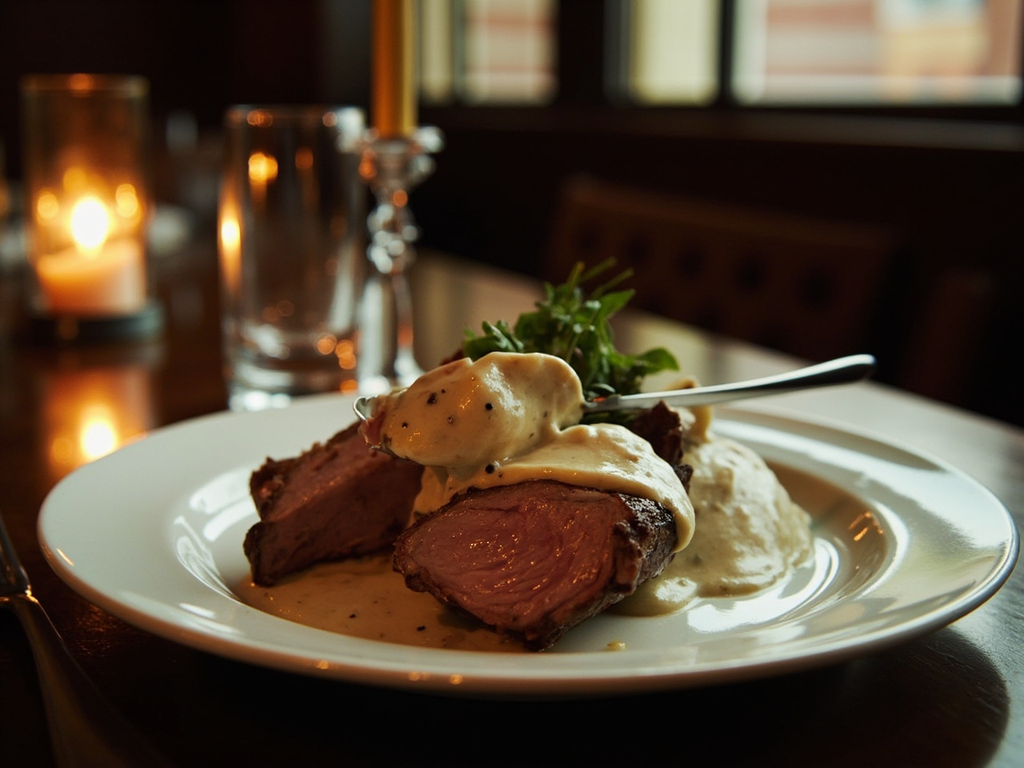
flipRoast Saddle of Mutton with Caper Sauce
Roast Saddle of Mutton with Caper Sauce
Why this dish? Night after night, in his gown on the Trinity dais, Hardy ate what the college kitchen served to all fellows: a roast of mutton, the quintessential Sunday and collegiate meat of Edwardian England. It was the daily fare of a bachelor who never kept his own kitchen.
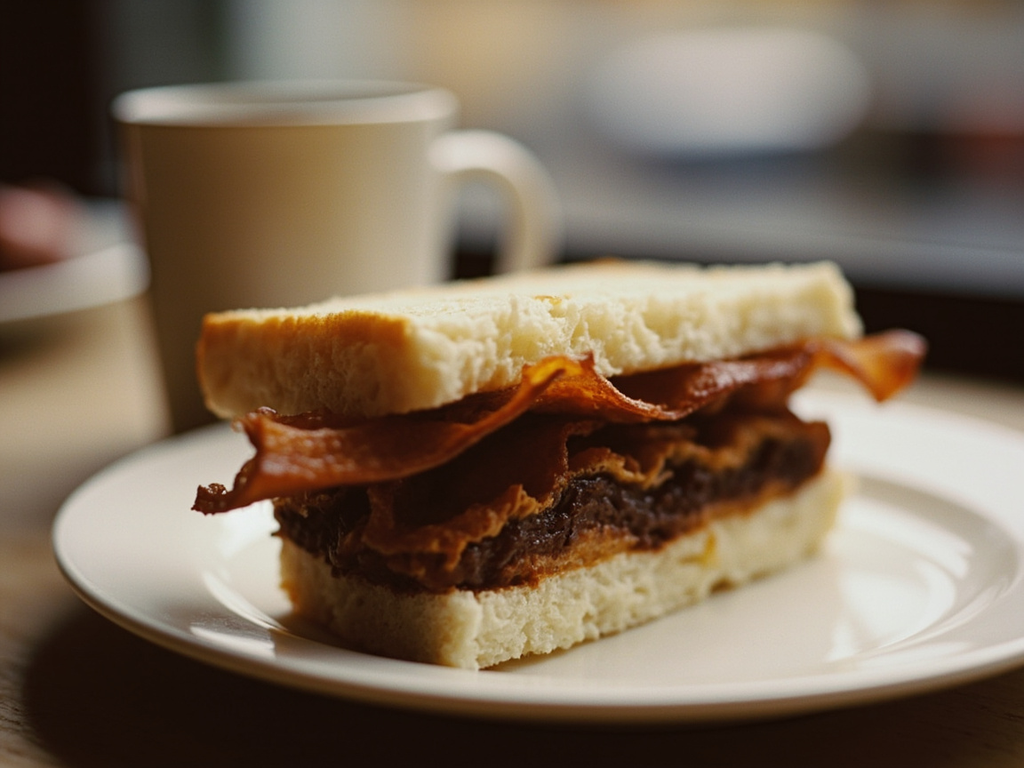
A piece of mutton roasted until the crust is golden and the interior pink, served with a white sauce enlivened by tangy capers — the classic English pairing with mutton, cutting through the fat.
You see, I have never in my life known how to boil an egg: a fellow of Trinity need not trouble himself with such details; the college kitchen handles them with a regularity I found almost mathematical. In the evening, under the gown, we were served this roast mutton, and the caper sauce relieved its blandness — I confess I never paid it more heed than to a proof already known. But let us agree: a man who spends his days on number theory needs an honest joint and a good cup of tea; the rest is superfluous.
- •Saddle or leg of mutton — a fine piece (meat)
- •Lard or dripping — a little (fat)
- •Butter — a knob (sauce binder)
- •Flour — a spoonful (thickener)
- •Mutton broth — a cup (sauce base)
- •Capers in vinegar — a good spoonful (acidity, signature)
- •Salt and pepper — to taste (seasoning)
Roast Saddle of Mutton with Caper Sauce
A piece of mutton roasted until the crust is golden and the interior pink, served with a white sauce enlivened by tangy capers — the classic English pairing with mutton, cutting through the fat.
Why this dish? Night after night, in his gown on the Trinity dais, Hardy ate what the college kitchen served to all fellows: a roast of mutton, the quintessential Sunday and collegiate meat of Edwardian England. It was the daily fare of a bachelor who never kept his own kitchen.
You see, I have never in my life known how to boil an egg: a fellow of Trinity need not trouble himself with such details; the college kitchen handles them with a regularity I found almost mathematical. In the evening, under the gown, we were served this roast mutton, and the caper sauce relieved its blandness — I confess I never paid it more heed than to a proof already known. But let us agree: a man who spends his days on number theory needs an honest joint and a good cup of tea; the rest is superfluous.
Ingredients (period version)
- Saddle or leg of mutton — a fine piece (meat)
- Lard or dripping — a little (fat)
- Butter — a knob (sauce binder)
- Flour — a spoonful (thickener)
- Mutton broth — a cup (sauce base)
- Capers in vinegar — a good spoonful (acidity, signature)
- Salt and pepper — to taste (seasoning)
Ingredients
- Leg or shoulder of lamb — 1.5 kg (meat)
- Oil or butter — 2 tbsp (fat)
- Butter — 30 g (roux)
- Flour — 30 g (roux)
- Broth (lamb or chicken) — 400 ml (sauce)
- Capers — 3 tbsp (acidity, signature)
- Lemon juice — a squeeze (acidity)
- Salt and pepper — to taste (seasoning)
Method
- Remove the meat from the fridge 1 hour before cooking, pat dry, and season generously with salt and pepper.
- Sear the meat on all sides in hot oil until browned.
- Roast in the oven at 190°C: allow about 20 minutes per 500g for pink meat. Rest for 15 minutes under foil.
- For the sauce: melt the butter, add the flour and cook for 1 minute, then gradually whisk in the hot broth until thickened.
- Off the heat, add the drained capers and a squeeze of lemon; adjust salt and pepper.
- Slice the mutton and spoon the caper sauce over it.
How it was made : At Cambridge colleges, roasts were cooked in large quantities on spits and then in the coal-fired ovens of the collegiate kitchens. Caper sauce traditionally accompanied boiled or roast mutton throughout Victorian and Edwardian England, codified by Mrs Beeton as early as 1861.
The contemporary twist : Replace part of the broth with a splash of white wine and scatter fresh dill over the top: the capers gain brightness without betraying the spirit of the High Table.
Sources : Isabella Beeton, Book of Household Management, 1861 · C. P. Snow, preface to A Mathematician's Apology, 1967
G.H. Hardy · Charactorium