 flip
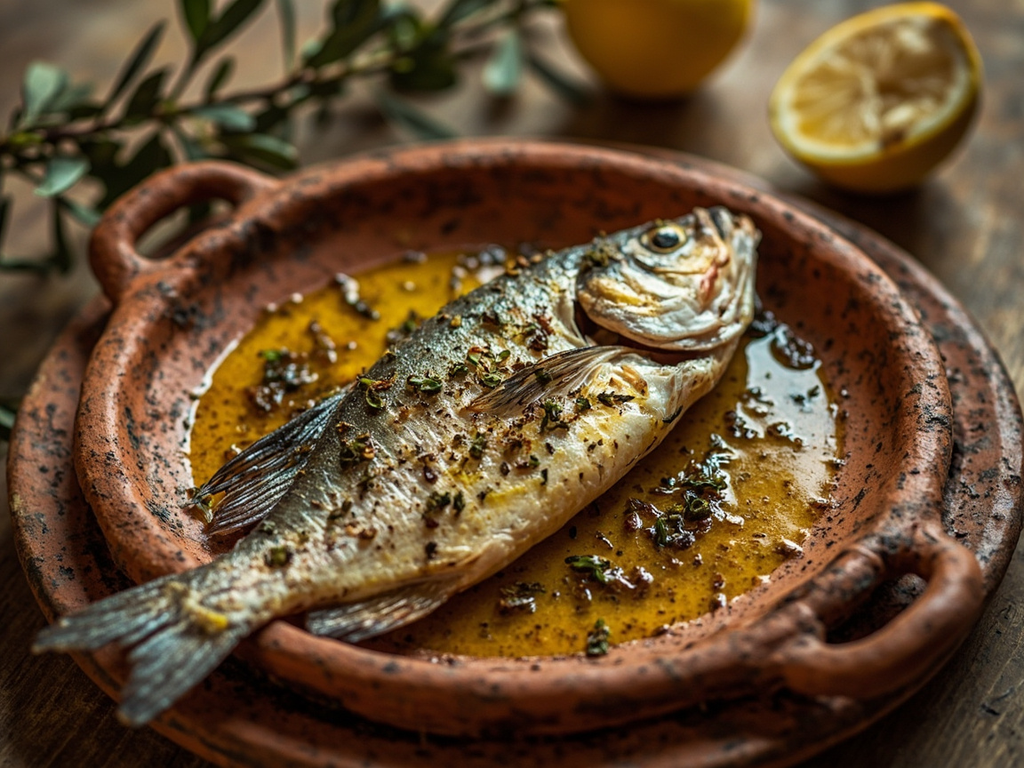
flipGrilled Sea Bream with Olive Oil, Oregano, and Sea Salt
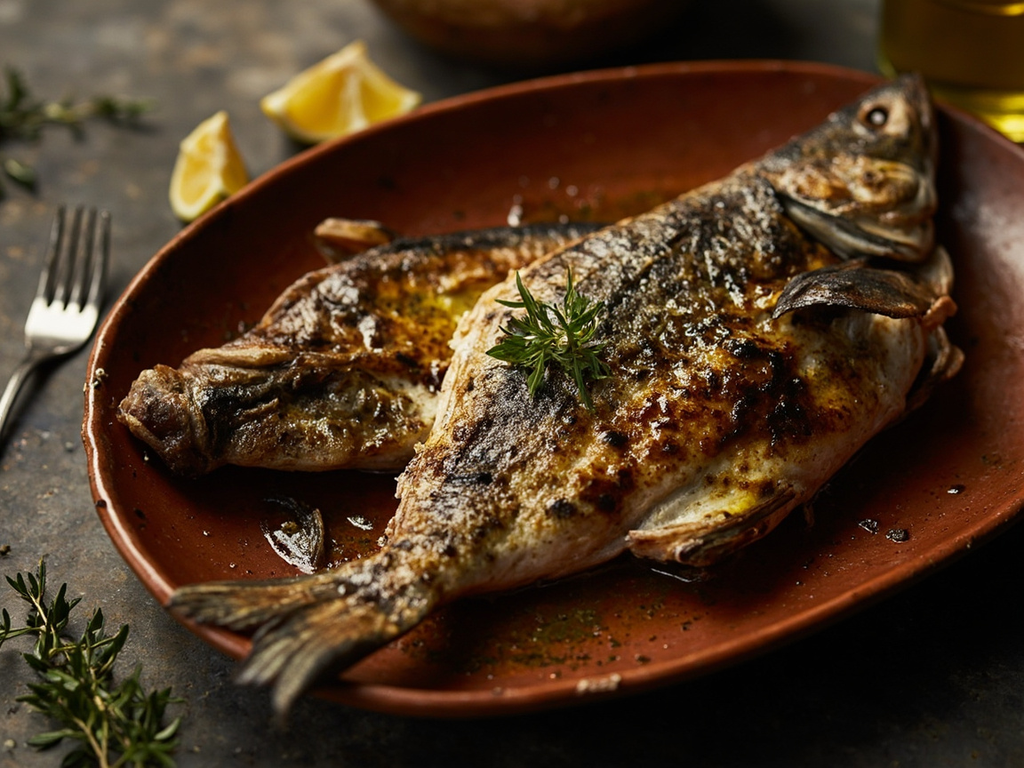
Grilled Sea Bream with Olive Oil, Oregano, and Sea Salt
Why this dish? Galatea is a daughter of the sea, and it is in Sicilian waters — those sung by the gastronome Archestratus of Gela — that her fish live. A beautiful fish simply grilled, as was done on the Sicilian coasts, is the banquet's tribute to the Nereid who rules the Mediterranean.
A whole rock fish, rubbed with olive oil and salt, grilled over embers, finished with oregano: Sicilian Greek cuisine held that good fish should not be masked, but respected.
You who feast on the shore, listen to the daughter of Nereus. Do not drown my fish in a thousand sauces as gluttons do: a fish caught in the morning is content with fire, a little oil, and the flower of oregano. Place it on the embers, turn it with a light hand, salt it with the salt the sea itself gives you. Serve it burning, open it, and as you eat, think that the sea that nourishes it is my domain.
- •Sea bream or whole rock fish — one fine fish (centerpiece)
- •Olive oil — a good drizzle (fat and binder)
- •Sea salt — to hand (seasoning)
- •Dried oregano — a generous pinch (signature Greek herb)
- •Wine vinegar (optional) — a few drops (brightness)
Grilled Sea Bream with Olive Oil, Oregano, and Sea Salt
A whole rock fish, rubbed with olive oil and salt, grilled over embers, finished with oregano: Sicilian Greek cuisine held that good fish should not be masked, but respected.
Why this dish? Galatea is a daughter of the sea, and it is in Sicilian waters — those sung by the gastronome Archestratus of Gela — that her fish live. A beautiful fish simply grilled, as was done on the Sicilian coasts, is the banquet's tribute to the Nereid who rules the Mediterranean.
You who feast on the shore, listen to the daughter of Nereus. Do not drown my fish in a thousand sauces as gluttons do: a fish caught in the morning is content with fire, a little oil, and the flower of oregano. Place it on the embers, turn it with a light hand, salt it with the salt the sea itself gives you. Serve it burning, open it, and as you eat, think that the sea that nourishes it is my domain.
Ingredients (period version)
- Sea bream or whole rock fish — one fine fish (centerpiece)
- Olive oil — a good drizzle (fat and binder)
- Sea salt — to hand (seasoning)
- Dried oregano — a generous pinch (signature Greek herb)
- Wine vinegar (optional) — a few drops (brightness)
Ingredients
- Whole royal sea bream, gutted and scaled — 1 (about 600 g) (centerpiece)
- Extra virgin olive oil — 3 tbsp (fat)
- Sea salt — 1 tsp (seasoning)
- Dried oregano — 1 tsp (herb)
- Lemon or wine vinegar — a few drops (acidity (lemon: modern touch))
Method
- Prepare a lively bed of embers or preheat a grill/very hot oven.
- Dry the fish, score the sides, rub with olive oil and salt inside and out.
- Grill 5 to 7 minutes per side depending on size, until the skin is golden and the flesh pearly.
- Sprinkle with oregano as soon as it comes off the fire and drizzle with olive oil.
- Serve whole, with a few drops of wine vinegar (or lemon, modern touch) and barley bread.
How it was made : In the 4th century BC, Archestratus of Gela, a Sicilian poet-gastronome, advocated a simple fish cuisine: grilling, salt, oil, herbs, without heavy sauces, so as not to mask freshness. Fish (*opson*) was a choice dish, often festive, accompanying the bread (*sitos*) that remained the meal's base. Oregano and sea salt were common Greek seasonings.
The contemporary twist : Plated on a large green leaf with a drizzle of olive oil and a lemon 'foam', echoing the sea foam from which Galatea emerges.
Sources : Archestratus of Gela, Hédypatheia (the 'Life of Luxury', fragments quoted by Athenaeus) · Athenaeus of Naucratis, Deipnosophists (fish and Sicilian cuisine)
Galatea · Charactorium