 flip
flipSteamed Coconut and Jaggery Modak (Ukadiche Modak)
Steamed Coconut and Jaggery Modak (Ukadiche Modak)
Why this dish? The modak is Ganesh's canonical offering: mythology tells of his immoderate love for this sweet dumpling, so much so that he is called Modakapriya, 'the one who loves modak.' During Ganesh Chaturthi, 21 are placed before his image.
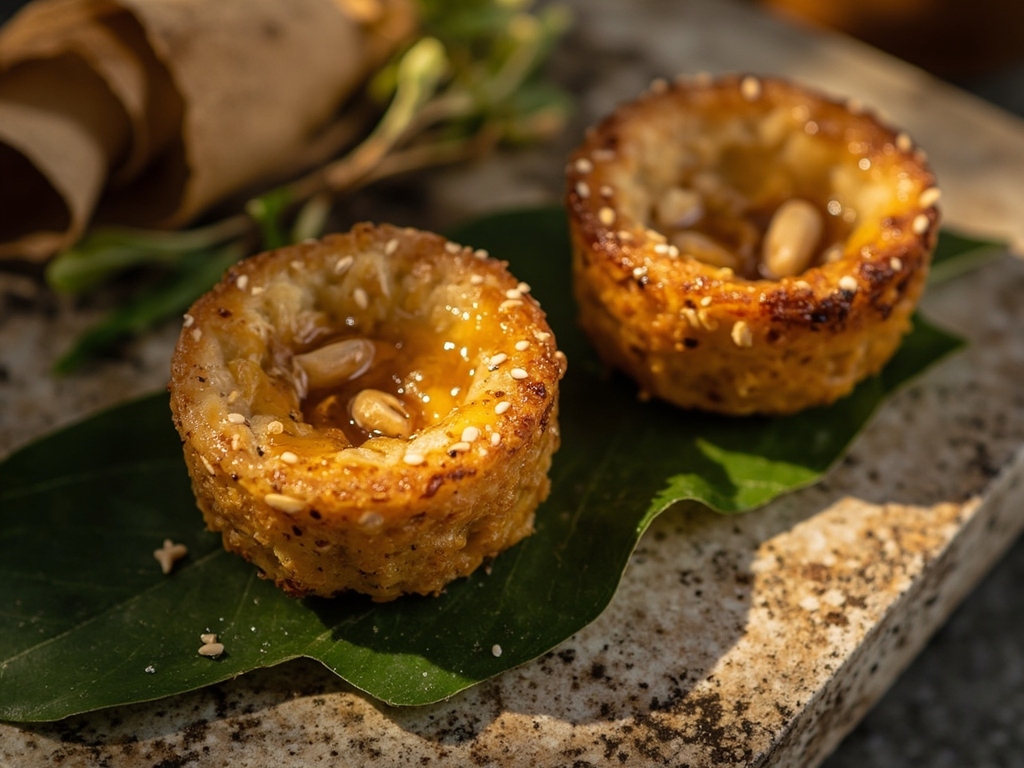
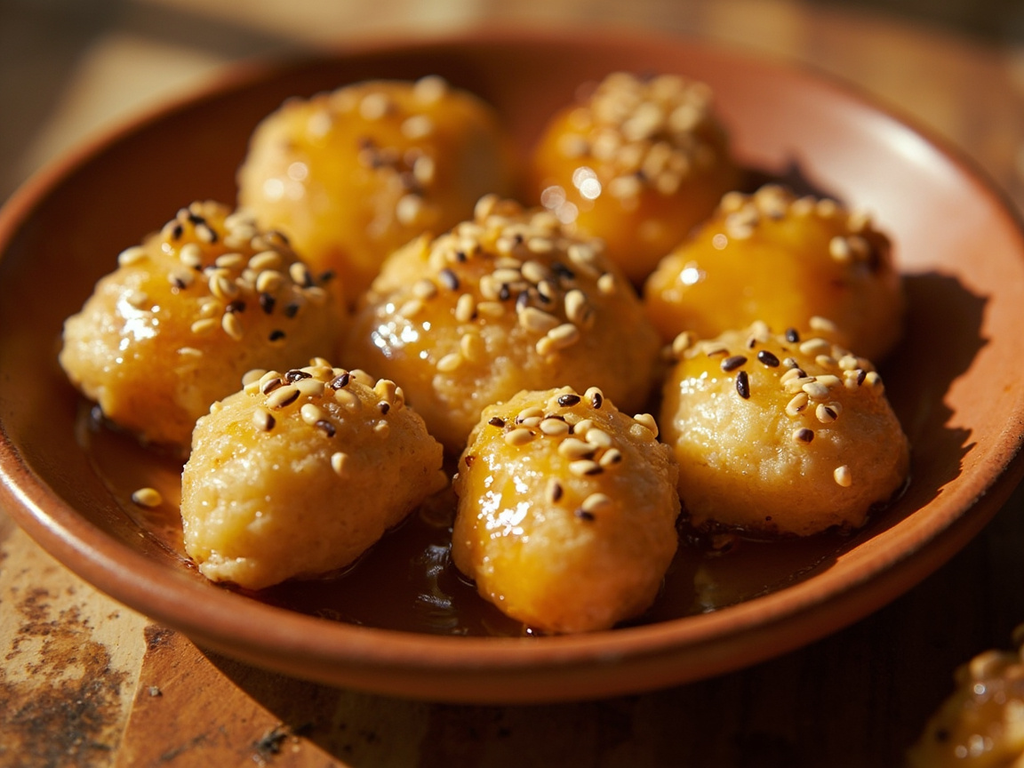
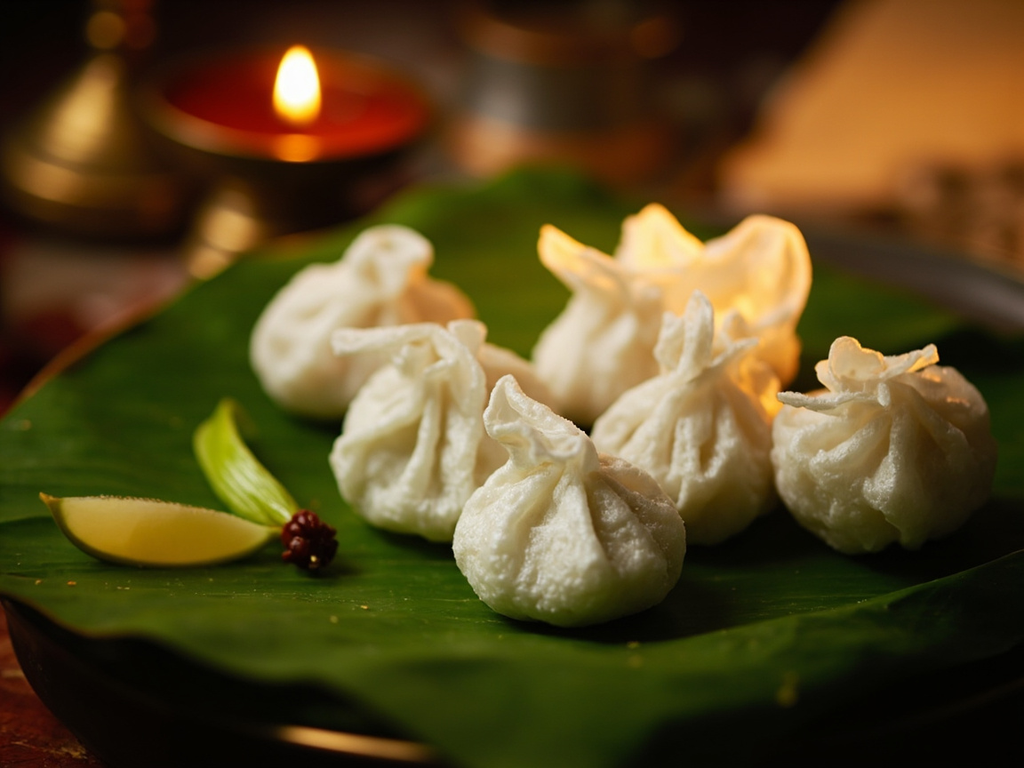
A delicate steamed rice-flour shell, white and translucent, pleated like a purse around a melting heart of grated coconut caramelized with cane sugar and scented with cardamom.
Come close, child, and fear nothing. Of all the sweets mortals lay at my feet, this is the one I love best — look at my round belly, it tells the truth! My mother Parvati kneaded the rice shell so finely that you could see the coconut heart through it, then closed it in thirteen folds like tying an offering. It is steamed, never fried: the pure must stay pure. Offer it first, then savor it, and may sweetness open all paths before you.
- •Freshly ground rice flour — one bowl (shell)
- •Fresh grated coconut — two handfuls (filling)
- •Jaggery (unrefined cane sugar) — equal parts with coconut (sweetener)
- •Green cardamom — a few crushed pods (flavoring)
- •Ghee — one spoonful (binder and shine)
Steamed Coconut and Jaggery Modak (Ukadiche Modak)
A delicate steamed rice-flour shell, white and translucent, pleated like a purse around a melting heart of grated coconut caramelized with cane sugar and scented with cardamom.
Why this dish? The modak is Ganesh's canonical offering: mythology tells of his immoderate love for this sweet dumpling, so much so that he is called Modakapriya, 'the one who loves modak.' During Ganesh Chaturthi, 21 are placed before his image.
Come close, child, and fear nothing. Of all the sweets mortals lay at my feet, this is the one I love best — look at my round belly, it tells the truth! My mother Parvati kneaded the rice shell so finely that you could see the coconut heart through it, then closed it in thirteen folds like tying an offering. It is steamed, never fried: the pure must stay pure. Offer it first, then savor it, and may sweetness open all paths before you.
Ingredients (period version)
- Freshly ground rice flour — one bowl (shell)
- Fresh grated coconut — two handfuls (filling)
- Jaggery (unrefined cane sugar) — equal parts with coconut (sweetener)
- Green cardamom — a few crushed pods (flavoring)
- Ghee — one spoonful (binder and shine)
Ingredients
- Rice flour — 150 g (shell)
- Grated coconut (fresh or rehydrated) — 150 g (filling)
- Grated jaggery (or whole cane sugar) — 120 g (sweetener)
- Green cardamom powder — 1/2 tsp (flavoring)
- Ghee — 1 tbsp + a little for hands (binder)
- Water — 200 ml (for dough)
- Pinch of salt — 1 pinch (balance)
Method
- Prepare the filling: gently melt coconut and jaggery in a pan until a soft, shiny mass forms, flavor with cardamom, let cool slightly.
- Bring water to a boil with ghee and salt, remove from heat and add rice flour all at once, stirring. Cover for 5 min.
- Knead the warm dough with ghee-greased hands until smooth and pliable.
- Form a small cup in your palm, fill with a spoonful of filling, then pinch the edges into regular pleats and close into a point like a purse.
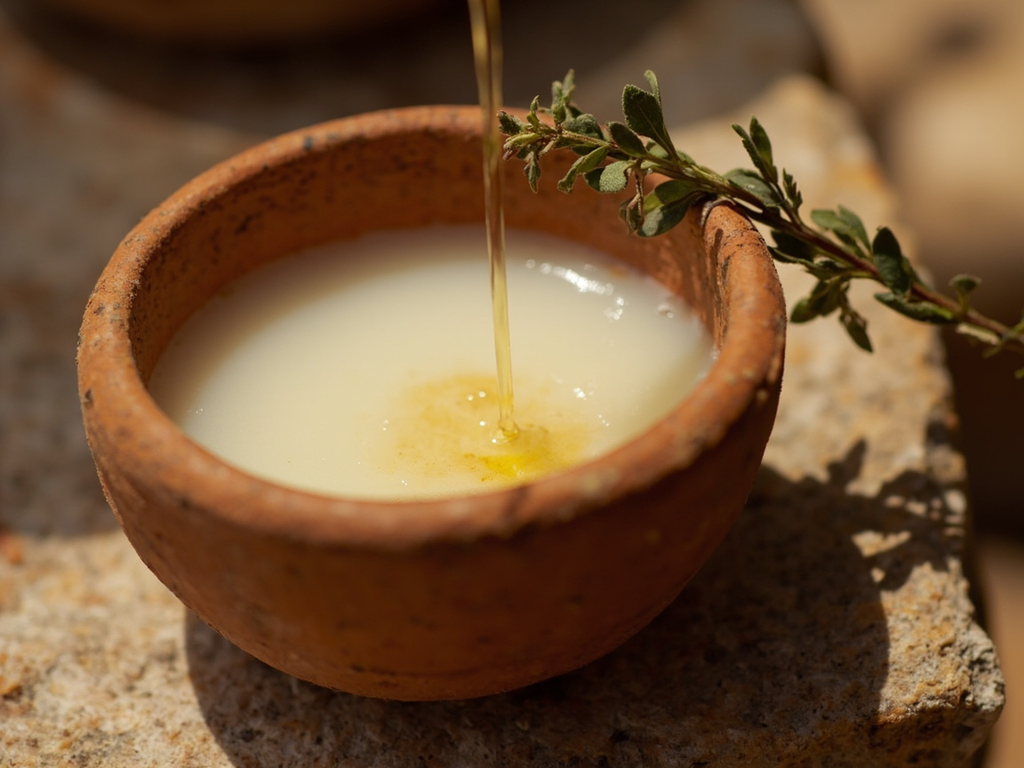
- Steam for 10–12 min on a cloth or leaves. Serve warm, drizzled with a little ghee.
How it was made : In ancient times, rice was ground on a stone mill the same day, and steaming was done over a pot of water covered with a cloth or banana leaves. Jaggery, obtained by reducing cane juice, was the only sweetener; refined white sugar did not exist.
The contemporary twist : For Ganesh Chaturthi, some pastry chefs in Pune gild their modak with edible gold leaf — the offering becomes a jewel.
Ganesh · Charactorium