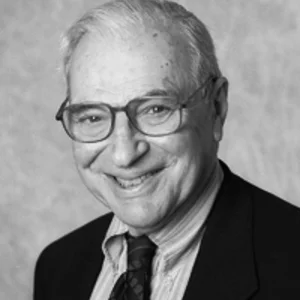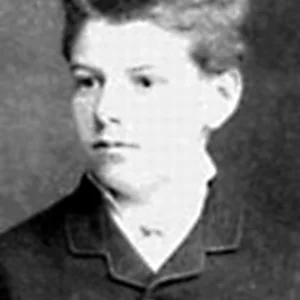

American economist of the Chicago school, winner of the Nobel Prize in Economics in 1992. He extended economic analysis to fields previously reserved for sociology, such as the family, education, crime, and discrimination.
Gary Becker
Gary Becker
6 min read
Frequently asked questions
Key Facts
- Born December 2, 1930, in Pottsville, Pennsylvania; died May 3, 2014, in Chicago
- Published 'The Economics of Discrimination' in 1957, his pioneering thesis on the economic analysis of discrimination
- Published 'Human Capital' in 1964, the founding work of human capital theory
- Received the Nobel Prize in Economics in 1992 for extending microeconomic analysis to human behavior
- Professor at the University of Chicago, a major figure of the Chicago school
Works & Achievements
Becker's first major book, which shows through the numbers that racial discrimination carries an economic cost for the person who practices it.
The founding work of the theory of “human capital”: education and training are investments that increase future productivity and income.
A famous article analyzing crime as a rational choice based on weighing costs, gains, and the risks of being punished.
A collection setting out his method: applying the logic of rational choice to all human behavior.
An economic analysis of marriage, divorce, and the number of children, viewed as rational decisions made by households.
An award honoring his entire body of work for having extended microeconomic analysis to human behavior and interactions.
Anecdotes
As a child, Gary Becker preferred sports to studying, until one of his brothers, who loved debate, gave him a taste for ideas. In high school, he still wavered between becoming a mathematician and devoting himself to great social causes: he would end up combining the two by applying mathematics to human problems.
Becker often told the story behind his most famous thesis: one day, pressed for time before a student exam, he had to decide whether it was better to park in a legal lot far away, or park illegally closer by and risk a fine. This personal calculation — cost, probability of getting caught, penalty — became the heart of his economic theory of crime.
When Becker began studying marriage, the family, and the number of children as “economic decisions,” many economists found the idea scandalous or ridiculous. For years, his work was sidelined; it was only decades later that it earned him the Nobel Prize in Economics in 1992.
His book on racial discrimination, published in 1957, showed with figures that discrimination is costly to the person who practices it, not only to its victim. In an era of segregation in the United States, this number-backed demonstration was both bold and unsettling.
For nearly twenty years, Becker wrote a monthly column in Business Week magazine, striving to explain his ideas to a broad audience without jargon. He believed that an economist should be able to talk about everyday life choices with anyone.
Primary Sources
Discrimination in the labor market reduces the real income not only of the minorities who suffer it, but also of those who practice it.
Spending on education, training, and medical care can be regarded as investments in human capital, because they improve people's future productivity.
A person commits an offense if the expected utility he derives from it exceeds the utility he could gain by devoting his time and resources to other activities.
My work has sought to extend the scope of economic analysis to areas of human behavior long reserved for sociology, psychology, and other disciplines.
Key Places
Small mining town where Gary Becker was born in 1930, into a Jewish family of modest origins.
Becker studied here and earned his first degree in 1951, before turning toward economics.
The heart of the “Chicago School,” where Becker wrote his thesis and then taught for most of his career. The birthplace of his most famous theories.
Becker taught here during the 1950s and 1960s before returning to Chicago for good.
The city where Becker lived, worked, and died in 2014, closely tied to his school of economic thought.
Typical Objects

The everyday tool of the economist-teacher, covered with equations and curves to model human choices. On it, Becker translated real-life behaviors into formulas.

Gold medal awarded to Becker in 1992 for extending economic analysis to human behavior. It crowned decades of work long considered marginal.

Becker tested his theories on numerical data concerning wages, education, or crime. Statistical analysis was at the heart of his scientific method.

His works such as Human Capital and A Treatise on the Family spread his ideas throughout the world. Writing was his main means of influence.

A monthly column where Becker explained the economics of everyday life to a broad audience. It illustrates his desire to make economic science accessible.
School Curriculum
Vocabulary & Tags
Key Vocabulary
Tags
Daily Life
Morning
Becker started early, often by reading the newspapers to spot behaviors in the news that could be analyzed economically. He would then head to his office at the University of Chicago to write and refine his models.
Afternoon
Afternoons were devoted to teaching and especially to the famous Chicago research workshop, where professors and students debated ongoing work fiercely. There Becker defended his ideas in intense intellectual discussions.
Evening
In the evening, he often kept working on his articles and books, or prepared his popular-audience columns. He also enjoyed exchanging ideas with his colleagues and economist friends such as Milton Friedman.
Food
Becker led the ordinary life of a twentieth-century American academic, with no particular diet. Meals on campus, working coffees, and dinners with family or colleagues set the rhythm of his days.
Clothing
He wore the classic university professor's outfit: a sober suit, shirt and tie, glasses. A discreet and serious appearance, far from any extravagance.
Housing
Becker lived in Chicago, near the university, in the comfort of a well-regarded professor. His true intellectual “home” remained his office and the campus seminar rooms.
Historical Timeline
Period Vocabulary
Liens externes & ressources
Références
Œuvres
The Economics of Discrimination
1957
Human Capital
1964
Crime and Punishment: An Economic Approach
1968
The Economic Approach to Human Behavior
1976
A Treatise on the Family
1981
Prix Nobel d'économie
1992