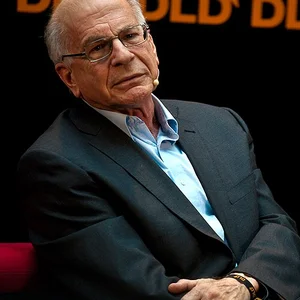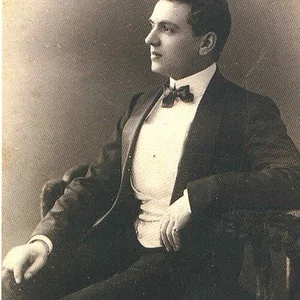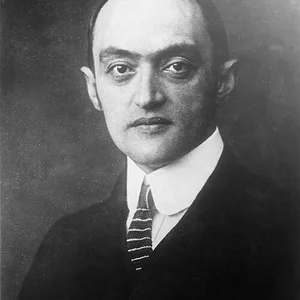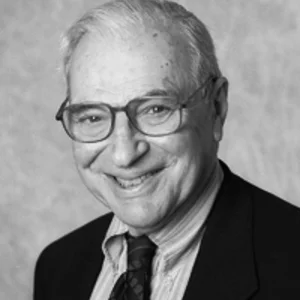

American economist, a major figure of 20th-century economics. The youngest-ever winner of the Nobel Prize in Economics (1972), he revolutionized social choice theory, welfare economics, and general equilibrium analysis.
Kenneth Arrow(1921 — 2017)
Kenneth Arrow
États-Unis
5 min read
Frequently asked questions
Key Facts
- Born in 1921 in New York, died in 2017 in Palo Alto, California
- States his “impossibility theorem” in 1951 in Social Choice and Individual Values
- Proves with Gérard Debreu in 1954 the existence of a competitive general equilibrium
- Receives the Nobel Prize in Economics in 1972 alongside John Hicks, at age 51 (youngest-ever winner)
- Pioneer of the economics of uncertainty and health economics (1963 article)
Works & Achievements
Proof that no voting method can perfectly aggregate individual preferences. Foundation of the modern theory of social choice.
Founding book in which Arrow lays out his theorem and creates an entire field at the frontier of economics and political science.
Mathematical proof of the existence of a general competitive equilibrium, a high point of 20th-century theoretical economics.
Pioneering article showing how uncertainty shapes the market for medical care. The birth certificate of health economics.
The idea that productivity rises with accumulated experience. A major influence on theories of economic growth.
A tool measuring how agents respond to risk, still central in finance and insurance.
An award crowning his contributions to the theory of general equilibrium and economic welfare.
Anecdotes
In 1972, Kenneth Arrow received the Nobel Prize in Economics at just 51 years old, becoming the youngest laureate in the history of the prize. He shared it with John Hicks for their work on general equilibrium and welfare theory.
During World War II, Arrow served as a meteorologist in the U.S. Army Air Forces. He discovered that the army's long-range forecasts were no better than chance, and his official memo pointing this out was, so the story goes, filed away and ignored by the bureaucracy.
His doctoral thesis contained his famous “impossibility theorem”: in it, Arrow proves mathematically that no voting system can turn individual preferences into a coherent collective choice while respecting a few common-sense rules. This result shook up political science as much as economics.
Arrow was renowned for his immense breadth of knowledge. A university legend tells that colleagues, hoping to catch him out, secretly studied an obscure subject (the breeding of gray whales) so they could discuss it in front of him — and that Arrow immediately proved every bit as expert on it as they were.
Five of his close collaborators or students also went on to win the Nobel Prize in Economics, making him the center of a true intellectual lineage, notably at Stanford University where he taught for many years.
Primary Sources
If we exclude the possibility of interpersonal comparisons of utility, then the only methods of passing from individual tastes to social preferences that are satisfactory and defined for a wide range of sets of individual preferences are either imposed or dictatorial.
The problem of social choice consists in passing from a set of known individual preference orderings to a social preference ordering.
We prove the existence of a competitive equilibrium for an economy in which agents maximize their satisfaction subject to a budget constraint.
The special characteristics of the medical-care market are largely explained as adaptations to the existence of uncertainty in the incidence of disease and in the efficacy of treatment.
Key Places
Arrow's native city, where he grew up during the Great Depression and studied at City College.
Where Arrow earned his doctorate and wrote his groundbreaking dissertation on social choice.
The California institution where he spent most of his career and trained several future Nobel laureates.
Where Arrow taught from 1968 to 1979, at the height of his international fame.
A research center that gathered the elite of mathematical economics and where Arrow got his start.
The California city where Arrow lived near Stanford and where he died in 2017.
Liens externes & ressources
Références
Œuvres
Théorème d'impossibilité d'Arrow
1951
Social Choice and Individual Values
1951
Modèle Arrow-Debreu
1954
Travaux sur l'économie de la santé
1963
Théorie de l'apprentissage par la pratique (learning by doing)
1962
Travaux sur l'aversion au risque (mesure Arrow-Pratt)
1965
Prix Nobel d'économie
1972