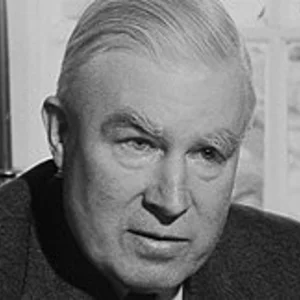

Finnish philosopher (1916–2003), successor to Wittgenstein at Cambridge, and founder of deontic logic. He made decisive contributions to analytic philosophy, the philosophy of action, and formal ethics.
Georg Henrik von Wright(1916 — 2003)
Georg Henrik von Wright
Finlande, grand-duché de Finlande
8 min read
Frequently asked questions
Famous Quotes
« Deontic logic is the logic of norms and obligations.»
« To understand an action is to grasp its intention.»
Key Facts
- Born on June 14, 1916, in Helsinki, Finland
- Succeeded Ludwig Wittgenstein in the Chair of Philosophy at Cambridge in 1948
- Founded deontic logic in 1951 with his article 'Deontic Logic'
- Published *Norm and Action* in 1963, a landmark work in the philosophy of norms
- Died on June 16, 2003, in Helsinki
Works & Achievements
An article published in the journal Mind, widely regarded as the founding act of deontic logic. Von Wright introduces a formal calculus of norms (obligations, permissions, prohibitions), opening up an entire field within logic and the philosophy of law.
A work that systematizes and compares the main systems of modal logic. Von Wright explores the modalities of necessity and possibility, laying formal foundations that would lastingly influence logicians and philosophers alike.
A major work in which von Wright develops a comprehensive logical theory of norms and human action. He carefully distinguishes between different types of norms and analyzes their logical structure, bridging moral philosophy and formal reasoning.
A philosophical analysis of the different meanings of the concept of "goodness" (moral good, instrumental good, hedonic good, medicinal good, and more). Von Wright reveals the richness and complexity of ethical vocabulary.
Von Wright brings two great methodological traditions into dialogue: the causal explanation of the natural sciences and the intentional understanding of the human sciences. This work remains a key reference in the philosophy of social science.
A reflection on free will and determinism in the light of logic and the philosophy of action. Von Wright articulates causality, intention, and freedom within a rigorously analytical framework.
A collection of essays in which von Wright, late in his career, questions the limits of scientific and technological progress. He expresses a pessimistic view of instrumental reason's capacity to guide humanity wisely.
Anecdotes
In 1948, Ludwig Wittgenstein, one of the greatest philosophers of the twentieth century, personally chose von Wright as his successor to the chair of philosophy at Cambridge. Von Wright was only 32 years old. The choice stunned the academic world: Wittgenstein, renowned for his extreme standards, almost never acknowledged his peers as equals.
Von Wright was one of Wittgenstein's three literary executors after his death in 1951. He devoted years to deciphering, organizing, and editing the thousands of handwritten pages left by his mentor, enabling the posthumous publication of major works such as the Philosophical Investigations. Without him, a large part of Wittgenstein's thought would have remained inaccessible.
In 1951, von Wright published a short article titled 'Deontic Logic' in the journal Mind. By introducing a formal calculus for reasoning about obligations, permissions, and prohibitions, he established an entirely new logical field from scratch. This text, written in a matter of weeks, is now one of the most cited philosophical articles of the twentieth century.
Unlike many analytic philosophers of his era, von Wright spent his later decades questioning the dangers of technical rationality and blind progress. In Truth and Human Knowledge (1993), he warned that Western civilization was heading toward its own ruin if it failed to reconcile scientific reason with ethical wisdom — a stance that surprised some of his colleagues.
Von Wright maintained a deep and lasting friendship with Wittgenstein, despite the 27-year age difference between them. Their correspondence and walks together in Cambridge were legendary in philosophical circles. After Wittgenstein's death, von Wright wrote his intellectual biography, which remains an indispensable reference for understanding the man as much as the thinker.
Primary Sources
It is the purpose of this paper to sketch an outline of a logic of norms… We shall use the letter O as a symbol for the operator 'it ought to be the case that', and P for 'it is permitted that'.
The present essay is an attempt to give a systematic account of the most important systems of modal logic and to examine their mutual relations.
Norms are not true or false. They are not descriptions of fact, but prescriptions, evaluations, or expressions of will… A logic of norms is therefore not a logic of truth, but a logic of validity.
There are two main traditions in the methodology of the sciences… One is connected with Galileo… The other tradition is connected with Aristotle… Understanding, in this second sense, is linked with intentionality and teleology.
The Enlightenment idea that science leads mankind to liberation and happiness has been shattered by the experience of the twentieth century. We must ask ourselves whether reason, as the West has practised it, has not become a threat to humanity itself.
Key Places
Von Wright's birthplace and final home. He studied there, taught at the university his entire career, and died there in 2003. Helsinki remained the center of his intellectual and personal life.
It was at Cambridge that von Wright met Wittgenstein in 1941, and where he succeeded him as Professor of Philosophy in 1948. He held the position for several years before returning to Finland.
Von Wright served as a visiting professor at Cornell on several occasions from the 1960s onward, including in 1965. Cornell helped bring his work on deontic logic and the philosophy of action to the attention of the American academic world.
Although von Wright was not a member of the Vienna Circle, he was deeply influenced by its ideas — logical positivism, verificationism. Vienna represents the intellectual crucible from which the analytic philosophy he practised throughout his life emerged.
Typical Objects

A daily tool for every academic of the twentieth century, von Wright typed his hundreds of articles, letters, and manuscripts on a typewriter. In Cambridge as in Helsinki, the typewriter symbolized rigorous and methodical intellectual work.

Symbolic logic demands precise notation systems: von Wright filled sheets with formulas using the deontic operators O (obligation), P (permission), F (prohibition) that he himself had introduced into the philosophical literature.

As Wittgenstein's literary executor, von Wright preserved and edited thousands of manuscript pages left behind by his mentor. These sheets, often enigmatic, occupied a significant part of his scholarly life.

The leading journals of analytic philosophy were the natural venue for von Wright's publications and reading. It was in Mind that he published 'Deontic Logic' in 1951, a founding text for an entire discipline.

Like many of his philosopher contemporaries (Russell, Wittgenstein), von Wright smoked a pipe during his sessions of reflection and academic conversations. This slow, ritual gesture accompanied deep thinking.

Wittgenstein himself frequently used the chess metaphor to illustrate his conceptions of language. In the Cambridge circles of the 1940s, the chessboard was as much an object of philosophical conversation as of leisure.
School Curriculum
Vocabulary & Tags
Key Vocabulary
Daily Life
Morning
Von Wright began his day early, in the quiet of his Helsinki study or his Cambridge rooms. He read academic correspondence and philosophy journals before turning to writing, preferring to work on logic and philosophy during the hours when the mind is sharpest.
Afternoon
Afternoons were devoted to university seminars, discussions with students and colleagues, and reviewing manuscripts. At Cambridge, he took long walks with Wittgenstein, during which the two men debated philosophy with legendary intensity.
Evening
In the evenings, von Wright often gathered with a small circle of philosopher colleagues for informal conversation. He also read literature and had a keen interest in music, maintaining a rich cultural life that fed his ethical thinking on the human condition.
Food
Like most Finnish and British academics of the era, von Wright kept a simple, unpretentious diet: rye bread, fish, and cold meats in Finland; sandwiches, hot tea, and college hall meals in Cambridge. Mealtimes were occasions for intellectual conversation as much as for sustenance.
Clothing
Von Wright dressed with the understated elegance typical of a European university professor in the 1940s–1970s: dark or grey suit, white shirt, and a restrained tie. At Cambridge, he would sometimes don academic robes for official ceremonies.
Housing
In Helsinki, von Wright lived in a well-appointed bourgeois apartment with an imposing library. At Cambridge, he occupied the rooms made available to Trinity College fellows, with views over the university's historic courts — a setting at once austere and prestigious.
Historical Timeline
Period Vocabulary
Liens externes & ressources
Références
Œuvres
Deontic Logic
1951
An Essay in Modal Logic
1951
Norm and Action: A Logical Enquiry
1963
The Varieties of Goodness
1963
Explanation and Understanding
1971
Freedom and Determination
1980
The Tree of Knowledge and Other Essays
1993