 flip
flipBlack Tea with Milk
Black Tea with Milk
Why this dish? Tea accompanies Boole's very routine, where it features among his habits: a temperance drink par excellence, it suits a pious and sober man, and structures the family 'tea' at the end of the day.
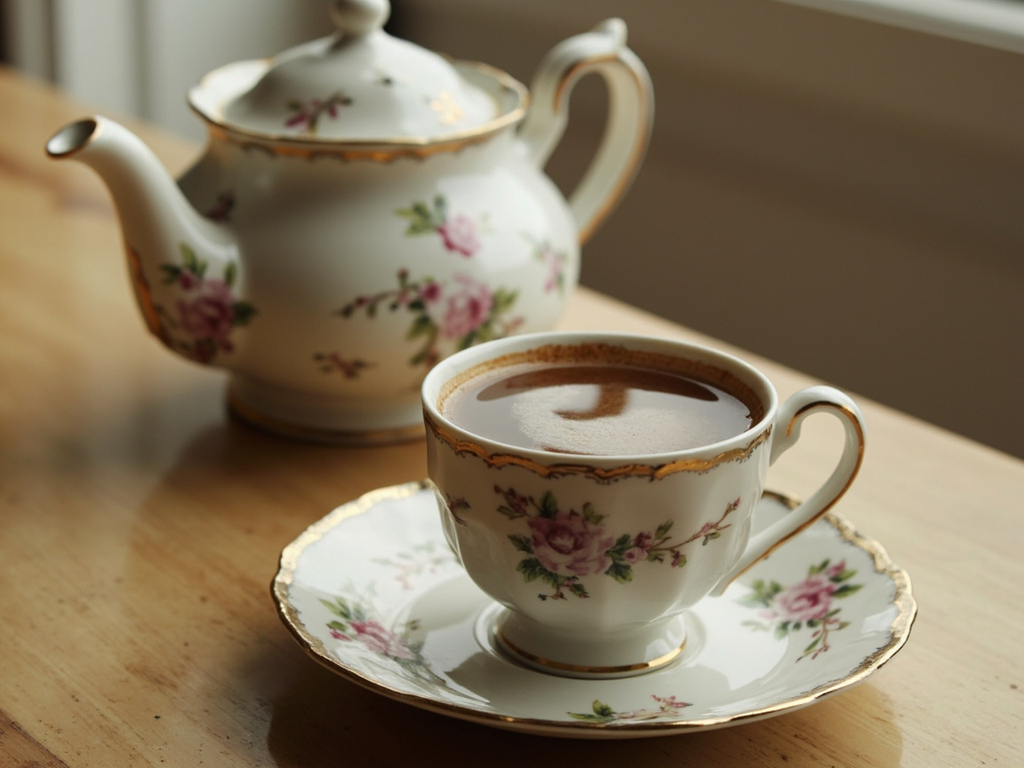
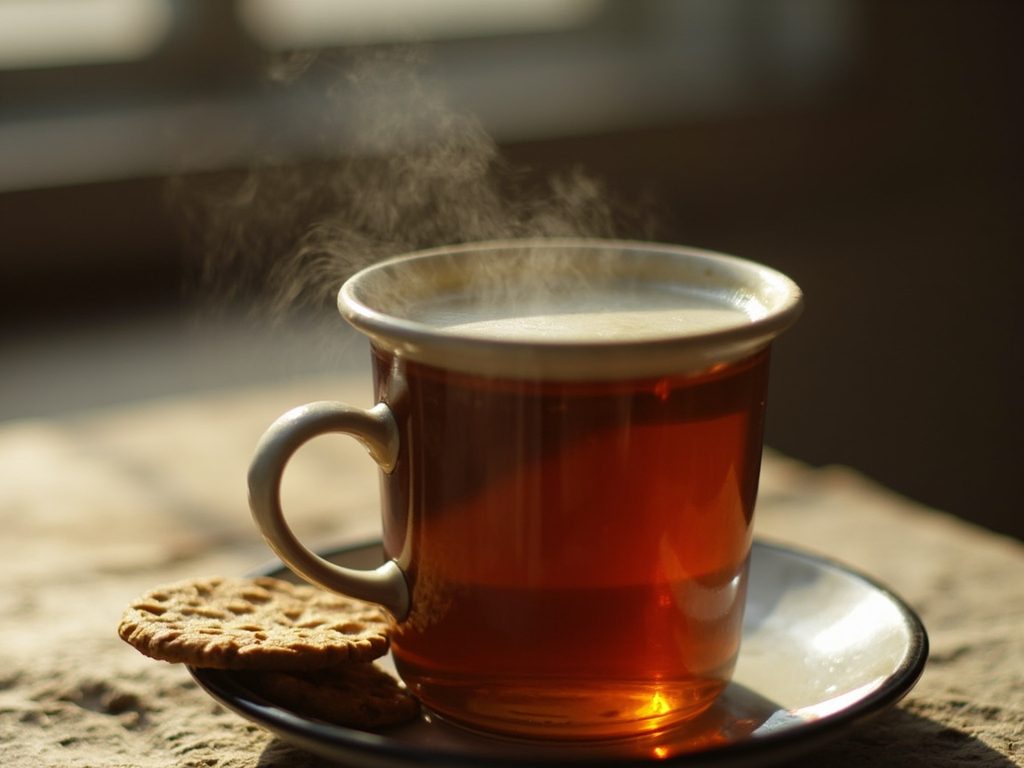
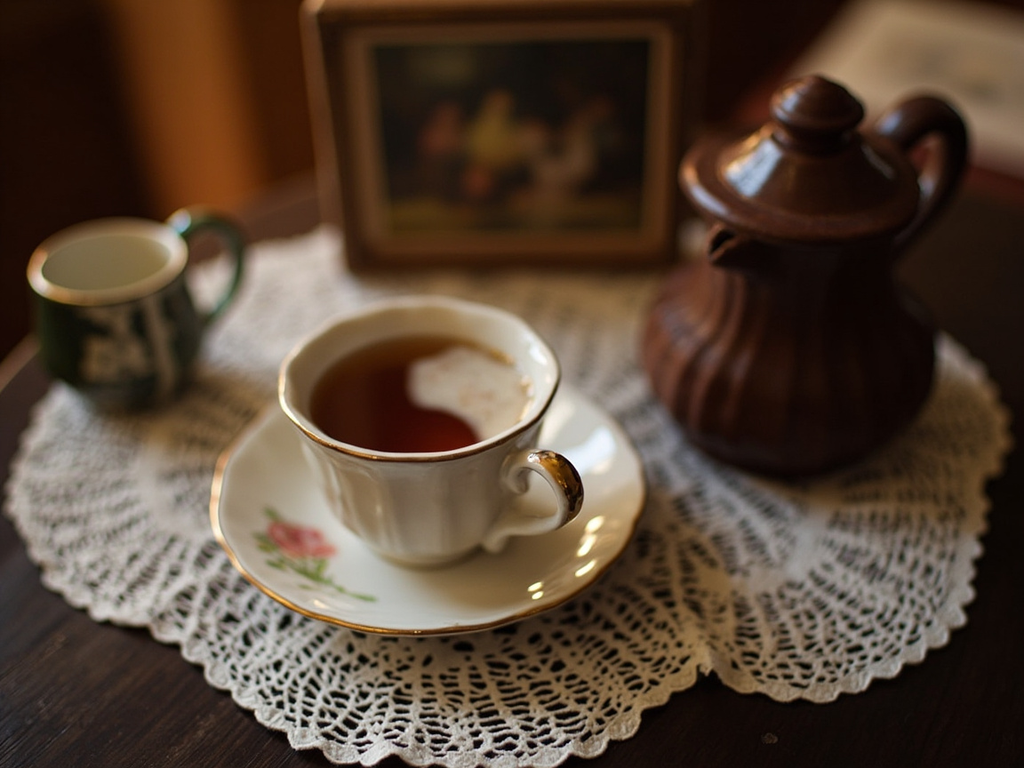
Strong black tea, brewed in a scalded teapot, served very hot, cut with milk and, if desired, barely sweetened. The universal drink of the Victorian table, around which evening conversations and readings took place.
First of all, scald the teapot: tea served in a cold pot is already half spoiled. Allow one spoonful of leaves per cup and one for the pot, pour the water at the first boil — not boiled beyond measure — and let it steep for the time of a short reflection. I add a cloud of milk, very little sugar, for tea should clear the mind and not weigh it down. It is, I believe, the most civilised of drinks, and the one that best suits a house of work and temperance.
- •Black tea leaves (India or China) — one spoonful per cup plus one for the pot (infusion)
- •Freshly boiled water — according to number of cups (infusion)
- •Milk — a splash per cup (soften)
- •Sugar — to taste (sweetness, optional)
Black Tea with Milk
Strong black tea, brewed in a scalded teapot, served very hot, cut with milk and, if desired, barely sweetened. The universal drink of the Victorian table, around which evening conversations and readings took place.
Why this dish? Tea accompanies Boole's very routine, where it features among his habits: a temperance drink par excellence, it suits a pious and sober man, and structures the family 'tea' at the end of the day.
First of all, scald the teapot: tea served in a cold pot is already half spoiled. Allow one spoonful of leaves per cup and one for the pot, pour the water at the first boil — not boiled beyond measure — and let it steep for the time of a short reflection. I add a cloud of milk, very little sugar, for tea should clear the mind and not weigh it down. It is, I believe, the most civilised of drinks, and the one that best suits a house of work and temperance.
Ingredients (period version)
- Black tea leaves (India or China) — one spoonful per cup plus one for the pot (infusion)
- Freshly boiled water — according to number of cups (infusion)
- Milk — a splash per cup (soften)
- Sugar — to taste (sweetness, optional)
Ingredients
- Loose black tea (Assam, Ceylon, or English Breakfast) — 1 tsp per cup + 1 for the pot (infusion)
- Freshly boiled filtered water — 200 ml per cup (infusion)
- Whole milk — a splash per cup (soften)
- Sugar — optional, to taste (sweetness)
Method
- Heat water and, as soon as it simmers, pour a little into the teapot to scald it, then discard.
- Place the leaves in the warm teapot.
- Pour the just-boiled water over the leaves and cover.
- Steep for 3–5 minutes depending on desired strength.
- Pour through a strainer, add a splash of milk, and sugar if desired.
How it was made : In the 19th century, tea became the popular drink of all British and Irish classes, supported by temperance movements that opposed it to alcohol. The order of milk and tea was already debated — as it is today. Water came from the kettle on the fire, and the warm teapot was jealously kept near the hearth.
The contemporary twist : Serve it as a 'true or false' service: two cups, one milk-first, the other tea-first, to have guests guess — a logical wink and a homage to the famous Lady Tasting Tea test.
Sources : Isabella Beeton, The Book of Household Management, 1861
George Boole · Charactorium