 flip
flipHoney Sanciau
Honey Sanciau
Why this dish? The sanciau, a thick peasant crêpe from the Berry, marked feast days and Sundays in the countryside that Sand knew intimately and depicted in her pastoral novels such as *La Mare au diable*.
A thick, soft crêpe, halfway between a galette and a pancake, made with wheat and buckwheat flour, golden in the pan and drizzled with honey. A rustic treat that delighted young and old during village festivities.
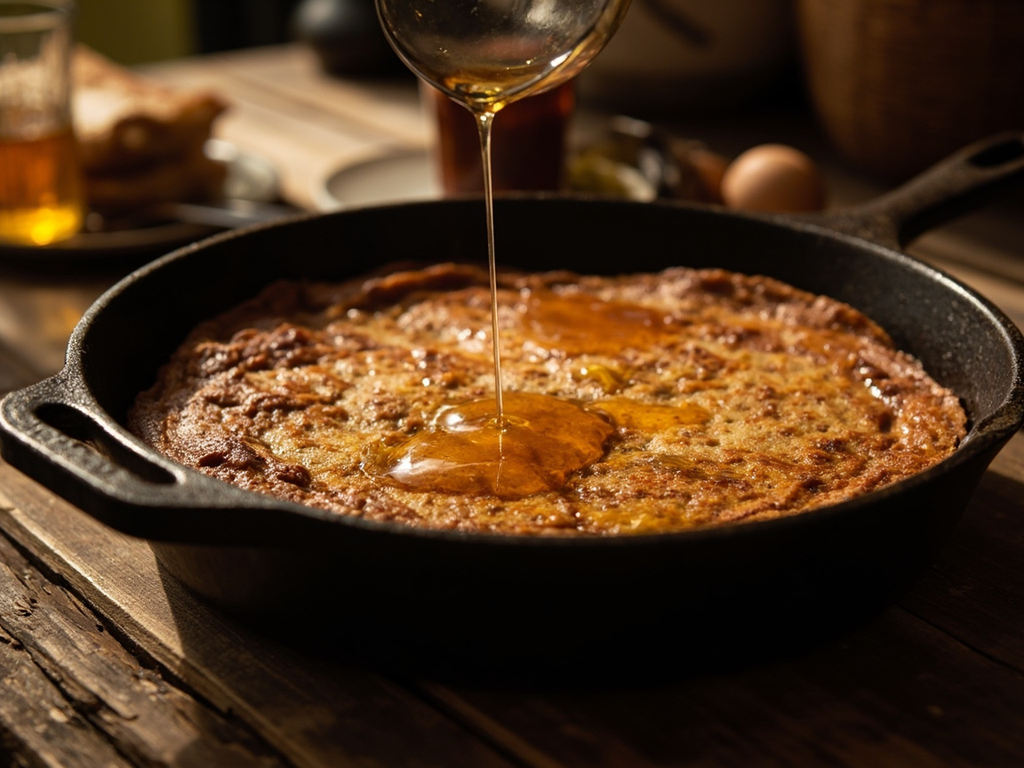
When the festival was in full swing in the village, or a lazy Sunday was upon us, you could hear the sanciau sizzling in the big cast-iron skillet. I like it thick, almost like a cake, barely sweetened in the batter, because it is the honey from the estate's hives that should sing on top. Flip it with a bold gesture, without hesitation, and let it take a nice brown bread color. My grandchildren always asked for a second piece, and I never knew how to refuse them.
- •Wheat flour — two handfuls (base of the batter)
- •Buckwheat flour — a handful (rustic flavor)
- •Eggs — a few (binder and softness)
- •Milk — as needed (liquid)
- •Honey from the hives — as much as you like (topping)
- •Butter — a knob (cooking)
Honey Sanciau
A thick, soft crêpe, halfway between a galette and a pancake, made with wheat and buckwheat flour, golden in the pan and drizzled with honey. A rustic treat that delighted young and old during village festivities.
Why this dish? The sanciau, a thick peasant crêpe from the Berry, marked feast days and Sundays in the countryside that Sand knew intimately and depicted in her pastoral novels such as *La Mare au diable*.
When the festival was in full swing in the village, or a lazy Sunday was upon us, you could hear the sanciau sizzling in the big cast-iron skillet. I like it thick, almost like a cake, barely sweetened in the batter, because it is the honey from the estate's hives that should sing on top. Flip it with a bold gesture, without hesitation, and let it take a nice brown bread color. My grandchildren always asked for a second piece, and I never knew how to refuse them.
Ingredients (period version)
- Wheat flour — two handfuls (base of the batter)
- Buckwheat flour — a handful (rustic flavor)
- Eggs — a few (binder and softness)
- Milk — as needed (liquid)
- Honey from the hives — as much as you like (topping)
- Butter — a knob (cooking)
Ingredients
- Wheat flour — 150 g (base of the batter)
- Buckwheat flour — 75 g (rustic flavor)
- Eggs — 2 (binder and softness)
- Milk — 30 cl (liquid)
- Sugar — 1 tablespoon (light sweetness in the batter)
- Honey — 4 tablespoons (topping)
- Butter — 30 g (cooking)
Method
- Mix the two flours, sugar, and a pinch of salt, then incorporate the eggs.
- Gradually add the milk to obtain a thick, smooth batter, denser than crêpe batter; let rest for 30 minutes.
- Melt a knob of butter in a skillet and pour in a generous ladleful of batter to a thickness of 1 cm.
- Cook over medium heat until bubbles form, flip, and brown the other side.
- Serve hot, drizzled with warm honey.
How it was made : The sanciau (also called sanciot or matefaim in other regions) was made with whatever flours were available on the farm, often mixed with cheap buckwheat. Without refined sugar in modest households, it was sweetened with honey or eaten plain, even savory depending on the day.
The contemporary twist : Serve it folded in four with a spoonful of farmhouse fromage blanc and a drizzle of chestnut honey, christened "sanciau de Nohant."
George Sand · Charactorium