 flip
flipVendée Sunday Gâche
Vendée Sunday Gâche
Why this dish? In Clemenceau's Vendée, the gâche — a dense brioche flavored with crème fraîche — crowned celebrations: Easter, weddings, first communions. Reserved for great days, it marked the break from daily black bread. The memory of Sundays in Mouilleron-en-Pareds.
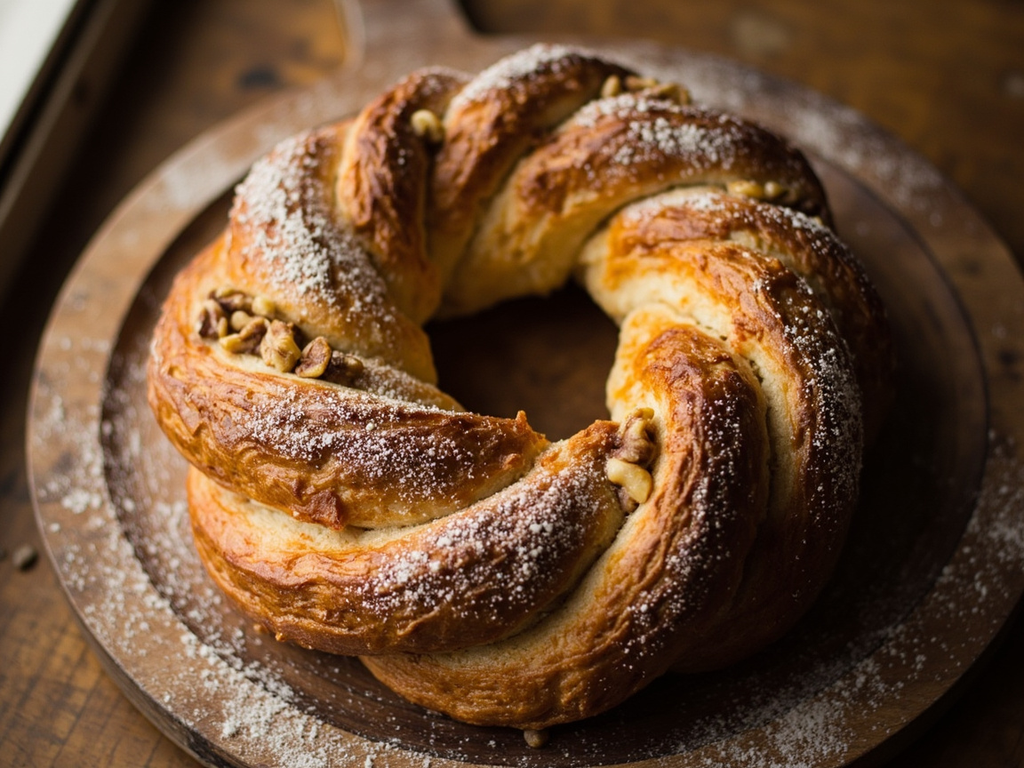
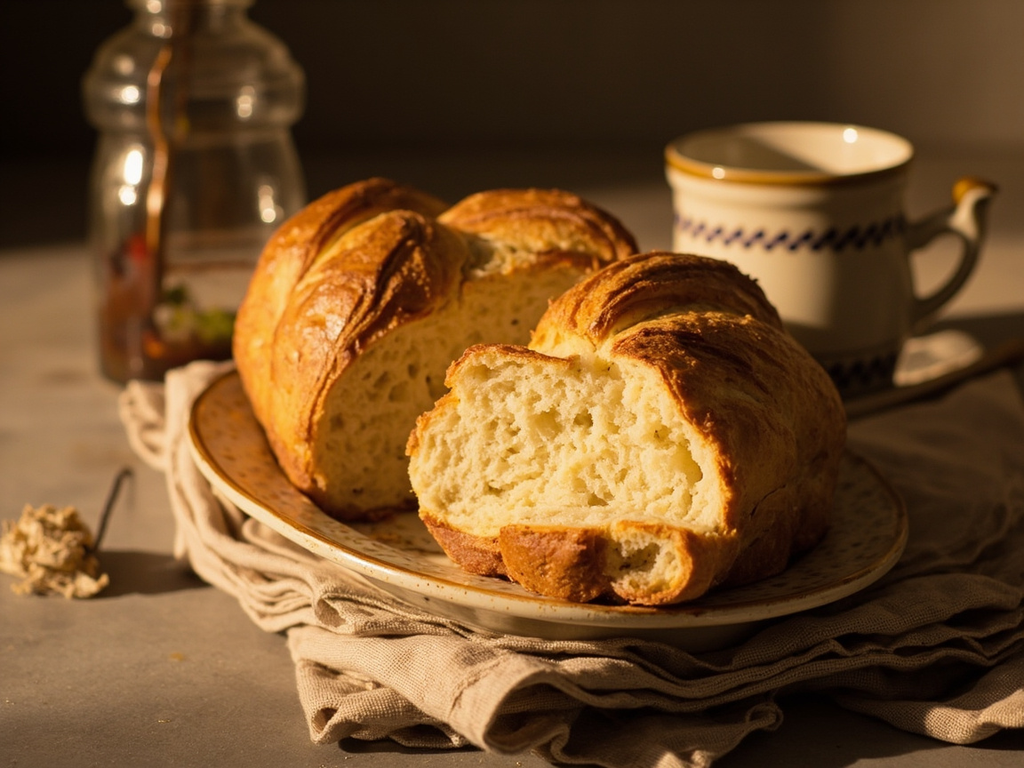
A soft and dense brioche, enriched with crème fraîche and butter, split with a long slash on top, golden from the oven. Less airy than a Parisian brioche, more rustic and generous.
Do not think that the Vendéen knows only soup and toil! On feast days, my grandmother would bring out the gâche: a heavy, golden brioche, kneaded with cream and butter, which we dared not cut into until after mass. She would slash it with a big knife stroke on top so it would open in the oven like a flower. On Sunday, believe me, that was worth all the pastries of your boulevards. Sweetness is all the more appreciated when it is earned.
- •Wheat flour — a large measure (base)
- •Thick crème fraîche — a bowl (signature tenderness)
- •Butter — a lump (richness)
- •Eggs — a few (binder)
- •Sugar — a measure (sweetness)
- •Baker's sourdough — as needed (leavening)
- •Eau-de-vie or orange blossom water — a splash (flavor)
Vendée Sunday Gâche
A soft and dense brioche, enriched with crème fraîche and butter, split with a long slash on top, golden from the oven. Less airy than a Parisian brioche, more rustic and generous.
Why this dish? In Clemenceau's Vendée, the gâche — a dense brioche flavored with crème fraîche — crowned celebrations: Easter, weddings, first communions. Reserved for great days, it marked the break from daily black bread. The memory of Sundays in Mouilleron-en-Pareds.
Do not think that the Vendéen knows only soup and toil! On feast days, my grandmother would bring out the gâche: a heavy, golden brioche, kneaded with cream and butter, which we dared not cut into until after mass. She would slash it with a big knife stroke on top so it would open in the oven like a flower. On Sunday, believe me, that was worth all the pastries of your boulevards. Sweetness is all the more appreciated when it is earned.
Ingredients (period version)
- Wheat flour — a large measure (base)
- Thick crème fraîche — a bowl (signature tenderness)
- Butter — a lump (richness)
- Eggs — a few (binder)
- Sugar — a measure (sweetness)
- Baker's sourdough — as needed (leavening)
- Eau-de-vie or orange blossom water — a splash (flavor)
Ingredients
- All-purpose flour (T45) — 500 g (base)
- Thick crème fraîche — 100 g (signature tenderness)
- Softened butter — 100 g (richness)
- Eggs — 3 (+ 1 for glaze) (binder)
- Sugar — 100 g (sweetness)
- Fresh baker's yeast — 20 g (leavening)
- Orange blossom water — 1 tbsp (flavor)
- Salt — 1 pinch (balance)
Method
- Dissolve the yeast in a little warm milk. In a large bowl, mix flour, sugar, and salt.
- Add eggs, crème fraîche, orange blossom water, and the dissolved yeast. Knead for 10 minutes until a soft dough forms.
- Gradually incorporate the softened butter, kneading until the dough is smooth and pulls away from the sides.
- Cover and let rise for 1 1/2 to 2 hours at room temperature, then punch down and shape into a large oval loaf on a baking sheet.
- Let rise again for 1 hour. Brush with beaten egg, slash the top lengthwise with a blade, and bake at 180°C for 25 to 30 minutes until beautifully golden.
How it was made : The gâche was prepared the day before festivities and kept for several days thanks to the cream and butter. Its characteristic top slash, made with a blade, distinguishes it from braided brioche. It was sometimes dipped in Sunday coffee or hot chocolate.
The contemporary twist : Serve in thick slices, lightly toasted, with a dollop of orange blossom whipped cream — a "lost brioche" twist for special days.
Georges Clemenceau · Charactorium