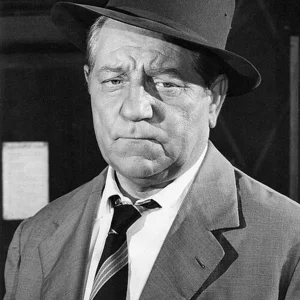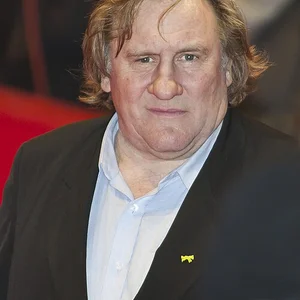

Gérard Depardieu is one of the most famous and prolific French actors, with over 200 films to his name. Born in 1948 in Châteauroux, he established himself from the 1970s as a major figure in both French and international cinema.
Gérard Depardieu(1948 — ?)
Gérard Depardieu
France, Russie, Émirats arabes unis
8 min read
Frequently asked questions
Famous Quotes
« Cinema is a matter of perspective.»
« I have always wanted to be free.»
Key Facts
- Born on December 27, 1948, in Châteauroux (Indre)
- Breakthrough role in Going Places by Bertrand Blier (1974)
- César Award for Best Actor for The Last Metro by François Truffaut (1981)
- Nominated for the Academy Award for Best Actor for Cyrano de Bergerac (1991)
- Russian citizenship granted by Vladimir Putin in January 2013
Works & Achievements
Bertrand Blier's film that introduced Depardieu to the general public. This provocative work embodies the spirit of liberation of the 1970s and marks a turning point in popular French cinema.
François Truffaut's film about life in a Parisian theater under the Occupation. Depardieu plays Bernard Granger alongside Catherine Deneuve; a critical and commercial success, winning ten César Awards including Best Film.
A French-Polish co-production directed by Andrzej Wajda. Depardieu portrays revolutionary Georges Danton in a physically commanding and passionate performance that earned him international recognition.
Jean-Paul Rappeneau's adaptation of Rostand's masterpiece. Considered the pinnacle of Depardieu's career, the film was awarded at Cannes and nominated for an Academy Award; it became an ambassador for French culture abroad.
Peter Weir's American film that cemented Depardieu's international breakthrough in Hollywood. He became the first French actor to carry the lead role in a major successful American film.
Claude Berri's adaptation of Zola's novel, one of the largest productions in French cinema history. Depardieu portrays Étienne Lantier with remarkable intensity; the film drew over 6 million admissions in France.
Depardieu portrays Jean Valjean in this international adaptation of Victor Hugo's novel, helping to bring French literary heritage to audiences around the world.
Anecdotes
Born into a modest working-class family in Châteauroux, Gérard Depardieu left school at a young age and lived by petty theft before discovering theater by chance, when a friend dragged him along to a drama class in Paris. This unexpected encounter with the stage would radically transform his path and reveal an exceptional raw talent.
To prepare for his role in 'Germinal' (1993), the adaptation of Zola's novel, Depardieu immersed himself for several weeks in the mining world of northern France, meeting former miners and studying 19th-century living conditions. This commitment to historical authenticity, characteristic of his working method, allowed him to deliver a striking physical and emotional portrayal of the character Étienne Lantier.
In 1990, he played Cyrano de Bergerac in Jean-Paul Rappeneau's film — a role considered one of the most demanding in the French repertoire due to the thousands of verses that must be memorized. His performance earned him the Best Actor Award at the Cannes Film Festival and an Academy Award nomination, bringing French culture onto the international stage.
Depardieu is one of the few French actors to have genuinely broken through in Hollywood, starring notably in 'Green Card' (1991) opposite Andie MacDowell. In the film, he plays a Frenchman seeking American citizenship — a role that symbolically reflects his ability to embody characters caught between two cultures.
A passionate viticulture enthusiast, Depardieu owns several wine estates in France and abroad, including in the Anjou region. This love of the land and manual work ties into his public image as a man of the people, grounded in the simple pleasures of life — a far cry from the elitist image often associated with the film world.
Primary Sources
I couldn't really read, I stumbled over my words, I searched for them. And then something happened on that stage. I existed. For the first time, I truly existed.
Truffaut taught me to listen. He always said: an actor who truly listens, you can see it on screen. Everything else comes after.
Cinema is a constant encounter. With directors, with characters, with the audience. Without that encounter, there is nothing.
I am leaving because you consider that success, creativity, talent, and difference must be punished.
Key Places
Depardieu's hometown, where he grew up in a difficult working-class environment. This social context, marked by poverty and marginalization, deeply shaped his acting style and his affinity for playing ordinary people.
It was in Paris that Depardieu discovered theater and drama classes in the 1960s. The capital was the setting for his training and his first successes on screen and on stage.
Depardieu shot several Franco-Italian co-productions at the Roman studios, reflecting the integration of French cinema into major European productions during the 1970s and 1980s.
Depardieu's wine estate in Anjou, where he has been producing wine since the 1990s. This place embodies his attachment to French terroir and to an authentic, unpretentious way of life.
Depardieu was the first French actor to establish himself in major Hollywood productions, paving the way for greater international visibility of French cinema in the 1990s.
Typical Objects

Depardieu prepares his roles by meticulously annotating his screenplays, underlining his characters' motivations. This preparation method reflects his deep work in dramatic analysis, despite having left school at a very young age.

On set, Depardieu is known for quickly taking on the costumes of his working-class characters — often workwear or peasant clothing — which mirror his modest origins and his taste for physically embodied roles.

As the owner of vineyards in the Anjou region, Depardieu is a well-known wine enthusiast and producer. For him, wine represents a way of life and a connection to the French land, which he claims as a core part of his identity.

The 35mm camera is the iconic tool of French cinema from the 1970s to 1990s, the era in which Depardieu built his career. It symbolizes the golden age of auteur cinema, during which he worked with directors such as Truffaut, Blier, and Pialat.

To portray Cyrano, Depardieu underwent intensive fencing training. The stage sword has become a symbol of this role, widely regarded as the pinnacle of his artistic career.

His acquisition of Russian citizenship in 2013 was a highly symbolic event in the later part of his career, highlighting the tensions between artistic identity, national belonging, and globalization — a subject of heated debate in France.
School Curriculum
Vocabulary & Tags
Key Vocabulary
Tags
Daily Life
Morning
During intense filming periods, Depardieu rises early — often before dawn — to reach the set in time for the first makeup call. He prepares his scenes the night before by reviewing his annotated script, working to inhabit his character physically from the very start of the day.
Afternoon
Afternoons are devoted to long hours on set, sometimes 12 to 14 hours on major productions such as 'Germinal'. Between takes, Depardieu mingles with technicians and crew members, known for his approachability and warm presence on set.
Evening
Evenings after filming are an opportunity to gather around a meal and a glass of wine with the team. A passionate lover of gastronomy and winemaking, Depardieu is known for his generosity at the table, carrying on the traditions of everyday French conviviality.
Food
A great admirer of traditional French cuisine, Depardieu enjoys rustic dishes and regional produce. Winemaking and wine tasting — particularly from his own Anjou vineyards — form an important part of his relationship with food and the art of living.
Clothing
Off set, Depardieu favors a casual, unpretentious style: leather jacket, simple sweater, ordinary trousers. His wardrobe reflects his working-class roots and his rejection of the polished or elitist image often associated with actors.
Housing
Depardieu has lived in several properties across France, including a townhouse in Paris and his wine estate in Anjou. His relationship with space is defined by an attachment to the land and to tangible, grounded surroundings — far removed from ostentatious luxury.
Historical Timeline
Period Vocabulary
Visual Style
L'esthétique du cinéma français d'auteur des années 1970-1990 : grain argentique, lumières dramatiques, décors authentiques de la France populaire et historique.
Sound Ambience
L'ambiance sonore des plateaux de cinéma français des années 1970-1990 : caméras 35 mm, bruits de coulisses parisiens et convivialité des équipes de tournage.
Liens externes & ressources
Références
Œuvres
Les Misérables (Valjean)
1995
Rechercher
The Charactorium game, on iPhone
Revive the forgotten figures of History, one at a time.
Download on theApp Store