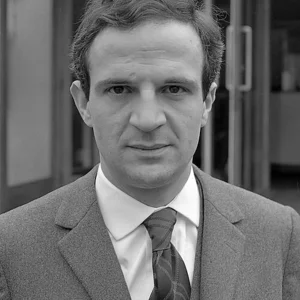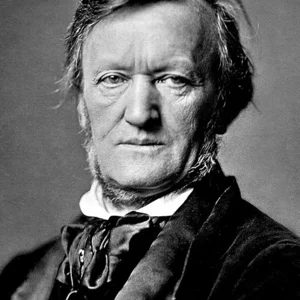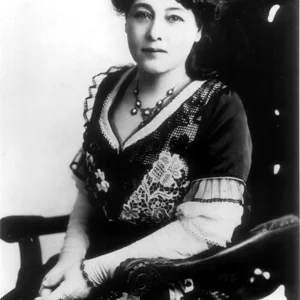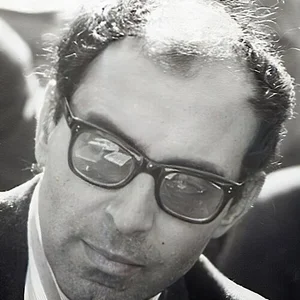

Franco-Swiss filmmaker (1930–2022) and a major figure of the French New Wave. He revolutionized the language of cinema with films such as Breathless (1960), challenging the conventions of traditional storytelling.
Jean-Luc Godard(1930 — 2022)
Jean-Luc Godard
Suisse, France
9 min read
Frequently asked questions
Famous Quotes
« Cinema is truth twenty-four times a second.»
« A tracking shot is a question of morality.»
Key Facts
- 1930: Jean-Luc Godard is born in Paris
- 1960: release of Breathless, the founding film of the New Wave
- 1968: strong political engagement during the events of May 68, temporary abandonment of commercial cinema
- 1985: direction of Hail Mary, a controversial film
- 2022: death in Switzerland by assisted suicide at the age of 91
Works & Achievements
Godard's debut feature, shot in seventeen days on the streets of Paris with a minimal budget. It revolutionized cinematic language through its jump cuts, handheld camera work, and deliberately fragmented narrative.
A portrait of a young woman who slides into prostitution, divided into twelve tableaux like a stage play. Godard blends social inquiry, philosophy, and cinéma-vérité, with Anna Karina in the lead role.
An adaptation of Alberto Moravia's novel starring Brigitte Bardot, Michel Piccoli, and Fritz Lang playing himself. A meditative work on a love that slowly crumbles, artistic creation, and the tension between art-house and commercial cinema.
A poetic and political road movie shot in Technicolor, starring Jean-Paul Belmondo and Anna Karina. A manifesto-film blending violence, obsessive love, literary references, and a critique of consumer society.
An apocalyptic pamphlet against the bourgeoisie, featuring the celebrated eight-minute traffic-jam tracking shot. Often regarded as the end of Godard's first creative period, before his radical political turn.
A monumental work in eight episodes combining film essay and visual poem. Godard reconstructs the history of the twentieth century through cinema in an associative montage of film fragments, texts, and music.
A 3D film using digital technology in a poetic and experimental way, winner of the Jury Prize at Cannes. At 84, Godard reaffirmed his ability to constantly reinvent cinematic language.
Anecdotes
During the editing of *À bout de souffle* (1960), the producer demanded that Godard cut thirty minutes from the film. Rather than resorting to conventional cuts, Godard slashed directly within the scenes themselves, thereby inventing the “jump cut” — a jarring leap within a single shot. This technique, initially perceived as a technical flaw, became one of the most influential stylistic signatures in world cinema.
Godard often filmed without a finalized script, giving actors their lines on the very morning of shooting or whispering them through a walkie-talkie during takes. Jean-Paul Belmondo and Jean Seberg learned their *À bout de souffle* dialogue on the fly, lending the film its spontaneous energy and disarming naturalism.
In May 1968, Godard, Truffaut, and other filmmakers took to the stage at the Cannes Film Festival to grab the curtains and interrupt screenings, demanding that the festival show solidarity with striking workers and students. The festival was suspended — an unprecedented event in its history — and became a symbol of the political commitment of an entire generation of artists.
In 2022, at the age of 91, Godard chose to end his life through legal assisted suicide in Switzerland. He stated that his decision was not linked to a serious illness, but to a profound “fatigue.” This deliberately chosen death — in keeping with his films’ refusal of all narrative convention — sparked widespread ethical and philosophical debate around the world.
In *Vivre sa vie* (1962), Godard divides the film into twelve “tableaux” announced by title cards, like a stage play. He was one of the first directors to embed numbers and subtitles directly into the image to comment on the action or address the viewer directly, transforming cinematic storytelling into a visual philosophical essay.
Primary Sources
We must confront vague ideas with clear images. Cinema allows us to show and think at the same time — that is its unique strength among all the arts.
A tracking shot is a matter of morality. What one shows, how one shows it, where the camera moves — all of this is an ethical choice as much as an aesthetic one.
We stand in solidarity with the student and workers' movement. Continuing the festival would be a criminally frivolous act. We demand the closure of the festival.
Cinema substitutes for our gaze a world that conforms to our desires. Cinema is an invention without a future… but perhaps the living memory of the twentieth century.
Key Places
The natural backdrop of Breathless (1960), where Godard shot in the streets without permits using a hidden camera. The cafés, pavements, and cheap hotel rooms of the Latin Quarter become the true protagonists of his films.
The temple of world cinema founded by Henri Langlois, where Godard and the future filmmakers of the New Wave spent their youth watching hundreds of films. Godard considered it the place where he received his real education in cinema.
The stage for the New Wave's breakthrough from 1959 onward, and the scene of political protests during May 1968. Godard presented several films there and won awards, while at the same time criticizing the festival's media spectacle.
A town on the shores of Lake Geneva where Godard settled permanently in the 1970s. He lived and worked there for nearly fifty years in relative seclusion, until his death in September 2022.
The great Roman film studios where Contempt (1963) was shot, starring Brigitte Bardot and Michel Piccoli. The film adapts Moravia's novel and stands as one of Godard's most accessible works, blending popular cinema with self-reflexivity.