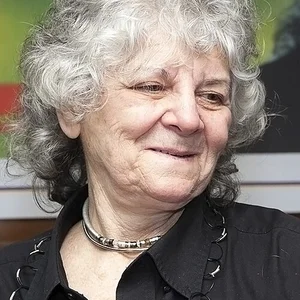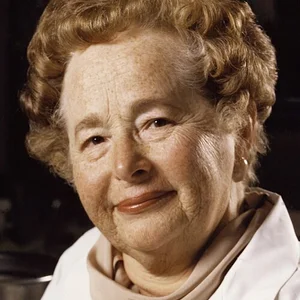

Gertrude B. Elion (1918-1999) was an American biochemist and pharmacologist, a pioneer of rational drug design. Her research led to the development of treatments for leukemia, gout, transplant rejection, and viral infections. She received the Nobel Prize in Medicine in 1988.
Gertrude B. Elion(1918 — 1999)
Gertrude Elion
États-Unis
6 min read
Frequently asked questions
Key Facts
- Born on January 23, 1918, in New York, into a family of Jewish immigrants from Eastern Europe.
- Developed 6-mercaptopurine in 1950, a drug to treat childhood leukemia.
- Created azathioprine, an immunosuppressant that made organ transplants possible, and allopurinol to treat gout.
- Contributed to the creation of acyclovir (1977), the first antiviral effective against herpes.
- Received the Nobel Prize in Physiology or Medicine in 1988, shared with George Hitchings and James Black.
Works & Achievements
The first effective treatment for acute childhood leukemia, which turned an almost always fatal disease into one that could often be cured.
A drug against malaria, still used worldwide today, notably against toxoplasmosis.
An immunosuppressant that prevents the rejection of transplanted organs and made the first major kidney transplants possible.
The standard treatment for gout, which relieved millions of patients by reducing uric acid.
The first truly selective antiviral, against herpes: it proved that a virus could be treated without harming healthy cells.
The design principles she had established allowed her team to develop the first treatment for AIDS after she had retired.
A synthesis of her entire scientific approach: understanding disease at the molecular level in order to design targeted drugs.
Anecdotes
When Gertrude was 15, her beloved grandfather died of cancer in terrible suffering. Devastated, she decided that day to devote her life to fighting disease. This personal grief would become the driving force behind her entire career as a researcher.
A chemistry graduate at just 19, Gertrude ran into a wall: no laboratory wanted a woman. One recruiter even told her she would be a “disruptive influence” among men. So she took on a string of odd jobs, including testing food quality at a grocery store, without ever giving up.
It was the Second World War that finally opened the laboratory doors to her: with the men away at the front, there was a shortage of chemists. In 1944, she was hired by George Hitchings, with whom she would form a legendary scientific duo for nearly forty years.
Gertrude Elion never earned a doctorate. Enrolled in evening classes, she was asked to choose between studying full-time and keeping her job: she chose her work. Yet in 1988, she received the Nobel Prize in Medicine — one of the few laureates without a doctorate.
She called acyclovir, her antiviral drug against herpes, “her final jewel.” It proved for the first time that a virus could be fought without destroying healthy cells, paving the way for treatments against AIDS that her team would develop later.
Primary Sources
When I was 15, my grandfather died a painful death from cancer. I was deeply motivated to do something that might one day lead to a cure for this terrible disease.
Our purpose was not simply to make compounds and see what they did, but to understand how and why they worked, so as to rationally design better drugs.
I was told that women didn't go into chemistry. I saw no reason why we couldn't.
Don't be afraid of hard work. Nothing worthwhile comes easily.
Key Places
Birthplace of Gertrude Elion, where she grew up in a family of Jewish immigrants before moving to the Bronx.
A free public university for women where she earned her chemistry degree at age 19, despite the Great Depression.
Where she began her collaboration with George Hitchings in 1944 and developed her first groundbreaking drugs.
A major scientific hub where the laboratory relocated; here she continued her research, notably on the antiviral drug acyclovir.
The city where she received the Nobel Prize in Medicine in 1988, the worldwide recognition of a lifetime of research.
A university town where she settled and where she died in 1999, after continuing to teach and mentor young researchers.
Typical Objects

Small ball-and-stick models representing the atoms of purines, the building blocks of DNA. They helped Elion picture "decoy" molecules capable of fooling diseased cells.

A register where the researcher recorded every experiment, dose, and result, day after day. It is the written memory and the proof of her discoveries.

A device that measures how a substance absorbs light in order to identify and quantify molecules. Essential for tracking the action of a new compound.

Glass instruments used to draw up and mix liquids with precision during experiments. The daily routine of a chemistry laboratory.

A small round transparent dish used to grow cells, bacteria, or viruses to test the effect of a medicine. Elion used it to observe whether her molecules blocked the disease.

The medicine she invented to treat childhood leukemia. The lives of thousands of young patients depended on this simple tablet.
School Curriculum
Vocabulary & Tags
Key Vocabulary
Tags
Daily Life
Morning
Gertrude arrived early at the laboratory, where her ongoing experiments awaited her. The morning was devoted to preparing compounds, measuring out solutions, and reviewing her lab notebook to plan the day's trials.
Afternoon
The afternoon was spent among test tubes, cell cultures, and measuring instruments, observing how her molecules acted on diseased cells. She constantly discussed the results with George Hitchings and his team.
Evening
In the evening, passionate about her work, she often stayed late or brought scientific papers home to read. When she allowed herself some free time, she enjoyed opera, photography, and travel.
Food
A modern, active woman of twentieth-century America, she ate simply, often quick meals grabbed between two experiments. She also loved discovering varied cuisines during her many travels.
Clothing
In the laboratory, she wore the chemist's white coat over plain, practical outfits. Outside of it, she dressed with the understated elegance of an urban professional of her time.
Housing
Single all her life, she lived in apartments and then modest houses near her workplace, first in the New York area and later in North Carolina. Her home was above all a place to rest between two days of research.
Historical Timeline
Period Vocabulary
Liens externes & ressources
Références
Œuvres
6-mercaptopurine (Purinethol)
1953
Pyriméthamine (Daraprim)
1952
Azathioprine (Imuran)
1957
Allopurinol (Zyloprim)
1966
Aciclovir (Zovirax)
1977
Mise au point des méthodes ayant mené à l'AZT
1987
Conférence Nobel « The Purine Path to Chemotherapy »
1988