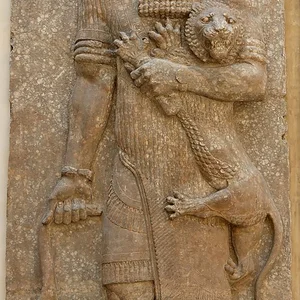

Gilgamesh is a legendary king of Sumer, whose story is told in the Epic of Gilgamesh, the oldest known literary text in human history. This Mesopotamian work explores themes of friendship, the quest for immortality, and the human condition in the face of death.
Gilgamesh
Gilgamesh
7 min read
Frequently asked questions
Key Facts
- Gilgamesh is said to have ruled as king of Uruk around 2700 BCE, according to the Sumerian King List
- The Epic of Gilgamesh, composed around the 22nd–21st centuries BCE, is the oldest known epic poem in human history
- The narrative follows Gilgamesh's quest for immortality after the death of his friend Enkidu
- The epic was discovered in the 19th century among the archives of the Library of Ashurbanipal at Nineveh in Mesopotamia
- The text contains a flood narrative, a story motif that predates the biblical tradition
Works & Achievements
The oldest known literary text in human history, recounting the adventures of King Gilgamesh, his quest for immortality, and his friendship with Enkidu. This foundational Mesopotamian work explores the universal themes of friendship, power, and human mortality.
Gilgamesh is credited with building the impressive walls of the city of Uruk, a symbol of his power and political achievements. These fortifications are presented as one of his greatest architectural accomplishments.
Gilgamesh ruled the Sumerian city-state of Uruk and raised it to the status of a major power in Mesopotamia. His reign marks an important period of political and cultural expansion in the region.
In the epic, Gilgamesh undertakes a legendary journey to meet Utnapishtim and discover the secret of immortality, including the account of the Great Flood. This quest symbolizes the human struggle against death and impermanence.
The relationship between Gilgamesh and the created being Enkidu forms the emotional heart of the epic. This profound friendship, and its rupture through Enkidu's death, illuminates the central themes of the human condition and grief.
Anecdotes
Gilgamesh was the king of the city-state of Uruk in Mesopotamia, and archaeologists have discovered his name inscribed on Sumerian royal lists dating back to the 3rd millennium BCE. Although most of his exploits are legendary, his historical existence is confirmed by these ancient administrative documents.
The Epic of Gilgamesh, written on clay tablets in cuneiform, is humanity's first great work of literature and was passed down to us thanks to archaeologists who excavated the library of Ashurbanipal at Nineveh in the 19th century. This text, more than 4,000 years old, tells how Gilgamesh searched for immortality after the death of his friend Enkidu.
According to the epic, Gilgamesh built the walls of Uruk, and archaeological excavations have indeed uncovered the ruins of these ancient ramparts in Iraq. Archaeologists believe Gilgamesh may have been a real king who strengthened his city's defenses around 2700 BCE.
The friendship between Gilgamesh and Enkidu, his companion created by the gods, is one of the earliest accounts of deep friendship in world literature. This relationship — in which the two characters support each other through their adventures and Gilgamesh mourns Enkidu's death — has influenced all the great literary traditions that followed.
Primary Sources
Gilgamesh, two-thirds god and one-third man, was the king of Uruk. None could match his strength. He who had seen all things, who knew every secret, possessed all wisdom.
Gilgamesh, whose father was a demon and whose mother was a goddess, ruled Uruk for 126 years. He is counted among the antediluvian kings.
Agga, king of Kish, came to besiege Uruk, the beloved city of Gilgamesh. But Gilgamesh rose up, a fearsome warrior, and drove back the enemy.
The ancient kings of Uruk, including Gilgamesh the wise, are mentioned among the great monarchs who shaped Mesopotamia.
Key Places
Sumerian city-state where Gilgamesh reigns as legendary king. Uruk is the main setting of the Epic and the seat of the hero's power, renowned for its impressive walls said to have been built by Gilgamesh himself.
Mythical land where Gilgamesh and his companion Enkidu journey to battle the guardian Humbaba. This place represents the hero's quest into distant and dangerous territory, symbolizing the confrontation with the unknown.
Legendary mountain where the Dwelling of the Sun is located, which Gilgamesh crosses during his quest for immortality following the death of Enkidu. This place marks the threshold between the visible world and the hidden realms beyond.
Mythical body of waters that Gilgamesh crosses in his quest to find Utnapishtim, the man who holds the secret of immortality. This realm represents the boundary between the world of the living and that of the immortals.
Major religious and cultural center of Sumer where some of the oldest known manuscripts of the Epic of Gilgamesh were discovered. This city embodies the importance of textual transmission in Mesopotamian civilization.
Located in Assyria, this site preserved the most complete version of the Epic of Gilgamesh on cuneiform tablets. This place of memory ensured the survival and transmission of one of the great masterworks of ancient literature.
Typical Objects

The Mesopotamian writing medium on which the Epic of Gilgamesh was recorded. These tablets represent the oldest known literary text and bear witness to the transmission of the legendary tale of the Sumerian king.

Symbol of Gilgamesh's power and kingship as ruler of Uruk. This ceremonial headdress marks the authority of Mesopotamian sovereigns and his standing as a political leader.

Gilgamesh's primary weapons as a warrior, essential during his adventures and battles against Humbaba and the Bull of Heaven. These weapons reflect the importance of hunting and warfare in ancient Mesopotamia.

A close-combat weapon symbolizing Gilgamesh's martial strength. Sumerian rulers were above all warriors, and this sword represents his role as protector of Uruk.

Richly decorated tunics and robes worn by Sumerian kings such as Gilgamesh. These colored textiles, often dyed in purple, reflect the luxury and elevated status of the Mesopotamian elite.

A prestige object used to mark and authenticate official documents. This engraved seal represents King Gilgamesh's administrative and political authority over the kingdom of Uruk.

Mesopotamian ceramics associated with burial practices and the theme of death that haunts Gilgamesh throughout the epic. These vessels reflect the story's central preoccupation with human mortality.

A monument symbolizing the power of the city of Uruk and Gilgamesh's prestige as a builder. Mesopotamian ziggurats embody royal authority and the connection between the divine and the earthly.
School Curriculum
Vocabulary & Tags
Key Vocabulary
Tags
Lieu
Mythologie
Daily Life
Morning
As king of Uruk, Gilgamesh begins his day by inspecting the city's fortifications and construction sites. He receives reports from his administrators on harvests, taxes, and affairs of the kingdom. The king then takes part in the morning religious rituals held in honor of the gods, particularly Shamash and Anu.
Afternoon
The afternoon is devoted to royal audiences, where Gilgamesh dispenses justice and hears petitions from his subjects. He joins his warriors and attendants for military training, honing his combat and archery skills. He may also oversee large-scale architectural projects, such as the construction or upkeep of the city walls.
Evening
In the evening, Gilgamesh dines in the royal palace with his court and advisors. He listens to musicians, poets, and storytellers who recount tales of warriors and the deeds of the gods. He may also rest in the palace gardens or consult with scribes on administrative matters.
Food
The king eats barley or wheat bread, the dietary staple of Sumer, along with fresh fish from the Euphrates and Tigris rivers. His royal table includes lamb or goat meat on special occasions, fruits such as dates and grapes, and beer — the common drink of Mesopotamia.
Clothing
Gilgamesh wears good-quality wool or linen garments typical of Sumerian rulers. He is dressed in a pleated skirt reaching to the knees and wears a royal cloak or mantle. He displays insignia of power: a diadem, metal bracelets, and likely a braided beard, a symbol of royal dignity.
Housing
The king resides in a monumental palace in Uruk, built from mudbrick with thick, massive walls. The palace includes several administrative halls, private apartments, inner courtyards, and storerooms. It is surrounded by imposing ramparts that tower over the city and symbolize royal authority over the kingdom.
Historical Timeline
Period Vocabulary
Visual Style
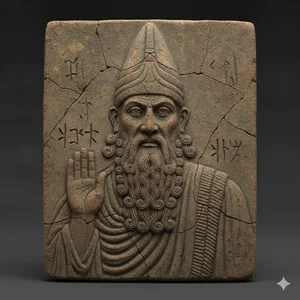
Un style visuel inspiré des arts de la Mésopotamie antique, mêlant l'esthétique des tablettes cunéiformes, des bas-reliefs sumériens et de la sculpture proto-dynastique. L'atmosphère évoque les palais et temples de Sumer avec des teintes chaudes de terre cuite, d'or et de pierre, baignés d'une lumière dramatique du désert.
Sound Ambience
Une ambiance sonore épique et mystique mêlant les bruits authentiques d'une cité sumérienne ancienne aux échos spirituels de la quête intemporelle de Gilgamesh face à la mort et l'amitié.
Liens externes & ressources
Références
Œuvres
L'Épopée de Gilgamesh
XXIIe-XIIe siècle av. J.-C. (transcription écrite)
Construction des murs d'Uruk
Environ 2700 av. J.-C.
Règne et expansion d'Uruk
Environ 2700 av. J.-C.
La quête du Déluge et de l'immortalité
Intégré à l'Épopée de Gilgamesh
L'amitié avec Enkidu
Intégré à l'Épopée de Gilgamesh