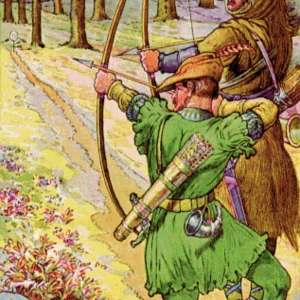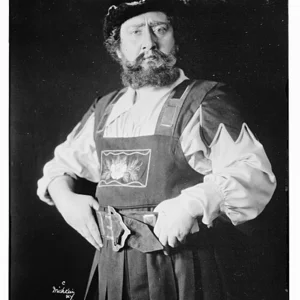

Legendary Swiss hero of the 14th century, symbol of the struggle against oppression and Swiss independence. According to tradition, he defied an Austrian bailiff by shooting an arrow at an apple placed on his son's head, before taking part in the revolt against Habsburg rule.
William Tell
William Tell
Suisse
8 min read
Frequently asked questions
Key Facts
- The apple legend: he was forced to shoot an arrow at an apple placed on his son's head to prove his skill as an archer
- Defiance of Gessler: his refusal to pay homage to the Austrian bailiff who represented Habsburg tyranny
- Participation in the 1291 revolt: symbol of the struggle for Swiss independence and cantonal freedom
- Central figure of Swiss identity: represents popular resistance against political oppression
- Immortalized in the 19th century: Schiller's play (1804) cemented his legend across European audiences
Works & Achievements
The legendary act of defiance in which William Tell allegedly shot an arrow at an apple placed on his son's head, forced upon him by the bailiff Gessler as an act of humiliation. This event symbolizes the refusal of oppression and becomes the founding act of the Swiss national myth.
Participation in the rebellion of the Swiss cantons against Austrian Habsburg domination. Tell embodies the struggle for independence and autonomy of the Swiss lands against foreign rule.
The founding moment of the Swiss Confederation, in which William Tell and representatives of the cantons of Uri, Schwyz, and Unterwalden are said to have sworn an oath of mutual alliance against Habsburg tyranny.
The act of vengeance in which William Tell allegedly killed the Austrian bailiff Gessler, the embodiment of Habsburg oppression. This event symbolically marks the end of tyranny and the beginning of Swiss freedom.
A legendary episode in which Tell battles Gessler's troops in the Schöllenen Gorge, showcasing his courage and determination to liberate his homeland.
The transformation of William Tell into an iconic figure representing freedom, autonomy, and resistance against oppression. He becomes Switzerland's national hero and embodies the values of Swiss independence.
Anecdotes
William Tell is a legendary character, not a historical one. Modern historians agree that the earliest written sources about him date from the 15th century, well after the supposed 14th-century events. The story of the apple shot off his son's head is not attested in any contemporary document and resembles a founding myth created to celebrate Swiss independence.
The legend of William Tell appears for the first time in the White Book of Sarnen (Weisse Buch) around 1470, a Swiss document that blended historical facts with oral traditions. This late source shows that the character was gradually constructed as a national symbol, long after the actual revolt against the Habsburgs in the 13th century.
The Helvetic revolt against Habsburg Austria is, however, historically documented and dates to 1291, with the Federal Charter of the Rütli founding the Swiss Confederation. William Tell was woven into this real history as a legendary figure to embody it, but no 14th-century chronicler ever mentions him.
The complete absence of historical evidence has not prevented the Tell legend from becoming the emblem of Switzerland. Friedrich Schiller made him the hero of his play in 1804, giving the character a Romantic dimension and transforming him into a universal symbol of freedom.
Modern Swiss historians regard William Tell as a literary creation rather than a real person, comparable to other legendary heroes. His importance lies in his ability to represent the Swiss values of freedom and independence, even though he may never have existed.
Primary Sources
William Tell, a man of great renown and courage, was forced by the bailiff Gessler to shoot an arrow at an apple placed on his son's head, which he accomplished with remarkable skill.
The three cantons of Uri, Schwyz and Unterwald joined together to maintain peace and justice, and to defend themselves against any act of violence or tyrannical oppression.
Tell, having accomplished the feat of the archery shot, escaped and took up arms against the bailiff Gessler, bringing about his death, and thus becoming a symbol of Swiss freedom.
And Tell loosed his arrow with such precision that the apple was pierced clean through, while his son remained unharmed, bearing witness to the father's great skill.
Key Places
A town in the canton of Uri in central Switzerland, the legendary site where William Tell is said to have performed his famous feat of shooting an arrow off his son's head on the orders of the bailiff Gessler. This town is the heart of the Tell legend.
An alpine lake where William Tell is said to have escaped from the bailiff Gessler by crossing its turbulent waters after fleeing captivity, becoming a symbol of freedom and resistance against oppression.
The Swiss canton where the legend of William Tell originates. This region is considered the birthplace of the legendary hero and of the independence movement against Habsburg domination in the 14th century.
A fictional or legendary fortress associated with the bailiff Hermann Gessler, the main antagonist of the William Tell legend, symbolizing Austrian oppression.
A historic meadow on the shores of Lake Lucerne where, according to tradition, William Tell and other patriots are said to have sworn an oath of revolt against the Habsburgs in 1291, marking the beginning of the Swiss Confederation.
A village in the canton of Uri traditionally held to be the birthplace of William Tell, home to a chapel dedicated to the legendary Swiss hero.
Typical Objects

Guillaume Tell's weapon of choice, the bow symbolizes his legendary skill. It was with an arrow shot from a bow that he supposedly split the apple placed on his son's head, completing the feat imposed by the bailiff Gessler.

The central object of the Guillaume Tell legend, the apple represents the ordeal imposed on him and the hero's extraordinary marksmanship. It has become the iconic symbol of his courage and resistance to Austrian oppression.

A portable case used to store and carry arrows, an indispensable accessory for the medieval warrior and hunter. It is a characteristic element of 14th-century military equipment.

A formidable ranged weapon of the Middle Ages, the crossbow was particularly common in Switzerland and the Alpine regions during the 14th century. It represents the military technology of the era and the fighting capacity of the mountain peoples.

Typical combat equipment of the 14th-century medieval warrior. These weapons represent Guillaume Tell's role as a resistance fighter against the better-equipped Austrian soldiers and bailiffs.

A modern symbol associated with Guillaume Tell as a founding hero of the Swiss Confederation. Although the flag did not exist in its current form during the legendary era, it represents the Helvetic independence for which Tell fought.

A major geographical element of the legend's setting, the Swiss Alps form the backdrop to Guillaume Tell's resistance. They symbolize the terrain on which the rebels fought against Habsburg domination.

According to legend, Guillaume Tell's refusal to bow before the bailiff Gessler's hat placed on a pole was what triggered the apple ordeal. This hat has become a symbol of revolt against tyrannical authority.
School Curriculum
Vocabulary & Tags
Key Vocabulary
Daily Life
Morning
Guillaume Tell rises before dawn, as was common among Alpine peasants and craftsmen of his era. He first checks his crossbow and arrows — essential tools for both hunting and defending his community. After a light meal of bread and milk, he prepares for the day's tasks, which typically revolve around making use of local resources.
Afternoon
He spends his afternoons in subsistence activities: hunting game in the Alpine forests, crafting or maintaining his weapons, and taking part in communal work or local assemblies. Men in the Swiss cantons of the 14th century devoted a significant portion of their time to crossbow practice, which was regarded as a fundamental civic and military skill.
Evening
In the evening, Guillaume Tell returns home to his family and the household chores that await him. He shares the evening meal with his family, and may then join informal gatherings of village men to discuss community matters — particularly questions of resistance against the authority of the Austrian bailiff.
Food
His diet relies mainly on local produce: dark or brown bread, locally made hard cheese, milk and dairy products, hunted game (roe deer, chamois), and occasionally freshwater fish. In winter, stored cheeses and dried meat supplement a limited but well-suited Alpine diet.
Clothing
He wears clothing typical of a mountain man in the late Middle Ages: a linen tunic or shirt, a woolen doublet, hose, and a wool cloak for the cold. His garments are simple but sturdy, naturally dyed, with reinforced wear points. He also carries a bladed weapon and his crossbow at all times — marks of his status as a free man and citizen.
Housing
Guillaume Tell lives in a house typical of the Swiss mountains: built from wood or stone depending on local resources, with a central hearth used for heating and cooking. The dwelling is modest, with a few rooms for the family and sometimes the animals, and access to common land for farming and livestock.
Historical Timeline
Period Vocabulary
Visual Style
Un style pictural de la Renaissance du Nord, mêlant le réalisme historique médiéval à une dimension épique et légendaire. L'ambiance est dramatique et héroïque, avec un jeu de lumière contrasté rappelant les maîtres flamands et allemands du XVe-XVIe siècles, sublimant le courage face à l'oppression.
Sound Ambience
Une ambiance alpine médiévale tendue et immersive, mêlant les bruits de la montagne suisse, le crissement de l'arc, les murmures d'une foule anxieuse et les éléments sonores d'une rébellion imminente contre l'oppression.
Liens externes & ressources
Références
Œuvres
Le Tir à la pomme
XIVe siècle (légendaire)
Révolte contre les Habsbourg
1291-1308 (période légendaire)
Serment du Rütli
1291 (tradition légendaire)
Mort du bailli Gessler
XIVe siècle (légendaire)
Légende de la Schöllenen
XIVe siècle (légendaire)
Symbole de l'indépendance suisse
Depuis le XIVe siècle