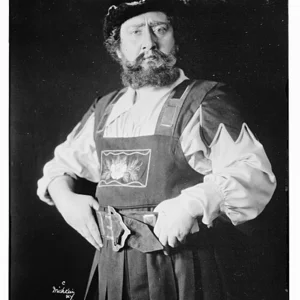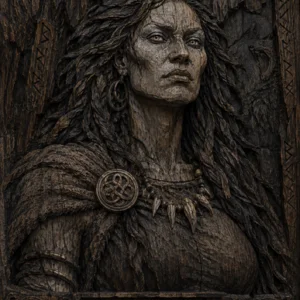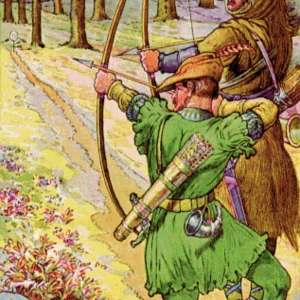

A legendary hero of English folklore, Robin Hood is an archer and outlaw said to have operated in England during the Middle Ages. An iconic figure of popular resistance, he embodies the ideal of robbing from the rich to give to the poor.
Robin Hood
Robin Hood
royaume d'Angleterre
8 min read
Frequently asked questions
Key Facts
- A legendary figure with no definitive historical evidence, first mentioned in English popular ballads from the 14th century onward
- Hero of Sherwood Forest in England, symbol of revolt against feudal injustice
- Central figure of English medieval legend, robbing from the rich to give to the poor
- Popularized through ballads, chivalric romances, and oral traditions of the late Middle Ages
- A myth still very much alive in popular culture, inspiring literature, theatre, and film
Works & Achievements
Robin Hood makes his home in Sherwood Forest, where he organizes a band of outlaws. This base becomes a symbol of resistance against oppressive authority and of life on the fringes of feudal society.
Robin Hood captures wealthy lords and royal officials, redistributing their wealth to peasants and the poor. This act becomes the heart of his legend and the archetype of popular social justice.
Robin Hood consistently stands against the Sheriff of Nottingham, the embodiment of unjust royal power. This rivalry symbolizes the conflict between popular justice and the oppressive feudal order.
Robin Hood gathers around him men such as Little John and Will Scarlet, forming a community of outlaws bound together by values of equality and brotherhood in Sherwood.
The legend of Robin Hood spreads through ballads and oral storytelling across England, making him a major folk hero who embodies the medieval common people's aspirations for justice and equality.
Robin Hood establishes the literary and cultural model of the justified outlaw — one whose criminal acts are given moral legitimacy by a righteous cause. This prototype would go on to influence literature and culture for centuries.
Anecdotes
Robin Hood appears in written texts for the first time around the 14th century, notably in William Langland's poem 'Piers Plowman', dated around 1377. Contrary to popular legend, no contemporary historical document from the 12th century mentions an archer by that name operating in England. Historians consider that the historical figure of Robin, if he existed at all, remains impossible to identify with any certainty.
In the 14th and 15th centuries, the legends of Robin Hood were passed down orally before being recorded in popular ballads and tales. These later sources describe how Robin supposedly fought against the abuses of feudal authority and the excessive levies of the clergy. However, modern historians have found no reliable documentary evidence of his exploits.
Legend places Robin Hood in Sherwood Forest, near Nottingham, as the hideout for his band of outlaws. This specific geographical setting, mentioned in later accounts, helped transform Robin into a universal symbol of revolt against injustice. Archaeologists and historians have explored the region without uncovering any tangible evidence of his historical existence.
The 14th- and 15th-century accounts portray Robin as a socially ambiguous figure: some versions present him as a dispossessed nobleman defending the poor, while others depict him as a common criminal. This variation across later sources shows that Robin Hood is above all a literary and folkloric creation reflecting medieval social tensions, rather than a reliable historical portrait.
The character of Robin Hood experienced a major literary revival from the 16th century onward, with theatrical and novelistic adaptations. In each era, authors reinvent Robin according to the moral and political concerns of their time, confirming that we are dealing with a living legend rather than an established historical fact.
Primary Sources
Lythe and listin, gentilmen, That be of frebore blode; I shall you tel of a good yeman, His name was Robyn Hode.
In England there was a man called Robin Hood, who was a great plunderer and a great thief...
Around this time there was in England a celebrated outlaw by the name of Robert Hood, who with his companions committed great acts of robbery.
Here beginneth a mery geste of Robyn Hood and of his life, and the notable acts which he did in his time.
Key Places
Famous forest in Nottinghamshire where Robin Hood is said to have established his hideout with his companions. It is the legendary heart of his outlaw activities and his redistribution of wealth to the poor.
City in central England where the Sheriff who pursued Robin Hood is said to have ruled. This rivalry between the hero and the local authorities is central to the legends.
Region of northern England associated with certain variants of the Robin Hood legends, particularly later 15th-century traditions that place him in this area.
Forest in Yorkshire mentioned in medieval ballads as an alternative base of operations for Robin Hood, particularly in the earliest traditions.
A traditional location associated with Robin Hood's legendary death in some versions of the stories. Medieval ballads place his demise in the vicinity of this cathedral.
Some later versions of the Robin Hood legends place him in Scotland, particularly 15th-century traditions that claimed this figure for Scottish folklore.
Typical Objects

Robin Hood's weapon of choice, the English longbow was a formidable instrument in the Middle Ages. It is through his exceptional mastery of this weapon that the legendary hero earns his exploits and his reputation as an invincible archer.
📷 Domaine public · Wikimedia Commons ↗
The essential ammunition of any archer, arrows are Robin Hood's tools of combat. According to legend, his arrows strike impossible targets with remarkable precision.
📷 CC BY 3.0 de · Wikimedia Commons ↗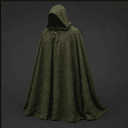
An emblematic garment of the character since the later medieval traditions, the green cloak has become synonymous with Robin Hood and aids his camouflage in Sherwood Forest. It has become the hero's most recognizable iconic accessory.
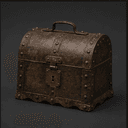
A symbol of the wealth stolen from nobles and clergy, the purse represents the treasure Robin redistributes to the poor. It embodies the heart of his legend: robbing from the rich to give to the poor.
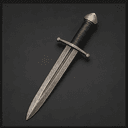
A close-combat weapon of the Middle Ages, the dagger or short sword completes Robin Hood's arsenal during his skirmishes with the sheriff's guards and the nobility.
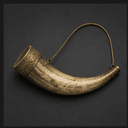
An instrument used in the Middle Ages for hunting and communication, the horn allows Robin and his Merry Men to coordinate their movements throughout Sherwood Forest.
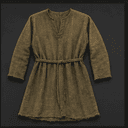
A typical garment of the Middle Ages, the outlaw's simple tunic stands in sharp contrast to the luxurious clothing of the nobility he fights against. It represents his humble origins and his status as a fugitive.
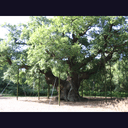
Though a place rather than an object, the forest is the iconic setting where Robin Hood operates and hides. It symbolizes freedom and resistance in the face of established authority in the Middle Ages.
📷 CC BY-SA 3.0 · Wikimedia Commons ↗School Curriculum
Vocabulary & Tags
Key Vocabulary
Tags
Mythologie
Daily Life
Morning
Robin Hood wakes up in Sherwood Forest to the sound of birdsong. He checks the traps and lookouts positioned to monitor the trade routes. An early morning scout of the surrounding area lets him plan the day's ambushes.
Afternoon
The afternoon is devoted to archery practice, the core activity that keeps his formidable accuracy sharp. He organizes the distribution of the day's spoils among his men and listens to reports from his spies about the movements of nobles and royal tax collectors.
Evening
At nightfall, Robin and his band gather around a campfire for a communal meal. They discuss future strategies and share stories, strengthening the group's bonds and their shared commitment to redistributing wealth.
Food
Robin and his men live off game hunted in the forest — deer, rabbits, and boar — as well as fish from nearby streams. They also eat bread and provisions confiscated from wealthy travelers. Wild honey and berries round out this rustic but reasonably varied diet.
Clothing
Robin wears wool and leather clothing suited to forest life: a brown-green tunic, hose, and a leather jerkin for protection. He is recognized by his longbow and arrows, symbols of his skill, and likely wears a cloth or leather cap to shield himself from the elements.
Housing
The band lives in temporary camps hidden deep within Sherwood Forest, making use of natural shelters or building huts from branches and foliage. These mobile setups allow them to stay one step ahead of the royal authorities and any pursuit by the Sheriff's soldiers.
Historical Timeline
Period Vocabulary
Visual Style
Un style visuel romantique et médiéval mêlant l'esthétique des manuscrits enluminés anglais aux peintures pré-raphaélites, baignant dans les teintes forestières et les ambiances de légende. L'éclairage chaleureux et théâtral souligne le caractère héroïque et folklorique du personnage dans son environnement naturel.
Sound Ambience
Ambiance immersive de la forêt de Sherwood au Moyen Âge : nature sauvage entrelacée de bruits de clandestinité (arc, flèches), d'instruments folkloriques lointains et de la vie quotidienne d'une communauté de hors-la-loi vivant en harmonie avec la nature.
Liens externes & ressources
Références
Œuvres
Légende de Sherwood Forest
XIIe-XVe siècles
Vol redistribution aux pauvres
XIIe-XIVe siècles
Résistance contre le shérif de Nottingham
XIIe-XIVe siècles
Formation de la bande des Joyeux Compagnons
XIIe-XIVe siècles
Ballades et traditions orales
XIVe-XVe siècles
Archétype de l'outlaw noble
XIIe-XVe siècles