 flip
flipTrifle with Cream and Fruit
Trifle with Cream and Fruit
Why this dish? Beyond her austere convalescent diet, the wealthy Victorian table that Harriet frequented reserved its splendour for dessert. The trifle, assembled in a tall glass dish, crowned formal dinners: a festive dish, the opposite of her daily sobriety, which she would certainly have seen served at the tables she visited.
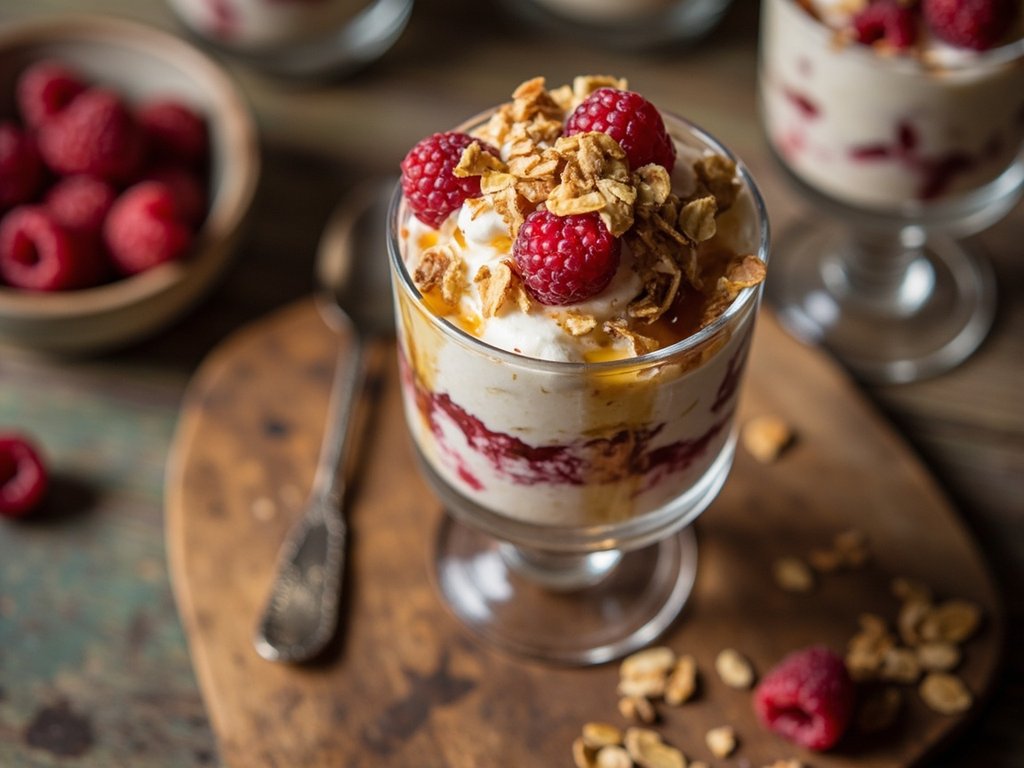
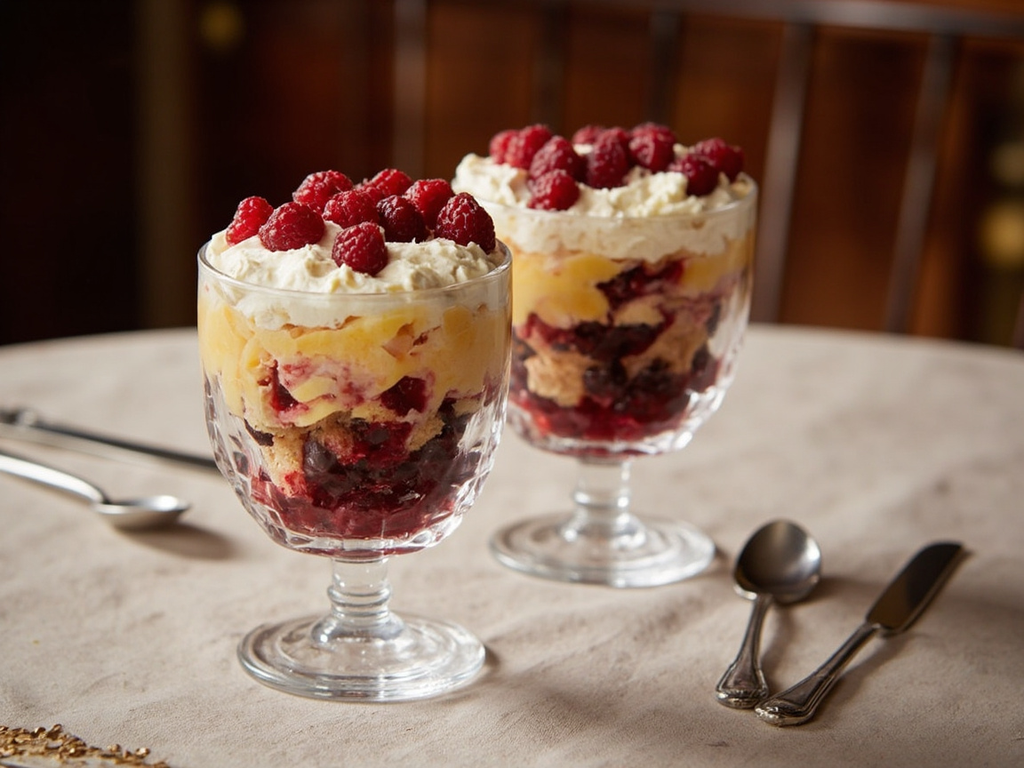
A layered dessert in a large glass dish: sponge biscuits soaked in sweet wine, fruit, custard, and whipped cream. The sweet, fresh triumph of Victorian dinners.
Here is the dish for grand evenings, built in layers in a fine glass where each one dips with a spoon. One lines the bottom with biscuits moistened with a finger of sherry, arranges fruit, then a smooth custard, and over it a cloud of whipped cream. For my part, I took only a few spoonfuls — my condition demanded it — but I loved to see it appear: there is in these layered sweets a gaiety that learned conversation cannot replace.
- •Savoy biscuits or ladyfingers — a dozen (base)
- •Sherry wine — half a glass (soaking)
- •Fruit (raspberries, currants, or jam) — a good layer (tangy freshness)
- •Milk and egg yolks — a pint of milk, 4 yolks (custard)
- •Sugar — to taste (sweetness)
- •Whipped fresh cream — a bowl (crowning)
Trifle with Cream and Fruit
A layered dessert in a large glass dish: sponge biscuits soaked in sweet wine, fruit, custard, and whipped cream. The sweet, fresh triumph of Victorian dinners.
Why this dish? Beyond her austere convalescent diet, the wealthy Victorian table that Harriet frequented reserved its splendour for dessert. The trifle, assembled in a tall glass dish, crowned formal dinners: a festive dish, the opposite of her daily sobriety, which she would certainly have seen served at the tables she visited.
Here is the dish for grand evenings, built in layers in a fine glass where each one dips with a spoon. One lines the bottom with biscuits moistened with a finger of sherry, arranges fruit, then a smooth custard, and over it a cloud of whipped cream. For my part, I took only a few spoonfuls — my condition demanded it — but I loved to see it appear: there is in these layered sweets a gaiety that learned conversation cannot replace.
Ingredients (period version)
- Savoy biscuits or ladyfingers — a dozen (base)
- Sherry wine — half a glass (soaking)
- Fruit (raspberries, currants, or jam) — a good layer (tangy freshness)
- Milk and egg yolks — a pint of milk, 4 yolks (custard)
- Sugar — to taste (sweetness)
- Whipped fresh cream — a bowl (crowning)
Ingredients
- Ladyfingers or sponge cake — 12 (base)
- Sweet sherry (or fruit juice for children) — 80 ml (soaking)
- Raspberries or mixed berries — 250 g (tangy freshness)
- Milk — 500 ml (custard)
- Egg yolks — 4 (custard)
- Sugar — 80 g (sweetness)
- Heavy cream — 250 ml (whipped cream)
Method
- Make the custard: heat the milk, whisk the yolks with sugar, combine and cook gently until it coats the spoon, without boiling. Let cool.
- Line the bottom of a large glass dish or bowl with biscuits, sprinkle with sherry (or fruit juice).
- Spread a layer of berries.
- Cover with cooled custard.
- Whip the cream into soft peaks and spread on top.
- Refrigerate for at least 2 hours and decorate with a few berries before serving.
How it was made : The trifle, attested in England since the 16th century, was enriched in the 19th century with custard and took its modern layered form. Served in cut-glass bowls, it displayed the abundance of the Victorian table at receptions.
The contemporary twist : Assembled in individual clear glasses to reveal the colourful layers, a retro-chic bistro dessert style.
Sources : Hannah Glasse, The Art of Cookery Made Plain and Easy, 1747 · Isabella Beeton, Mrs Beeton's Book of Household Management, 1861
Harriet Taylor Mill · Charactorium