Hatshepsut(1506 av. J.-C. — 1457 av. J.-C.)
Hatshepsut
Égypte antique
8 min read
Hatchepsout est l'une des rares femmes à avoir régné en tant que pharaon d'Égypte. Après avoir assuré la régence pour son beau-fils Thoutmôsis III, elle prit le pouvoir vers 1478 av. J.-C. et gouverna pendant plus de vingt ans. Son règne fut marqué par la prospérité, de grands chantiers architecturaux et une expédition commerciale célèbre vers le pays de Pount.
Frequently asked questions
Key Facts
- Vers 1478 av. J.-C. : elle prend le titre de pharaon et se fait représenter avec les attributs masculins traditionnels (barbe postiche, némès, sceptres)
- Vers 1470 av. J.-C. : elle envoie une expédition commerciale vers le pays de Pount, rapportant myrrhe, ébène et animaux exotiques
- Elle fait ériger son temple funéraire à Deir el-Bahari, chef-d'œuvre de l'architecture égyptienne
- Elle fait construire deux obélisques gigantesques au temple de Karnak en l'honneur d'Amon
- Après sa mort (vers 1457 av. J.-C.), Thoutmôsis III fit effacer une grande partie de ses représentations et inscriptions
Works & Achievements
Hatshepsut's most iconic monument, this three-terraced temple is considered one of the masterpieces of ancient Egyptian architecture; its walls tell in images the story of her divine origin and her accomplishments.
Carved from pink Aswan granite and covered in electrum, these obelisks reached 29 meters in height; one of them still stands today, bearing witness to the power of Hatshepsut's reign.
An unprecedented diplomatic and commercial mission that brought back to Egypt myrrh trees, ebony, ivory, and rare animals; its account in bas-reliefs constitutes one of the earliest travel narratives in human history.
A red quartzite chapel built as a resting place for the sacred barque of Amun during processions, adorned with scenes celebrating the co-regency and royal rites; dismantled under Thutmose III, it was reconstructed in the 20th century.
A rock-cut temple carved into the cliff face and dedicated to the goddess Pakhet; the façade inscription proclaims Hatshepsut's legitimacy and her role as restorer of temples following Hyksos domination.
Anecdotes
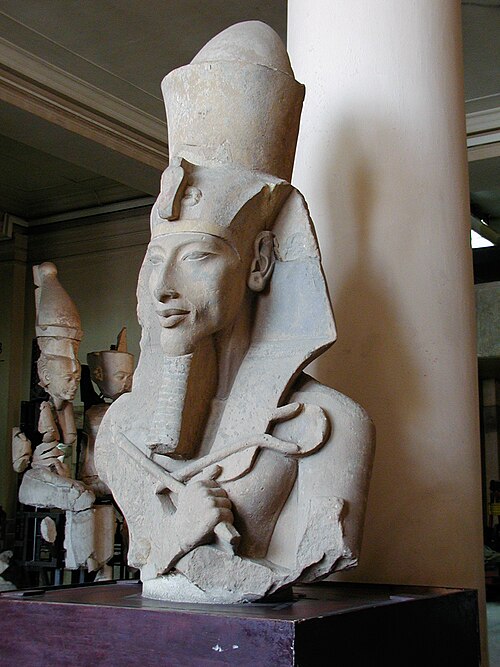
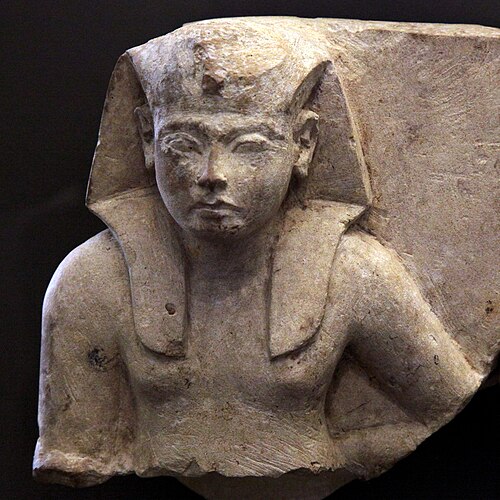
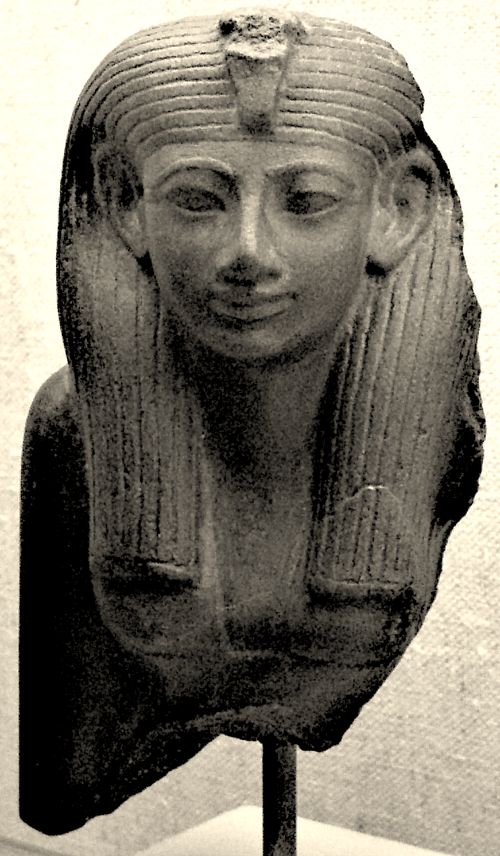
Hatshepsut was the first woman to reign as a full pharaoh, not merely as a regent. To establish her authority, she had herself depicted on monuments with the masculine attributes of power: the double crown, the heqa scepter, and the ritual golden false beard. This visual strategy allowed her to govern Egypt for more than twenty years without major challenge.
Around 1470 BCE, Hatshepsut sent a spectacular maritime expedition to the mysterious land of Punt, probably located on the coasts of present-day Eritrea or Somalia. The ships returned laden with myrrh, ebony, ivory, and leopard skins. This expedition was immortalized in the bas-reliefs of her funerary temple at Deir el-Bahri, constituting one of the oldest travel accounts in human history.
Hatshepsut had two immense obelisks of pink Aswan granite erected at Karnak, the tallest ever raised at the time. Each stood approximately 29 meters high and was covered in electrum, a natural alloy of gold and silver, to reflect the rays of the sun. She had inscribed at the base: 'Let whoever sees them in millions of years say: this was made for her out of love for him.'
After her death, her successor Thutmose III had her name and image erased from most monuments, attempting to eliminate her memory from official history. For centuries, Egyptologists were unaware of her very existence. It was not until the 19th century that the American archaeologist Herbert Winlock formally identified Hatshepsut and reconstructed her exceptional reign through the patient study of mutilated cartouches.
Hatshepsut's chief architect, Senenmut, was one of the most influential figures of her reign. He oversaw the construction of her funerary temple and served as tutor to the royal daughter Neferure. Some historians have put forward the hypothesis of an intimate relationship between the two, drawing on obscene graffiti found in workers' tombs, but this remains a debated question among specialists.
Primary Sources
I am his daughter, according to his own proclamation, she who wears the white diadem... He chose me as king of the Two Lands, as ruler of all the living.
Loading of the ships in great abundance with the wonders of the land of Punt: all the beautiful aromatic plants of the Divine Land, heaps of myrrh resin, fresh myrrh trees, along with ebony and pure ivory.
The living god, Maât-Ka-Rê, beloved of Amun, sent an expedition to the turquoise mines in order to bring to her father Amun the precious stones of the Divine Land.
I gave him two great obelisks covered with electrum so that my memory would be eternal in his house... I did not sleep on account of it.
Key Places
Hatshepsut's mortuary temple, an architectural masterpiece with superimposed colonnaded terraces built into the cliff face; its bas-reliefs depict the expedition to Punt and the queen's divine birth.
Great religious complex dedicated to Amun where Hatshepsut erected her two famous giant obelisks and built the Red Chapel; it was the spiritual and political center of her reign.
Royal necropolis where Hatshepsut's tomb (KV20) was carved, the oldest royal tomb in the Valley of the Kings, shared with her father Thutmose I.
Religious and political capital of Egypt under the 18th Dynasty, center of the cult of Amun and Hatshepsut's main residence during her reign.
Mining site and temple dedicated to the goddess Hathor where inscriptions were found attesting to expeditions organized under Hatshepsut's reign to extract turquoise and copper.
Mythical trading territory, probably the present-day Eritrean-Somali region, destination of the famous maritime expedition commanded by Hatshepsut around 1470 BC to bring back incense, ebony, and exotic animals.
Liens externes & ressources
Références
Œuvres
Temple funéraire de Deir el-Bahari (Djeser-Djésérou)
vers 1470-1458 av. J.-C.
Les deux obélisques de Karnak
vers 1457 av. J.-C.
Expédition commerciale au pays de Pount
vers 1470 av. J.-C.
Chapelle Rouge de Karnak
vers 1473 av. J.-C.
Spéos Artémidos (grotte d'Artémis), Beni Hassan
vers 1460 av. J.-C.