Ancient Egypt
Pharaohs, queens, scribes and builders of Ancient Egypt — three millennia of civilisation along the Nile.
43 characters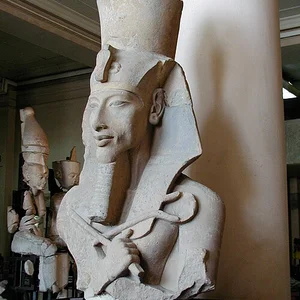
43 characters
Akhenaten
1400 av. J.-C. — 1335 av. J.-C.
Pharaoh of the 18th Dynasty of Egypt (c. 1353–1336 BCE), Akhenaten revolutionized religion by imposing the monotheistic worship of Aten, the solar disk. He relocated the capital to Akhetaten (Amarna) and profoundly transformed Egyptian art.
Amenhotep III
1399 av. J.-C. — 1350 av. J.-C.
Pharaoh of the 18th Egyptian dynasty (c. 1391–1353 BC), he ruled Egypt at the height of its diplomatic and artistic power. His reign was marked by relative peace, intensive building activity, and exceptional cultural refinement.
Ammit
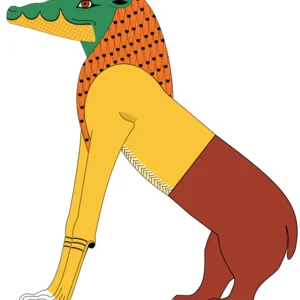
Ammit is a hybrid Egyptian deity, part lion, part hippopotamus, part crocodile. She presides over the Weighing of the Heart in the Hall of Judgment of the Dead. Souls deemed unworthy are devoured by her, condemned to the second death.
Anuket
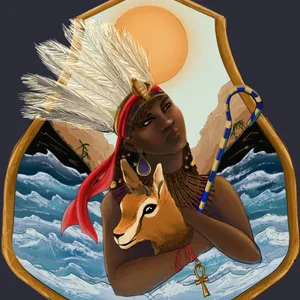
Anuket is an Egyptian goddess personifying the Nile and its annual floods, venerated at Elephantine and in Nubia. She is depicted wearing a crown of feathers and is associated with the fertility of lands irrigated by the river.
Apep
Apophis, or Apep, is the giant serpent of chaos in ancient Egyptian mythology. Each night, he attacks the solar barque of Ra in the underworld, threatening cosmic order. He is the absolute embodiment of chaos, darkness, and oblivion.
Apophis
Apophis is the great serpent of chaos in Egyptian mythology, the embodiment of darkness and absolute disorder. The eternal enemy of the sun god Ra, he attempts each night to swallow the solar barque during its journey through the underworld. The Egyptians performed daily rituals to ward off his attacks and preserve cosmic order.
Arsinoe II
315 av. J.-C. — 269 av. J.-C.
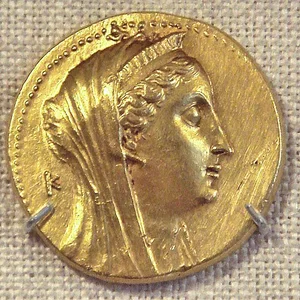
A Macedonian princess born around 316 BCE, daughter of Ptolemy I, she became queen of Ptolemaic Egypt. Co-regent alongside her brother and husband Ptolemy II, she wielded considerable political influence and was deified during her own lifetime.

Aten
Aten is the solar deity of ancient Egypt, represented as the sun disk whose rays end in human hands. Elevated to the status of sole god by Pharaoh Akhenaten in the 14th century BCE, Aten stood at the heart of an unprecedented religious revolution.
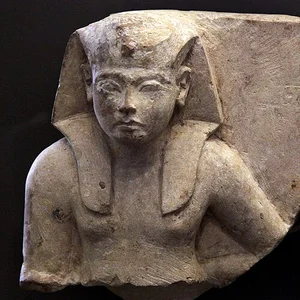
Ay
1400 av. J.-C. — 1400 av. J.-C.
Ay was pharaoh of Egypt around 1323–1319 BCE, successor to Tutankhamun. A senior official and priest, he played a key role at the close of the Amarna period by restoring the traditional worship of the Egyptian gods.
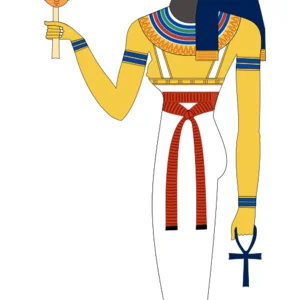
Bastet
Cat goddess of ancient Egyptian mythology, Bastet is the daughter of the sun god Ra and the protector of the home, women, and children. Venerated by the Egyptian people since the Old Kingdom, she embodies both maternal gentleness and protective power. Her cult, centered in Bubastis (Lower Egypt), reached its peak during the 1st millennium BCE.
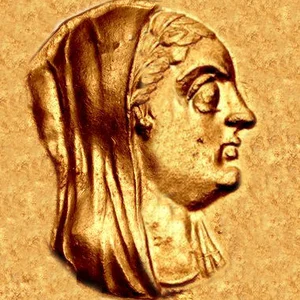
Berenice I
339 av. J.-C. — ?
Macedonian queen who became the wife of Ptolemy I, founder of the Lagid dynasty in Egypt. Mother of Ptolemy II Philadelphus, she was deified after her death and played a foundational role in establishing the dynastic legitimacy of the Ptolemies.
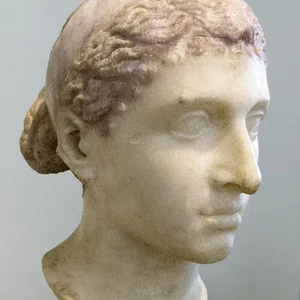
Cleopatra
68 av. J.-C. — 29 av. J.-C.
The last queen of Egypt's Ptolemaic dynasty, Cleopatra VII ruled from 51 to 30 BC. A woman of power and learning, she allied herself with Julius Caesar and later Mark Antony in an effort to preserve her kingdom's independence against Rome.
Meritaten
Eldest daughter of Pharaoh Akhenaten and Queen Nefertiti, Meritaten lived during the Amarna religious revolution in the 14th century BCE. She became Great Royal Wife of Pharaoh Smenkhkare and was abundantly depicted in the art of the Amarna period.
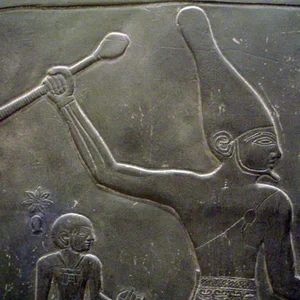
Narmer
3200 av. J.-C. — 3124 av. J.-C.
Narmer is considered the first pharaoh of unified Egypt, around 3100 BCE. He is credited with uniting Upper and Lower Egypt under a single crown, thereby founding the first Egyptian dynasty.
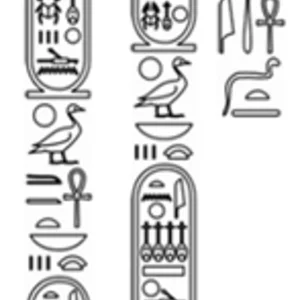
Neferneferuaten
1400 av. J.-C. — 1400 av. J.-C.
Neferneferuaten was a queen of Egypt from the 18th Dynasty, probably co-regent or direct successor to Akhenaten around 1335 BCE. Her exact identity remains debated: she may be Nefertiti under a new name, or a daughter of Akhenaten.
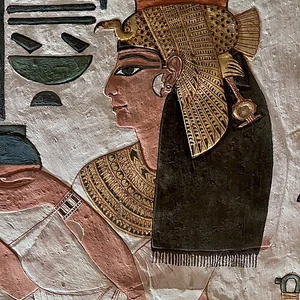
Nefertari
1289 av. J.-C. — 1254 av. J.-C.
Great Royal Wife of Ramesses II, Nefertari is one of the most celebrated queens of ancient Egypt. Her tomb in the Valley of the Queens, with its exceptionally well-preserved paintings, reflects her extraordinary status. Ramesses II dedicated the smaller temple at Abu Simbel to her, where she was depicted at the same scale as the pharaoh himself.
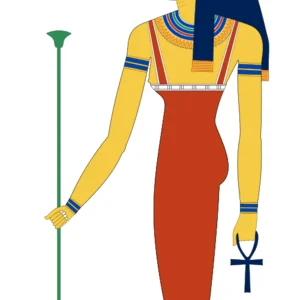
Nephthys
An ancient Egyptian goddess, Nephthys is the protector of the dead and the deceased. Sister of Isis, Osiris, and Set, she plays a fundamental role in Egyptian funerary rites. Her tradition is passed down through the Pyramid Texts and the Coffin Texts.
Nitocris
2250 av. J.-C. — 2191 av. J.-C.
Nitocris is a legendary queen or female pharaoh of ancient Egypt, associated with the end of the Sixth Dynasty (c. 2184 BC). Mentioned by Herodotus and Manetho, she is said to have avenged the murder of her brother before taking her own life. Her historical existence remains debated.
Nut
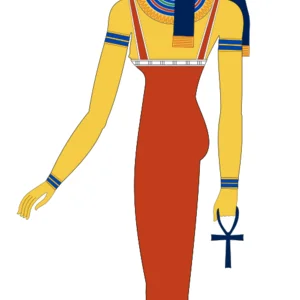
Nut is the Egyptian goddess of the sky in ancient Egyptian mythology. Her arched body, scattered with stars, forms the celestial vault that protects the earth. She swallows the sun each evening and gives birth to it again each morning.
Ptah
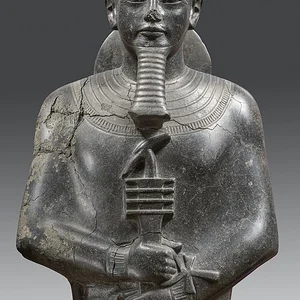
Ptah is one of the oldest and most important gods of ancient Egypt, a creator god and patron of craftsmen and architects. Venerated at Memphis since the Old Kingdom, he embodies creation through thought and speech. His triad with Sekhmet and Nefertum forms the heart of the Memphite cult.
Sekhmet
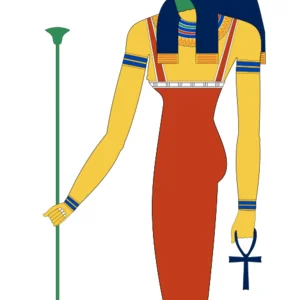
A lioness goddess of ancient Egyptian mythology, Sekhmet embodies both warlike destruction and healing power. Daughter of Ra, she is the protector of the pharaoh on the battlefield and the patron of physicians. Her cult, attested as far back as the Old Kingdom, was especially vibrant in Memphis.
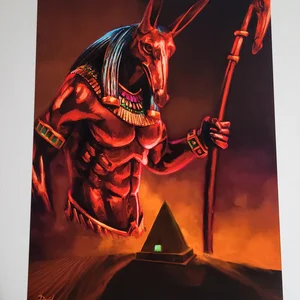
Set
Set is the Egyptian god of chaos, storms, and the desert. Brother of Osiris, whom he murdered to seize the throne of Egypt, he was later defeated by his nephew Horus. An ambivalent figure, he was also venerated as the protector of Ra against the serpent Apophis.
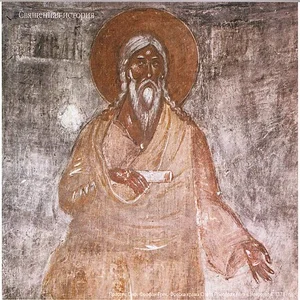
Seth
3873 av. J.-C. — 2957 av. J.-C.
Egyptian god of chaos, storms, and the desert, Seth is one of the most complex deities in the Egyptian pantheon. Brother of Osiris, whom he murdered, he embodies primal violence but also the protective force necessary for cosmic order.
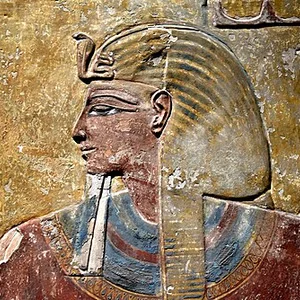
Seti I
1322 av. J.-C. — 1278 av. J.-C.
Seti I was the second pharaoh of the Nineteenth Dynasty of Egypt, reigning around 1294–1279 BC. Son of Ramesses I, he restored Egypt's military and religious power following the Amarna period. He is renowned for his campaigns in Canaan and Libya, as well as for his magnificent temple at Abydos.
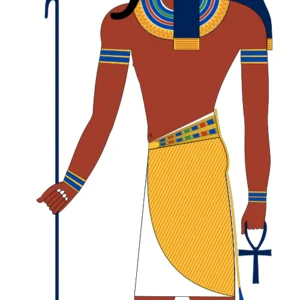
Shou
Shou is the ancient Egyptian deity personifying air and light. Son of Ra and husband of Tefnut, he supports the vault of the sky by separating Nut (the sky) from Geb (the earth). He embodies the vital space between the cosmos and the earthly world.
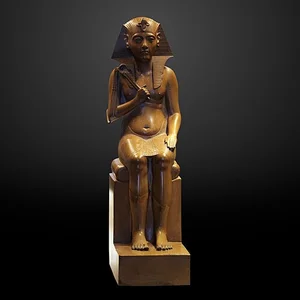
Smenkhkare
1400 av. J.-C. — 1333 av. J.-C.
A short-lived pharaoh of ancient Egypt's 18th Dynasty, Smenkhkare reigned briefly around 1338–1336 BC, succeeding Akhenaten. His identity remains one of the most enigmatic puzzles of ancient Egypt.
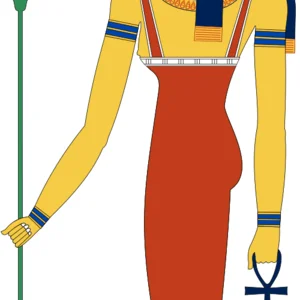
Tefnut
Tefnut is an Egyptian goddess with the head of a lioness, personification of moisture and dew. Daughter of Ra and sister-wife of Shu, she is part of the Ennead of Heliopolis. She embodies life-giving rain and plays a role in maintaining cosmic balance.
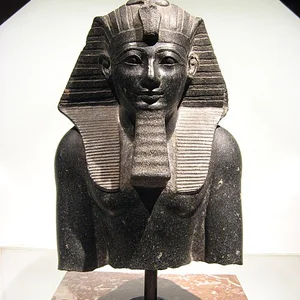
Thutmose III
1480 av. J.-C. — 1424 av. J.-C.
Pharaoh of the 18th Egyptian Dynasty (c. 1479–1425 BCE), Thutmose III is considered the greatest conqueror of ancient Egypt. He led seventeen military campaigns and brought the Egyptian empire to its greatest territorial extent.
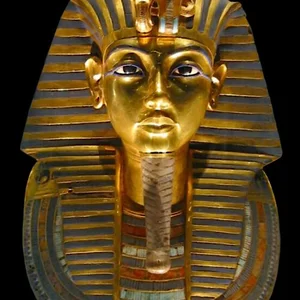
Tutankhamun
1340 av. J.-C. — 1323 av. J.-C.
An Egyptian pharaoh of the 18th Dynasty, he reigned around 1332–1323 BCE. Ascending to the throne at approximately nine years old, he restored polytheistic worship after the Atenist revolution of Akhenaten. His tomb, discovered intact in 1922, is one of the greatest archaeological discoveries of the 20th century.
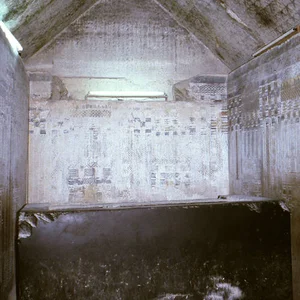
Unas
2374 av. J.-C. — 2349 av. J.-C.
Unas was the last pharaoh of the Fifth Dynasty of ancient Egypt, reigning around 2375–2345 BCE. His pyramid at Saqqara is world-famous for containing the Pyramid Texts, the oldest known corpus of religious writings in human history.
Anubis
Anubis is the funerary god of ancient Egypt, depicted with a black jackal's head. He is the protector of the dead and of cemeteries, and guides souls into the afterlife.
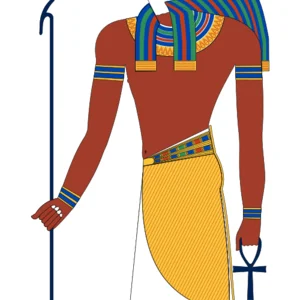
Horus
Horus is a major deity of ancient Egyptian mythology, depicted with the head of a falcon. Son of Osiris and Isis according to legend, he embodies the sky and the sun. He is one of the most important gods in the Egyptian pantheon, venerated since the Old Kingdom.
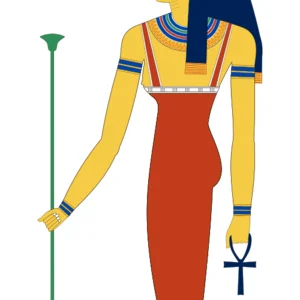
Isis
Isis is a major goddess of Egyptian mythology, associated with magic, motherhood, and protection. She is best known for having resurrected her husband Osiris after his murder by his brother Set, embodying the power of life and regeneration.
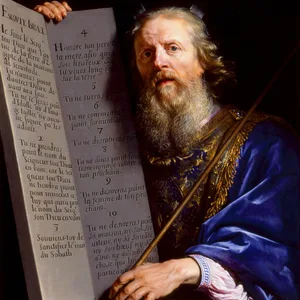
Moses
Moses is a central figure in the Hebrew Bible and Judaism. According to biblical tradition, he led the Hebrew people out of Egypt during the Exodus and received the Ten Commandments on Mount Sinai. He is venerated as the great lawgiver and prophet of the people of Israel.
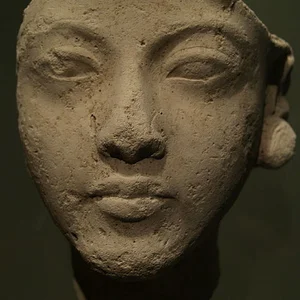
Nefertiti
1369 av. J.-C. — 1329 av. J.-C.
Nefertiti was the Great Royal Wife of Pharaoh Akhenaten, in the 14th century BC. She played an important role in the monotheistic religious reform of her era, promoting the cult of Aten, the sun god. Her idealized face, known through the famous bust, makes her one of the most depicted queens of Egypt.
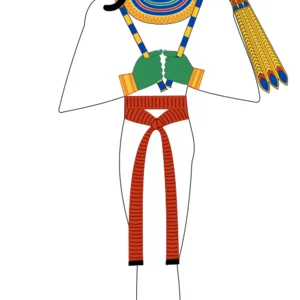
Osiris
Osiris is a major deity of ancient Egyptian mythology, associated with fertility, agriculture, and above all the afterlife and resurrection. According to Egyptian legend, he was killed by his brother Set and then resurrected by his wife Isis, becoming the king of the underworld and the symbol of eternal life.
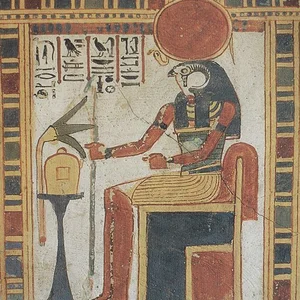
Ra
Ra is the principal solar deity of ancient Egypt, worshipped as the creator of the world and king of the gods. He embodies the life-giving power of the sun and its daily journey across the sky. His cult spanned more than three millennia of Egyptian civilization.
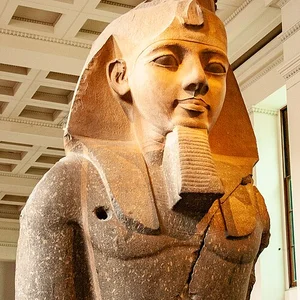
Ramesses II
1302 av. J.-C. — 1212 av. J.-C.
Ramesses II is one of the greatest pharaohs of ancient Egypt, who reigned for 66 years in the 13th century BC. He is famous for his colossal monuments, including the temples of Abu Simbel, and for the Battle of Kadesh against the Hittites.
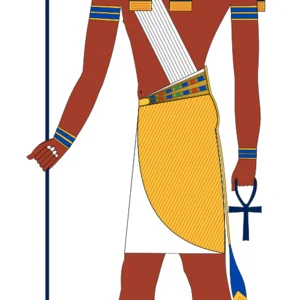
Thoth
Thoth is a deity of ancient Egyptian mythology, associated with wisdom, writing, and knowledge. Depicted with the head of an ibis or a baboon, he was venerated as the inventor of hieroglyphic writing and as the scribe of the gods.
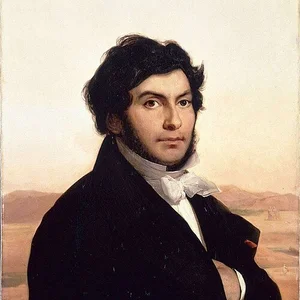
Champollion
1790 — 1832
French Egyptologist (1790-1832) who revolutionized the study of ancient Egypt by deciphering Egyptian hieroglyphs using the Rosetta Stone. His work opened the door to understanding Egyptian civilization and established Egyptology as a scientific discipline.

Herbert Winlock
American Egyptologist and archaeologist, curator and later director of the Metropolitan Museum of Art in New York. He led major excavations at Deir el-Bahari, in Egypt, and advanced knowledge of the Egyptian Middle Kingdom.
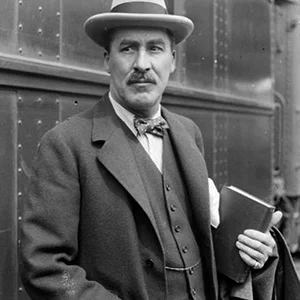
Howard Carter
1874 — 1939
British archaeologist and Egyptologist (1874–1939), Howard Carter is world-famous for discovering in 1922 the nearly intact tomb of Tutankhamun in the Valley of the Kings, Egypt. This discovery is considered the greatest in the history of archaeology.
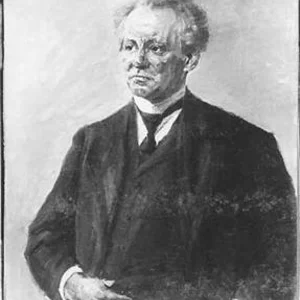
Ludwig Borchardt
1863 — 1938
Ludwig Borchardt (1863-1938) was a German Egyptologist and architect. He led the excavations at Tell el-Amarna, where his team unearthed the famous bust of Nefertiti in 1912. He founded the German Archaeological Institute in Cairo.