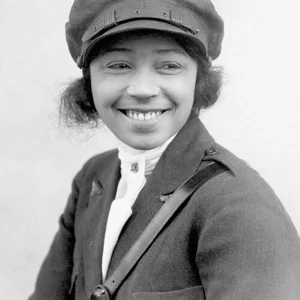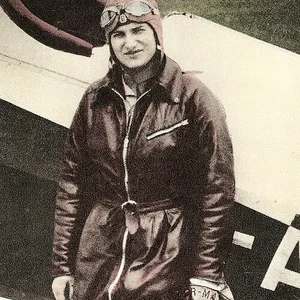

Hélène Boucher (1908–1934) was a French aviator who set several world speed records in the 1930s. Nicknamed “the fiancée of the air,” she stands as a pioneering figure in women's aviation, before dying tragically at age 26 in a training accident.
Hélène Boucher(1908 — 1934)
Hélène Boucher
France
8 min read
Frequently asked questions
Key Facts
- 1908: Born in Paris on May 23
- 1931: Earns her pilot's license
- 1934: Sets a women's world speed record at 445 km/h
- 1934: Simultaneously holds multiple world speed records over 1 km, 100 km, and 1,000 km
- 1934: Dies on November 30 at age 26 from injuries sustained in a training flight accident at Guyancourt
Works & Achievements
Ratified by the Fédération Aéronautique Internationale, this record stands as the pinnacle of Hélène Boucher's career. It made her the fastest female aviator in the world and elevated her to the status of a national icon.
In 1934, Hélène Boucher simultaneously held multiple women's world records over different distances (500 km, 1,000 km), reflecting the consistency and power of her performances throughout the year.
This prestigious air speed competition brought together the elite of French pilots. Hélène Boucher's presence among the male competitors was a powerful symbol of breaking into a space that had until then been exclusively reserved for men.
Hélène Boucher performed at numerous air shows across France. Her aerobatic routines drew enthusiastic crowds and helped bring sport aviation to a wider public.
Anecdotes
Before ever taking the controls of an aircraft, Hélène Boucher first threw herself into skydiving. In 1930, she made her first parachute jump and was instantly captivated by the sky. It was this passion for the heights that led her to earn her pilot's licence in 1931, opening the door to a dazzling — though tragically brief — career.
In August 1934, Hélène Boucher shattered the women's world speed record several times in quick succession. On 11 August, at the controls of her Renault-powered Caudron racing plane, she reached 444.8 km/h — a breathtaking speed for the era, aboard a machine barely larger than a torpedo, with no pressurised cockpit or modern safety equipment.
Nicknamed "the sweetheart of the skies" by the press, Hélène Boucher was a popular and widely admired figure in 1930s France. She embodied daring and modernity at a time when aviation was almost exclusively a man's world, and her courage both fascinated the public and challenged prevailing attitudes.
Her death on 30 November 1934 sent a wave of national mourning across France. Her Caudron crashed during a training session at Guyancourt after a landing failure. She was only 26. The whole country paid tribute to this pioneer: thousands attended her funeral, and she was posthumously awarded the Légion d'honneur.
Hélène Boucher competed in the 1934 Coupe Deutsch de la Meurthe, one of the most prestigious air races of the era. She went up against seasoned male pilots in a world where women aviators were still regarded as a curiosity. Her presence and her performances helped legitimise women's aviation in the eyes of the general public.
Primary Sources
The women's world speed record over 100 km on a closed circuit is officially ratified at 444.8 km/h in favor of Miss Hélène Boucher, flying a Caudron aircraft with a Renault engine.
France loses today one of her most brilliant aviators. Hélène Boucher, who had devoted her short life to the conquest of the skies, died as she had lived: at the controls of her aircraft, in the embrace of the sky she loved so dearly.
Among the competitors in this great national event, Miss Boucher distinguished herself by her composure and mastery of her craft, holding her own against the country's finest male pilots.
The Legion of Honour medal is awarded posthumously to Miss Hélène Boucher, aviator, in recognition of her outstanding services to French aviation and her world speed records.
Key Places
Hélène Boucher was born on January 23, 1908, in the 4th arrondissement of Paris, into a modest family. It was in this city that she grew up, found her footing, and began to dream of the skies.
One of the nerve centers of French sport aviation in the 1930s, located south of Paris. Hélène Boucher trained there regularly and took part in national competitions.
It was on this airfield near Versailles that Hélène Boucher was killed on November 30, 1934, during a training flight. The accident occurred on landing, following a mechanical failure of her aircraft.
A major center for military and sport aviation in the south of France, Istres hosted several speed record attempts in which Hélène Boucher took part during 1934.
An airfield close to Paris, Villacoublay was one of the main training and competition venues frequented by the leading figures of French aviation during the interwar years.
Typical Objects

Essential for pilots of the 1930s, this soft leather helmet protected the head from cold and noise in open cockpits. Hélène Boucher wore one without fail during her competition flights, making it the signature accessory of her public image.

These wide goggles with metal frames and tinted lenses shielded the eyes from wind, dust, and insects in open-cockpit aircraft. Together with the leather helmet, they were the defining visual symbol of male and female aviators in the interwar years.
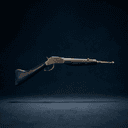
An ultralight, high-powered racing monoplane designed to break speed records, fitted with a liquid-cooled Renault engine. It was at the controls of an aircraft from this family that Hélène Boucher set her world records in 1934.

A flight instrument that measures altitude by reading atmospheric pressure, essential for record-breaking flights and aerobatic maneuvers. Competition pilots had to read it in an instant, even at speeds above 400 km/h.

A full-body garment made of canvas or leather, worn to protect against the cold and engine oil spray. Put on over ordinary clothes, it transformed Hélène Boucher — an elegant Parisienne on the ground — into a figure of the aeronautical avant-garde the moment she approached her aircraft.

A precision instrument used by FAI officials to time laps over a measured course or speed base. Without this stopwatch and its official record, none of Hélène Boucher's performances could have been recognized as an official world record.
A specialized map showing terrain relief, airfields, restricted zones, and visual landmarks on the ground. Pilots of the 1930s often navigated by sight with the chart on their knees in the cockpit, without any of the modern electronic instruments available today.
School Curriculum
Vocabulary & Tags
Key Vocabulary
Daily Life
Morning
A training day began at dawn with the reading of weather reports posted at the airfield office. Hélène Boucher would then inspect her aircraft with the mechanic, checking the engine, control surfaces, and fuel before any flight, in the cold of early tarmac mornings.
Afternoon
Flight sessions took place in the middle of the day, when atmospheric conditions were most stable. During record attempts, FAI officials timed each pass over the measured course, while the ground crew carefully logged every piece of data.
Evening
After landing, Hélène Boucher would debrief with her mechanic: the aircraft's behavior, oil consumption, unusual vibrations. Evenings might be spent at receptions in Parisian aeroclubs, where well-known pilots exchanged experiences and planned their next attempts.
Food
The diet of competitive aviators was sober and pragmatic: light meals before flights to avoid altitude sickness, and hearty food in the evening to recover from physical exertion. Coffee was omnipresent in the aeroclubs — a universal remedy against cold mornings on the tarmac.
Clothing
On the ground, Hélène Boucher wore elegant outfits in keeping with 1930s fashion — dresses or tailored suits, a hat, and heels. In flight, she pulled on a leather or canvas flying suit over her clothes, topped with a pilot's helmet and goggles, transforming a young Parisian woman into a figure at the vanguard of aviation.
Housing
Hélène Boucher lived in Paris with her family. Her sporting commitments frequently took her to stay near airfields, in modest hotels or with members of local aeroclubs — far from bourgeois comfort, but as close as possible to the sky she loved.
Historical Timeline
Period Vocabulary
Liens externes & ressources
Références
Œuvres
Record du monde féminin de vitesse sur 100 km en circuit fermé (444,8 km/h)
11 août 1934
Records du monde féminins de vitesse sur diverses distances
1934
Participation à la Coupe Deutsch de la Meurthe
1934
Démonstrations d'acrobatie aérienne lors des meetings nationaux
1932–1934