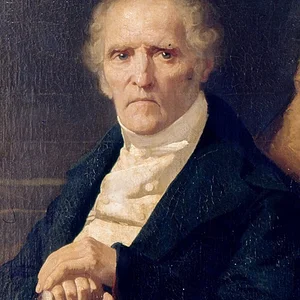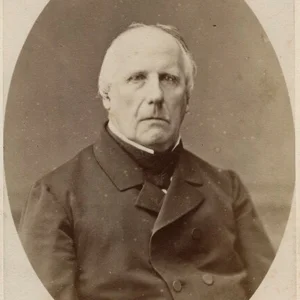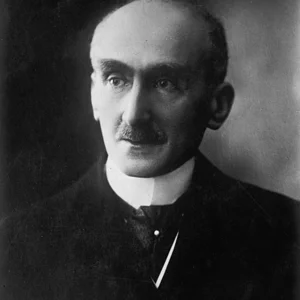

French philosopher (1859–1941) who revolutionized modern thought by opposing intuition to rational intelligence and developing a philosophy of duration. His major works, 'Laughter' and 'The Creative Mind', explore creativity and the evolution of consciousness. He received the Nobel Prize in Literature in 1927 for the body of his philosophical work.
Frequently asked questions
Famous Quotes
« Duration is the form which the succession of our conscious states assumes when our ego lets itself live, when it refrains from separating its present state from its former states.»
« Intuition is the sympathy by which one is transported into the interior of an object in order to coincide with what is unique in it.»
« Laughter is, above all, a certain grimace that warns us.»
Key Facts
- 1889: Publication of 'Time and Free Will: An Essay on the Immediate Data of Consciousness', foundation of his theory of duration
- 1900: Becomes professor at the Collège de France
- 1907: Publication of 'Laughter: An Essay on the Meaning of the Comic'
- 1927: Awarded the Nobel Prize in Literature
- 1932: Publication of 'The Two Sources of Morality and Religion', his last major work
Works & Achievements
Bergson's founding thesis in which he introduces the concept of 'duration' as the inner experience of time, irreducible to the time measured by science. This work constitutes the starting point of his entire philosophy.
A major work exploring the relationships between the brain, memory, and perception. Bergson distinguishes habit-memory (mechanical) from pure memory (spiritual), laying the foundations of a philosophy of mind.
A brilliant essay in which Bergson analyzes laughter as a social reaction to 'the mechanical encrusted upon the living.' An accessible work frequently studied in secondary education for its clarity and depth.
Bergson's masterpiece, in which he develops the concept of the élan vital to propose a creative reading of biological evolution against pure Darwinian mechanism. This work earned him immediate international recognition.
Bergson's last major work, distinguishing closed morality (tribal, mechanical) from open morality (universal, creative), and exploring mysticism as the culmination of the élan vital in humanity.
A collection of essays and lectures in which Bergson revisits his philosophical method and defends intuition as a mode of knowledge superior to analytical intelligence for grasping living reality.
Anecdotes
Bergson's lectures at the Collège de France were so popular that hundreds of people would crowd outside the doors several hours before they opened. Society ladies sometimes had their servants reserve their seats in advance, and the hall overflowed into the corridors. This phenomenon, unique in French academic history, earned him the nickname 'philosopher of the salons'.
When Vichy's antisemitic laws were promulgated in 1940, Bergson — elderly and ill — could have been granted an exemption due to his worldwide renown. He categorically refused any preferential treatment and painfully rose from his sickbed to register in person on the lists of Jews, as an act of solidarity with his persecuted co-religionists. This gesture of great moral dignity compelled the admiration of his contemporaries.
In 1917, during the First World War, the French government sent Bergson on a secret diplomatic mission to the United States to persuade President Woodrow Wilson to enter the war on the side of the Allies. Philosopher turned diplomat, he met with Wilson on several occasions, and his conversations contributed, according to some historians, to influencing the American decision.
Bergson was a cousin by marriage of Marcel Proust, who was profoundly influenced by his philosophy of time and memory. Proust attended his thesis defence in 1889 and later acknowledged his debt to the Bergsonian notion of 'duration'. Yet Bergson declined the invitation to read 'In Search of Lost Time', feeling that Proust illustrated a conception of time different from his own.
Shortly before his death, Bergson — who had long drawn close to Catholicism and had nearly converted — explained in his will why he had remained faithful to Judaism: he did not want to abandon a people who were about to be persecuted. This decision, set down in his final wishes, reveals the profound ethical consistency of the philosopher of the élan vital.
Primary Sources
Pure duration is the form which the succession of our conscious states assumes when our ego lets itself live, when it refrains from separating its present state from its former states.
The vital impetus we speak of consists, in short, in a need for creation. It cannot create absolutely, because it encounters matter before it, that is to say the movement inverse to its own.
Any incident is comic that calls our attention to the physical side of a person when it is the moral side that is at stake. Why does one laugh at an orator who sneezes at the most pathetic moment of his speech? Because something mechanical is encrusted upon something living.
A philosopher worthy of the name has never said more than a single thing; and even then it is something he has tried to say rather than actually said, and what he has said he has only half said.
Humanity lies groaning, half crushed beneath the weight of its own progress. It does not sufficiently realize that its future is in its own hands. It is for humanity to see first whether it wants to go on living.
Key Places
Institution where Bergson taught from 1900 to 1921 and where his lectures on the philosophy of duration drew considerable crowds, making him the most celebrated intellectual figure of the Belle Époque.
Elite graduate school where Bergson pursued his brilliant studies from 1878 and forged his philosophical training, rubbing shoulders with the future intellectual elites of France.
School where Bergson taught as a philosophy professor from 1883 to 1888, a formative provincial period during which he wrote his foundational thesis on consciousness and time.
Institution to which Bergson was elected a member in 1914, cementing his status as a major figure in French letters and thought, where he delivered several widely noted speeches.
Bourgeois residential district where Bergson lived for much of his adult life, in an apartment that served as the setting for numerous intellectual conversations with the leading figures of his time.
Typical Objects
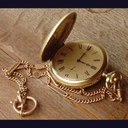
The very object Bergson used to illustrate the difference between time as measured by science (mechanical ticking, divisible) and duration as lived inwardly, continuous and indivisible. For him, the watch represents the artificial spatialization of time.
📷 CC BY-SA 3.0 · Wikimedia Commons ↗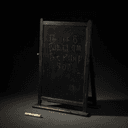
Bergson was a remarkable teacher who made extensive use of the blackboard to illustrate his abstract concepts with diagrams. His students at the Collège de France recalled his drawings representing memory as a cone or duration as a continuous line.
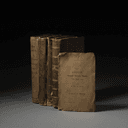
Passionately interested in the life sciences, Bergson avidly read the works of biologists and naturalists of his time. His library contained the writings of Darwin, Lamarck, and contemporary embryologists, all of which nourished his theory of the élan vital.
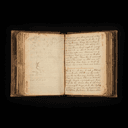
Bergson worked very slowly and wrote his texts by hand with extreme care, revising at length before any publication. His notebooks bear witness to a thought in perpetual motion, in keeping with his philosophy of duration.
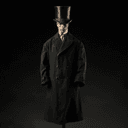
The characteristic attire of the bourgeois professor of the Belle Époque, which Bergson wore during his lectures and talks. His sartorial elegance contrasted with the revolutionary radicalism of his philosophy.
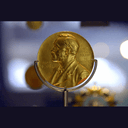
Bergson received the Nobel Prize in Literature in 1927, an extremely rare distinction for a philosopher. Unable to travel to Stockholm for health reasons, he had his acceptance speech read on his behalf, in which he defended the value of philosophical intuition.
📷 CC BY-SA 4.0 · Wikimedia Commons ↗School Curriculum
Vocabulary & Tags
Key Vocabulary
Daily Life
Morning
Bergson rose early and devoted his mornings to reading and writing, working with a methodical slowness he claimed as an intellectual necessity. He tirelessly revised his manuscripts, sometimes spending months on a single chapter before judging it worthy of publication.
Afternoon
His afternoon lectures at the Collège de France (until 1921) were exceptional events: Bergson prepared his lessons carefully and improvised eloquently before packed lecture halls. Outside teaching periods, he received visitors, students, and intellectuals from around the world at his Parisian apartment.
Evening
Bergson's evenings were often devoted to the literary and philosophical salons of Parisian high society, where his celebrity made him a highly sought-after guest. He also read literature, particularly appreciating Proust, and engaged in prolonged inner reflection that he considered the source of his philosophical intuitions.
Food
Like most Parisian bourgeois of his era, Bergson followed a classic French diet: family meals with a starter, main course, and cheese, accompanied by a moderate table wine. His wife, from a well-to-do family, managed the household to the comfortable standards of the intellectual bourgeoisie of the Third Republic.
Clothing
Bergson wore the characteristic academic attire of his milieu and era: a buttoned black frock coat, starched white collar, understated tie, and top hat for official outings. His elegance was that of a Collège de France professor mindful of representing his position with dignity.
Housing
Bergson lived for many years in fine Haussmann-style apartments in the bourgeois arrondissements of Paris, notably in the 16th. His interior reflected the taste of a cultured intellectual: an imposing library, a solid wood desk, and a drawing room where he received students and distinguished visitors in a setting that was both elegant and scholarly.
Historical Timeline
Period Vocabulary
Visual Style
Esthétique Belle Époque franco-impressionniste, tons chauds ambrés et sépia, lumière dorée filtrant par de hautes fenêtres haussmanniennes, intérieurs académiques élégants évoquant la fluidité du temps et de la pensée.
Sound Ambience
L'atmosphère sonore de la Belle Époque parisienne : amphithéâtres du Collège de France bondés, craie sur tableau noir, murmures admiratifs d'une foule intellectuelle et bruits feutrés d'un Paris encore à cheval entre deux siècles.
Liens externes & ressources
Références
Œuvres
Essai sur les données immédiates de la conscience
1889
Matière et mémoire
1896
Le Rire. Essai sur la signification du comique
1900
L'Évolution créatrice
1907
Les Deux Sources de la morale et de la religion
1932
La Pensée et le Mouvant
1934