 flip
flipPlakous, Honey and Fresh Cheese Cake
Plakous, Honey and Fresh Cheese Cake
Why this dish? Hera is not only appeased with the blood of oxen: honey and flour cakes, those sweet offerings called pelanos, are also placed on her altars. Goddess of marriage, she willingly receives these sweets at weddings held under her protection — for the honey cake seals unions as much as oaths.
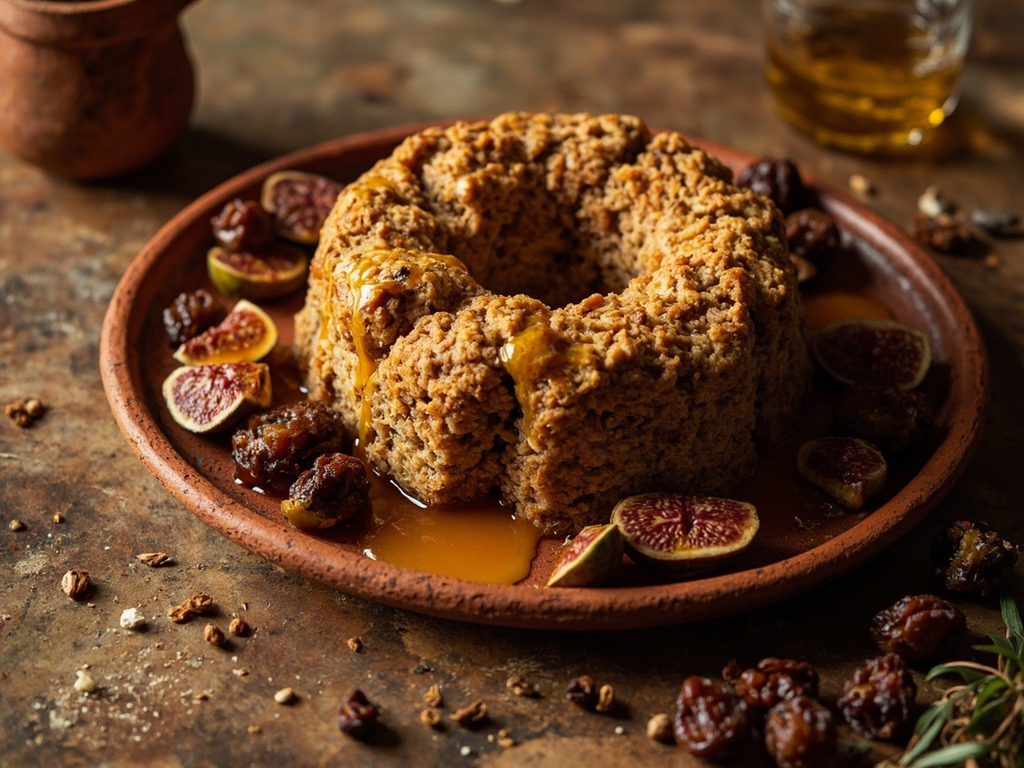
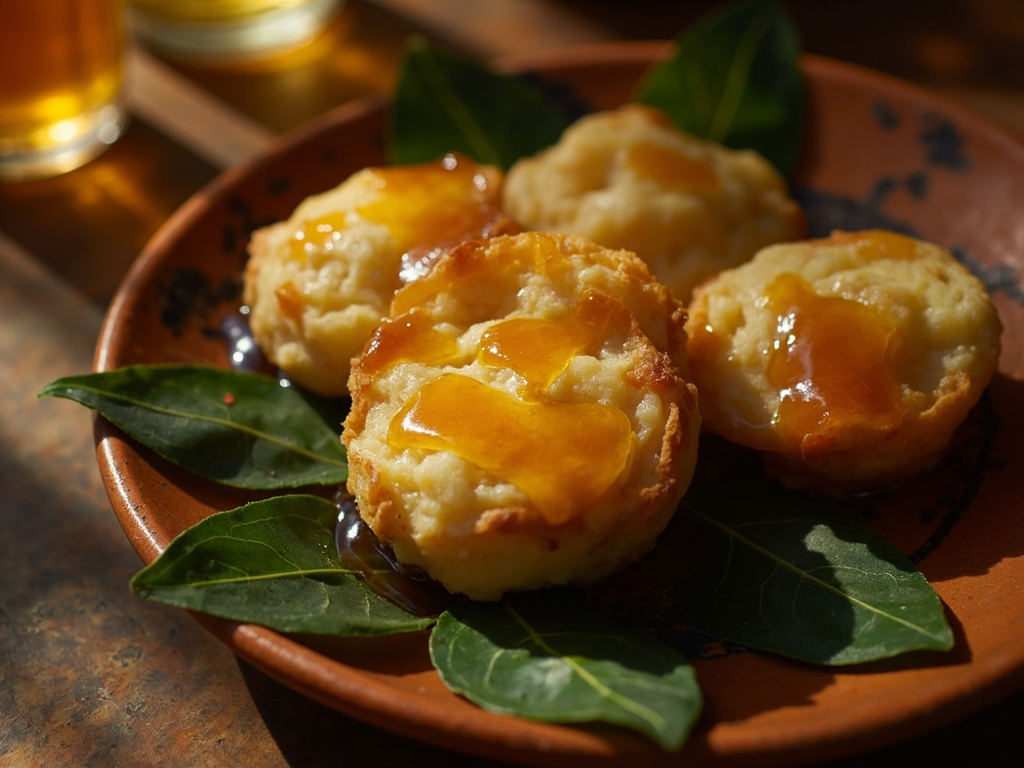
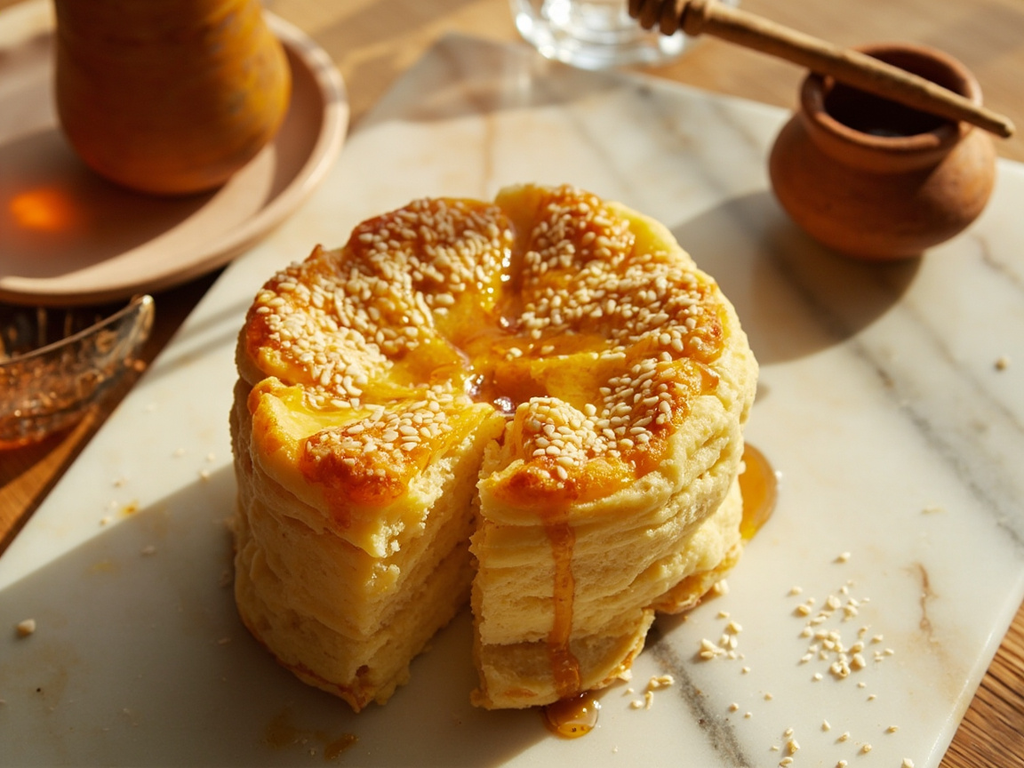
A soft cake made of fresh cheese beaten with honey, bound with flour and scented with sesame, gently baked until golden. Plakous is the distant ancestor of many Mediterranean cheesecakes.
You who marry under my gaze, listen to the queen of wives: no oath holds without sweetness. Beat the fresh cheese with the honey of bees until it becomes cream, bind it with a little flour, sprinkle with sesame, and let it brown with patience. Place a portion on my altar and share the rest with your betrothed. Thus your union will be sweet as this cake, and I, Hera, will be its faithful guardian.
- •Fresh ewe's milk cheese — a fine lump (base)
- •Honey — generously (sweetener and binder)
- •Wheat flour — as needed (structure)
- •Sesame seeds — a handful (flavor)
Plakous, Honey and Fresh Cheese Cake
A soft cake made of fresh cheese beaten with honey, bound with flour and scented with sesame, gently baked until golden. Plakous is the distant ancestor of many Mediterranean cheesecakes.
Why this dish? Hera is not only appeased with the blood of oxen: honey and flour cakes, those sweet offerings called pelanos, are also placed on her altars. Goddess of marriage, she willingly receives these sweets at weddings held under her protection — for the honey cake seals unions as much as oaths.
You who marry under my gaze, listen to the queen of wives: no oath holds without sweetness. Beat the fresh cheese with the honey of bees until it becomes cream, bind it with a little flour, sprinkle with sesame, and let it brown with patience. Place a portion on my altar and share the rest with your betrothed. Thus your union will be sweet as this cake, and I, Hera, will be its faithful guardian.
Ingredients (period version)
- Fresh ewe's milk cheese — a fine lump (base)
- Honey — generously (sweetener and binder)
- Wheat flour — as needed (structure)
- Sesame seeds — a handful (flavor)
Ingredients
- Ricotta or fresh ewe's milk cheese — 400 g (base)
- Honey — 120 g (plus a little for drizzling) (sweetener and binder)
- Flour — 60 g (structure)
- Eggs — 2 (binder)
- Sesame seeds — 2 tbsp (flavor)
Method
- Preheat the oven to 170 °C.
- Beat the fresh cheese with the honey until smooth and creamy.
- Add the eggs one by one, then the sifted flour.
- Pour into an oiled mold, sprinkle with sesame seeds.
- Bake for 35 to 40 minutes: the cake should be set and golden.
- Let cool slightly, drizzle with honey, and serve at room temperature.
How it was made : The Greeks offered various votive cakes to the gods (the generic term pelanos, and named forms like plakous, popanon...). The plakous later described by Cato in the Roman world (placenta) derives from this tradition of cheese, honey, and flour cakes, sometimes layered.
The contemporary twist : Served as individual portions in small cups, topped with a few pomegranate seeds for color and acidity: 'Olympus cheesecake'.
Sources : Athenaeus, The Deipnosophists (Greek cakes) · Cato the Elder, De agricultura (placenta, heir to plakous)
Hera · Charactorium