 flip
flipPelanos with Honey for the Herm
Pelanos with Honey for the Herm
Why this dish? At crossroads and doorways stood herms: stone pillars topped with the head of Hermes, guardians of roads and thresholds. Travelers and merchants would leave a honey cake to attract luck — the "hermaion," the happy find, is the god's gift.
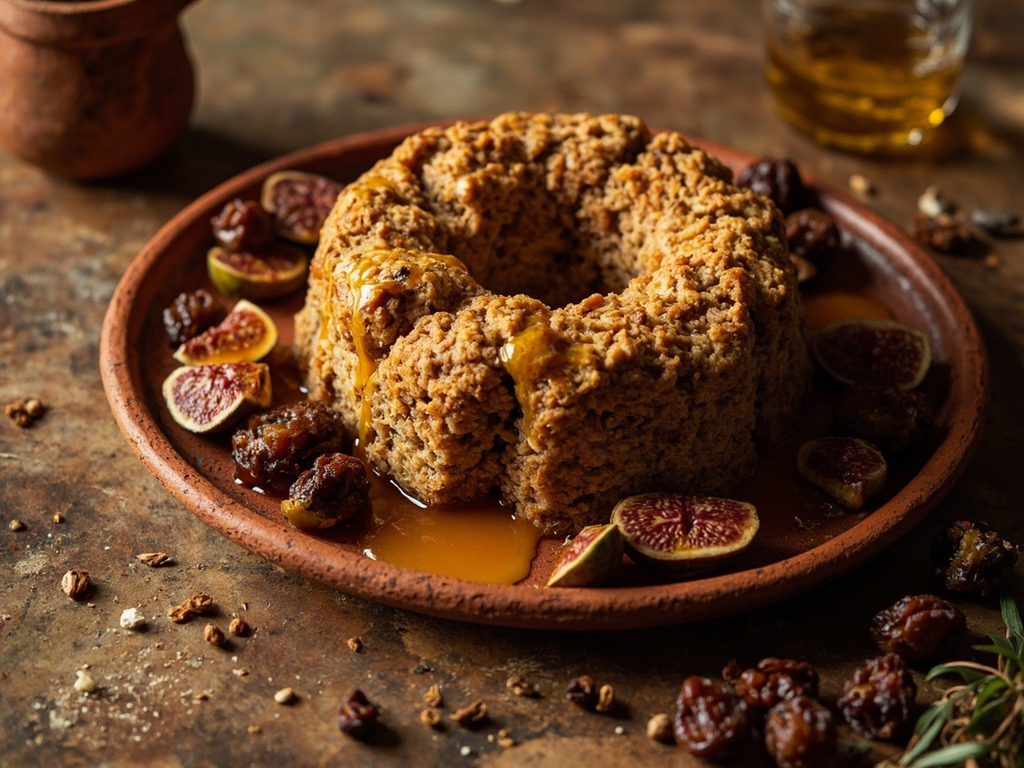
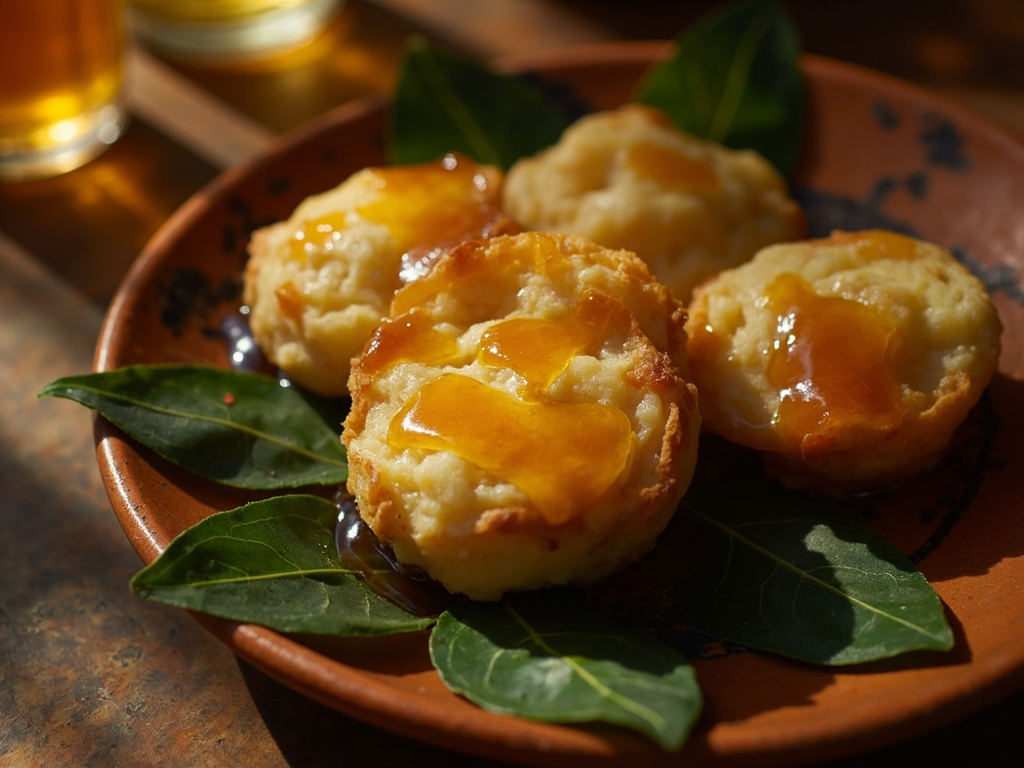
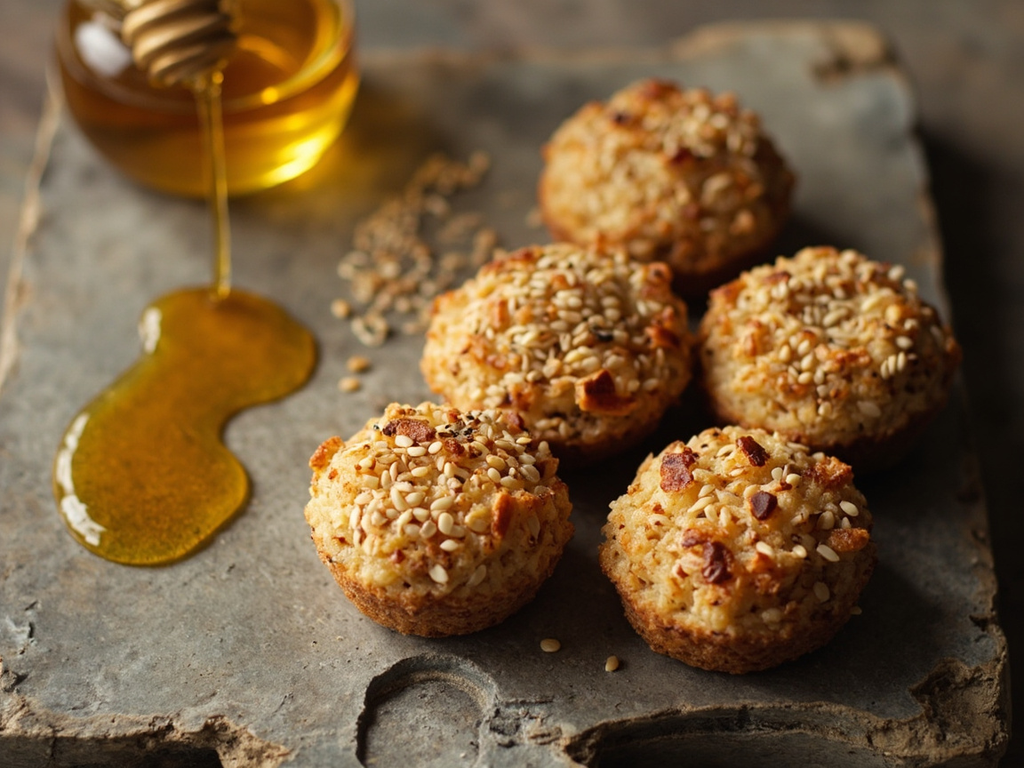
A small round flatbread of barley and wheat bound with honey and olive oil, sprinkled with sesame, baked until golden. Sweet, dense, made to be placed, not devoured — the typical offering of the hurried passerby.
Approach, traveler, and do not pass my stone without a word. I am the god of paths: it is I who make the lost coin and the right road appear under your foot. Offer me this little honey cake — no need to slaughter an ox, a bit of barley, a drizzle from Hymettus, and we are friends. Roll it round between your palms, sprinkle it with sesame as one sows luck, and go: the rest of the journey is my concern.
- •Roasted barley flour (alphita) — two handfuls (cereal base)
- •Wheat flour — one handful (binder, structure)
- •Thyme honey — as needed, until bound (sacred sweetener, binder)
- •Olive oil — a drizzle (softness)
- •Sesame seeds — a pinch (decoration, crunch)
- •Warm water — as needed (dough adjustment)
Pelanos with Honey for the Herm
A small round flatbread of barley and wheat bound with honey and olive oil, sprinkled with sesame, baked until golden. Sweet, dense, made to be placed, not devoured — the typical offering of the hurried passerby.
Why this dish? At crossroads and doorways stood herms: stone pillars topped with the head of Hermes, guardians of roads and thresholds. Travelers and merchants would leave a honey cake to attract luck — the "hermaion," the happy find, is the god's gift.
Approach, traveler, and do not pass my stone without a word. I am the god of paths: it is I who make the lost coin and the right road appear under your foot. Offer me this little honey cake — no need to slaughter an ox, a bit of barley, a drizzle from Hymettus, and we are friends. Roll it round between your palms, sprinkle it with sesame as one sows luck, and go: the rest of the journey is my concern.
Ingredients (period version)
- Roasted barley flour (alphita) — two handfuls (cereal base)
- Wheat flour — one handful (binder, structure)
- Thyme honey — as needed, until bound (sacred sweetener, binder)
- Olive oil — a drizzle (softness)
- Sesame seeds — a pinch (decoration, crunch)
- Warm water — as needed (dough adjustment)
Ingredients
- Barley flour — 120 g (base)
- Wheat flour (all-purpose) — 60 g (binder)
- Thyme honey (or wildflower) — 90 g (sweetener, binder)
- Olive oil — 2 tbsp (softness)
- Sesame seeds — 1 tbsp (decoration)
- Warm water — 40–60 ml (hydration)
Method
- Mix the two flours in a bowl.
- Add honey and olive oil, then warm water little by little until a soft, non-sticky dough forms.
- Shape small round flatbreads the size of a palm, about a finger thick.
- Generously sprinkle with sesame seeds, pressing them in to adhere.
- Bake at 180°C for about 18–20 minutes, until the edges are golden. Let cool slightly: the flatbread firms up as it cools.
How it was made : "Bloodless" offerings (pelanos, popana) — porridges, flatbreads, and honeyed cereal cakes — were the daily bread of Greek piety, far more common than blood sacrifices reserved for great occasions. They were placed on domestic altars, at herms, in sanctuaries. Since sugar was unknown, honey was the only sweetener.
The contemporary twist : Serve as a bite-sized dessert at the end of a meal under the name "Hermaion," with a drizzle of warm honey and fresh thyme — luck is eaten in a mouthful.
Sources : Theophrastus, Characters (The Superstitious Man) · Pausanias, Description of Greece · Andrew Dalby, Siren Feasts: A History of Food and Gastronomy in Greece (1996)
Hermes · Charactorium