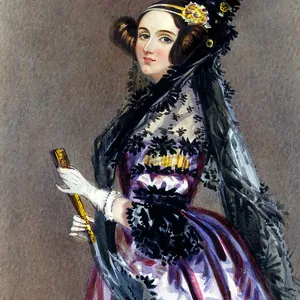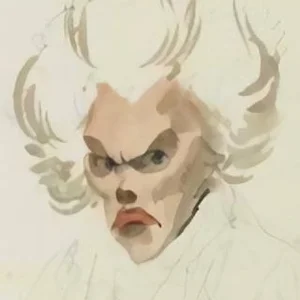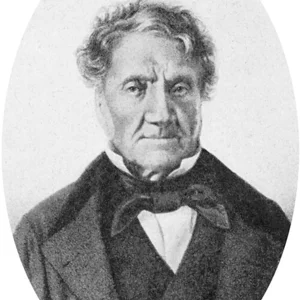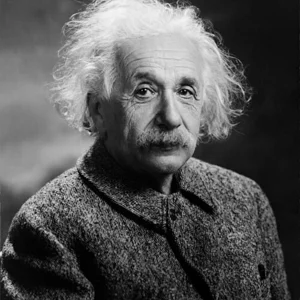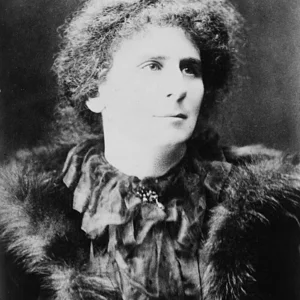

British mathematician and engineer (1854-1923), pioneer of electrical engineering. She conducted groundbreaking research on the electric arc and invented several technical devices, becoming the first woman elected as an associate member of the Royal Society.
Hertha Ayrton(1854 — 1923)
Hertha Ayrton
Royaume-Uni, Royaume-Uni de Grande-Bretagne et d'Irlande
8 min read
Frequently asked questions
Key Facts
- 1854: Birth of Phoebe Sarah Marks in Portsea (England), the future Hertha Ayrton
- 1880: Earns her mathematics degree from Girton College, Cambridge
- 1899: Publishes her research on the electric arc and reads a paper before the Institution of Electrical Engineers
- 1902: Nominated for fellowship of the Royal Society, rejected because she was a married woman; elected associate member in 1906
- 1915-1918: Invents the Ayrton fan, used to dispel toxic gases from the trenches during the First World War
Works & Achievements
A mathematical instrument for dividing and measuring line segments with precision, patented before her marriage. The first public demonstration of her inventive abilities in the field of scientific instruments.
The first oral scientific communication delivered by a woman at the IEE, presenting her research on the parasitic hissing of the electric arc and its physicochemical causes.
A landmark paper setting out her theories on the formation and stability of the electric arc, published in the most prestigious journal in British science.
A definitive treatise born of several years of experimental research, adopted as a textbook in engineering schools. The crowning scientific contribution of her career, cited for decades.
A series of publications in the Proceedings of the Royal Society on the formation of sand ripples under wave action, demonstrating the breadth of her scientific curiosity beyond electrical engineering.
A portable fan designed to disperse poison gas in the trenches during the First World War. A humanitarian invention reflecting her commitment to applying science in the service of soldiers in danger.
Anecdotes
Born Phoebe Sarah Marks, she adopted the name Hertha in her teens, in tribute to a poem by Swinburne evoking a goddess of nature. This choice reflects her independent spirit and her determination to forge her own identity, far from the Victorian conventions that weighed heavily on women of her generation.
In 1902, the Royal Society considered electing her a Fellow — the highest scientific honour in Britain — but its statutes excluded married women. She was ultimately elected "honorary associate member
the first woman to receive this distinction. The decision highlights the contradictions of an institution that acknowledged her genius while denying her formal equality.
During the First World War, Hertha Ayrton invented a portable fan — the "Ayrton fan" — capable of driving toxic gases out of trenches through powerful, localised movements of air. She had thousands manufactured at her own expense and sent them to the front, but the British Army was slow to adopt them on a large scale, to the inventor's great frustration.
A close friend of Marie Curie, she welcomed the Polish scientist into her London home in 1912 when Curie, exhausted and hounded by the press in the wake of the Langevin scandal, needed rest and privacy. The two women, pioneers in different fields, shared the same conviction: science has no sex.
In 1899, she became the first woman to read her own paper before the Institution of Electrical Engineers, on the hissing of the electric arc. The event was noted in the specialist press, and she was elected a member of the IEE that same year — again, a first for a woman.
Primary Sources
The arc depends for its existence on the conducting power of the vapour of the electrodes. If this vapour be removed or cooled, the arc is extinguished. The positive crater of the arc is formed by the volatilisation of the carbon, which is carried across to the negative electrode.
The hissing of the arc is caused by the rapid oxidation of the carbon at the tip of the positive electrode, which produces carbon dioxide and monoxide. The absence of hissing in vacuo confirms this explanation.
The electric arc is not a simple phenomenon; it results from a series of complex physical and chemical interactions at the surface of the electrodes, governed by the nature and temperature of the vapour produced.
The ripples formed in sand by water are due to oscillatory motion of the liquid, and their dimensions are determined by the velocity of that motion and the size of the sand grains.
Key Places
An industrial port town where Hertha Ayrton was born in 1854, into a modest Jewish family of Polish immigrants. The hardworking environment of her childhood forged her tenacious character.
Founded in 1869, it was one of the first English colleges to admit women. Hertha studied mathematics there from 1876 to 1881 and passed the Tripos, but Cambridge refused to award degrees to women until 1948.
In her London home in the Paddington district, Hertha Ayrton set up a private laboratory where she conducted the bulk of her research on the electric arc and sand ripples.
A leading institution of the British electrical engineering community, where Hertha Ayrton delivered the first oral paper by a woman in 1899 and was elected a member that same year.
Hertha Ayrton and Marie Curie shared a scientific and activist friendship. Their reciprocal visits between London and Paris came to symbolise the international solidarity of women in science at the turn of the twentieth century.
Typical Objects

A lighting device with two carbon electrodes between which an intensely bright arc flashes. Hertha Ayrton devoted years to understanding its mechanisms — particularly the hissing and instability — in order to improve public lighting in major cities.

An essential instrument for measuring electric current in her laboratory. She used it to precisely quantify variations in the arc's current, laying the groundwork for a rigorously experimental approach to electrical engineering.

A mathematical instrument she designed and patented in 1884, used to divide a line segment into equal parts with great precision. This first patent demonstrates her inventiveness in the field of scientific measuring instruments.

A portable fan with rigid vanes that she invented during the First World War to disperse toxic gases in the trenches. Simple, lightweight, and effective, it was distributed to thousands of British soldiers.

The essential components of the arc lamp that Hertha Ayrton studied with painstaking care. She analysed how their wear, composition, and temperature affect the stability and intensity of the arc.

Her experimental notebooks, partly preserved at the British Library and Girton College, bear witness to a rigorous experimental method: measurement tables, apparatus diagrams, and hypotheses refined step by step.
School Curriculum
Vocabulary & Tags
Key Vocabulary
Tags
Daily Life
Morning
Hertha Ayrton begins her day early, often after a night spent reading scientific literature. She has a simple breakfast with her family, then makes her way to her laboratory set up in their Norfolk Square home, where she reviews the previous day's notes and prepares her experiments on the electric arc.
Afternoon
The afternoon is devoted to experimental work: adjusting carbon electrodes, taking galvanometer readings, and closely observing the arc flame. She meticulously records every result in her notebooks and receives colleagues or female students several times a week who come to consult her.
Evening
Evenings are often taken up by suffragist meetings or scientific dinners where she vigorously champions women's access to academic institutions. She keeps up an active correspondence with Marie Curie and other European scientists, and proofreads her articles before going to bed.
Food
Simple British middle-class Edwardian fare: porridge in the morning, sandwiches or cold meat at midday, a hot dinner in the evening with roast, boiled vegetables, and pudding. Tea is taken at all hours — an indispensable social ritual of London life.
Clothing
Hertha Ayrton wears the understated clothing of an Edwardian woman of science: long woollen or serge dresses in dark colours (black, grey, navy), high collars, and tight-fitted cuffs. In her laboratory, she puts on a work apron to protect her clothes from carbon spatter and copper splashes.
Housing
The Ayrton family lives in a well-appointed townhouse on Norfolk Square in the Paddington district of London. The house includes a drawing room for intellectual gatherings, a well-stocked library, and a room converted into a private laboratory, fitted at her own expense with state-of-the-art electrical apparatus.
Historical Timeline
Period Vocabulary
Visual Style
Portrait académique victorien dans un laboratoire électrique : clair-obscur entre lumière au gaz et éclat de l'arc électrique, palette de bruns profonds et d'éclairs bleu-blanc caractéristiques de l'ère industrielle finissante.
Sound Ambience
Crépitement de l'arc électrique dans un laboratoire victorien, brouhaha de Londres industrielle sur pavés mouillés, et rumeur des réunions suffragistes : l'univers sonore d'Hertha Ayrton mêle rigueur expérimentale et engagement militant.
Liens externes & ressources
Références
Œuvres
Diviseur de lignes (brevet d'invention)
1884
The Hissing of the Electric Arc (article et communication IEE)
1899
On the Mechanism of the Electric Arc (Philosophical Transactions of the Royal Society)
1901
The Electric Arc (ouvrage de référence)
1902
Recherches sur les ondulations du sable (série d'articles)
1904–1911
Fan Ayrton (brevet d'invention)
1915