
Apophis, or Apep, is the giant serpent of chaos in ancient Egyptian mythology. Each night, he attacks the solar barque of Ra in the underworld, threatening cosmic order. He is the absolute embodiment of chaos, darkness, and oblivion.
Apep
Apep
8 min read
Frequently asked questions
Key Facts
- Apophis is attested as early as the Middle Kingdom (around 2055–1650 BCE) in Egyptian religious texts.
- Each night, he battles Ra's barque in the underworld (Duat), threatening to prevent the sunrise.
- Specific rituals, such as the 'Book of Apophis', were recited by priests to repel the serpent.
- He is systematically defeated by protective deities, notably Seth and Ra, ensuring the return of daylight.
- Apophis never had an official cult in Egypt: no temple was dedicated to him, as even depicting him was considered dangerous.
Works & Achievements
A comprehensive ritual manual describing the daily and seasonal ceremonies performed to neutralize Apep. It is the most exhaustive source on the myth, including magical spells, ritual gestures, and depictions of the serpent to be destroyed.
A royal funerary text describing hour by hour the nocturnal journey of Ra through the Duat. It presents Apep as the greatest obstacle Ra must overcome in the fifth hour in order to be reborn at dawn.
A collection of spells enabling the deceased to pass safely through the Duat. Chapter 39, 'Spell for Repelling Apep', symbolically armed the dead against the serpent of chaos during their journey into the afterlife.
A body of magical spells inscribed on the interior of Middle Kingdom coffins. They contain some of the earliest detailed descriptions of Apep and incantations to neutralize him, extending to ordinary people a protection that had previously been reserved for kings.
A manuscript held at the British Museum, copying much older ritual texts against Apep. It stands as one of the most complete records of the cursing ceremonies and symbolic destruction of the serpent of chaos.
Anecdotes
Every night, according to Egyptian cosmology, Apep attempted to swallow the solar barque of Ra into the depths of the Duat, the underworld. This perpetual battle symbolized the eternal struggle between order (Ma'at) and chaos (Isfet): the rising of the sun each morning was proof that Ra had once again defeated him.
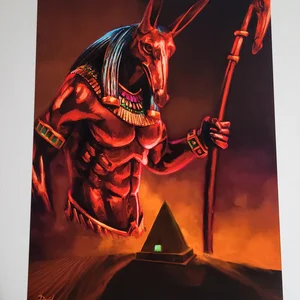
In a surprising reversal, it was Set — the god of disorder and violence — who played the role of Ra's protector against Apep. Armed with a spear, he pierced the serpent each night from the prow of the solar barque, showing that even chaos can be turned against a still greater threat.
Egyptian priests performed elaborate daily rituals described in the 'Book of Overthrowing Apophis.' They would fashion a wax figurine of Apep, bind it with red thread, trample it, burn it, and then dissolve it in donkey urine — all symbolic acts designed to weaken the serpent in the underworld.
The Egyptians attributed solar eclipses and violent sandstorms to Apep's rare temporary victories over Ra. These terrifying natural phenomena were interpreted as the moment when the giant serpent managed to partially swallow the solar barque, plunging the world into darkness.
Unlike other Egyptian deities, Apep had no temple, no devotional cult, and no worshippers: he was never paid homage. His only ritual existence was to be cursed, depicted in order to be destroyed, and named in order to be conjured away. He is one of the very few entities in Egyptian mythology to embody pure, absolute evil.
Primary Sources
"Back, Apophis, enemy of Ra! You are struck down, you are pierced, you cannot advance. Ra is victorious over you, O Apophis, enemy of Ra."
"Let the enemy of Ra be driven back! Let the serpent of chaos not pass! Order (Ma'at) triumphs over nothingness (Isfet)."
"Back, serpent Apep! Do not draw near to Ra. I know your name, I know your spells: you are defeated, you are overthrown."
"Apep is bound, his coils are severed. The light of Ra floods the Duat. The serpent of chaos is motionless."
"Cursed be Apophis at every hour of day and night. Let his name be burned, let his image be trampled, let his bones be broken."
Key Places
The realm of the dead located beneath the earth and within the primordial waters of Nun, this is where Apep dwelled and attacked the solar barque of Ra each night. The Duat is the main setting of the Apep myth, described in detail in the Book of the Amduat.
The great religious complex of Thebes where the priests of Amun performed daily rituals to destroy Apep. Depictions of the battle between Ra and the serpent adorn the walls of several chapels within the temple.
A major theological center of ancient Egypt and the heartland of Ra's solar cult. It was here that the cosmology describing the sun's nightly journey and Apep's attacks was developed — the foundation of the myth as we know it.
The sacred city dedicated to the cult of Osiris, where numerous funerary papyri containing anti-Apep spells were discovered. Nocturnal rituals there were tied to the deceased's journey through the Duat and the dangers embodied by the serpent.
The royal necropolis of the New Kingdom, where pharaohs' tombs are decorated with scenes from the Book of the Amduat and the Book of Caverns, depicting Ra's nightly journey and his repeated battles against Apep.