 flip
flipAruhe — pounded fern root
Aruhe — pounded fern root
Why this dish? Hineahuone was born from the red earth and lives from the first gifts of Papatūānuku. Before the voyaging ancestors brought gardens, aruhe — the rhizome of the bracken fern — was the daily bread drawn directly from the soil: the food closest to what she herself is, flesh of the earth.
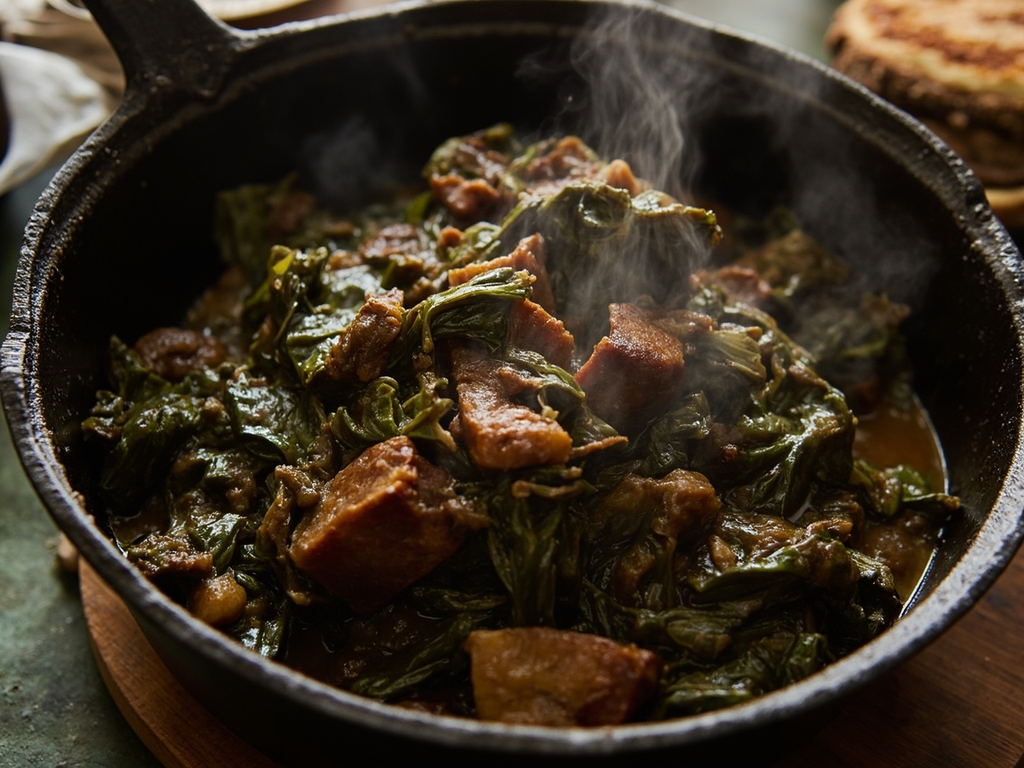
The fleshy rhizome of the fern, dried then roasted on embers and pounded with a stone beater. The starchy, fibrous pulp is sucked, and the hard fibre spat out. A humble, earthy, slightly bitter food that nourished forest peoples generation after generation.
Ē taku uri, come close and look at my hands: they are of the same clay as what you eat. When hunger came, we went to Papatūānuku, our mother, and pulled the aruhe root from the ground. We left it to dry, then laid it on the embers until it sang, and with the stone beater we struck it, struck it, until we opened its tender heart. It is rough on the tongue, yes — but it is the taste of the earth I am made of, and no one ever went to bed hungry as long as the fern grew.
- •Aruhe (bracken fern) rhizomes — an armful (staple starch)
- •Hardwood embers — a hearth (cooking)
Aruhe — pounded fern root
The fleshy rhizome of the fern, dried then roasted on embers and pounded with a stone beater. The starchy, fibrous pulp is sucked, and the hard fibre spat out. A humble, earthy, slightly bitter food that nourished forest peoples generation after generation.
Why this dish? Hineahuone was born from the red earth and lives from the first gifts of Papatūānuku. Before the voyaging ancestors brought gardens, aruhe — the rhizome of the bracken fern — was the daily bread drawn directly from the soil: the food closest to what she herself is, flesh of the earth.
Ē taku uri, come close and look at my hands: they are of the same clay as what you eat. When hunger came, we went to Papatūānuku, our mother, and pulled the aruhe root from the ground. We left it to dry, then laid it on the embers until it sang, and with the stone beater we struck it, struck it, until we opened its tender heart. It is rough on the tongue, yes — but it is the taste of the earth I am made of, and no one ever went to bed hungry as long as the fern grew.
Ingredients (period version)
- Aruhe (bracken fern) rhizomes — an armful (staple starch)
- Hardwood embers — a hearth (cooking)
Ingredients
- Parsnips — 4 medium roots (evokes the starchy fibrous root (raw aruhe is neither available nor recommended for consumption))
- Cooked chestnuts — 150 g (recalls earthy softness)
- Sea salt — a pinch (seasoning)
- Water — a splash (bind the mash)
Method
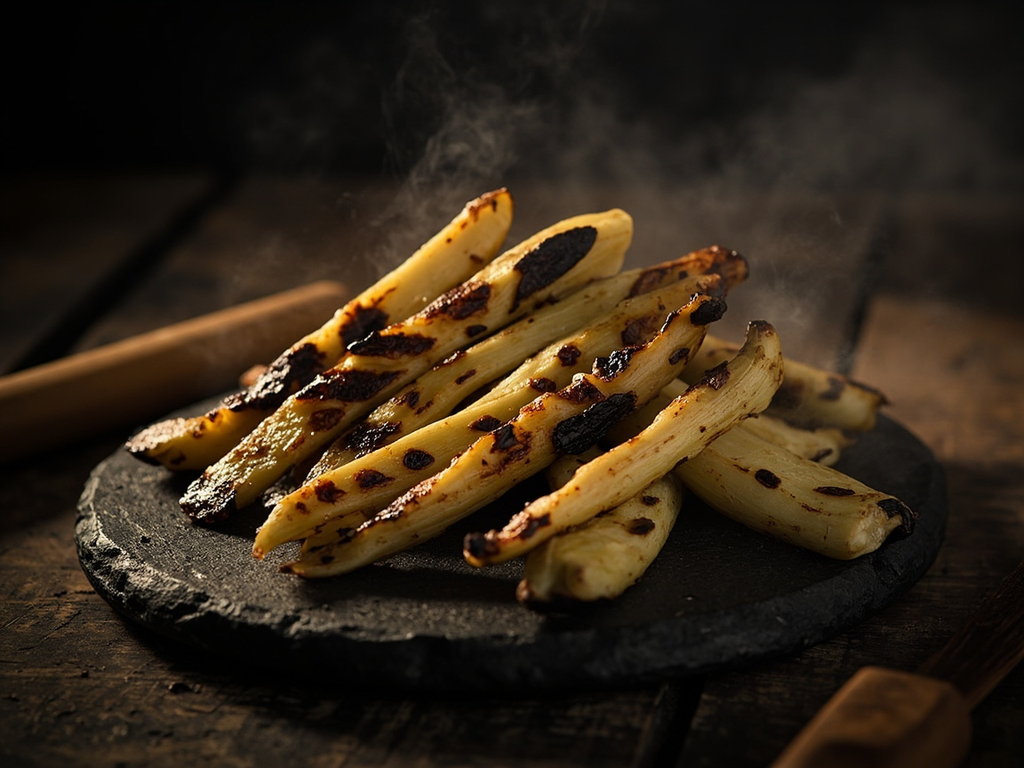
- Roast the whole unpeeled parsnips on a grill or under the embers until the skin blackens and the heart is tender.
- Do the same with the chestnuts (or use already cooked ones).
- Roughly peel, combine parsnips and chestnuts in a mortar.
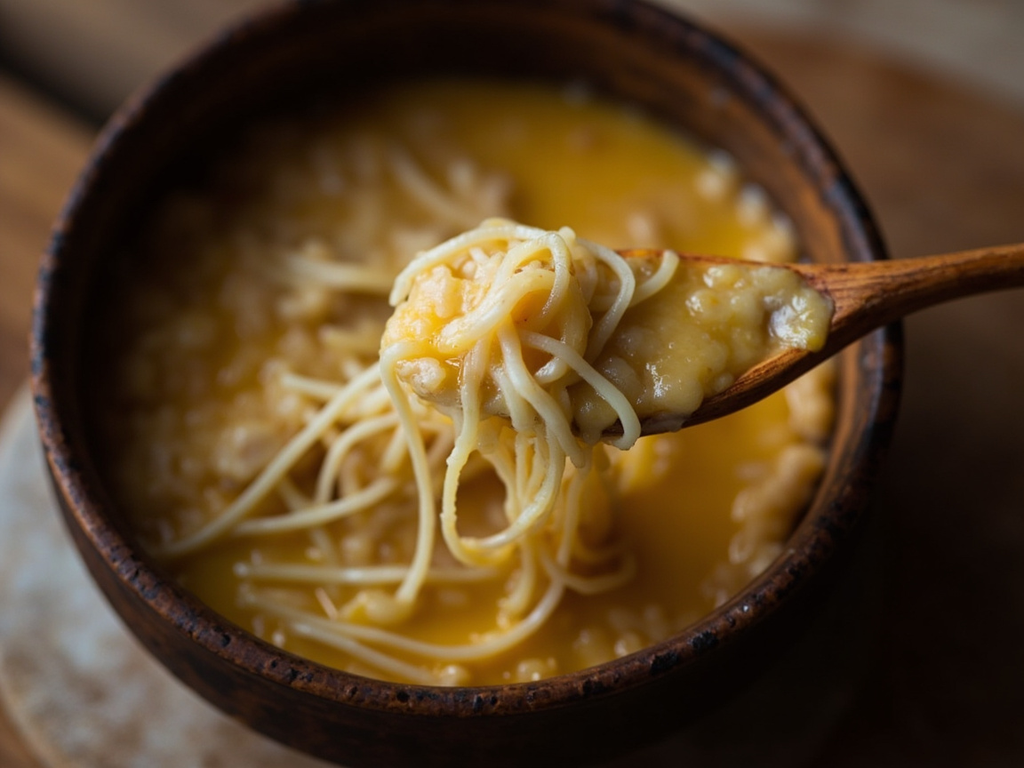
- Pound with a pestle into a rustic, fibrous purée, adding a splash of water and a pinch of salt.
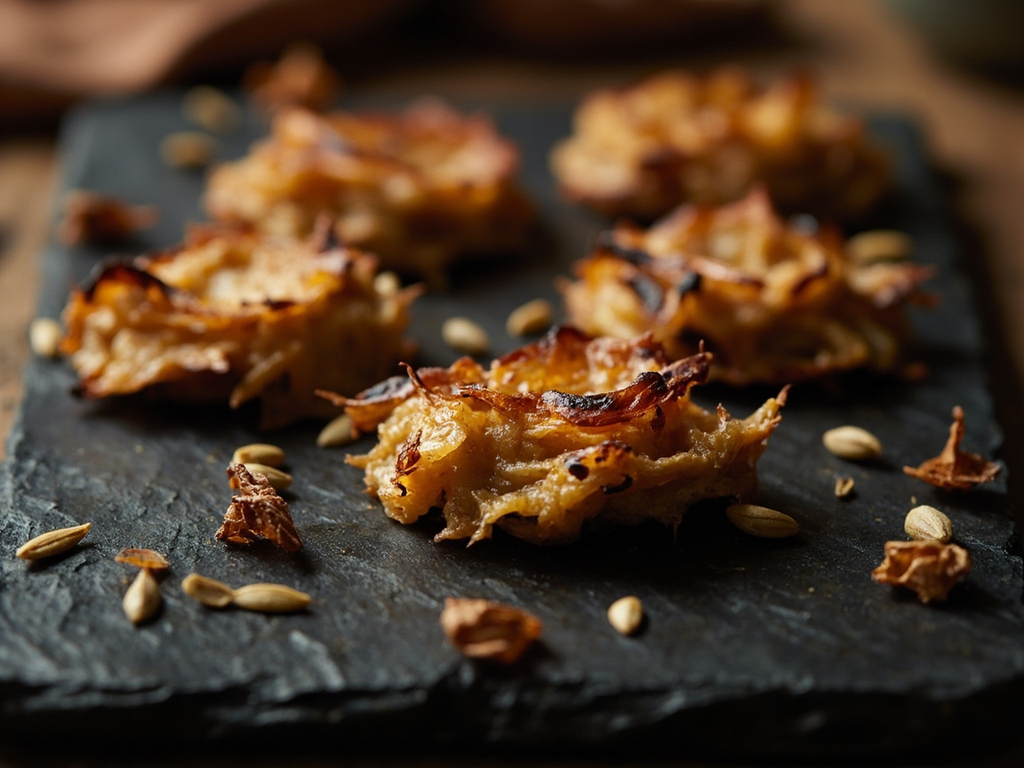
- Shape into small patties and warm briefly on the embers before sharing by hand.
How it was made : Aruhe was harvested in late summer, dried as a reserve, then roasted before being pounded on a flat stone with a patu aruhe (beater). The pulp was chewed and the fibre spat out. It was the dominant daily starch in regions without horticulture.
The contemporary twist : Serve the mash as quenelles on a dark slate, sprinkled with roasted seeds, as a nod to the raw, mineral taste of the ancestral root.
Sources : Elsdon Best, Forest Lore of the Maori (1942) · Elsdon Best, Maori Agriculture (1925)
Hineahuone · Charactorium