 flip
flipMillet Porridge with Phasis River Fish
Millet Porridge with Phasis River Fish
Why this dish? Absyrtus grew up on the banks of the Phasis (the modern Rioni), a fish-rich river that irrigated Colchis. Before he was a warrior prince, he was a child nourished, like every Colchian, on this millet porridge seasoned with the fish that fishermen brought daily to the palace of Aia.
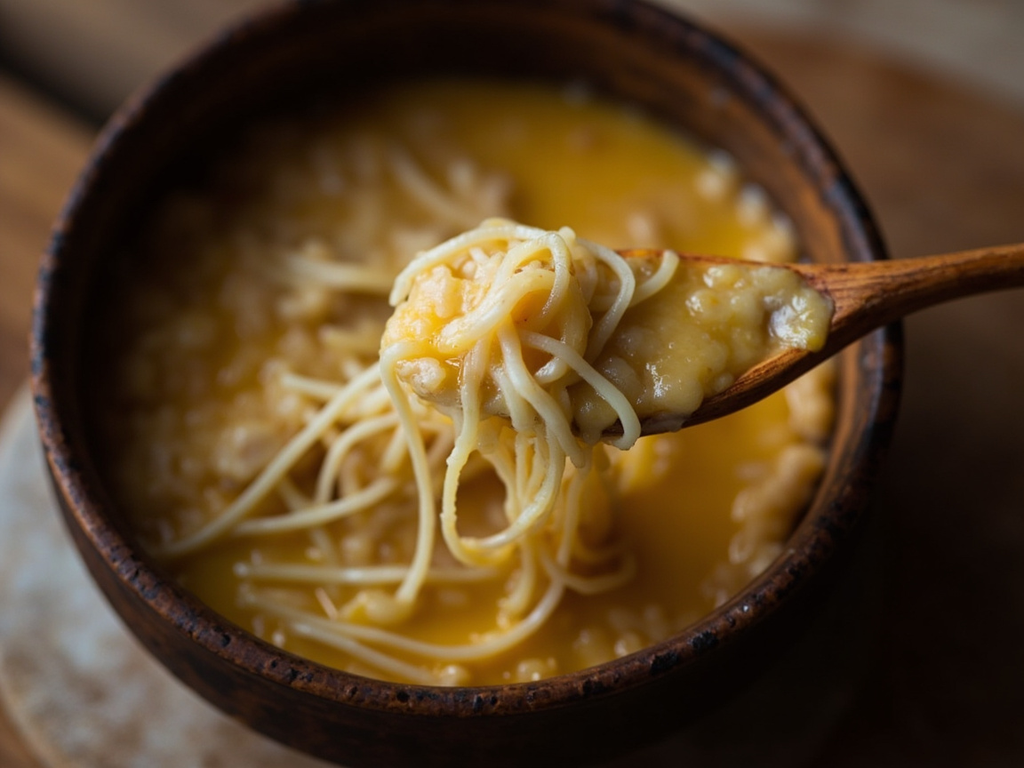
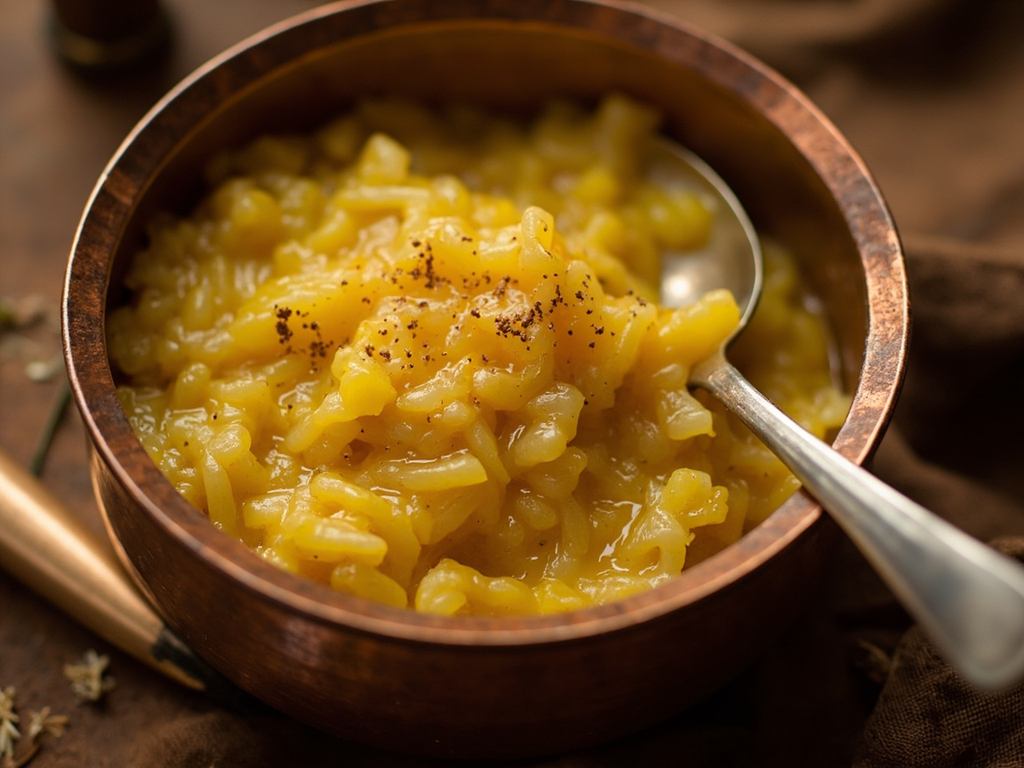
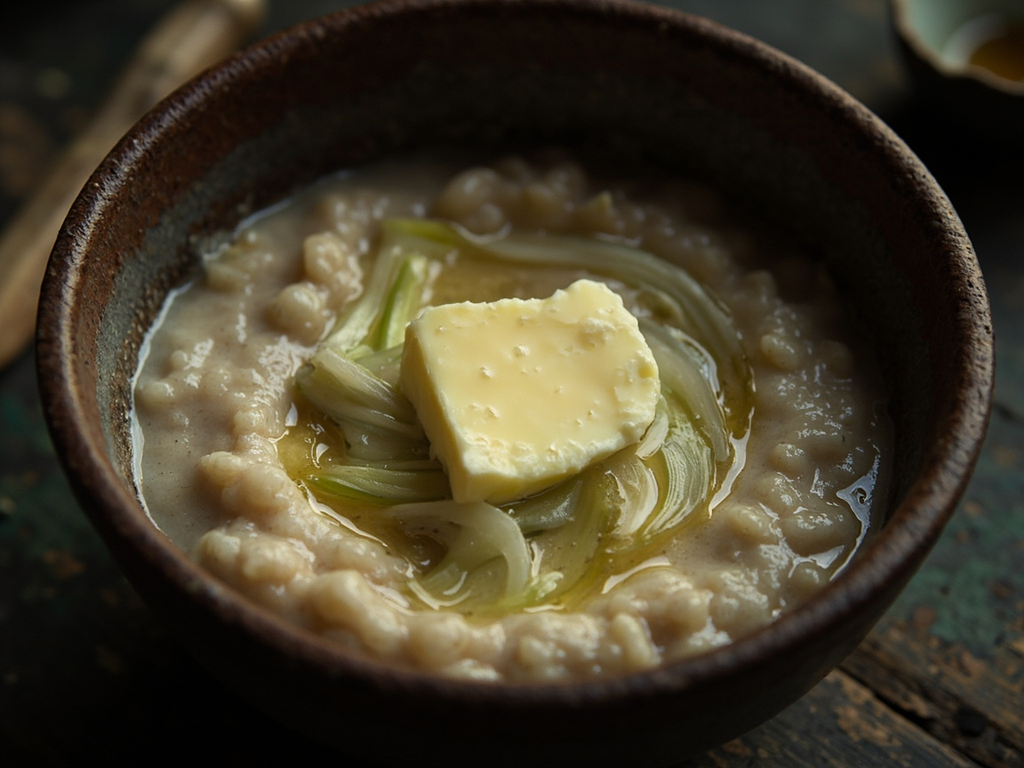
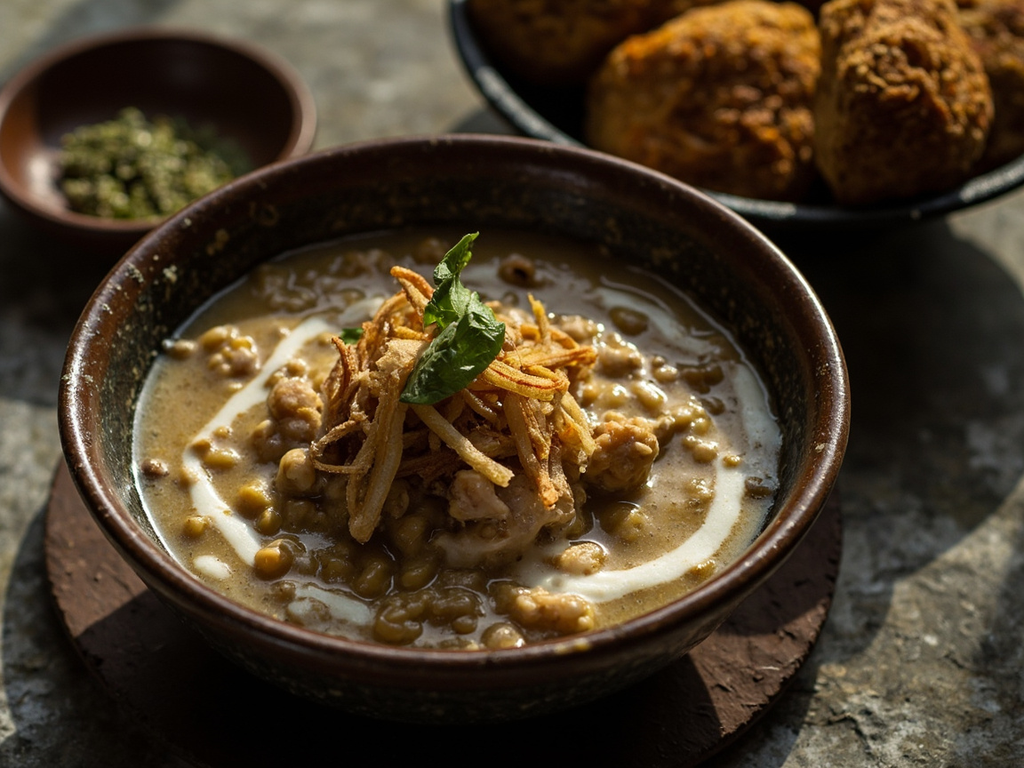
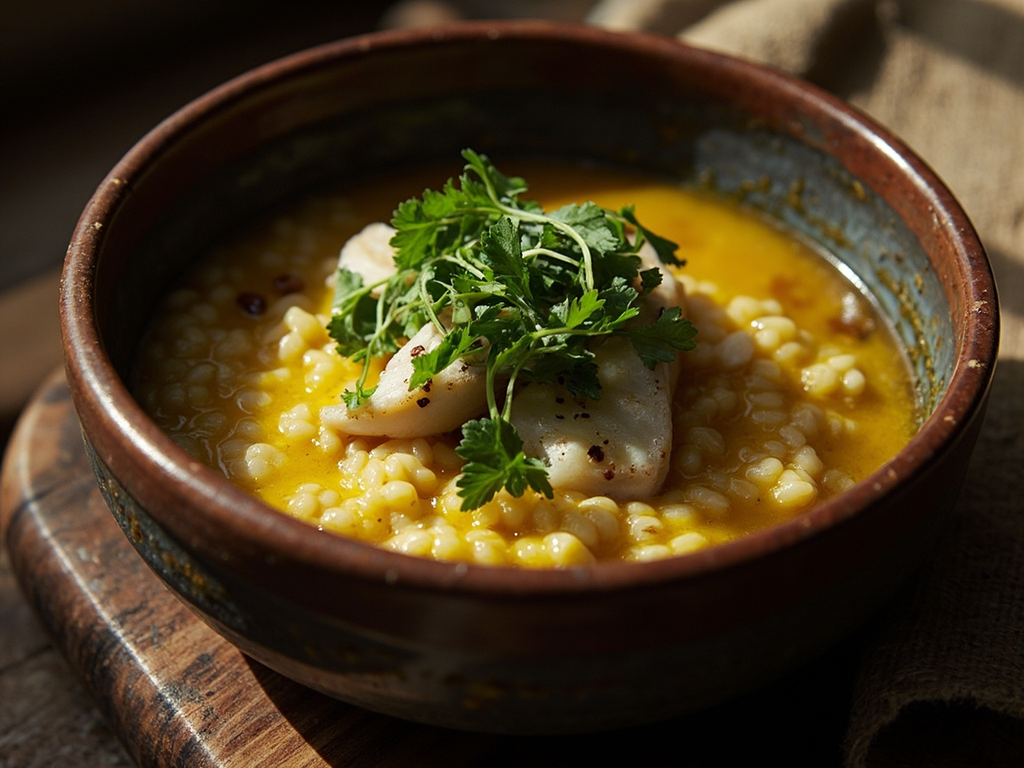
A thick millet porridge, the base of every Colchian table, enriched with pieces of river fish, fresh herbs, and a drizzle of oil. Comforting and simple, it is the everyday dish, from the humblest fisherman to the kitchens of King Aeëtes.
Stranger, know that in the palace of my father Aeëtes, before the gold and meats of great evenings, it was this porridge that was given to me. They would swell the millet in the water of the Phasis until it became smooth as the river's clay, then they would lay the still-wriggling fish, caught that morning in the traps. My sister Medea would toss in herbs whose names she alone knew. Eat it hot, always hot—that is how a son of Colchis regains his strength.
- •Millet — a good handful per person (staple grain)
- •River fish (catfish, bream, Phasis sturgeon) — one portion per person (protein)
- •Spring or river water — three times the volume of millet (cooking liquid)
- •Fresh coriander and lovage — one bunch (herb)
- •Oil (linseed or walnut) — a drizzle (fat binder)
- •Salt — to taste (seasoning)
Millet Porridge with Phasis River Fish
A thick millet porridge, the base of every Colchian table, enriched with pieces of river fish, fresh herbs, and a drizzle of oil. Comforting and simple, it is the everyday dish, from the humblest fisherman to the kitchens of King Aeëtes.
Why this dish? Absyrtus grew up on the banks of the Phasis (the modern Rioni), a fish-rich river that irrigated Colchis. Before he was a warrior prince, he was a child nourished, like every Colchian, on this millet porridge seasoned with the fish that fishermen brought daily to the palace of Aia.
Stranger, know that in the palace of my father Aeëtes, before the gold and meats of great evenings, it was this porridge that was given to me. They would swell the millet in the water of the Phasis until it became smooth as the river's clay, then they would lay the still-wriggling fish, caught that morning in the traps. My sister Medea would toss in herbs whose names she alone knew. Eat it hot, always hot—that is how a son of Colchis regains his strength.
Ingredients (period version)
- Millet — a good handful per person (staple grain)
- River fish (catfish, bream, Phasis sturgeon) — one portion per person (protein)
- Spring or river water — three times the volume of millet (cooking liquid)
- Fresh coriander and lovage — one bunch (herb)
- Oil (linseed or walnut) — a drizzle (fat binder)
- Salt — to taste (seasoning)
Ingredients
- Hulled millet — 200 g (staple grain)
- Freshwater fish fillets (trout, perch, or pike-perch) — 400 g (protein)
- Water or light broth — 700 ml (cooking liquid)
- Fresh coriander — 1 small bunch (herb)
- Lovage or celery stalks with leaves — 2 stalks (herb)
- Walnut oil — 2 tbsp (fat binder)
- Salt — 1 tsp (seasoning)
Method
- Rinse the millet in clear water, then pour it into salted cold water.
- Bring to a simmer and cook over low heat for 25–30 minutes, stirring, until thick and creamy.
- Cut the fish into large chunks and place on top of the porridge; cover and poach for 6–8 minutes, until opaque.
- Chop the coriander and lovage, gently fold them in so as not to break the fish.
- Serve piping hot in bowls, drizzled with walnut oil.
How it was made : Millet (and panic grass) was the dominant cereal of the Pontic peoples before wheat became widespread. It was cooked into a thick porridge (a kykeon) in clay pots set on embers; river fish, abundant in the Phasis, was the most common protein source for the inhabitants.
The contemporary twist : Served as a dome in a dark stoneware bowl, sprinkled with toasted crushed walnuts and a coriander-infused walnut oil: the 'polenta at the edge of the Greek world'.
Sources : Herodotus, Histories, IV (peoples of the Pontus and Caucasus) · Apollonius of Rhodes, Argonautica, Books II–III (Colchis and the Phasis)
Absyrtos · Charactorium