 flip
flipAruhe — roasted and beaten fern root
Aruhe — roasted and beaten fern root
Why this dish? Daughter of Tāne, god of the forest and trees, Hinetītama belongs to the plant world. The aruhe, the fern root that grows abundantly in the thickets of her father's forest, was the everyday food, the one found without a garden, the daily bread of the ancestors.
The rhizome of the bracken fern roasted on embers then pounded on a stone to release the fibrous, starchy pulp, which is chewed slowly. Earthy taste, slightly bitter and smoky.
Do not think that a great oven is always needed to eat. When my father Tāne's forest yields its ferns, dig up the root after the rains, dry it, then lay it on the embers until it blackens. Then strike it on the flat stone, again and again, to break the fibers and free the sweet pulp within. Chew it long, keep some under the ash for lean days: it is the faithful food, the one that never fails those who know the land.
- •Aruhe rhizomes (bracken fern, Pteridium esculentum) — a freshly dug bunch (staple starch)
- •Wood embers — a hearth (roasting)
Aruhe — roasted and beaten fern root
The rhizome of the bracken fern roasted on embers then pounded on a stone to release the fibrous, starchy pulp, which is chewed slowly. Earthy taste, slightly bitter and smoky.
Why this dish? Daughter of Tāne, god of the forest and trees, Hinetītama belongs to the plant world. The aruhe, the fern root that grows abundantly in the thickets of her father's forest, was the everyday food, the one found without a garden, the daily bread of the ancestors.
Do not think that a great oven is always needed to eat. When my father Tāne's forest yields its ferns, dig up the root after the rains, dry it, then lay it on the embers until it blackens. Then strike it on the flat stone, again and again, to break the fibers and free the sweet pulp within. Chew it long, keep some under the ash for lean days: it is the faithful food, the one that never fails those who know the land.
Ingredients (period version)
- Aruhe rhizomes (bracken fern, Pteridium esculentum) — a freshly dug bunch (staple starch)
- Wood embers — a hearth (roasting)
Ingredients
- Parsnips (safe substitute — raw bracken fern is toxic) — 4 roots (evocative earthy starch)
- Jerusalem artichokes — 200 g (earthy and bitter note)
- Vegetable oil — 1 tbsp (grilling)
- Smoked sea salt — 1 pinch (reminder of embers)
Method
- Safety note: real bracken fern root is toxic raw and not recommended today; we replace it here with parsnips and Jerusalem artichokes that evoke its earthy taste.
- Peel parsnips and Jerusalem artichokes, cut into batons.
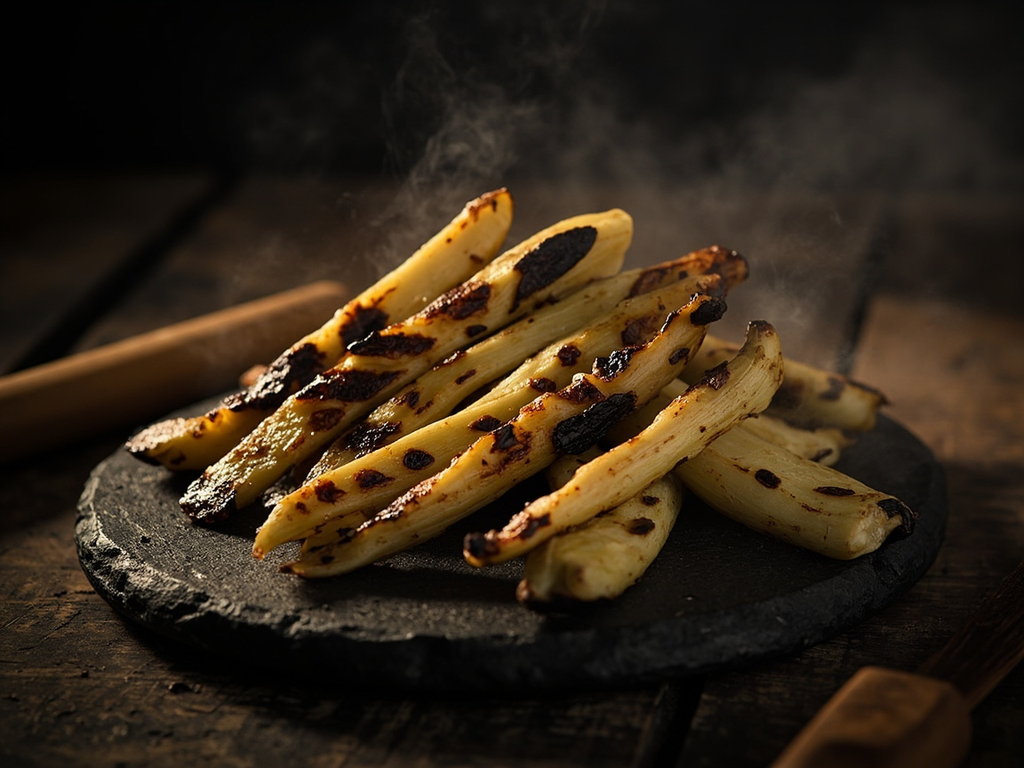
- Grill them dry or with very little oil in a cast-iron pan over high heat until charred in spots.
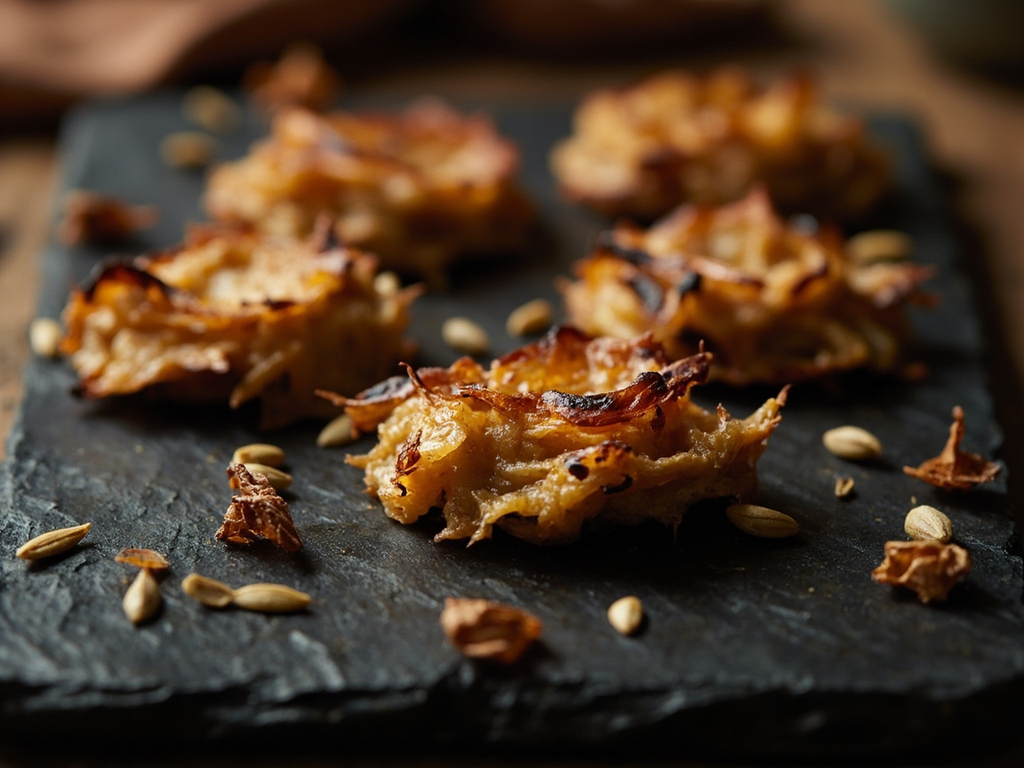
- Roughly mash them with a pestle or fork for a fibrous texture, like the beaten pulp of aruhe.
- Season with smoked salt and serve warm, to be chewed slowly.
How it was made : Aruhe was the fundamental starch of the Māori before the rise of kūmara, especially in regions too cold for cultivation. The rhizomes were dried, roasted, then beaten with a wooden mallet (patu aruhe) on a stone. Prolonged consumption wore down teeth, a visible mark on many ancient skeletons.
The contemporary twist : Present the grilled batons in a bundle on a slate, with a small wooden mallet placed beside: the ancestral beating gesture is told before crunching.
Sources : Leach, Helen, 1000 Years of Dining: A History of Cooking in New Zealand · Colenso, William, On the Vegetable Food of the Ancient New Zealanders, 1880
Hinetītama · Charactorium