 flip
flipChinese Green Tea, Quanzhou Style
Chinese Green Tea, Quanzhou Style
Why this dish? Having reached the ports of Yuan China, including the great Quanzhou (Zaytûn) which he admired, Ibn Battuta was one of the few Muslim travelers to describe the Chinese custom of drinking an infusion of leaves—tea, then unknown in his world.
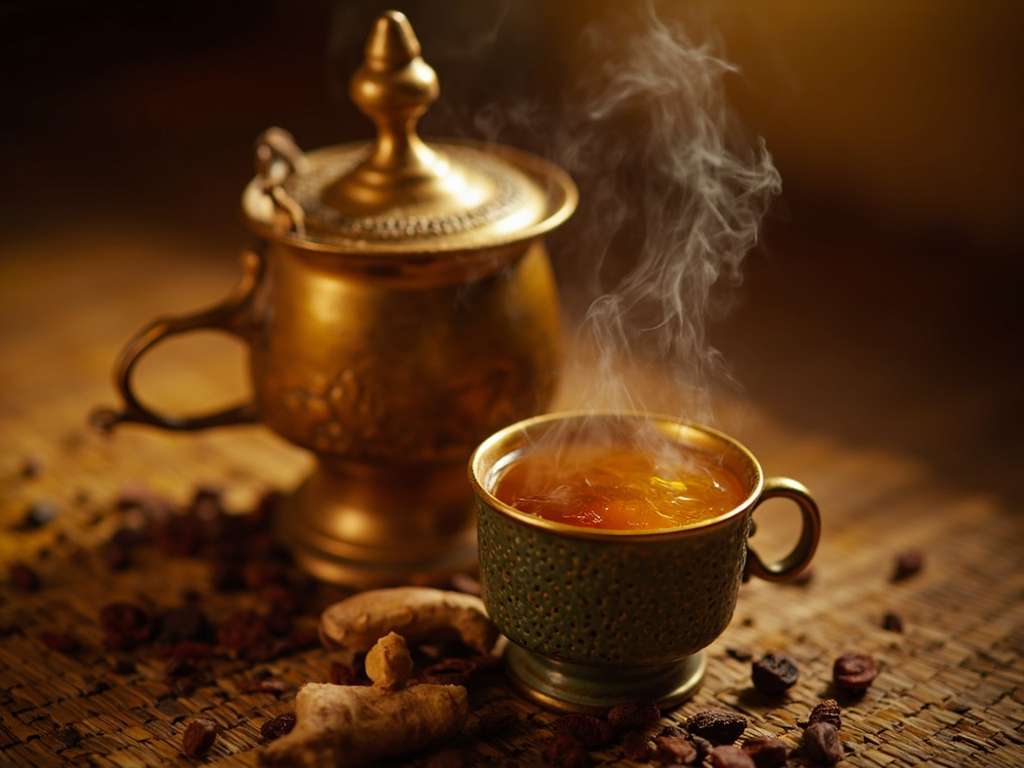
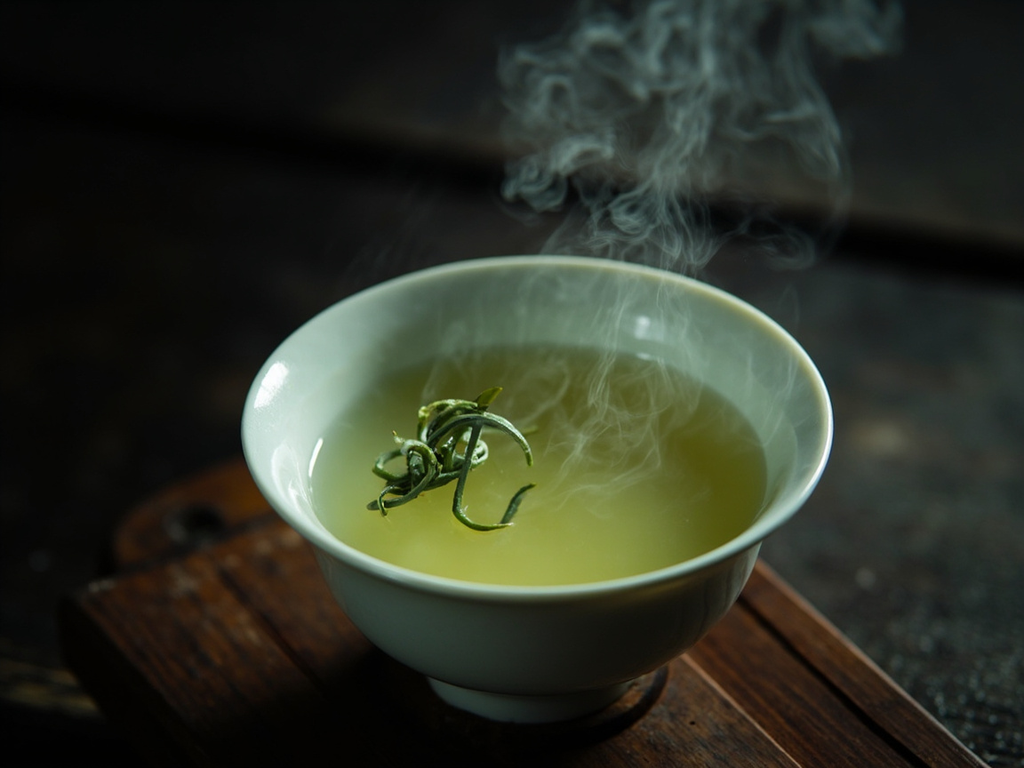
A clear, fragrant infusion of green tea leaves, served steaming hot and unsweetened, in a porcelain bowl. The welcome drink of medieval China, bitter and refreshing, which amazed the traveler from the West.
Here, reader, is a strange thing I saw in the land of China that none of our people know. The people there boil water over leaves of a shrub, and draw from it a hot, clear, slightly bitter drink, which they offer to every guest who crosses their threshold. They put neither sugar nor honey in it and drink it in small sips from bowls of that porcelain so fine you would think it glass. I tasted it out of courtesy, and I noted this custom, for the traveler must report what his people have never seen.
- •Green tea leaves — a pinch per bowl (infusion)
- •Spring water — as needed (base)
Chinese Green Tea, Quanzhou Style
A clear, fragrant infusion of green tea leaves, served steaming hot and unsweetened, in a porcelain bowl. The welcome drink of medieval China, bitter and refreshing, which amazed the traveler from the West.
Why this dish? Having reached the ports of Yuan China, including the great Quanzhou (Zaytûn) which he admired, Ibn Battuta was one of the few Muslim travelers to describe the Chinese custom of drinking an infusion of leaves—tea, then unknown in his world.
Here, reader, is a strange thing I saw in the land of China that none of our people know. The people there boil water over leaves of a shrub, and draw from it a hot, clear, slightly bitter drink, which they offer to every guest who crosses their threshold. They put neither sugar nor honey in it and drink it in small sips from bowls of that porcelain so fine you would think it glass. I tasted it out of courtesy, and I noted this custom, for the traveler must report what his people have never seen.
Ingredients (period version)
- Green tea leaves — a pinch per bowl (infusion)
- Spring water — as needed (base)
Ingredients
- Chinese green tea (longjing or gunpowder) — 2 g per cup (infusion)
- Low-mineral water — 200 ml per cup (base)
Method
- Heat water without bringing to a full boil (about 75-80 °C, when fine bubbles rise).
- Place the leaves in the bowl or teapot.
- Pour the hot water and infuse for only 1 to 2 minutes.
- Serve clear and steaming, without sugar, in a porcelain bowl.
- The same leaves can be re-infused two or three times, in the Chinese manner.
How it was made : Under the Yuan, tea was already the quintessential social beverage of China, drunk as a leaf infusion. The Muslim world adopted it much later; in Ibn Battuta's time, it was an exotic curiosity reserved for travelers on the China routes.
The contemporary twist : Serve in the gong fu cha style with multiple short successive infusions, to take guests from Tangier to Zaytûn in a single tasting.
Sources : Ibn Battuta, Rihla (stay in the ports of China)
Ibn Battûta · Charactorium