 flip
flipJalebi (crispy syrup-soaked spirals)
Jalebi (crispy syrup-soaked spirals)
Why this dish? At the market, in the evening, in any North Indian town, jalebis sizzle in oil and pile up golden — the street-side treat every Indian associates with festivals and leisurely strolls. For a filmmaker who loves to wander through alleys and capture ordinary life, it's the sweet snack that punctuates a day of walking.
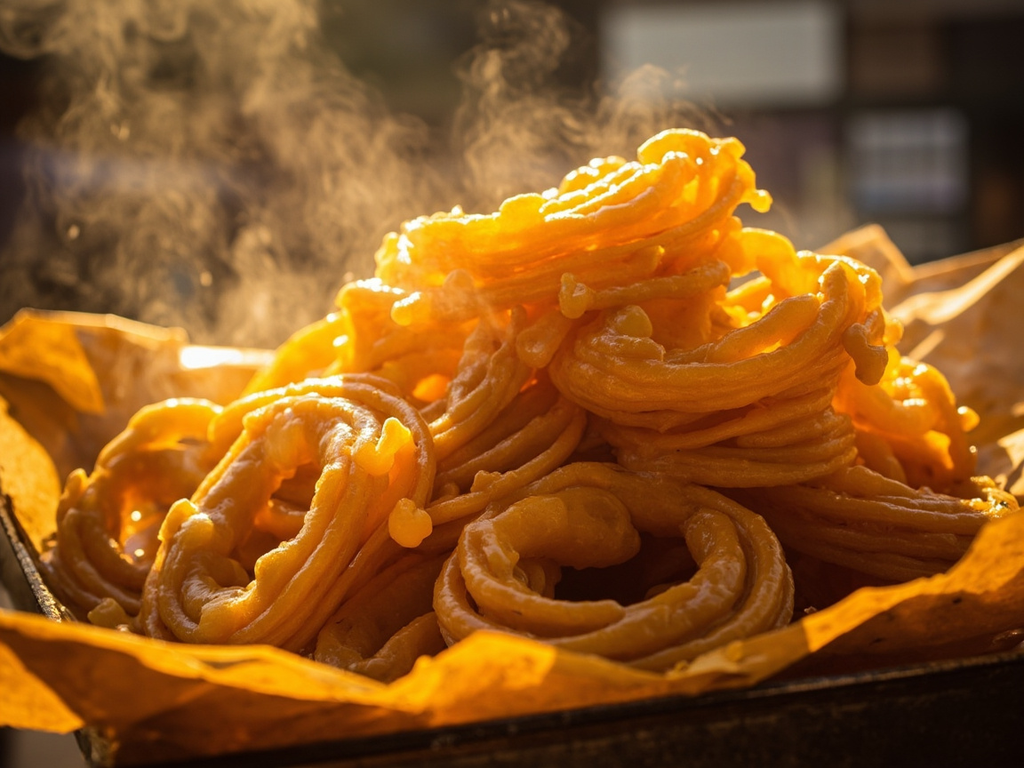
Fermented batter spirals fried until crispy, plunged hot into a sugar syrup perfumed with saffron and cardamom. Crunchy outside, juicy inside, best devoured warm.
In the evening, when I lose myself in a bazaar to feel the real life of a city, I follow the smell — of hot oil and sugar. The vendor pours the batter in spirals with a gesture he's repeated for twenty years, without ever looking. The batter, he's let it sour all night; that's what gives it that little tang under the sugar. Take it hot, straight out of the syrup, and bite quickly before it softens — it's fleeting, like most beautiful things.
- •Fine wheat flour (maida) — a bowl (batter)
- •Yogurt — a little (fermentation)
- •Sugar — for syrup (syrup)
- •Saffron — a few threads (color and fragrance)
- •Cardamom — a pinch (fragrance)
- •Ghee or oil — for frying (cooking)
Jalebi (crispy syrup-soaked spirals)
Fermented batter spirals fried until crispy, plunged hot into a sugar syrup perfumed with saffron and cardamom. Crunchy outside, juicy inside, best devoured warm.
Why this dish? At the market, in the evening, in any North Indian town, jalebis sizzle in oil and pile up golden — the street-side treat every Indian associates with festivals and leisurely strolls. For a filmmaker who loves to wander through alleys and capture ordinary life, it's the sweet snack that punctuates a day of walking.
In the evening, when I lose myself in a bazaar to feel the real life of a city, I follow the smell — of hot oil and sugar. The vendor pours the batter in spirals with a gesture he's repeated for twenty years, without ever looking. The batter, he's let it sour all night; that's what gives it that little tang under the sugar. Take it hot, straight out of the syrup, and bite quickly before it softens — it's fleeting, like most beautiful things.
Ingredients (period version)
- Fine wheat flour (maida) — a bowl (batter)
- Yogurt — a little (fermentation)
- Sugar — for syrup (syrup)
- Saffron — a few threads (color and fragrance)
- Cardamom — a pinch (fragrance)
- Ghee or oil — for frying (cooking)
Ingredients
- All-purpose flour — 150 g (batter)
- Plain yogurt — 2 tbsp (fermentation)
- Water — about 120 ml (batter)
- Sugar — 300 g (syrup)
- Water (for syrup) — 150 ml (syrup)
- Saffron — 1 pinch (fragrance)
- Ground cardamom — 1/4 tsp (fragrance)
- Lemon juice — a few drops (prevents syrup crystallization)
- Neutral oil or ghee — for deep frying (cooking)
Method
- Mix flour and yogurt with water to form a smooth, flowing batter; let ferment for 8 to 12 hours (or overnight) until it bubbles slightly.
- Prepare the syrup: cook sugar and water with saffron, cardamom, and a few drops of lemon juice until slightly syrupy (1 thread consistency). Keep warm.
- Pour the batter into a piping bag (or a squeeze bottle) and pipe spirals directly into hot oil.
- Fry until the spirals are golden and crispy on both sides.
- Plunge the hot spirals into the warm syrup for 20-30 seconds, then drain and serve immediately.
How it was made : The jalebi, descended from syrup-soaked sweets from the Persian and Arab world (zalabiya), has been documented in India since the Middle Ages and appears in ancient culinary texts. The fermentation of the batter, before the use of baking powder, was done naturally in the open air or with yogurt — hence its characteristic slight sourness.
The contemporary twist : Served on a folded newspaper sheet like from the street vendor, accompanied by a little rabri (reduced milk cream) for a 'wedding party' version.
Imtiaz Ali · Charactorium