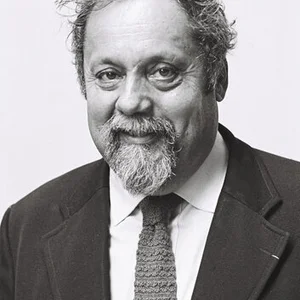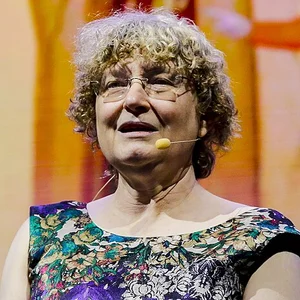

Belgian-born physicist and mathematician, naturalized American, born in 1954. A pioneer of wavelet theory, her work revolutionized signal processing and image compression. First female president of the International Mathematical Union.
Ingrid Daubechies(1954 — ?)
Ingrid Daubechies
États-Unis, Belgique
7 min read
Frequently asked questions
Key Facts
- Born on August 17, 1954, in Houthalen, Belgium
- Developed the Daubechies wavelets in 1988, the mathematical foundation of the JPEG2000 compression standard
- First woman to receive the honorary Fields Medal (Gauss Prize) in 2010
- First female president of the International Mathematical Union (2011–2014)
- Professor at Duke University since 2011, after previously teaching at Princeton
Works & Achievements
A family of orthonormal mathematical functions with compact support bearing her name. These tools allow any signal to be decomposed into layers of increasing resolution, with applications in image compression, denoising, and data analysis.
Published in *Communications on Pure and Applied Mathematics*, this article is one of the most cited in 20th-century mathematics. It rigorously proves the existence and construction of orthonormal compactly supported wavelets.
A landmark reference work that became the "bible" of wavelets and one of the best-selling applied mathematics books in the world. It made wavelet theory accessible to the entire international scientific community.
Development of the biometric compression standard adopted by the FBI for its national fingerprint database, enabling a storage reduction by a factor of 15 to 20 with no significant loss of quality.
Her wavelet algorithms form the mathematical core of JPEG 2000, a standard used for high-quality compression in medicine, heritage archiving, astronomy, and professional digital broadcasting.
Anecdotes
In 1988, Ingrid Daubechies published a paper her colleagues considered almost impossible to produce: she proved the existence of compactly supported orthonormal wavelets. This result revolutionized signal processing and was immediately recognized as one of the greatest mathematical advances of the second half of the twentieth century.
In the 1990s, the FBI was looking for a way to store its millions of fingerprint records without overwhelming its servers. Engineers chose to use Daubechies wavelets to compress these images at a ratio of 15 to 20 to one. To this day, the United States national biometric database relies on her method.
In 2011, Ingrid Daubechies became the first woman to serve as president of the International Mathematical Union since its founding in 1920. She used her term to promote mathematics in developing countries and to encourage young women to pursue careers in science.
As a teenager, Ingrid Daubechies would tell herself she fell asleep doing mental arithmetic — running through sums and multiplications in her head. Her engineer father encouraged her to see mathematics as a game rather than a school obligation, an attitude that permanently shaped her relationship with research.
Her work on wavelets was incorporated into the JPEG 2000 standard: whereas the old JPEG format produced unsightly blocky artifacts at high compression rates, JPEG 2000 delivers sharp, detailed images. This standard is now used in medicine, heritage archiving, and astronomy.
Primary Sources
We construct orthonormal bases of compactly supported wavelets, with arbitrarily high regularity. The order of regularity increases linearly with the support width.
Wavelets are a mathematical tool for hierarchically decomposing functions. They allow any function to be described in terms of a coarse overall shape, plus details that range from broad to narrow.
The history of wavelets is a perfect example of the cross-fertilization between pure mathematics, theoretical physics, signal processing and numerical analysis — fields that rarely talk to each other.
Mathematics is one of the oldest and most universal languages of humanity. Its role in understanding the world and driving innovation has never been greater than in our era.
Key Places
Ingrid Daubechies's hometown, in the industrial region of Limburg. It is here that she grew up and developed her passion for mathematics, encouraged by her father, an engineer.
The university where she completed her entire undergraduate and graduate education, from her bachelor's degree through her doctorate in physics. It is here that she published her first research and met her earliest scientific mentors.
The legendary AT&T research center where Daubechies joined an exceptional team of mathematicians starting in 1987. It is in these laboratories that she developed her groundbreaking wavelet theory.
Daubechies was appointed here in 1994, becoming the first tenured woman in the mathematics department. She taught and led research there for seventeen years, training a generation of mathematicians.
Since 2011, Daubechies has held the James B. Duke Professor of Mathematics chair. She continues her work there on data analysis, biological applications, and the digital preservation of artistic heritage.
Typical Objects

In the laboratories and lecture halls where Daubechies works, the blackboard remains the central tool of mathematical thinking. She traces the graphs of her wavelet functions on it, starting over until absolute rigor is achieved.

From the 1980s onward, computers made it possible to visualize and simulate the properties of wavelets. Daubechies uses numerical computation programs to test her mathematical constructions before formally proving them.
An electronic signal visualization instrument used in signal processing laboratories at Bell Labs. It allows researchers to observe the waveforms that wavelet theory seeks precisely to analyze and compress.

An emblem of the real-world impact of her work, the FBI's biometric fingerprint sensor is directly linked to Daubechies wavelets, which allow millions of files to be compressed with unmatched fidelity and efficiency.

Daubechies publishes and reads in journals such as 'Communications on Pure and Applied Mathematics' and 'Proceedings of the IEEE'. These publications are the primary vehicle for disseminating her discoveries throughout the global scientific community.

Daubechies' wavelet algorithms find a direct application in medical imaging. MRI and CT scanners produce enormous volumes of data that wavelet compression makes storable and transmissible.
School Curriculum
Vocabulary & Tags
Key Vocabulary
Tags
Daily Life
Morning
Ingrid Daubechies starts her days early, often before 8 a.m. She reads the latest preprints posted on arXiv and publications from her colleagues before heading to her university office. Her mornings are often devoted to solitary reflection, writing papers, or preparing lectures.
Afternoon
Her afternoons are shaped by seminars, meetings with doctoral students, and interdisciplinary collaborations with engineers, physicists, and biologists. She regularly serves on international committees and handles an extensive scientific correspondence.
Evening
In the evenings, she often prepares presentations for international conferences or works on revisions of papers submitted to journals. Deeply committed to promoting women in science and to advancing mathematics in developing countries, she also dedicates time to those causes.
Food
Like many internationally active academics, Daubechies lives to the rhythm of frequent travel between Europe and the United States. She enjoys Belgian cuisine when she returns to her home region, and follows a simple, balanced diet in her everyday American life.
Clothing
In professional settings, Daubechies favors a relaxed yet polished academic style typical of American professors: blazer, sweater, trousers — nothing showy. For official ceremonies or speeches during her presidency of the IMU, she opts for more formal attire.
Housing
Daubechies has lived near Princeton and later Durham, in comfortable houses in American university suburbs. Her home environment is almost certainly overrun with books, scientific journals, and computers — much like a personal mathematical library.
Historical Timeline
Period Vocabulary
Visual Style
Style visuel épuré et analytique évoquant les mathématiques appliquées contemporaines : tableaux d'équations, graphes d'ondelettes, visualisations de signaux numériques, dans une palette allant du blanc au bleu profond.
Sound Ambience
Ambiance sonore d'un laboratoire universitaire de mathématiques appliquées des années 1990-2010, mêlant le bourdonnement des ordinateurs scientifiques, le frottement de la craie sur le tableau noir et le murmure discret des échanges académiques internationaux.
Liens externes & ressources
Références
Œuvres
Famille d'ondelettes de Daubechies (D2 à D20)
1988
Orthonormal bases of compactly supported wavelets (article)
1988
Ten Lectures on Wavelets (livre, SIAM)
1992
Standard WSQ (Wavelet Scalar Quantization) pour le FBI
1993
Contribution à la norme internationale JPEG 2000
2000