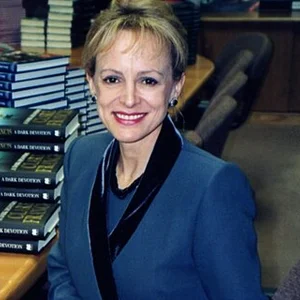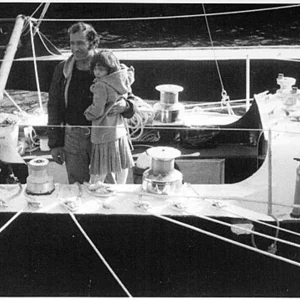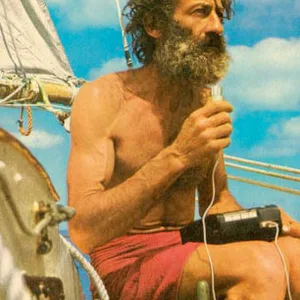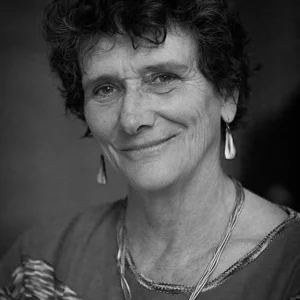

Isabelle Autissier (born in 1956) is a French sailor, the first woman to complete a solo round-the-world offshore race under sail. Trained as a fisheries engineer, she also became a writer and an advocate for ocean conservation.
Isabelle Autissier(1956 — ?)
Isabelle Autissier
France
6 min read
Frequently asked questions
Key Facts
- Born on 18 October 1956 in Paris, she trained as an agricultural engineer specializing in fisheries science (the science of fishing).
- In 1991, she became the first woman to complete a solo round-the-world offshore race under sail (the BOC Challenge).
- During the 1994–1995 BOC Challenge, she set a transatlantic crossing record before being dismasted in the Indian Ocean.
- In 1999, her sailboat capsized in the Southern Ocean during the Around Alone race; she was rescued after a dramatic operation.
- After her sporting career, she published several novels and chaired WWF France from 2009 to 2021, campaigning for ocean conservation.
Works & Achievements
Her offshore racing debut, which launched her career as a professional sailor.
She became the first woman to finish a solo round-the-world race, a feat that made her famous.
In the early 1990s, she set crossing records that confirmed her standing among the best offshore sailors.
An autobiographical account of her voyages, the first step in her career as a writer.
A novel awarded the Prix Maurice Genevoix, which cemented her literary reputation.
A survival novel set on a subantarctic island, a bestseller fueled by her knowledge of the southern seas.
A major public commitment to protecting the oceans and biodiversity.
Anecdotes
In 1991, at the end of the BOC Challenge, a solo round-the-world sailing race with stopovers, Isabelle Autissier became the first woman to complete a solo round-the-world race. Setting off from Newport in the United States, she rounded the formidable Cape Horn and finished 7th in an almost entirely male fleet, proving that a woman has every right to compete in offshore racing.
On 16 February 1999, in the middle of the South Pacific Ocean, her sailboat PRB capsized and stayed upside down, keel in the air, thousands of kilometres from any coast. Sheltering in the overturned hull, freezing and plunged into darkness, she set off her distress beacon. She was saved by a fellow competitor in the race, the Italian sailor Giovanni Soldini, who diverted his boat to come and find her.
Before she was a sailor, Isabelle Autissier was a fisheries engineer — in other words, a specialist in fish and fishing. She even taught at a leading agricultural college in Rennes. This scientific background, unusual for an ocean racer, explains her lifelong commitment to understanding and protecting the sea.
In 1994, during another round-the-world voyage, her mast snapped in the raging seas of the Deep South. She first managed to reach the Kerguelen Islands with a makeshift rig, then, having set off again, was dismasted once more and had to be rescued by the Australian navy. These dramatic adventures made her famous far beyond the world of sailing.
After her sporting career, she reinvented herself as a writer and as president of the nature conservation organisation WWF France from 2009 to 2021. Her novels, including 'L'amant de Patagonie', have won awards, and she uses her fame to raise the alarm about ocean pollution and global warming.
Primary Sources
In it, she recounts her solo voyages, the solitude of the vast open spaces, and life aboard a racing yacht in the southern seas.
A two-voice account of the southern lands and seas (Kerguelen, penguins, icy landscapes), blending maritime adventure with wonder at a threatened natural world.
A novel set in Tierra del Fuego in the 19th century, which earned her the Maurice Genevoix Prize and confirmed her reinvention as a recognized writer.
A shipwrecked couple survives on a deserted subantarctic island; the book draws on her intimate knowledge of the southern seas and their harshness.
Key Places
Birthplace of Isabelle Autissier in 1956.
City where she trained as a fisheries engineer and taught at an agricultural school before devoting herself to sailing.
Atlantic port with which she is closely associated, the base for her preparations and her maritime commitment.
Southern tip of the American continent, a dreaded passage that she rounded during her solo round-the-world voyages.
Remote archipelago in the Deep South that she reached with a jury rig after her dismasting in 1994.
Site of the capsizing of her yacht PRB in 1999, where she was rescued by Giovanni Soldini.
Typical Objects

A fast, lightweight sailboat designed for solo ocean sailing; it is the central tool of all her round-the-world races.

A transmitter that uses satellites to signal the position of a sailor in danger; it is what allowed Autissier to be located during her shipwrecks of 1994 and 1999.

A device that holds the boat's course in place of the helmsman, essential so that a solo sailor can sleep, maneuver, or rest.

A shortwave radio that makes it possible to communicate over very long distances from the middle of the ocean—a vital link to land and to the other competitors.

Waterproof clothing and a tether attaching the sailor to the boat, protecting against the cold, the sea spray, and the risk of going overboard in the Southern Ocean.
An instrument for measuring the altitude of celestial bodies, used to calculate one's position—a valuable backup when the navigation electronics fail.

A work of fiction she writes after her sporting career; her seafaring stories earn her several literary awards.
School Curriculum
Vocabulary & Tags
Key Vocabulary
Daily Life
Morning
Sailing solo, the day begins with analysing the weather data received by radio and checking the boat's position. Isabelle Autissier inspects the sail settings and the state of the rigging, because the slightest oversight can cost the race or her life.
Afternoon
The afternoon is paced by manoeuvres, repairs and the constant upkeep of the boat. Alone, she has to do everything: climb the mast, stitch up a sail, bail out water, all while holding her course on an often rough sea.
Evening
In the evening she sleeps only in short stretches, from twenty minutes to a few hours, always ready to leap onto the deck. In the Deep South she also watches out for the growlers and icebergs that can loom up in the night.
Food
Her diet relies mainly on freeze-dried meals rehydrated with hot water, energy bars and light, long-keeping foods. Fresh water is precious, sometimes produced on board by a desalinator, and she eats quickly between two manoeuvres.
Clothing
She wears waterproof oilskins, insulating base layers, a beanie and boots to withstand the cold and the sea spray. A safety harness keeps her permanently tethered to the boat so she does not fall overboard.
Housing
Her “home” is the cramped cabin of the yacht, cluttered with charts, instruments and gear, at the chart table or on a tiny bunk. Everything there is damp, noisy and forever moving, shaken by the ocean swell.
Historical Timeline
Period Vocabulary
Liens externes & ressources
Références
Œuvres
Première course transatlantique en solitaire (Mini 6.50)
1987
BOC Challenge, premier tour du monde en solitaire achevé par une femme
1990-1991
Records de vitesse sur des routes océaniques en solitaire
années 1990
Versant océan
1998
L'amant de Patagonie
2012
Soudain, seuls
2015
Présidence de WWF France
2009-2021