 flip
flipHerb chicken fricassée
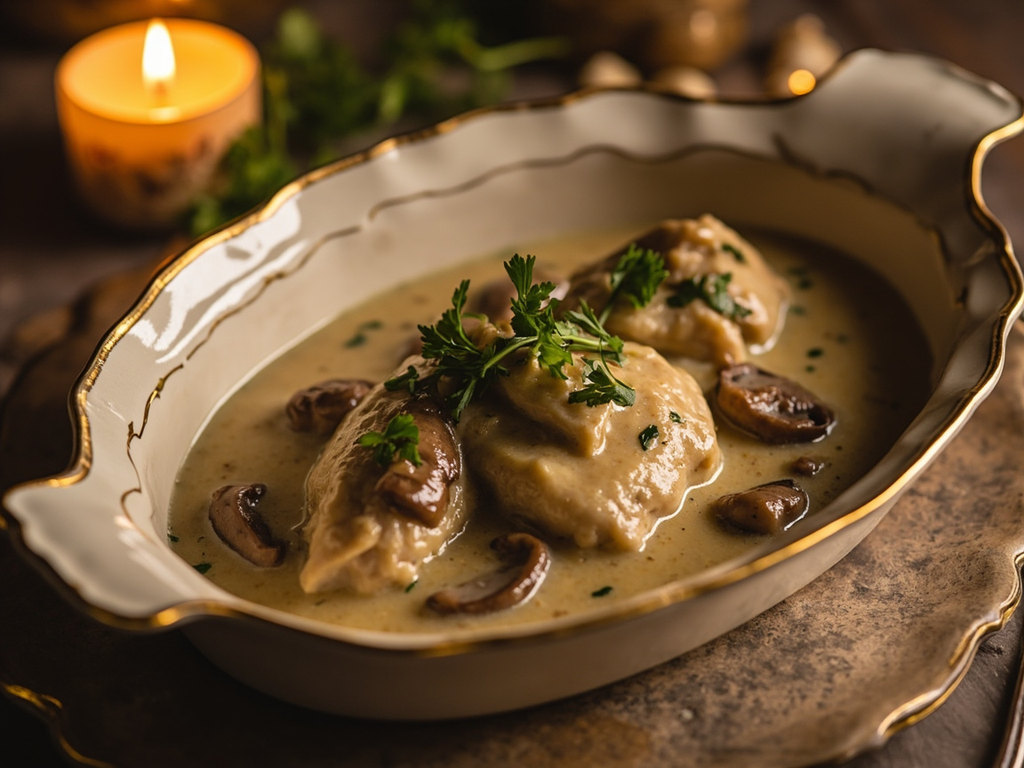
Herb chicken fricassée
Why this dish? La Fontaine was the protégé of Nicolas Fouquet and celebrated the sumptuous feasts at Vaux-le-Vicomte. This butter-and-herb fricassée, a star dish of La Varenne's new cuisine, featured among the refined entrées of such a table.
Chicken pieces browned in butter, moistened with clear broth and thickened with egg yolk, perfumed with parsley, spring onion, and tarragon: the elegance of the new French taste of the Grand Siècle.
When I supped at Monsieur the Superintendent's, at Vaux, they served fricassées whose mere aroma would have converted a hermit. Here is the trick: you brown the poultry in fresh butter without burning it, you moisten it with a clear broth, and you bind it with a beaten egg yolk, with plenty of fine herbs from the garden. None of those shrill spices of old that mask everything! Good taste, you see, is like a good fable: you must recognize the thing itself.
- •Chicken (young fowl) — one, cut up (protein)
- •Fresh butter — a good knob (fat)
- •Clear meat broth — two ladles (moistening)
- •Egg yolks — two (thickener)
- •Fine herbs (parsley, spring onion, tarragon) — a bunch (signature)
- •Verjuice — a dash (acidity)
- •Salt, nutmeg — to taste (seasoning)
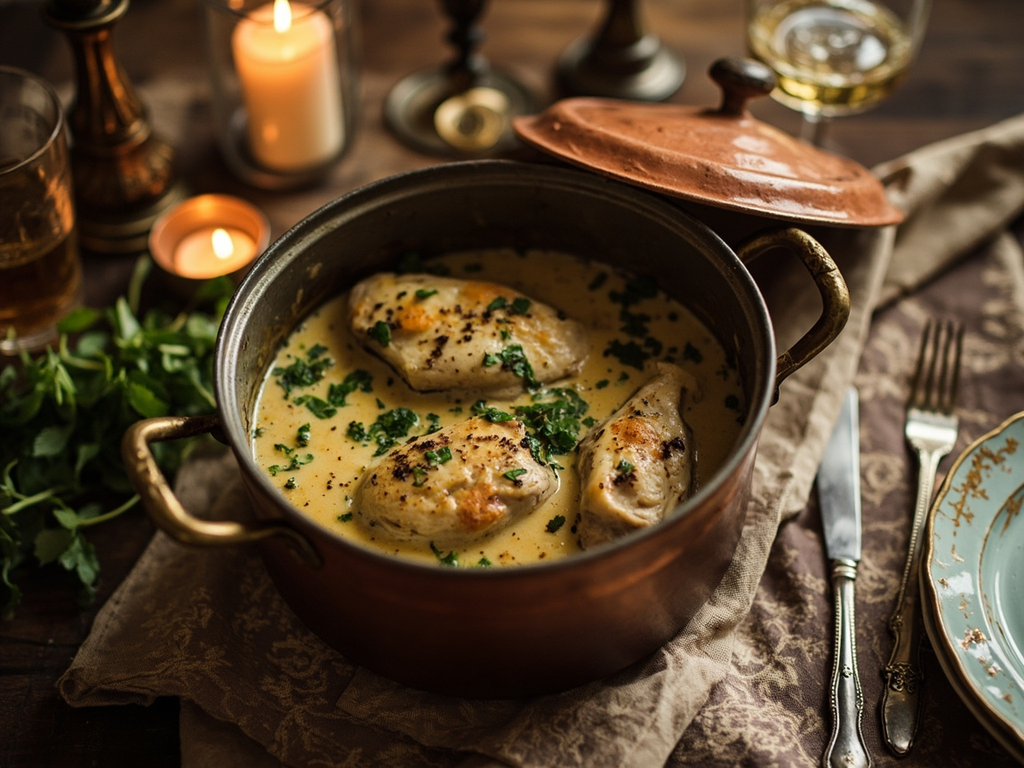
Herb chicken fricassée
Chicken pieces browned in butter, moistened with clear broth and thickened with egg yolk, perfumed with parsley, spring onion, and tarragon: the elegance of the new French taste of the Grand Siècle.
Why this dish? La Fontaine was the protégé of Nicolas Fouquet and celebrated the sumptuous feasts at Vaux-le-Vicomte. This butter-and-herb fricassée, a star dish of La Varenne's new cuisine, featured among the refined entrées of such a table.
When I supped at Monsieur the Superintendent's, at Vaux, they served fricassées whose mere aroma would have converted a hermit. Here is the trick: you brown the poultry in fresh butter without burning it, you moisten it with a clear broth, and you bind it with a beaten egg yolk, with plenty of fine herbs from the garden. None of those shrill spices of old that mask everything! Good taste, you see, is like a good fable: you must recognize the thing itself.
Ingredients (period version)
- Chicken (young fowl) — one, cut up (protein)
- Fresh butter — a good knob (fat)
- Clear meat broth — two ladles (moistening)
- Egg yolks — two (thickener)
- Fine herbs (parsley, spring onion, tarragon) — a bunch (signature)
- Verjuice — a dash (acidity)
- Salt, nutmeg — to taste (seasoning)
Ingredients
- Free-range chicken thighs and breasts — 1 kg (protein)
- Butter — 50 g (fat)
- Chicken broth — 40 cl (moistening)
- Egg yolks — 2 (thickener)
- Fresh parsley, chives, and tarragon — 1 bunch (signature)
- Verjuice or lemon juice — 1 tbsp (acidity)
- Salt, grated nutmeg — to taste (seasoning)
Method
- Melt the butter in a casserole and brown the chicken pieces without coloring them too much.
- Season with salt and a little nutmeg, moisten with hot broth, and simmer covered for 30 minutes.
- Remove the pieces and keep warm; beat the egg yolks with the verjuice.
- Off the heat, pour the yolks into the broth while stirring vigorously to thicken the sauce without boiling.
- Add the chopped fine herbs, return the chicken, reheat gently, and serve immediately.
How it was made : The fricassée is one of the emblematic recipes of *Le Cuisinier françois* by La Varenne (1651), which revolutionized cooking by replacing medieval spices with butter, broths, and fresh herbs. The egg yolk liaison, sometimes sharpened with verjuice, was a mark of refinement.
The contemporary twist : Serve in individual cocottes with a splash of cream and herbs snipped at the last moment, in a "Grand Siècle bistronomy" style.
Jean de La Fontaine · Charactorium