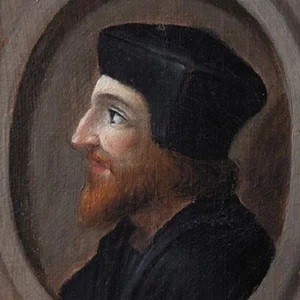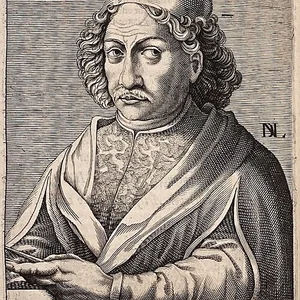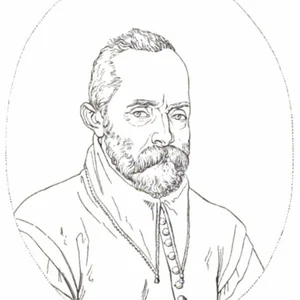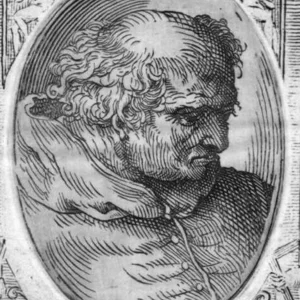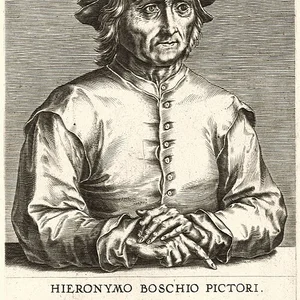

Hieronymus Bosch was a Dutch painter and draughtsman of the late Middle Ages and early Renaissance. Famous for his fantastical compositions teeming with hybrid creatures and infernal scenes, he offers a moral and allegorical vision of sin and salvation.
Hieronymus Bosch(1450 — 1516)
Hieronymus Bosch
Pays-Bas septentrionaux
6 min read
Frequently asked questions
Key Facts
- Born around 1450 in 's-Hertogenbosch (Bois-le-Duc), in the Duchy of Brabant
- Member of the religious Brotherhood of Our Lady ('Illustrious Brotherhood of Our Lady')
- Painter of the triptych The Garden of Earthly Delights (around 1490-1500), held at the Prado Museum in Madrid
- Created works such as The Temptation of Saint Anthony and The Haywain
- Died in 1516 in 's-Hertogenbosch; his art would influence Bruegel the Elder and later the Surrealists
Works & Achievements
Bosch's most famous triptych, teeming with fantastical figures evoking paradise, earthly pleasure, and hell. Held at the Prado Museum.
An allegorical triptych in which humanity scrambles over a mountain of hay, a symbol of the vanity of earthly goods and of human greed.
A triptych depicting the hermit saint beset by demons and monstrous visions, illustrating the struggle against sin.
A triptych showing the sorting of souls and the torments of hell, a central theme of Bosch's moral thought.
A satirical scene in which a charlatan distracts an onlooker while the man is being robbed, denouncing gullibility and deceit.
A small panel showing fools and clergy feasting in a drifting boat, an allegory of folly and human blindness.
A religious triptych of great refinement, blending a sacred scene with unsettling details, held at the Prado.
Anecdotes
Almost nothing is known about the life of Hieronymus Bosch: he spent his entire existence in the small town of 's-Hertogenbosch (Bois-le-Duc), from which he took his painter's name, and he left behind neither diary nor letters. Historians reconstruct his biography mainly from account records and from the religious brotherhood to which he belonged.
Bosch was a member of the prestigious Brotherhood of Our Lady, a religious association of notables. The registers show that he took part in its banquets and that he was commissioned to do work, such as designs for stained-glass windows or a gilded crucifix.
His most famous painting, The Garden of Earthly Delights, is an enormous triptych filled with hundreds of tiny figures, giant fruits, and impossible creatures. When it is closed, its panels painted in grisaille show the creation of the world enclosed within a transparent sphere.
Bosch married Aleid van de Meervenne, a woman from a wealthy family, which assured him a degree of financial comfort and the standing of a notable in his town. This advantageous marriage allowed him to work with great creative freedom.
More than forty years after his death, King Philip II of Spain became a passionate collector of his works: this is why several of Bosch's masterpieces are today found in the Prado Museum in Madrid rather than in the Netherlands.
Primary Sources
The brotherhood's accounts mention on several occasions “Jheronimus van Aken, painter,” attesting to his membership as a sworn member and his participation in the fraternity's activities.
A funeral mass was celebrated in 1516 for “Jheronimus Aquen alias Bosch, insignis pictor” (distinguished painter), confirming the fame he had already earned during his lifetime.
Van Mander describes Bosch as a painter of “deviltries and frightful scenes” whose strange inventions fascinated viewers, while regretting the scarcity of information available about his life.
The royal inventories list several works attributed to “El Bosco,” acquired by the king, who valued their moral and religious dimension.
Key Places
Town in Brabant where Bosch was born, lived and died. It gave him his artist's name and the setting for his entire career.
The town's great Gothic church, the center of local religious life and seat of the Brotherhood of Our Lady, to which Bosch belonged.
Meeting place of the religious confraternity of leading citizens to which Bosch belonged, where he took part in banquets and received commissions.
Spanish museum that today holds several of Bosch's masterpieces, including The Garden of Earthly Delights, thanks to the collections of Philip II.
Typical Objects

A three-panel painting whose side wings fold over the central panel. Bosch made it his format of choice for his large religious and moral compositions.

The wooden support on which Bosch painted, typical of Flemish painting before canvas became widespread. Baltic oak was carefully prepared and coated.

A technique perfected by the Flemish Primitives, allowing for transparencies and minutely detailed work. Bosch used it for his luminous colours and fine layering.

Fantastical beings blending human bodies, animals, plants and objects, populating Bosch's hells. They symbolise sin, temptation and punishment.

Sketches executed in ink and pen used to conceive the compositions. Bosch is one of the first Northern painters from whom standalone drawings survive.

Records confirm that Bosch supplied designs (cartoons) for stained-glass windows intended for his confraternity's chapel. This was common work for a painter of the time.
School Curriculum
Vocabulary & Tags
Key Vocabulary
Tags
Daily Life
Morning
Bosch rose early in his house on the market square of 's-Hertogenbosch. After a prayer and a light meal, he headed to his workshop, where he prepared his oak panels, ground his pigments, and resumed his works in progress by daylight.
Afternoon
The afternoon was devoted to meticulous painting, layer after layer, and to designing new compositions through pen drawings. He might receive patrons, members of the brotherhood, or notables who came to discuss an altarpiece or a stained-glass window.
Evening
In the evening, after the sunset that put an end to his precise work, Bosch sometimes took part in the banquets and gatherings of the Brotherhood of Our Lady. The evenings ended with prayer, in a society deeply shaped by religion.
Food
The diet of a notable in the Netherlands around 1500 was based on bread, beer (safer than water), soups, and freshwater and saltwater fish. Meat, cheeses, and fruit rounded out the meals, which were richer during the brotherhood's banquets.
Clothing
Bosch, a man of means, wore good-quality clothing: a long tunic, a dark woolen cloak, and a chaperon or cap. The colors and fabrics signaled his rank as a burgher and as a member of a respected brotherhood.
Housing
He lived in a timber-framed house overlooking the great market square of 's-Hertogenbosch, partly inherited through his wealthy wife. The home also served as a workshop, with a working ground floor and living rooms upstairs.
Historical Timeline
Period Vocabulary
Liens externes & ressources
Références
Œuvres
Le Jardin des délices
vers 1490-1500
Le Chariot de foin
vers 1512-1515
La Tentation de saint Antoine
vers 1501
Le Jugement dernier
vers 1505-1515
L'Escamoteur (Le Jongleur)
vers 1502
La Nef des fous
vers 1500-1510
L'Adoration des mages
vers 1494