Renaissance
Artists, humanists, navigators and patrons of the Renaissance — the revival of arts, sciences and thought.
388 characters
388 characters
Politics(86)
Agostino Chigi
1466 — 1520
Agostino Chigi (1466–1520) was the greatest banker of the Italian Renaissance, financier to popes Julius II and Leo X. A lavish patron of the arts, he commissioned the construction and decoration of the Villa Farnesina in Rome, with frescoes by Raphael and his pupils.
Agrippa d'Aubigné
1552 — 1630
French writer, poet, and soldier, a major figure of Protestantism. A companion-in-arms of Henri de Navarre (the future Henri IV), he is the author of Les Tragiques, a great epic of the Wars of Religion.
Akbar
1542 — 1605
Jalal ud-Din Muhammad Akbar (1542-1605) was the third and greatest Mughal emperor of India. He unified the Indian subcontinent under his rule and championed a policy of religious tolerance remarkable for his time.
Akbar the Great
The third emperor of the Mughal dynasty, Akbar ruled over northern India from 1556 to 1605. A brilliant military strategist and administrator, he left his mark on history through his policy of religious tolerance toward Hindus and Muslims alike.
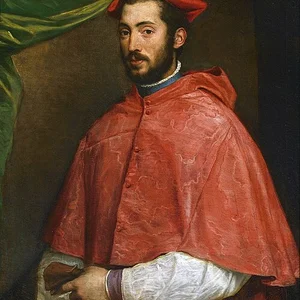
Alessandro Farnese
1520 — 1589
Italian general and statesman in the service of Spain, governor of the Spanish Netherlands. A renowned strategist of his time, he was meant to support the Spanish Armada in 1588 to invade England, a threat referenced by Elizabeth I in her Tilbury speech.
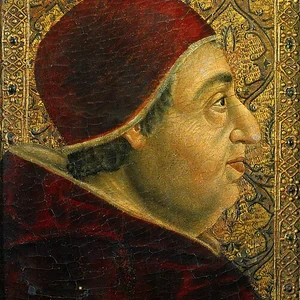
Alexander VI
1431 — 1503
Spanish pope from 1492 to 1503, Alexander VI is one of the most controversial figures in the history of the papacy. Head of the powerful Borgia family, he blended politics, nepotism, and diplomacy in Renaissance Rome.
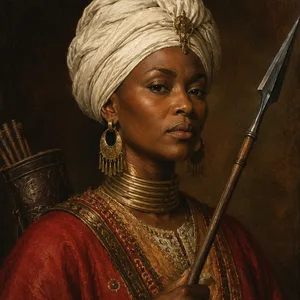
Amina de Zaria
1533 — 1610
Warrior princess of the Hausa city-state of Zazzau (present-day Nigeria), she reigned around 1576–1610 and led numerous military campaigns that significantly expanded her kingdom's territory. The first woman to rule Zazzau, she has become a symbol of female power in West Africa.
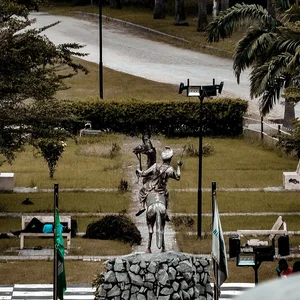
Amina of Zazzau
A Hausa warrior queen of the kingdom of Zazzau (present-day Zaria, Nigeria), Amina reigned around the 16th century according to Hausa oral traditions. She greatly expanded her kingdom's territory through military conquest and is celebrated as a symbol of female power in Hausa collective memory.
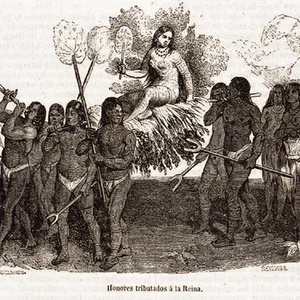
Anacaona
1474 — 1503
Taíno queen and poet of Hispaniola (c. 1474–1503), Anacaona was renowned for her areítos — ceremonial songs and poems passed down through oral tradition. A fierce resister of Spanish colonization, she was captured and executed by Nicolás de Ovando.
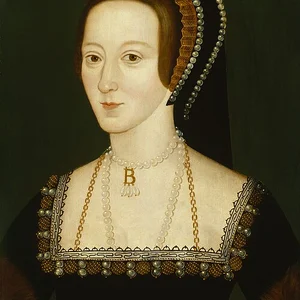
Anne Boleyn
1507 — 1536
Queen of England from 1533 to 1536, Anne Boleyn was the second wife of Henry VIII. Her marriage required England's break with Rome, giving rise to the Church of England. Mother of Elizabeth I, she was accused of adultery and beheaded at the Tower of London.
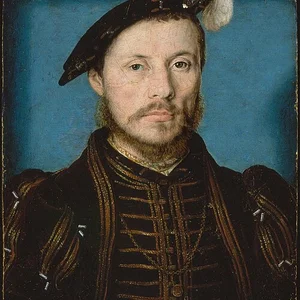
Anne de Montmorency
1493 — 1567
Anne de Montmorency (1493-1567) was Constable of France and one of the most powerful servants of kings Francis I and Henry II. A great military leader and statesman, he left a lasting mark on the town of Pézenas, where he established his power as governor of Languedoc.
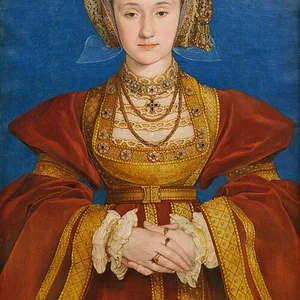
Anne of Cleves
1515 — 1557
A German princess of the House of La Marck, Anne of Cleves became the fourth wife of King Henry VIII of England in January 1540. The marriage, motivated by a diplomatic alliance with the Protestant princes, was annulled after six months.
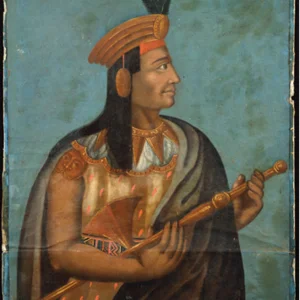
Atahualpa
1500 — 1533
The last Inca emperor, Atahualpa seized power at the end of a civil war against his brother Huáscar. Captured by Francisco Pizarro's Spanish conquistadors in 1532, he was executed in 1533, marking the collapse of the Inca Empire.
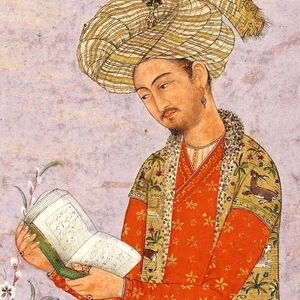
Babur
1483 — 1530
Founder of the Mughal Empire, Babur was a Timurid prince who, after losing Samarkand, conquered India in 1526 at the Battle of Panipat. A refined poet and memoirist, he left behind the Baburnama, one of the earliest autobiographies in Islamic literature.
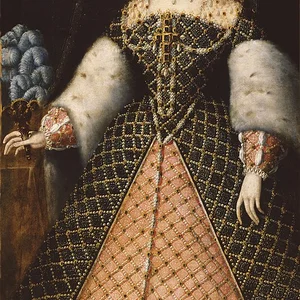
Catherine de Medici
1519 — 1589
Queen consort of France (1547–1559) and regent of the kingdom during the Wars of Religion. Born in Florence in 1519, she played a major political role by attempting to maintain the balance between Catholics and Protestants in France.
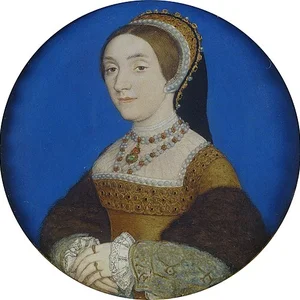
Catherine Howard
1523 — 1542
Catherine Howard was the fifth wife of King Henry VIII of England, whom she married in 1540. A very young queen consort, she was accused of adultery and treason, then executed in 1542.
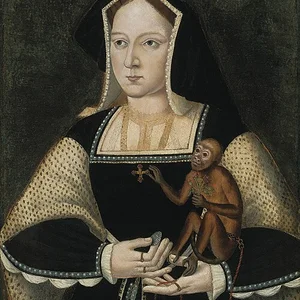
Catherine of Aragon
1485 — 1536
A Spanish Infanta who became Queen of England, Catherine of Aragon was the first wife of Henry VIII. Her refusal to have their marriage annulled triggered the Anglican schism and England's break with Rome.
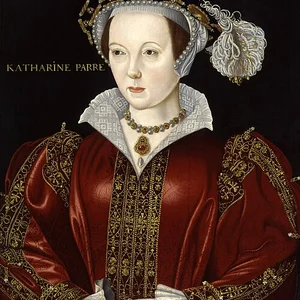
Catherine Parr
1512 — 1548
Sixth and last wife of King Henry VIII of England, whom she married in 1543. A cultured woman with reformist convictions, she was the only one of the six wives to outlive the king. She served as Regent of England in 1544 during Henry VIII's French campaign.
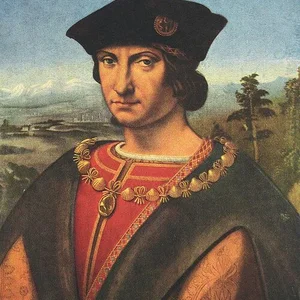
Charles d'Amboise
Lord of Chaumont and governor of the Duchy of Milan on behalf of Louis XII, Charles d'Amboise (1473–1511) was one of the leading French military commanders during the Italian Wars. He is particularly known for having been Leonardo da Vinci's patron in Milan.
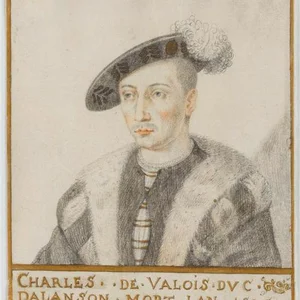
Charles IV of Alençon
1489 — 1525
Charles IV of Alençon (1489-1525) was Duke of Alençon and Count of Perche, a prince of the blood and a great aristocrat during the reign of Francis I. Husband of Marguerite of Angoulême (the future Marguerite of Navarre), he took part in the Battle of Pavia in 1525.
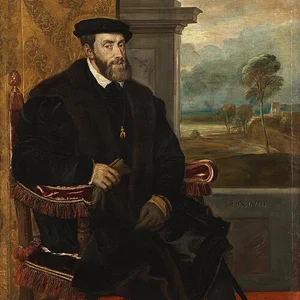
Charles V
1500 — 1558
Born in 1500 in Ghent, Charles V inherited a vast empire spanning Spain, the Netherlands, Austria, and much of Italy. King of Spain as Charles I, then elected Holy Roman Emperor in 1519, he ruled the largest European empire of the Renaissance. He abdicated in 1556 and retired to the monastery of Yuste, where he died in 1558.
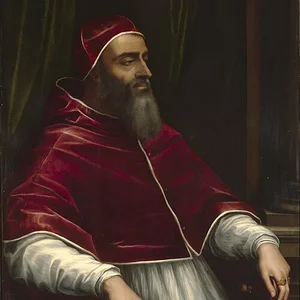
Clement VII
1478 — 1534
Pope from 1523 to 1534, Clement VII was a sovereign pontiff from the powerful Medici family. His pontificate was marked by the Sack of Rome in 1527 and his refusal to annul the marriage of Henry VIII of England, which triggered the Anglican schism.
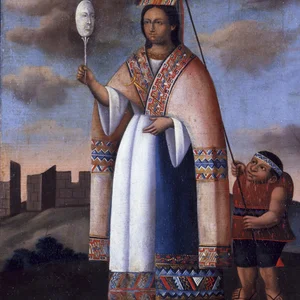
Coya Pacsa
Coya Pacsa was an Inca queen (coya), wife of the Inca Huayna Cápac, who ruled the Tawantinsuyu at the end of the 15th and beginning of the 16th century. A figure of the highest Inca nobility, she embodies the power and political role of the great royal wives in Inca civilization on the eve of the Spanish conquest. Information about her comes primarily from Quechua oral tradition and Spanish colonial chronicles.
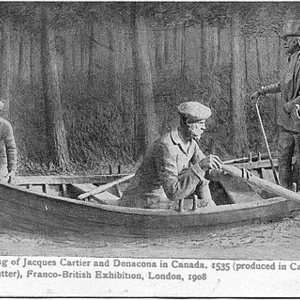
Donnacona
1500 — 1539
Chief of the St. Lawrence Iroquoians settled at Stadacona (present-day Quebec), Donnacona met Jacques Cartier during his voyages of 1534 and 1535. Taken to France by force by Cartier, he died at the court of King Francis I without ever seeing his homeland again.
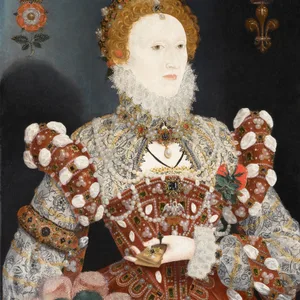
Elizabeth I
Queen of England and Ireland from 1558 to 1603, daughter of Henry VIII and Anne Boleyn. Her reign, the “Elizabethan era,” marks a golden age of culture and the consolidation of Protestantism in England. She embodies the figure of the “Virgin Queen,” an absolute sovereign who never married any of her suitors.
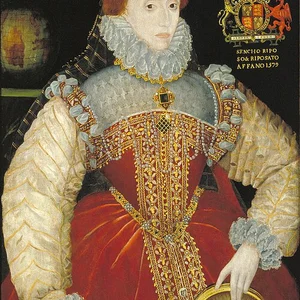
Elizabeth I of England
1533 — 1603
Elizabeth I (1533–1603) was Queen of England and Ireland for 45 years. The daughter of Henry VIII and Anne Boleyn, she consolidated Protestantism in England and led her kingdom to exceptional prominence in Europe. Her reign, known as the "Elizabethan era," was marked by the defeat of the Spanish Armada and a flourishing of arts and literature.

Fabrizio Moncada
1535 — 1579
Fabrizio Moncada was a Sicilian nobleman and politician from the powerful Moncada family, of Catalan origin, established in Sicily and playing a key role in the administration of the kingdom under Hispanic rule during the 15th and 16th centuries.
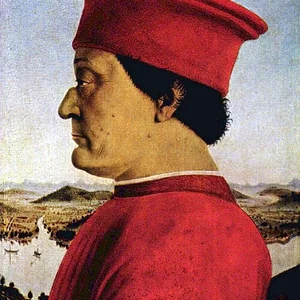
Federico da Montefeltro
1422 — 1482
Condottiere and lord of Urbino (1422–1482), Federico da Montefeltro was one of the most cultured princes of the Italian Renaissance. An exceptional patron of the arts, he made Urbino a major artistic center, commissioning his famous profile portrait from Piero della Francesca.
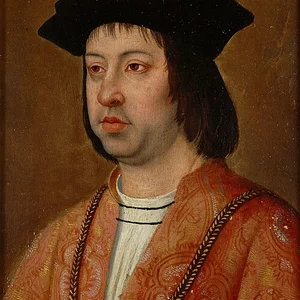
Ferdinand II of Aragon
1452 — 1516
King of Aragon, Ferdinand II married Isabella of Castile in 1469, uniting the two great Iberian crowns. Together, the “Catholic Monarchs” completed the Reconquista in 1492, financed Christopher Columbus's voyage, and laid the foundations of modern Spain.
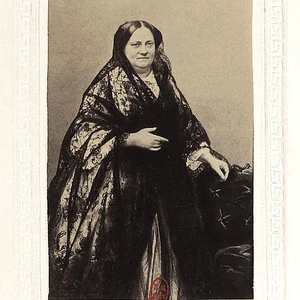
Ferdinand II of Spain
King of Aragon and, through his marriage to Isabella of Castile, co-ruler of a unified Spain. He completed the Reconquista in 1492 and funded Christopher Columbus's voyages, laying the foundations of the Spanish colonial empire.
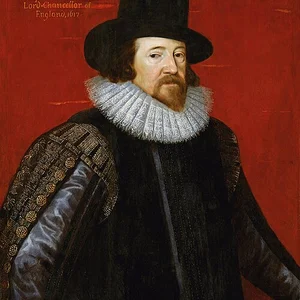
Francis Bacon
1561 — 1626
English philosopher and statesman (1561–1626), Francis Bacon is the founder of the modern experimental method. Lord Chancellor of England under James I, he championed the idea that science must be based on observation and induction rather than authority.
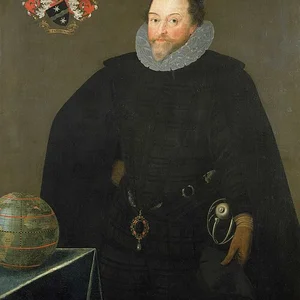
Francis Drake
1540 — 1596
Francis Drake was an English privateer and navigator of the 16th century, famous for being the second person to circumnavigate the globe by ship (1577–1580). Vice Admiral of the English fleet, he played a decisive role in the defeat of the Spanish Armada in 1588.
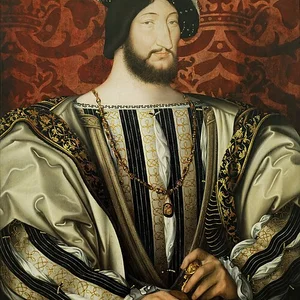
Francis I
1494 — 1547
Francis I (1494–1547) was one of the greatest kings of France and an iconic figure of the Renaissance. A great patron of the arts, he brought Leonardo da Vinci to France and transformed the royal court into a vibrant center of art and intellectual life. His reign was shaped by the Italian Wars and his rivalry with Charles V.
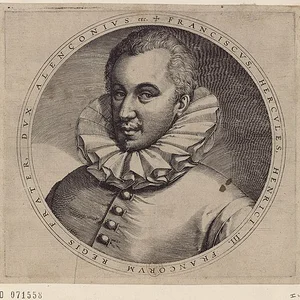
Francis of Anjou
The youngest son of Henry II and Catherine de' Medici, he was an ambitious figure of the Wars of Religion. Leader of the “Malcontents,” a suitor for the hand of Elizabeth I, and briefly sovereign of the rebellious Netherlands, his death in 1584 opened the crisis of succession to the French throne.
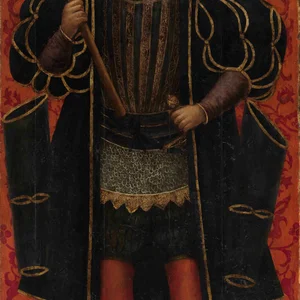
Francisco de Almeida
1450 — 1510
First Viceroy of Portuguese India (1505–1509), Francisco de Almeida consolidated the Lusitanian presence in the Indian Ocean. He won the decisive Battle of Diu (1509) against the Ottoman-Egyptian fleet, securing Portuguese maritime supremacy in Asia.
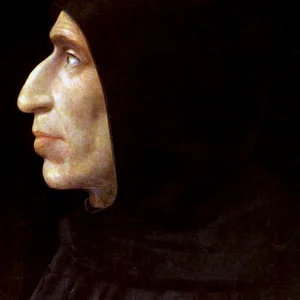
Girolamo Savonarola
1452 — 1498
Italian Dominican friar (1452–1498), Savonarola seized control of Florence after the expulsion of the Medici in 1494. A fiery preacher, he imposed a rigorist theocracy before being excommunicated and executed.
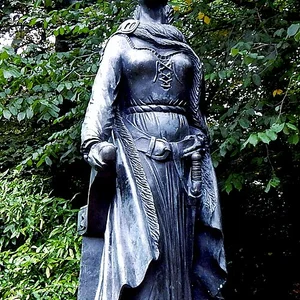
Grace O'Malley
1539 — 1599
Irish clan chief and navigator of the 16th century, nicknamed the “pirate queen.” At the head of the Ó Máille fleet, she scoured the west coast of Ireland through raiding and tolls, and negotiated in person with Elizabeth I of England.
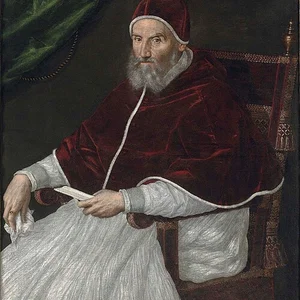
Gregory XIII
1502 — 1585
Gregory XIII was the 226th pope of the Catholic Church, from 1572 to 1585. Trained as a lawyer, he is best known for the calendar reform that bears his name, the Gregorian calendar, introduced in 1582 and still in use today.

Helena Glinskaya
A princess of Lithuanian origin, the second wife of the Grand Prince of Moscow Vasili III. Upon his death in 1533, she served as regent in the name of her son Ivan IV (the future Ivan the Terrible), then three years old, until her own death in 1538.
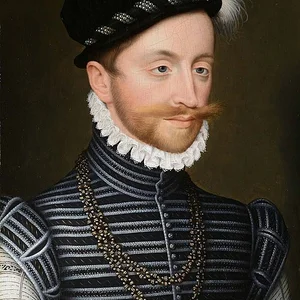
Henri I de Montmorency
1534 — 1614
Henri I de Montmorency (1534-1614) was a great French lord and military commander, governor of Languedoc for half a century. A Marshal and then Constable of France, he played a major role during the Wars of Religion and in the service of Henry IV.
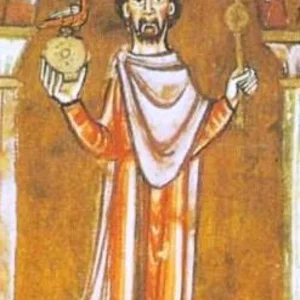
Henri IV
1553 — 1610
Henry IV (1050–1106) was Holy Roman Emperor from 1084 to 1105. He is best known for his power struggle with the papacy, particularly the Investiture Controversy, which pitted imperial authority against that of Pope Gregory VII.
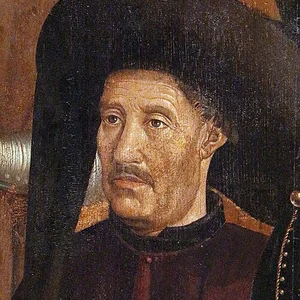
Henry the Navigator
1394 — 1460
A 15th-century Portuguese prince, son of King John I of Portugal. Although he himself rarely went to sea, he was the great organizer and patron of the expeditions along the coasts of Africa, ushering in the era of the great Portuguese discoveries.
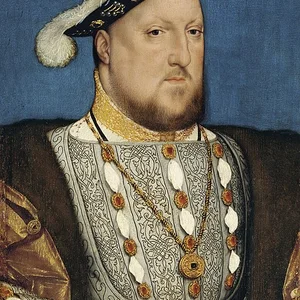
Henry VIII
1491 — 1547
King of England and Ireland from 1509 to 1547, Henry VIII is famous for breaking with the Catholic Church and founding the Church of England in order to annul his marriage. He married six wives and had two of them executed, leaving a lasting mark on England's political and religious history.
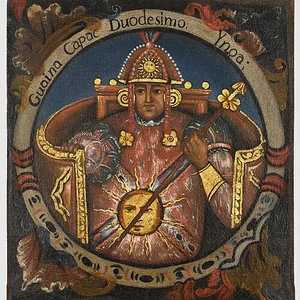
Huayna Cápac
1464 — 1525
Huayna Cápac was the eleventh Sapa Inca, ruler of the Inca Empire (Tahuantinsuyu) at its greatest territorial extent. He reigned from roughly 1493 to 1527 and expanded the empire northward as far as present-day Ecuador. His death, probably caused by an epidemic that arrived from Europe, triggered a war of succession between his sons Huáscar and Atahualpa.

Humabon
1500 — ?
Humabon was the raja of Cebu in the Philippines in the early 16th century. He welcomed Magellan's expedition in 1521 and converted to Christianity along with many of the island's inhabitants. He played a central role in the first contacts between the Philippine world and European explorers.

Inti
Inti is the principal solar deity of the Inca pantheon, venerated as the father of the Incas and the source of all life. His cult was at the heart of the state religion of the Inca Empire (Tawantinsuyu). The Sapa Inca was considered his direct son on Earth.
Isabella I of Castile
1451 — 1504
Isabella I of Castile (1451-1504) unified Spain by marrying Ferdinand II of Aragon, forming the Catholic Monarchs. She financed Christopher Columbus's voyage in 1492, opening the era of conquest in the Americas. Her reign was marked by the establishment of the Spanish Inquisition and the expulsion of the Jews from Spain.
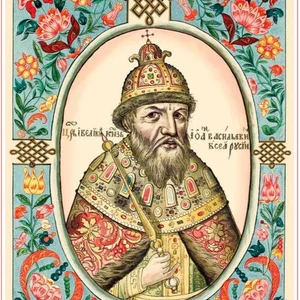
Ivan IV
1530 — 1584
The first tsar of Russia, Ivan IV unified and centralized Russian power in the 16th century. His reign was marked by significant territorial conquests and the brutal repression of the aristocracy through the oprichnina.
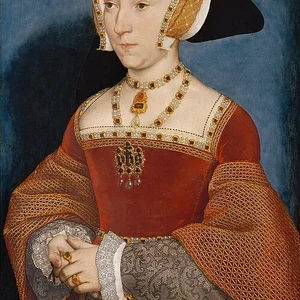
Jane Seymour
1508 — 1537
Jane Seymour was the third wife of King Henry VIII of England and queen consort from 1536 to 1537. She gave birth to the long-awaited male heir, the future Edward VI, but died a few days later from complications of childbirth.
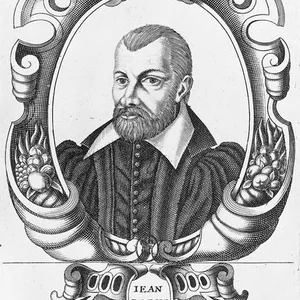
Jean Bodin
1530 — 1596
Jean Bodin was a French jurist, philosopher, and political theorist of the Renaissance. He is famous for developing the modern theory of state sovereignty in *The Six Books of the Commonwealth* (1576).
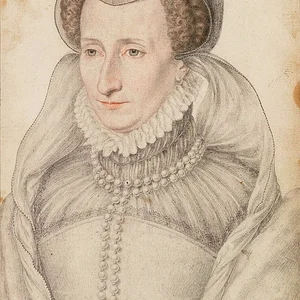
Jeanne d'Albret
1528 — 1572
Queen of Navarre from 1555 to 1572, Jeanne d'Albret was one of the leading figures of the Protestant Reformation in France. Mother of Henry IV, she imposed Calvinism in her territories and played a decisive political role in the Wars of Religion.

Joanna la Beltraneja
Castilian princess, acknowledged daughter of King Henry IV of Castile, claimant to the throne upon his death in 1474. Her contested legitimacy triggered a war of succession that pitted her against her aunt Isabella the Catholic. Defeated, she withdrew to Portugal where she ended her days.
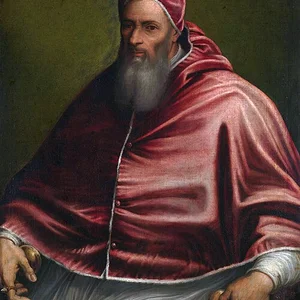
Julius III
1487 — 1555
Julius III (Giovanni Maria Ciocchi Del Monte, 1487–1555) was the 221st pope of the Catholic Church from 1550 to 1555. He convened the resumption of the Council of Trent and was a patron of the arts, protector of Michelangelo and Palestrina.
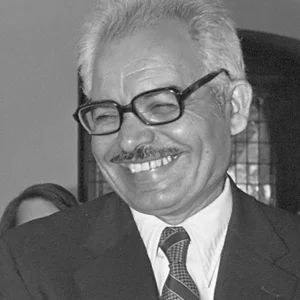
Kassa
Kassa is the mother of Askia Mohammed I, founder of the Askia dynasty in the Songhai Empire in the 15th century. Her memory is preserved through oral traditions and mentioned in the Tarikh al-Fattash, an Arabic chronicle written in the 16th century. Her role in legitimizing her son's succession illustrates the place of women in medieval Sahelian societies.
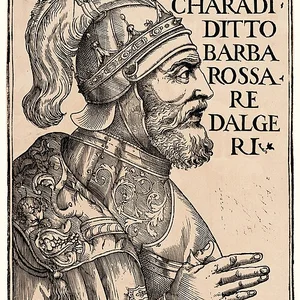
Khayr ad-Dîn Barbarossa
A corsair of Greek origin who became commander-in-chief of the Ottoman fleet under Suleiman the Magnificent. He dominated the western Mediterranean in the 16th century and turned the Regency of Algiers into an Ottoman stronghold.
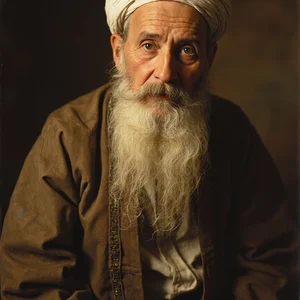
Khoja Ahrar
1404 — 1490
Khoja Ahrar (1404-1490) was the most influential Naqshbandi Sufi master in Central Asia, wielding considerable political power over the Timurid sultans. From Samarkand, he interceded with princes to protect the population and amassed immense wealth, which he redistributed through pious foundations.
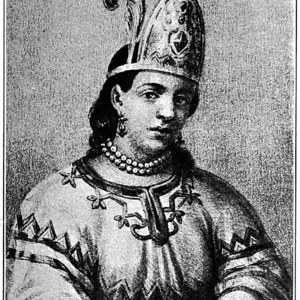
La Malinche
Born around 1500 into a noble Nahuatl family, sold into slavery and later given to Hernán Cortés, she became his interpreter, advisor, and companion. A central figure in the Conquest of Mexico, she remains an ambiguous symbol of betrayal and survival in Mexican historical memory.
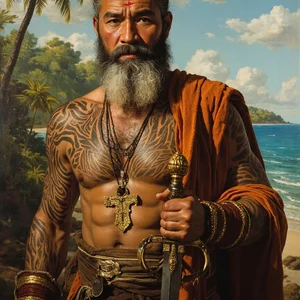
Lapu-Lapu
1491 — 1542
Lapu-Lapu was the datu (chief) of the island of Mactan in the Philippines. He is famous for defeating and killing the explorer Ferdinand Magellan at the Battle of Mactan on April 27, 1521, thus repelling the first Spanish attempt to conquer the Philippines.
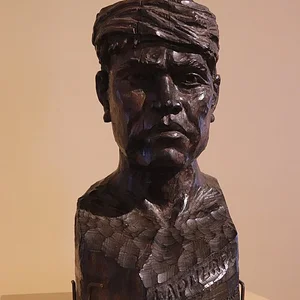
Lapulapu
1492 — 1542
A warrior chieftain from the island of Mactan in the Philippines, Lapulapu is famous for defeating and killing the explorer Ferdinand Magellan on April 27, 1521. He is considered the first national hero of the Philippines for resisting European colonization.
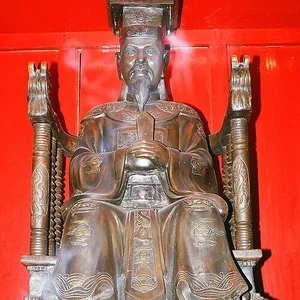
Lê Thánh Tông
1442 — 1497
Fifth emperor of Vietnam's Lê sơ dynasty (r. 1460–1497), he promulgated the Hồng Đức legal code and carried out sweeping reforms of the administration, education, and military. He conquered the Kingdom of Champa in 1471, permanently extending Vietnamese territory southward. A prolific poet, he founded the Tao Đàn literary circle and left more than 350 poems in classical Chinese. [1]
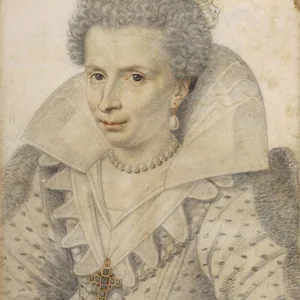
Leonora Galigaï
1568 — 1617
An Italian favorite and lady of the wardrobe to Queen Marie de' Medici, she wielded great influence at the French court during the regency alongside her husband Concino Concini. Accused of witchcraft, she was beheaded and then burned at the Place de Grève in 1617.
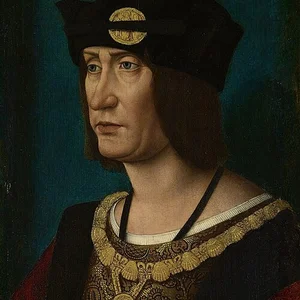
Louis XII
1462 — 1515
King of France from 1498 to 1515, Louis XII was nicknamed “Father of the People” for his fiscal and judicial reforms. He waged numerous Italian Wars to assert his claims over Milan and Naples.
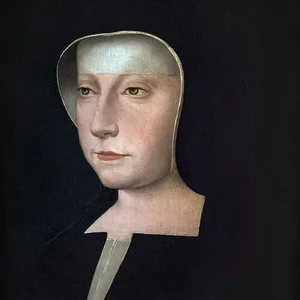
Louise de Savoie
1476 — 1531
Louise de Savoie (1476–1531), Duchess of Angoulême, was the mother of Francis I and Margaret of Navarre. She served twice as regent of France and played a major diplomatic role by negotiating the Peace of Cambrai in 1529.
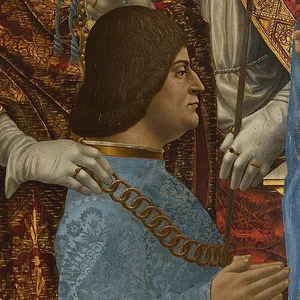
Ludovic Sforza
1452 — 1508
Duke of Milan from 1494 to 1499, nicknamed "il Moro" (the Moor), he was one of the most powerful princes in Renaissance Italy. A celebrated patron of the arts, he brought Leonardo da Vinci to his court and played a key role in the Italian Wars before being overthrown by Louis XII.
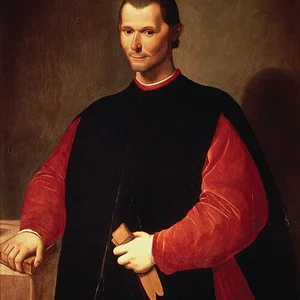
Machiavelli
1469 — 1527
Florentine philosopher and statesman (1469–1527), Machiavelli is the author of The Prince, a treatise that laid the foundations of modern political realism. He analyzes power as it is actually exercised, not as it should be, revolutionizing political thought during the Renaissance.
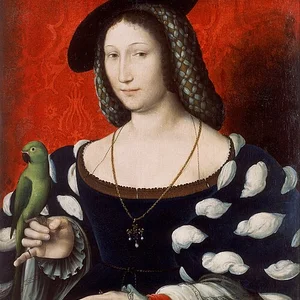
Margaret of Navarre
1492 — 1549
Elder sister of Francis I, Margaret of Navarre was one of the most educated women of the French Renaissance. A patron of humanists and religious reformers, she authored the Heptameron, a collection of tales inspired by Boccaccio's Decameron.
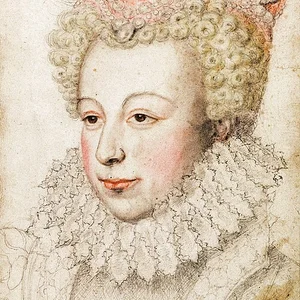
Marguerite de Valois
1553 — 1615
Queen consort of Navarre and later of France, nicknamed 'Queen Margot', she was a central figure in the Wars of Religion. A learned woman of letters, she left behind her Memoirs and was the first wife of Henry IV.
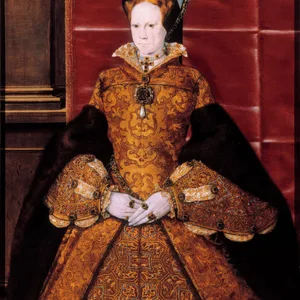
Mary I Tudor
Queen of England and Ireland from 1553 to 1558, Mary I Tudor was the first woman to reign in her own right over England. The daughter of Henry VIII and Catherine of Aragon, she restored Catholicism and persecuted Protestants, earning her the nickname "Bloody Mary".
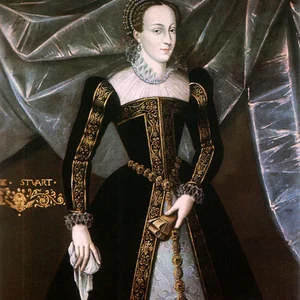
Mary, Queen of Scots
1542 — 1587
Queen of Scotland at six days old, raised at the French court, Mary Stuart became Queen consort of France before ruling a Scotland torn apart by the Protestant Reformation. A Catholic in a kingdom that had embraced Calvinism, she abdicated in 1567 and sought refuge with Elizabeth I, who had her imprisoned for eighteen years before having her beheaded in 1587.
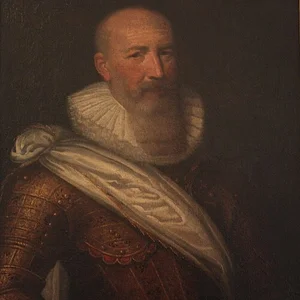
Maximilien II
Maximilien II (1527–1576) was Holy Roman Emperor from 1564 to 1576. The son of Ferdinand I, he pursued a policy of relative religious tolerance amid tensions between Catholics and Protestants, seeking to preserve the unity of the Empire during the height of the Reformation.
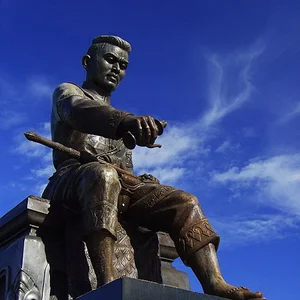
Naresuan
1555 — 1605
Naresuan the Great is the king of Ayutthaya who liberated the Siamese kingdom from Burmese domination at the end of the 16th century. A formidable strategist, he is famous for his elephant-back duel against the Burmese crown prince in 1593, a victory that sealed his people's independence.
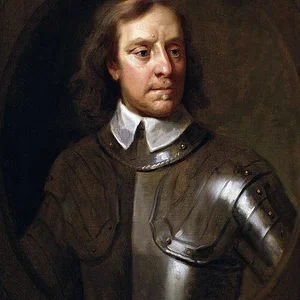
Oliver Cromwell
1599 — 1658
An English statesman and military leader, Oliver Cromwell led the Puritan revolution against Charles I. Commander of the Roundheads, he had the king executed in 1649 and ruled England as Lord Protector until his death in 1658.

Orazio Lomellini
Genoese nobleman and merchant of the 16th century, from the influential Lomellini family. The Lomellinis controlled major commercial networks across the Mediterranean, including the concession of the island of Tabarka for coral fishing and trade with North Africa.
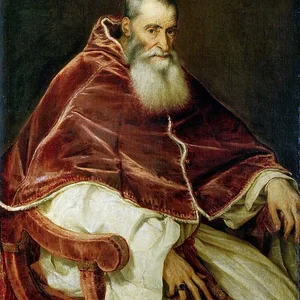
Paul III
1468 — 1549
Pope from 1534 to 1549, Alessandro Farnese was a major figure of the Catholic Counter-Reformation. He convened the Council of Trent, approved the Society of Jesus, and defended the dignity of the indigenous peoples of the Americas.
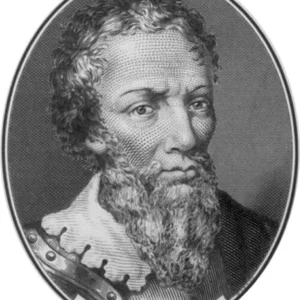
Pedro Álvares Cabral
1467 — 1520
Portuguese navigator and explorer (c. 1467–1520), Pedro Álvares Cabral is officially the first European to have reached Brazil in 1500. Commissioned by King Manuel I of Portugal, he claimed the land in the name of the Portuguese Crown.
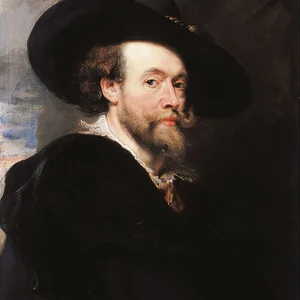
Peter Paul Rubens
1577 — 1640
A Flemish painter of the 17th century, Rubens is one of the masters of the European Baroque. As much a diplomat as an artist, he worked for the greatest courts of Europe. His monumental body of work, rich in color and movement, had a lasting influence on Western painting.
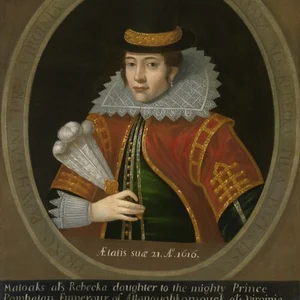
Pocahontas
1596 — 1617
Daughter of Chief Powhatan, leader of the Algonquian confederacy of Virginia, Pocahontas (c. 1596–1617) is a central figure in the encounter between the Powhatan peoples and the English settlers of Jamestown. Her story, passed down through colonial written sources and her people's oral tradition, symbolizes both the dialogue and the tensions between two worlds.
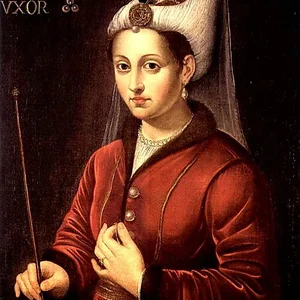
Roxelane
A slave of Ukrainian origin, she became the legal wife of Suleiman the Magnificent — the first concubine ever to be officially freed and married by an Ottoman sultan. Her influence over the politics of the Sublime Porte was considerable throughout the 16th century.
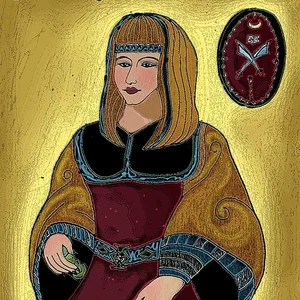
Sayyida al-Hurra
1485 — 1561
Born into an Andalusian family exiled after the fall of Granada, Sayyida al-Hurra became governor of Tétouan in the early 16th century. An ally of the corsair Barbarossa of Algiers, she led privateering campaigns in the western Mediterranean against the Iberian powers and was one of the few women to rule as a sovereign in the Muslim world of her time.
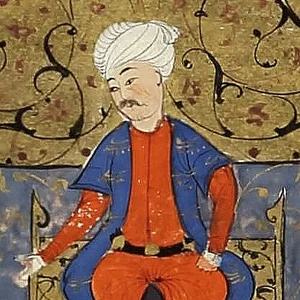
Selim I
1470 — 1520
Ottoman sultan from 1512 to 1520, Selim I tripled the size of the Empire by conquering Egypt, Syria, and the Hejaz. Nicknamed “the Grim,” he crushed the Safavids at Chaldiran and made the Ottoman sultan the guardian of Islam’s Holy Sites.
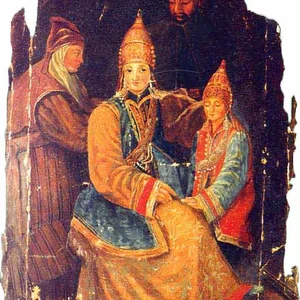
Söyembikä
1516 — 1557
Söyembikä was the last ruling khanum of the Khanate of Kazan in the 16th century. As regent for her infant son, she resisted Russian expansion before being captured by Ivan the Terrible in 1551. A national symbol for the Tatars, she remains a tragic figure of resistance to the Muscovite conquest.
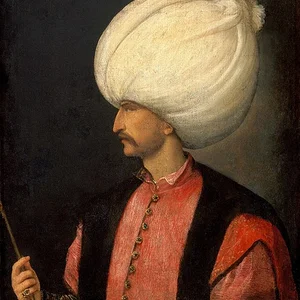
Suleiman the Magnificent
1494 — 1566
Suleiman I, known as the Magnificent, was the tenth Ottoman sultan, reigning from 1520 to 1566. He brought the Ottoman Empire to its territorial and cultural peak, threatening Christian Europe at the very gates of Vienna.
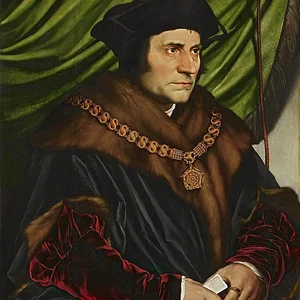
Thomas More
1478 — 1535
An English humanist and statesman, Thomas More served as Lord Chancellor to Henry VIII before opposing the Anglican schism. Author of Utopia (1516), he was executed for refusing to acknowledge the king as Supreme Head of the Church of England.
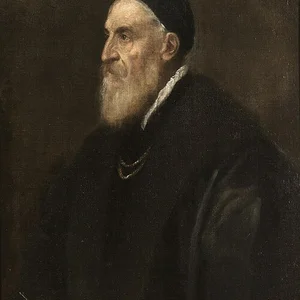
Titian
1490 — 1576
Titian, whose real name is Tiziano Vecellio, is the undisputed master of the Venetian school of the Renaissance. A prolific painter famous for his revolutionary use of color, he dominated the art scene for over sixty years and was the official portraitist of the greatest sovereigns of Europe.
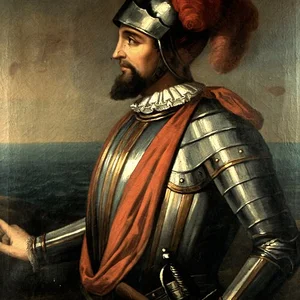
Vasco Núñez de Balboa
1475 — 1519
Spanish conquistador born around 1475, Balboa was the first European to see the Pacific Ocean from the New World in 1513. He crossed the Isthmus of Panama at the head of an expedition and claimed the “South Sea” in the name of the Spanish Crown.
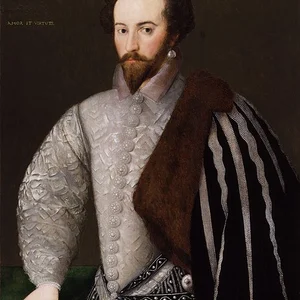
Walter Raleigh
1552 — 1618
English explorer, poet, and courtier (1552–1618), a favourite of Queen Elizabeth I. He organised several expeditions to North America and searched for El Dorado in South America. Imprisoned and later executed under James I, he remains an iconic figure of English expansion.
Visual Arts(55)
Agostino Chigi
1466 — 1520
Agostino Chigi (1466–1520) was the greatest banker of the Italian Renaissance, financier to popes Julius II and Leo X. A lavish patron of the arts, he commissioned the construction and decoration of the Villa Farnesina in Rome, with frescoes by Raphael and his pupils.
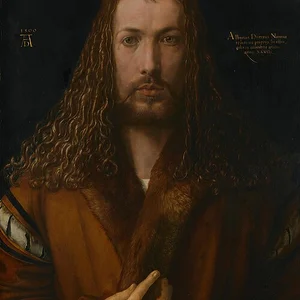
Albrecht Dürer
1471 — 1528
German Renaissance painter, printmaker, and theorist (1471–1528), Dürer is considered the greatest Germanic artist of his time. He introduced Italian Renaissance ideals to Northern Europe and revolutionized the art of woodcut and copper engraving.
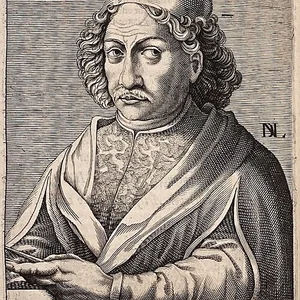
Andrea del Verrocchio
1435 — 1488
Florentine sculptor, painter, and goldsmith of the 15th century, Verrocchio ran one of the most influential workshops of the Italian Renaissance. He trained Leonardo da Vinci, among others. His sculptural work, including the equestrian statue of Bartolomeo Colleoni in Venice, exemplifies the revival of ancient art.
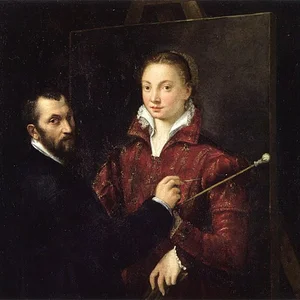
Bernardino Campi
1520 — 1591
Italian Mannerist painter (1522–1591), born in Cremona. A pupil of Giulio Campi, he developed an elegant style influenced by Lombard Mannerism. He is best known for having been the master of Sofonisba Anguissola.
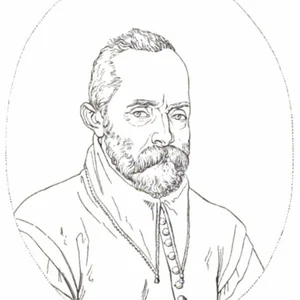
Bernardino Gatti
1495 — 1576
Italian Renaissance painter (c. 1495–1576), active mainly in Lombardy and Emilia. A pupil of Correggio, he developed a style influenced by Lombard Mannerism, creating frescoes and altarpieces for the major churches of Cremona and Pavia.
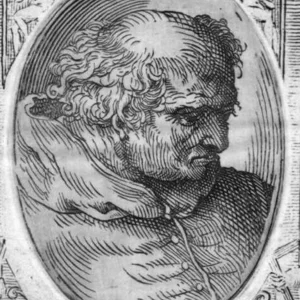
Bramante
1444 — 1514
Italian architect and painter of the Renaissance (1444–1514), Bramante is considered the father of High Renaissance architecture. He designed the plan for the new St. Peter's Basilica in Rome and created the Tempietto, a masterpiece of classical architecture.
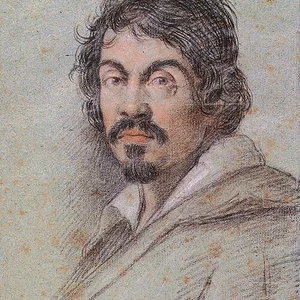
Caravaggio
1571 — 1610
An Italian painter at the turn of the 17th century, Caravaggio revolutionized Western art through his radical use of chiaroscuro and his realistic portrayal of religious subjects. A violent and tormented figure, he fled Rome after committing a murder in 1606 and died at the age of 38.
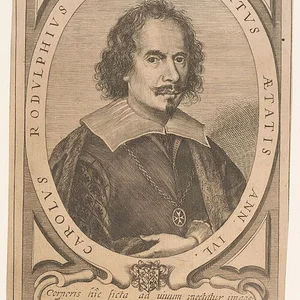
Carlo Ridolfi
1594 — 1658
Carlo Ridolfi (1594-1658) was a Venetian painter and Italian art historian. He is best known for his *Meraviglie dell'Arte*, a biographical collection of Venetian painters and a major source for the history of Italian painting.
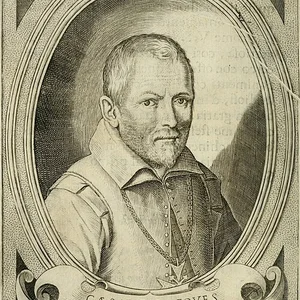
Cesare Ripa
1555 — 1622
Cesare Ripa (c. 1555–1622) was an Italian scholar and iconographer, author of the *Iconologia* (1593), an encyclopedic treatise that codified the allegorical representation of virtues, vices, and abstract concepts. His work became the essential reference for European artists and decorators from the 17th to the 18th century.
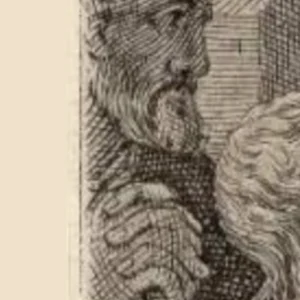
Ciriaco Mattei
1545 — 1614
Ciriaco Mattei (1545–1614) was a Roman nobleman and influential patron of the arts in the late Renaissance. A major collector of antiquities and paintings, he was one of Caravaggio's principal patrons in Rome.
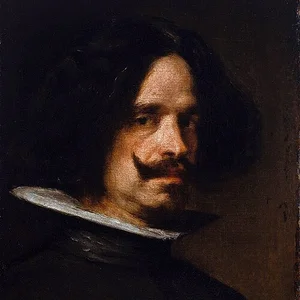
Diego Velázquez
1599 — 1660
Diego Velázquez (1599–1660) was the greatest Spanish painter of the Golden Age. As official painter to King Philip IV, he revolutionized painting through his mastery of light and realism. His masterpiece, Las Meninas, remains one of the most analyzed works in the history of art.
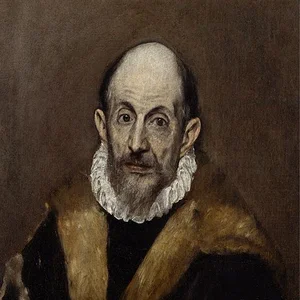
El Greco
1541 — 1614
Painter, sculptor, and architect born in Crete in 1541, El Greco settled in Toledo, Spain, where he developed a unique style blending Byzantine, Venetian, and Mannerist influences. His works, characterized by elongated figures and intense colors, make him one of the forerunners of Expressionism.
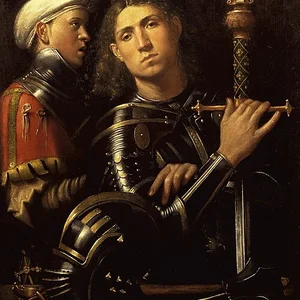
Erasmo da Narni (Gattamelata)
A fifteenth-century Italian condottiere, Erasmo da Narni — nicknamed "Gattamelata" (the honeyed cat) — was one of the greatest mercenary military commanders of his time. He is best known for inspiring Donatello to create the first large equestrian bronze statue of the Renaissance, erected in Padua.
Federico da Montefeltro
1422 — 1482
Condottiere and lord of Urbino (1422–1482), Federico da Montefeltro was one of the most cultured princes of the Italian Renaissance. An exceptional patron of the arts, he made Urbino a major artistic center, commissioning his famous profile portrait from Piero della Francesca.
Ferdinand II of Aragon
1452 — 1516
King of Aragon, Ferdinand II married Isabella of Castile in 1469, uniting the two great Iberian crowns. Together, the “Catholic Monarchs” completed the Reconquista in 1492, financed Christopher Columbus's voyage, and laid the foundations of modern Spain.
Ferdinand II of Spain
King of Aragon and, through his marriage to Isabella of Castile, co-ruler of a unified Spain. He completed the Reconquista in 1492 and funded Christopher Columbus's voyages, laying the foundations of the Spanish colonial empire.
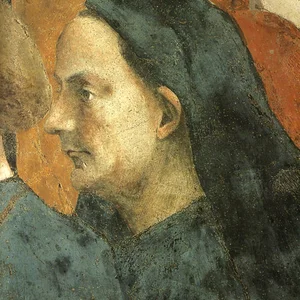
Filippo Brunelleschi
1377 — 1446
Florentine architect and engineer (1377–1446), he is considered the father of Renaissance architecture. He is renowned for designing the dome of the Cathedral of Santa Maria del Fiore in Florence and for formalizing the laws of linear perspective.
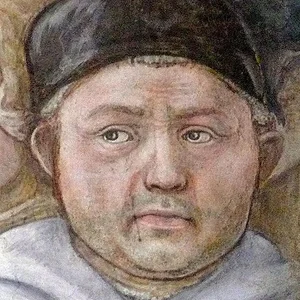
Filippo Lippi
1406 — 1469
Florentine painter of the Quattrocento (1406–1469), a Carmelite friar who became one of the masters of Italian religious painting. Celebrated for his Madonnas with tender, human features, he influenced Botticelli, whom he trained.
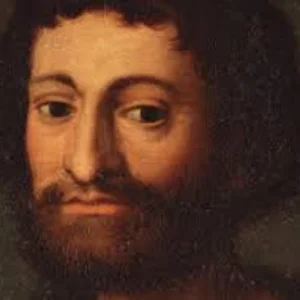
Francesco del Giocondo
1460 — 1542
A Florentine merchant and magistrate of the Renaissance, Francesco del Giocondo is best known for having commissioned Leonardo da Vinci to paint the portrait of his wife Lisa Gherardini, known as the Mona Lisa. Born in 1465 in Florence, he was a prosperous silk merchant.
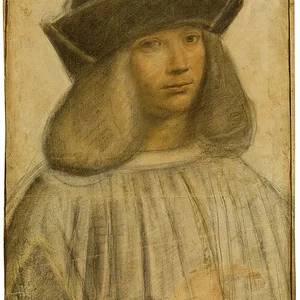
Francesco Melzi
1492 — 1570
Francesco Melzi (1491-1570) was Leonardo da Vinci's favorite pupil and faithful companion. An Italian painter of the Lombard Renaissance, he inherited Leonardo's manuscripts and works upon his death and helped preserve his legacy.
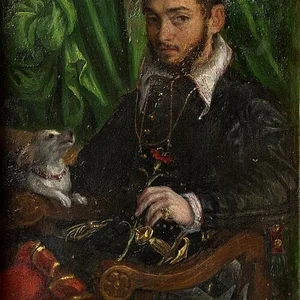
Gian Paolo Zappi
1555 — 1615
Italian painter active between the late 16th and early 17th centuries, originally from Faenza. He followed the Mannerist tradition of the Roman and Bolognese schools, producing religious and decorative works.
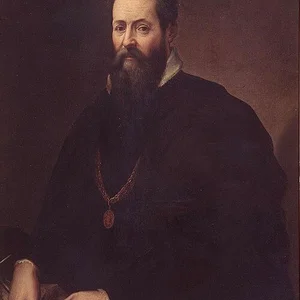
Giorgio Vasari
1511 — 1574
Giorgio Vasari was an Italian painter, architect, and writer of the Renaissance. Author of "Lives of the Most Excellent Painters, Sculptors, and Architects" (1550), he is considered the first art historian. He also designed the Uffizi Palace in Florence.
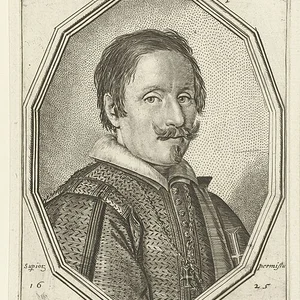
Giovanni Baglione
1566 — 1643
Italian painter and biographer (1566–1643), active in Rome. A rival of Caravaggio, he represents the late Mannerist current before adopting a moderate Baroque style. He is also known for his work on the lives of Roman painters.
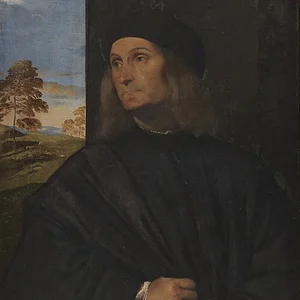
Giovanni Bellini
1430 — 1516
Giovanni Bellini was a major Venetian painter of the Italian Renaissance. Son of Jacopo and brother of Gentile Bellini, he revolutionized Venetian painting through his mastery of color, light, and atmosphere, paving the way for Giorgione and Titian.
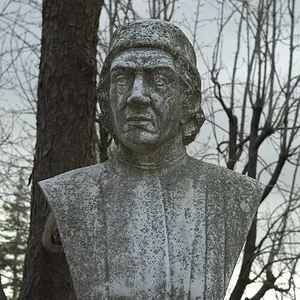
Giovanni Santi
Italian Renaissance painter (c. 1435–1494), born in Urbino. He is best known as the father of Raphael, whose first master he was. His pictorial work reflects the influence of Melozzo da Forlì and the court of the Montefeltro.
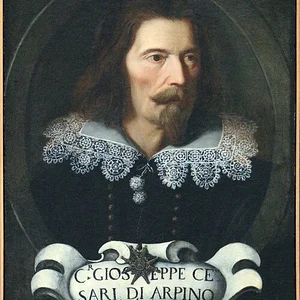
Giuseppe Cesari
1568 — 1640
Italian Mannerist painter (1568–1640), Giuseppe Cesari was one of the most fashionable artists in Rome at the end of the sixteenth century. He worked for several popes and was the first master of the young Caravaggio. His frescoes adorn the Basilica of Saint John Lateran and the Capitoline Hill, among other sites.
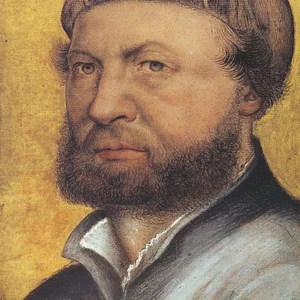
Hans Holbein the Younger
1497 — 1543
Hans Holbein the Younger was a German painter and engraver of the Renaissance, famous for his portraits of striking precision. Having become court painter to Henry VIII of England, he immortalized the great figures of the Tudor era and the humanists of his time.
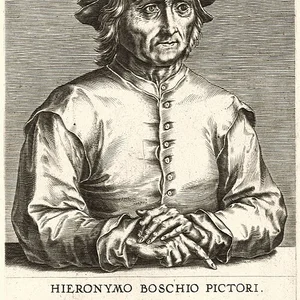
Hieronymus Bosch
1450 — 1516
Hieronymus Bosch was a Dutch painter and draughtsman of the late Middle Ages and early Renaissance. Famous for his fantastical compositions teeming with hybrid creatures and infernal scenes, he offers a moral and allegorical vision of sin and salvation.
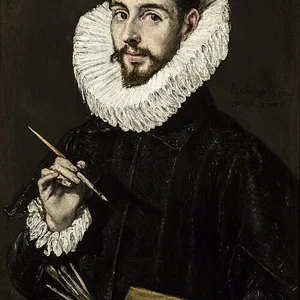
Jorge Manuel Theotokópoulos
Son and collaborator of El Greco, Jorge Manuel Theotokópoulos (1578–1631) was a painter and architect in Toledo. He carried on his father's Mannerist style while working as a master builder on several projects in the city.
Julius III
1487 — 1555
Julius III (Giovanni Maria Ciocchi Del Monte, 1487–1555) was the 221st pope of the Catholic Church from 1550 to 1555. He convened the resumption of the Council of Trent and was a patron of the arts, protector of Michelangelo and Palestrina.
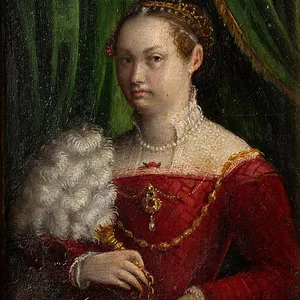
Lavinia Fontana
1552 — 1614
Lavinia Fontana (1552-1614) was a Bolognese painter considered the first professional female artist in the history of Western art. The daughter of painter Prospero Fontana, she excelled in portraiture and mythological scenes, working for the papal court in Rome.
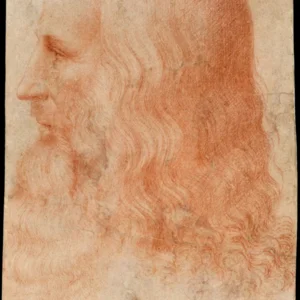
Leonardo da Vinci
1452 — 1519
Italian Renaissance painter, sculptor, architect, and engineer (1452–1519), Leonardo da Vinci embodies the ideal of the universal man. Creator of the Mona Lisa and The Last Supper, he revolutionized art through perspective and scientific observation, while pursuing research in anatomy, botany, and engineering.
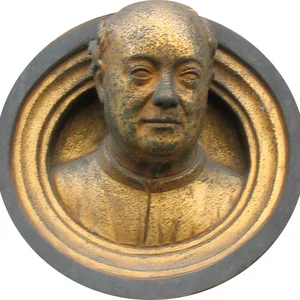
Lorenzo Ghiberti
1378 — 1455
Florentine goldsmith and sculptor (1378–1455), Ghiberti is renowned for creating the bronze doors of the Florence Baptistery, including the Gates of Paradise, a masterpiece of Renaissance sculpture.
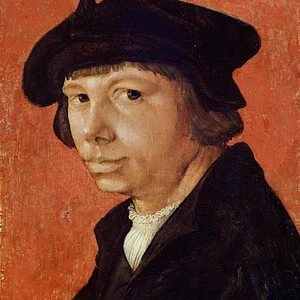
Lucas van Leyden
1494 — 1533
Dutch Renaissance painter and engraver (1494–1533), Lucas van Leyden is celebrated for the refinement of his copper and woodcut engravings. A contemporary of Dürer, he transformed the art of printmaking by introducing genre scenes and innovative perspective.
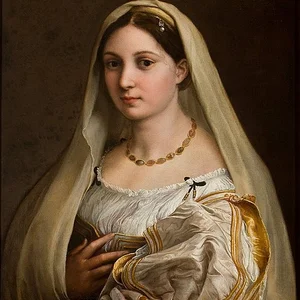
Margherita Luti
1500 — 1522
Margherita Luti, known as la Fornarina (“the baker's daughter”), was the model and companion of the painter Raphael in Rome. Her face inspired several of his Madonnas and the famous portrait La Fornarina.
Marguerite de Valois
1553 — 1615
Queen consort of Navarre and later of France, nicknamed 'Queen Margot', she was a central figure in the Wars of Religion. A learned woman of letters, she left behind her Memoirs and was the first wife of Henry IV.
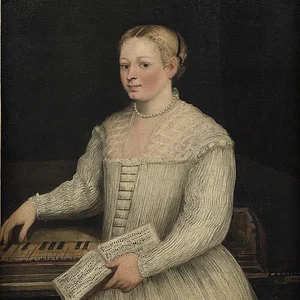
Marietta Robusti
1554 — 1590
Venetian painter of the late Renaissance (1554–1590), daughter and pupil of Tintoretto. Known as "la Tintoretta," she was celebrated for her portraits of remarkable psychological depth. Highly sought after at court, she turned down invitations from Philip II of Spain and Emperor Maximilian II in order to remain in Venice.
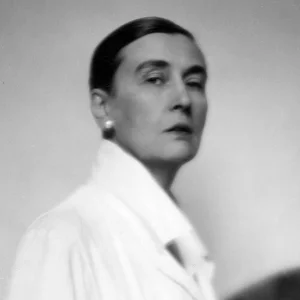
Mario Augusta
Painter or artist of the Italian Renaissance whose biographical details remain poorly documented. His name suggests an artist active in Italian artistic circles of the 15th–16th centuries.
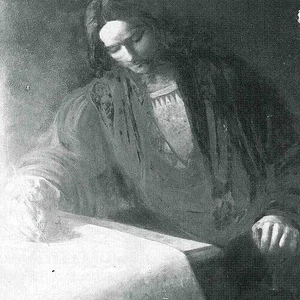
Martin Waldseemüller
1470 — 1520
A German Renaissance cartographer, he was the first to use the name “América” on a map, in 1507. His world map, printed in Saint-Dié-des-Vosges, depicts America for the first time as a distinct continent.
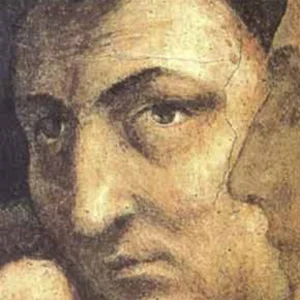
Masaccio
1401 — 1428
A Florentine painter of the early 15th century, Masaccio is considered one of the fathers of Renaissance painting. He revolutionized pictorial art by introducing linear perspective and a striking naturalism in the representation of human figures.
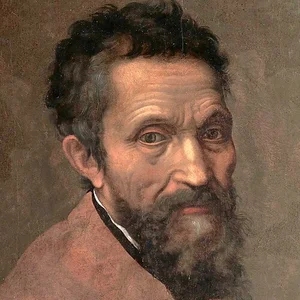
Michelangelo
1475 — 1564
Italian Renaissance painter, sculptor, poet, and architect (1475–1564). Michelangelo is considered one of the greatest artists of all time, author of world-famous masterpieces such as the David and the Sistine Chapel ceiling fresco.
Michelozzo di Bartolomeo
1396 — 1472
Florentine architect and sculptor of the early Renaissance (1396–1472), Michelozzo was the preferred architect of Cosimo de' Medici. He designed the Palazzo Medici Riccardi in Florence, a model for the Renaissance palace, and collaborated with Donatello on several sculptural works.
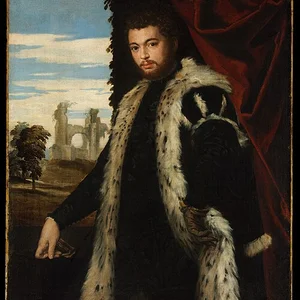
Paolo Veronese
Venetian Renaissance painter (1528–1588), celebrated for his vast, sumptuous compositions featuring large crowds of figures, brilliant colors, and illusionistic architectural settings. He painted decorative cycles for the Serenissima in the palaces and churches of Venice.
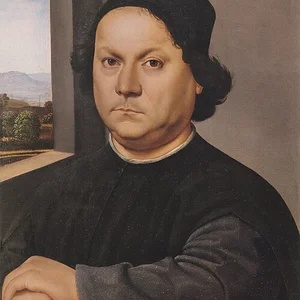
Perugino
Italian painter of the Umbrian Renaissance (c. 1446–1523), Perugino is celebrated for his harmonious compositions featuring gentle, idealized religious figures. A pupil of Verrocchio, he contributed to the Sistine Chapel and became Raphael's master.
Peter Paul Rubens
1577 — 1640
A Flemish painter of the 17th century, Rubens is one of the masters of the European Baroque. As much a diplomat as an artist, he worked for the greatest courts of Europe. His monumental body of work, rich in color and movement, had a lasting influence on Western painting.

Pierantonio Stiattesi
1612 — ?
A Florentine painter and art dealer active in Rome at the end of the 16th century, Pierantonio Stiattesi is best known as a close collaborator and agent of Caravaggio. He played the role of intermediary in the sale of paintings and left behind valuable correspondence shedding light on Rome's artistic world.
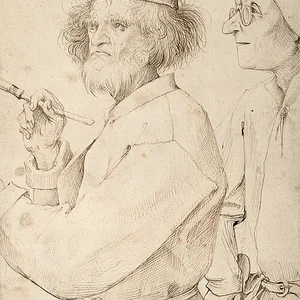
Pieter Bruegel the Elder
1525 — 1569
Brabantian painter and printmaker of the Flemish Renaissance, famous for his peasant scenes and vast landscapes. His works depict everyday life, popular proverbs, and 16th-century village festivities.
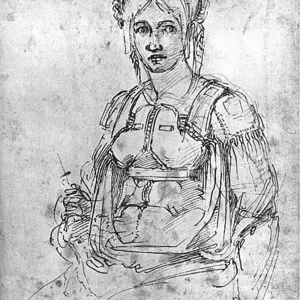
Properzia de' Rossi
1490 — 1530
A Bolognese sculptor of the Renaissance (c. 1490–1530), Properzia de' Rossi is considered the first professional female sculptor in Europe. She is celebrated for her marble bas-reliefs and miniature sculptures carved on apricot pits.
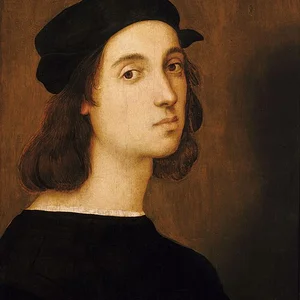
Raphael
1483 — 1520
Italian painter and architect of the Renaissance (1483–1520), Raphael is one of the great masters of the Italian Renaissance. He is celebrated for his harmonious compositions, his Madonnas, and his monumental frescoes, most notably The School of Athens in the Vatican.
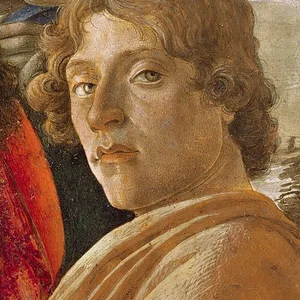
Sandro Botticelli
1445 — 1510
A major Florentine painter of the Italian Renaissance (1445–1510), Botticelli is celebrated for his mythological and religious compositions marked by graceful forms and a poetic visual world. His works, such as The Birth of Venus and Primavera, embody the humanist ideals of the Florentine Renaissance.
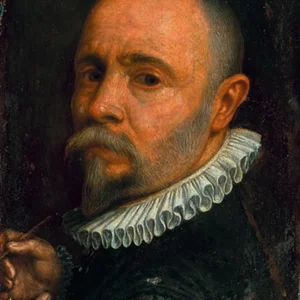
Simone Peterzano
1540 — 1599
Italian Mannerist painter active in Milan during the second half of the 16th century. Claiming to be a pupil of Titian, he is best known for having trained the young Caravaggio, who was his apprentice from 1584 to 1588.
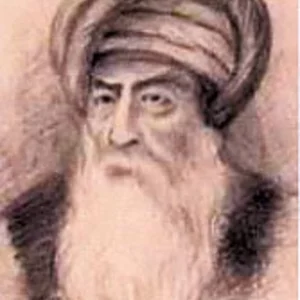
Sinan
1490 — 1588
Sinan (c. 1490–1588) was the greatest architect of the Ottoman Empire. Chief of the imperial architects under Suleiman the Magnificent, he designed more than 300 buildings, including the Süleymaniye Mosque in Istanbul and the Selimiye Mosque in Edirne, considered the absolute masterpiece of Ottoman architecture.
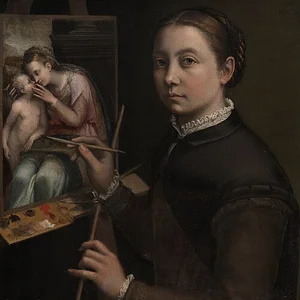
Sofonisba Anguissola
1532 — 1625
An Italian Renaissance painter (1532–1625), she was one of the first women artists to achieve international renown. Official portraitist at the court of King Philip II of Spain, she influenced many artists, including Caravaggio and Van Dyck.
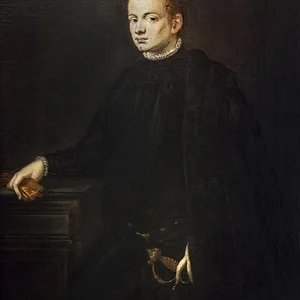
Tintoretto
A 16th-century Venetian painter and a major figure of late Mannerism. Nicknamed *il Tintoretto* (the little dyer) after his father's trade, he left his mark on Venetian painting through his dramatic compositions, bold foreshortening, and striking lighting effects.
Titian
1490 — 1576
Titian, whose real name is Tiziano Vecellio, is the undisputed master of the Venetian school of the Renaissance. A prolific painter famous for his revolutionary use of color, he dominated the art scene for over sixty years and was the official portraitist of the greatest sovereigns of Europe.
Literature(55)
Agrippa d'Aubigné
1552 — 1630
French writer, poet, and soldier, a major figure of Protestantism. A companion-in-arms of Henri de Navarre (the future Henri IV), he is the author of Les Tragiques, a great epic of the Wars of Religion.
Alexander VI
1431 — 1503
Spanish pope from 1492 to 1503, Alexander VI is one of the most controversial figures in the history of the papacy. Head of the powerful Borgia family, he blended politics, nepotism, and diplomacy in Renaissance Rome.
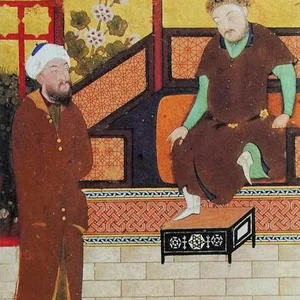
Alisher Navoi
1441 — 1501
Alisher Navoi (1441-1501) is the greatest poet of the Chagatai language and the founding father of Uzbek literature. A high official and vizier in Herat under Sultan Husayn Bayqara, he devoted his life to letters and patronage. His colossal body of work, including the *Khamsa*, elevated Eastern Turkic to the rank of a major literary language.
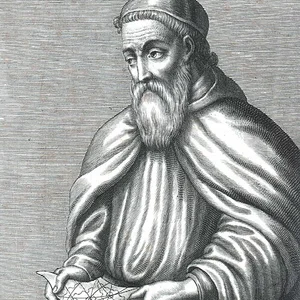
Amerigo Vespucci
1454 — 1512
Florentine navigator and explorer (1454–1512), Amerigo Vespucci made several voyages to the New World between 1499 and 1504. He was the first to understand that the lands discovered by Christopher Columbus formed an unknown continent, which was named after him: America.
Anacaona
1474 — 1503
Taíno queen and poet of Hispaniola (c. 1474–1503), Anacaona was renowned for her areítos — ceremonial songs and poems passed down through oral tradition. A fierce resister of Spanish colonization, she was captured and executed by Nicolás de Ovando.
Anne Boleyn
1507 — 1536
Queen of England from 1533 to 1536, Anne Boleyn was the second wife of Henry VIII. Her marriage required England's break with Rome, giving rise to the Church of England. Mother of Elizabeth I, she was accused of adultery and beheaded at the Tower of London.
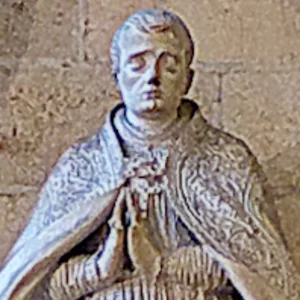
Antonio de Beatis
1450 — ?
Secretary and chaplain to Cardinal Luigi d'Aragona, Antonio de Beatis is known for the travel journal he wrote during their European journey of 1517–1518. He left a particularly valuable account of his meeting with Leonardo da Vinci in Amboise.
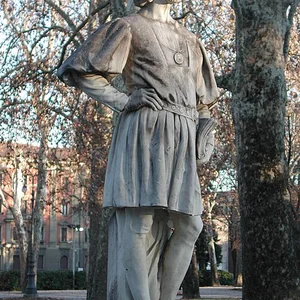
Ariosto
1474 — 1533
An Italian poet of the Renaissance, Ariosto is the author of Orlando Furioso, a vast epic poem in the Italian language. In the service of the Este court at Ferrara, he became one of the greatest literary figures of his time.
Babur
1483 — 1530
Founder of the Mughal Empire, Babur was a Timurid prince who, after losing Samarkand, conquered India in 1526 at the Battle of Panipat. A refined poet and memoirist, he left behind the Baburnama, one of the earliest autobiographies in Islamic literature.
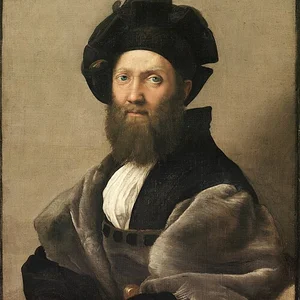
Baldassare Castiglione
1478 — 1529
Italian diplomat, writer, and courtier (1478–1529), Castiglione is the author of The Book of the Courtier, a treatise defining the ideal of the Renaissance court gentleman. Close to the great princes and artists of his time, he embodies the humanism of the court of Urbino.
Carlo Ridolfi
1594 — 1658
Carlo Ridolfi (1594-1658) was a Venetian painter and Italian art historian. He is best known for his *Meraviglie dell'Arte*, a biographical collection of Venetian painters and a major source for the history of Italian painting.
Catherine Parr
1512 — 1548
Sixth and last wife of King Henry VIII of England, whom she married in 1543. A cultured woman with reformist convictions, she was the only one of the six wives to outlive the king. She served as Regent of England in 1544 during Henry VIII's French campaign.
Cesare Ripa
1555 — 1622
Cesare Ripa (c. 1555–1622) was an Italian scholar and iconographer, author of the *Iconologia* (1593), an encyclopedic treatise that codified the allegorical representation of virtues, vices, and abstract concepts. His work became the essential reference for European artists and decorators from the 17th to the 18th century.
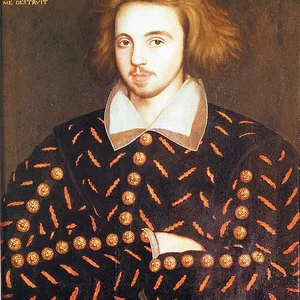
Christopher Marlowe
1564 — 1593
English playwright, poet, and translator of the Elizabethan Renaissance. A contemporary and rival of Shakespeare, he revolutionized English theatre with his blank-verse tragedies before dying violently at the age of 29.
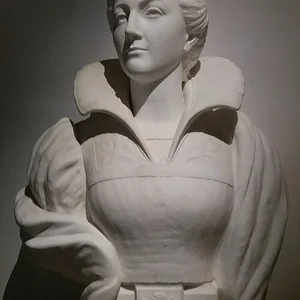
Clémence de Bourges
1530 — 1557
Clémence de Bourges was a young woman from Lyon during the Renaissance, remembered as the dedicatee of the Works of the poet Louise Labé in 1555. Born into a noble Lyon family, she embodies the figure of the cultivated young woman to whom Labé addresses her appeal for the education of women.
Clement VII
1478 — 1534
Pope from 1523 to 1534, Clement VII was a sovereign pontiff from the powerful Medici family. His pontificate was marked by the Sack of Rome in 1527 and his refusal to annul the marriage of Henry VIII of England, which triggered the Anglican schism.
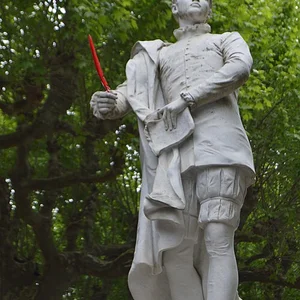
Étienne de La Boétie
1530 — 1563
French Renaissance writer, poet, and statesman (1530–1563). Author of the celebrated Discourse on Voluntary Servitude, he questioned why people accept oppression. A close friend of Montaigne, he embodies the critical humanist thought of the 16th century.
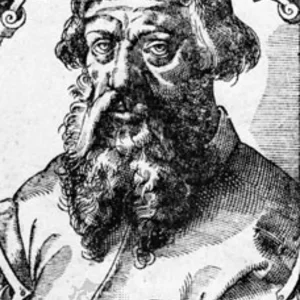
Étienne Dolet
1509 — 1546
Humanist, printer, and philologist from Lyon (1509–1546), Étienne Dolet was one of the first great publishers of texts in French and Latin. A champion of the French language, he was condemned for heresy and burned at the stake on Place Maubert in Paris in 1546.
Ferdinand II of Aragon
1452 — 1516
King of Aragon, Ferdinand II married Isabella of Castile in 1469, uniting the two great Iberian crowns. Together, the “Catholic Monarchs” completed the Reconquista in 1492, financed Christopher Columbus's voyage, and laid the foundations of modern Spain.
Ferdinand II of Spain
King of Aragon and, through his marriage to Isabella of Castile, co-ruler of a unified Spain. He completed the Reconquista in 1492 and funded Christopher Columbus's voyages, laying the foundations of the Spanish colonial empire.
Francis Bacon
1561 — 1626
English philosopher and statesman (1561–1626), Francis Bacon is the founder of the modern experimental method. Lord Chancellor of England under James I, he championed the idea that science must be based on observation and induction rather than authority.
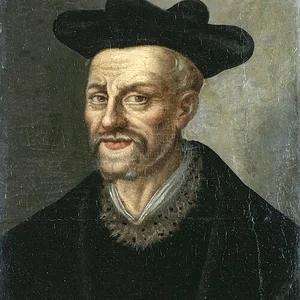
François Rabelais
1500 — 1553
A French humanist writer of the 16th century, Rabelais is the author of Gargantua and Pantagruel, novels about giants blending satire, fantasy, and social criticism. A monk, physician, and scholar, he embodies the spirit of the Renaissance through his innovative approach to literature and his celebration of ancient culture.
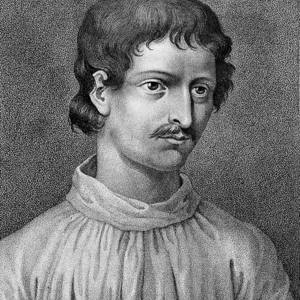
Giordano Bruno
1548 — 1600
An Italian Renaissance philosopher, cosmologist, and theologian, Giordano Bruno championed the idea of an infinite universe and a plurality of worlds. Condemned for heresy by the Inquisition, he was burned at the stake in Rome in 1600.
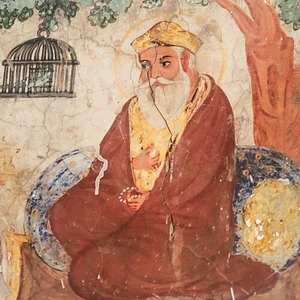
Guru Nanak
1469 — 1539
Gurū Nānak (1469-1539) was an Indian mystic and poet, the founder of Sikhism. He preached the oneness of God, the equality of all human beings, and the rejection of castes and formal rituals. The first of the ten Sikh Gurus, his hymns lie at the heart of the sacred book, the Gurū Granth Sahib.
Hélène de Surgères
1545 — 1618
Hélène de Surgères was a lady-in-waiting to Queen Catherine de' Medici at the Valois court. She remains famous as the dedicatee and inspiration of Pierre de Ronsard's *Sonnets pour Hélène* (1578).
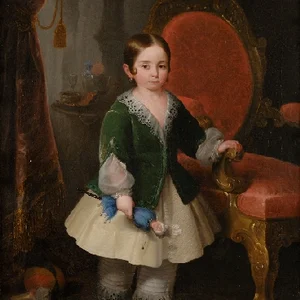
Isabel de Urbina
First wife of the Spanish writer Lope de Vega. Born into the Madrid nobility, she was abducted and then married by the playwright in 1588, and died young a few years later during her husband's exile.
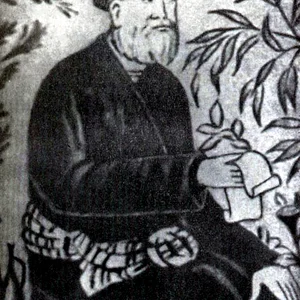
Jami
1414 — 1492
Jami (Abd al-Rahman Jami, 1414-1492) is the last great classical poet of Persian literature and one of the greatest masters of Sufism. Born in Jam in Khorasan, he lived in Herat under the protection of the Timurid sultans. A poet, philosopher, and mystic of the Naqshbandi brotherhood, he left behind an immense body of work, blending divine love, wisdom, and literary beauty.
Jean Bodin
1530 — 1596
Jean Bodin was a French jurist, philosopher, and political theorist of the Renaissance. He is famous for developing the modern theory of state sovereignty in *The Six Books of the Commonwealth* (1576).
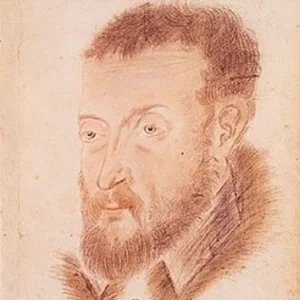
Joachim du Bellay
1522 — 1560
French Renaissance poet (1522–1560), co-founder of the Pléiade, a group of humanist writers. He theorized the defense of the French language and composed major lyric collections exploring love, exile, and melancholy.
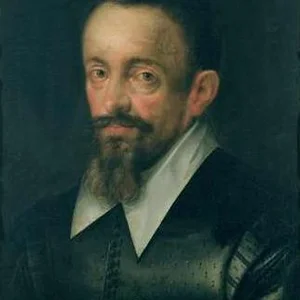
Johannes Kepler
1572 — 1630
German astronomer and mathematician (1572–1630), Kepler formulated the three laws of planetary motion that revolutionized astronomy. A disciple of Tycho Brahe, he confirmed Copernicus's heliocentric model through precise mathematical calculations.
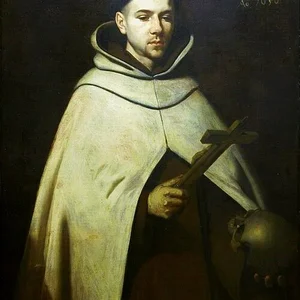
John of the Cross
1542 — 1591
Spanish Carmelite friar, mystic, and poet of the 16th century. A reformer of the Carmelite Order alongside Teresa of Ávila, he is the author of major works of mystical literature such as the *Dark Night of the Soul* and the *Spiritual Canticle*. A Doctor of the Church.
La Malinche
Born around 1500 into a noble Nahuatl family, sold into slavery and later given to Hernán Cortés, she became his interpreter, advisor, and companion. A central figure in the Conquest of Mexico, she remains an ambiguous symbol of betrayal and survival in Mexican historical memory.
Lê Thánh Tông
1442 — 1497
Fifth emperor of Vietnam's Lê sơ dynasty (r. 1460–1497), he promulgated the Hồng Đức legal code and carried out sweeping reforms of the administration, education, and military. He conquered the Kingdom of Champa in 1471, permanently extending Vietnamese territory southward. A prolific poet, he founded the Tao Đàn literary circle and left more than 350 poems in classical Chinese. [1]
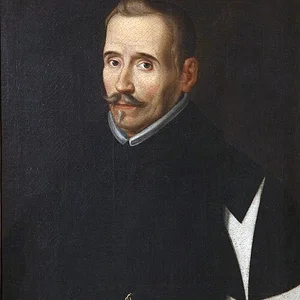
Lope de Vega
1562 — 1635
Lope de Vega (1562-1635) was the greatest playwright of the Spanish Golden Age. A remarkably prolific author, he revolutionized theater by breaking classical rules and popularizing the "comedia nueva." He was also a leading lyric and epic poet.
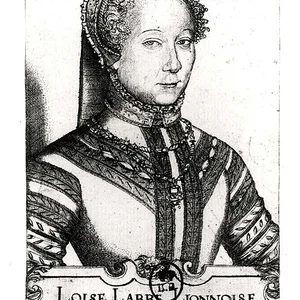
Louise Labé
1524 — 1566
A 16th-century Lyonnaise poet nicknamed 'la Belle Cordière' (the Beautiful Ropemaker), Louise Labé is celebrated for her passionate love sonnets. An iconic figure of the French Renaissance, she championed women's access to education and literary creation.
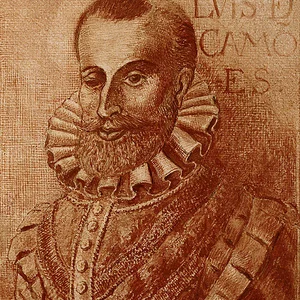
Luís de Camões
1524 — 1580
Luís de Camões (c. 1524–1580) is the greatest poet of the Portuguese language. A soldier and adventurer, he lived in Portugal, Africa, India, and Macau. His epic Os Lusíadas (1572) celebrates the Portuguese discoveries and remains a monument of world literature.
Margaret of Navarre
1492 — 1549
Elder sister of Francis I, Margaret of Navarre was one of the most educated women of the French Renaissance. A patron of humanists and religious reformers, she authored the Heptameron, a collection of tales inspired by Boccaccio's Decameron.
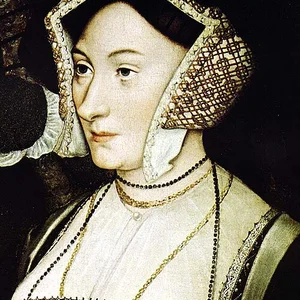
Margaret Roper
1505 — 1544
Margaret Roper, the eldest daughter of Thomas More, was an English humanist and translator of the Renaissance. Renowned for her exceptional scholarship, she was one of the first women not of royal birth to publish a translation in English.
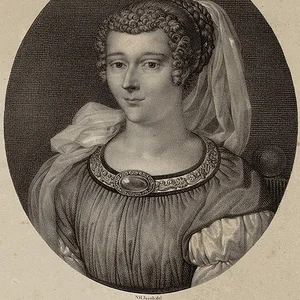
Marie de Gournay
1565 — 1645
Marie de Gournay (1565-1645) was a French woman of letters, the first editor of Montaigne's Essays, whose “fille d'alliance” (adopted daughter) she became. An author and polemicist, she championed intellectual equality between the sexes.
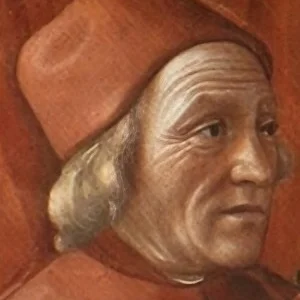
Marsilio Ficino
1433 — 1499
Italian philosopher and humanist of the Florentine Renaissance, a major figure of Neoplatonism. The first to translate the complete works of Plato into Latin, he led the Platonic Academy of Florence under the patronage of the Medici.
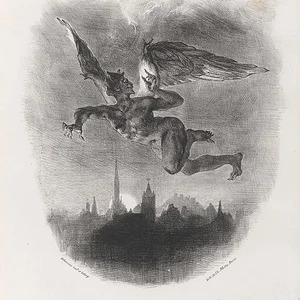
Mephistopheles
The demon of the Faustian pact, Mephistopheles is the Devil's agent tasked with seducing the scholar Faust. Made famous by Marlowe in Doctor Faustus (1592) and then by Goethe in Faust (1808), he embodies intellectual temptation and the corruption of the soul through the thirst for knowledge.
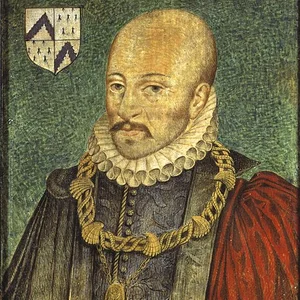
Michel de Montaigne
1533 — 1592
French Renaissance writer and philosopher (1533–1592), Montaigne is the author of the Essays, a landmark work of French literature blending personal reflection and humanism. Mayor of Bordeaux, he contributed to the rise of modern critical thinking.
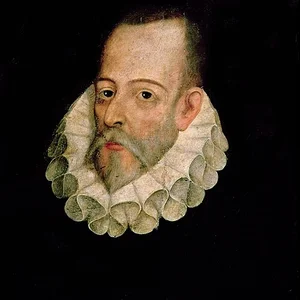
Miguel de Cervantes
1547 — 1616
Spanish writer of the Renaissance, Cervantes is the author of Don Quixote, one of the greatest novels in world literature. Soldier, captive in the Barbary Coast, and prolific author, he embodies the humanism of his era.
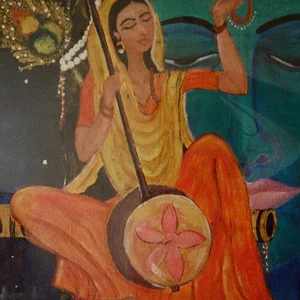
Mirabai
1498 — 1546
Mirabai was a 16th-century Rajput princess, mystic, and devotional poet dedicated to Krishna. Rejecting the conventions of her caste, she devoted her life to worship and composed hundreds of bhajans (devotional hymns) that have endured through the centuries. A major figure of the Bhakti movement, she embodies the spiritual quest freed from social hierarchies.
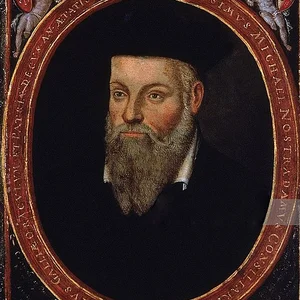
Nostradamus
1503 — 1566
A French physician and apothecary of the Renaissance, Nostradamus is famous for his Centuries, a collection of prophetic quatrains first published in 1555. He was also a respected practitioner during plague epidemics.
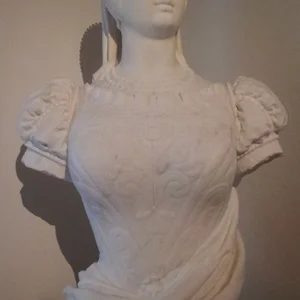
Pernette du Guillet
1520 — 1545
Pernette du Guillet (c. 1520–1545) was a Renaissance poet from Lyon and a key figure of the École de Lyon. An admirer and correspondent of Maurice Scève, she composed epigrams and songs in the Petrarchan tradition. Her posthumous collection *Rymes* (1545) places her among the first women poets in French literature.
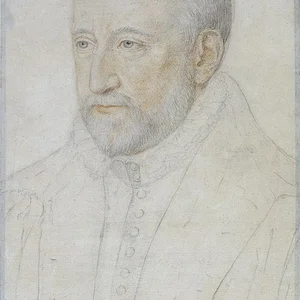
Pierre de Ronsard
1524 — 1585
Major French poet of the Renaissance (1524–1585), co-founder of the Pléiade with du Bellay. He transformed French poetry by introducing lyrical forms inspired by Antiquity and championing the vernacular language.
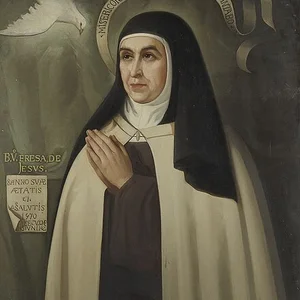
Teresa of Ávila
1515 — 1582
Reformer of the Carmelite Order, mystic, Doctor of the Church
Thomas More
1478 — 1535
An English humanist and statesman, Thomas More served as Lord Chancellor to Henry VIII before opposing the Anglican schism. Author of Utopia (1516), he was executed for refusing to acknowledge the king as Supreme Head of the Church of England.
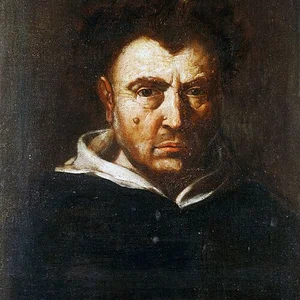
Tommaso Campanella
1568 — 1639
Tommaso Campanella was an Italian Dominican friar, philosopher, theologian, and poet of the late Renaissance. Imprisoned for nearly twenty-seven years for heresy and conspiracy against Spanish rule, he is the author of the utopia *The City of the Sun*.
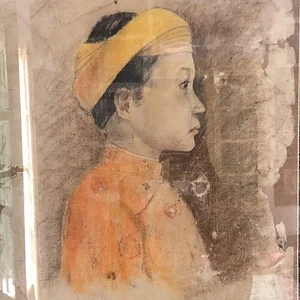
Tu Long
Tu Long (1543-1605) was a Chinese scholar and playwright of the Ming dynasty. Known for his *chuanqi* plays and his essays, he embodies the figure of the scholar-artist of late sixteenth-century China.
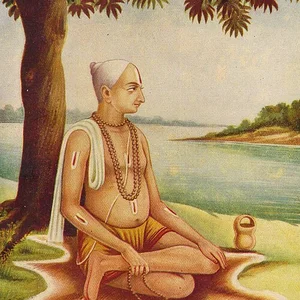
Tulsidas
1532 — 1623
Hindu poet and saint from North India, a major figure of the bhakti devotional movement. He is the author of the Ramcharitmanas, a Hindi (Awadhi) retelling of the Ramayana epic, which popularized the worship of Rama among the common people.
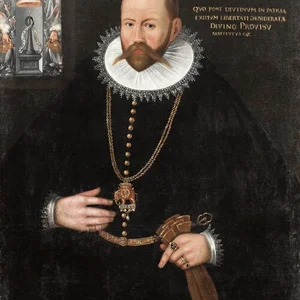
Tycho Brahe
1546 — 1601
A Danish Renaissance astronomer, Tycho Brahe is renowned for his astronomical observations of unmatched precision before the invention of the telescope. He discovered a supernova in 1572 and established that comets travel beyond the Moon, challenging Aristotelian cosmology.
Walter Raleigh
1552 — 1618
English explorer, poet, and courtier (1552–1618), a favourite of Queen Elizabeth I. He organised several expeditions to North America and searched for El Dorado in South America. Imprisoned and later executed under James I, he remains an iconic figure of English expansion.
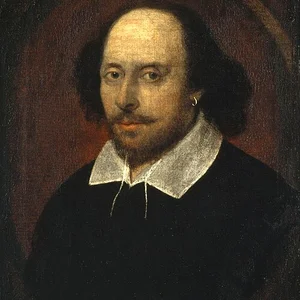
William Shakespeare
1564 — 1616
English playwright, poet, and actor (1564–1616), Shakespeare is the author of the greatest plays in world literature. He revolutionized theatre by exploring human psychology and creating unforgettable characters who grapple with love, power, and death.
Military(39)
Agrippa d'Aubigné
1552 — 1630
French writer, poet, and soldier, a major figure of Protestantism. A companion-in-arms of Henri de Navarre (the future Henri IV), he is the author of Les Tragiques, a great epic of the Wars of Religion.
Akbar the Great
The third emperor of the Mughal dynasty, Akbar ruled over northern India from 1556 to 1605. A brilliant military strategist and administrator, he left his mark on history through his policy of religious tolerance toward Hindus and Muslims alike.
Alessandro Farnese
1520 — 1589
Italian general and statesman in the service of Spain, governor of the Spanish Netherlands. A renowned strategist of his time, he was meant to support the Spanish Armada in 1588 to invade England, a threat referenced by Elizabeth I in her Tilbury speech.
Amina de Zaria
1533 — 1610
Warrior princess of the Hausa city-state of Zazzau (present-day Nigeria), she reigned around 1576–1610 and led numerous military campaigns that significantly expanded her kingdom's territory. The first woman to rule Zazzau, she has become a symbol of female power in West Africa.
Amina of Zazzau
A Hausa warrior queen of the kingdom of Zazzau (present-day Zaria, Nigeria), Amina reigned around the 16th century according to Hausa oral traditions. She greatly expanded her kingdom's territory through military conquest and is celebrated as a symbol of female power in Hausa collective memory.
Anne Boleyn
1507 — 1536
Queen of England from 1533 to 1536, Anne Boleyn was the second wife of Henry VIII. Her marriage required England's break with Rome, giving rise to the Church of England. Mother of Elizabeth I, she was accused of adultery and beheaded at the Tower of London.
Anne de Montmorency
1493 — 1567
Anne de Montmorency (1493-1567) was Constable of France and one of the most powerful servants of kings Francis I and Henry II. A great military leader and statesman, he left a lasting mark on the town of Pézenas, where he established his power as governor of Languedoc.
Atahualpa
1500 — 1533
The last Inca emperor, Atahualpa seized power at the end of a civil war against his brother Huáscar. Captured by Francisco Pizarro's Spanish conquistadors in 1532, he was executed in 1533, marking the collapse of the Inca Empire.
Babur
1483 — 1530
Founder of the Mughal Empire, Babur was a Timurid prince who, after losing Samarkand, conquered India in 1526 at the Battle of Panipat. A refined poet and memoirist, he left behind the Baburnama, one of the earliest autobiographies in Islamic literature.
Charles d'Amboise
Lord of Chaumont and governor of the Duchy of Milan on behalf of Louis XII, Charles d'Amboise (1473–1511) was one of the leading French military commanders during the Italian Wars. He is particularly known for having been Leonardo da Vinci's patron in Milan.
Charles IV of Alençon
1489 — 1525
Charles IV of Alençon (1489-1525) was Duke of Alençon and Count of Perche, a prince of the blood and a great aristocrat during the reign of Francis I. Husband of Marguerite of Angoulême (the future Marguerite of Navarre), he took part in the Battle of Pavia in 1525.
Elizabeth I
Queen of England and Ireland from 1558 to 1603, daughter of Henry VIII and Anne Boleyn. Her reign, the “Elizabethan era,” marks a golden age of culture and the consolidation of Protestantism in England. She embodies the figure of the “Virgin Queen,” an absolute sovereign who never married any of her suitors.
Erasmo da Narni (Gattamelata)
A fifteenth-century Italian condottiere, Erasmo da Narni — nicknamed "Gattamelata" (the honeyed cat) — was one of the greatest mercenary military commanders of his time. He is best known for inspiring Donatello to create the first large equestrian bronze statue of the Renaissance, erected in Padua.
Fabrizio Moncada
1535 — 1579
Fabrizio Moncada was a Sicilian nobleman and politician from the powerful Moncada family, of Catalan origin, established in Sicily and playing a key role in the administration of the kingdom under Hispanic rule during the 15th and 16th centuries.
Federico da Montefeltro
1422 — 1482
Condottiere and lord of Urbino (1422–1482), Federico da Montefeltro was one of the most cultured princes of the Italian Renaissance. An exceptional patron of the arts, he made Urbino a major artistic center, commissioning his famous profile portrait from Piero della Francesca.
Ferdinand II of Aragon
1452 — 1516
King of Aragon, Ferdinand II married Isabella of Castile in 1469, uniting the two great Iberian crowns. Together, the “Catholic Monarchs” completed the Reconquista in 1492, financed Christopher Columbus's voyage, and laid the foundations of modern Spain.
Ferdinand II of Spain
King of Aragon and, through his marriage to Isabella of Castile, co-ruler of a unified Spain. He completed the Reconquista in 1492 and funded Christopher Columbus's voyages, laying the foundations of the Spanish colonial empire.
Francis of Anjou
The youngest son of Henry II and Catherine de' Medici, he was an ambitious figure of the Wars of Religion. Leader of the “Malcontents,” a suitor for the hand of Elizabeth I, and briefly sovereign of the rebellious Netherlands, his death in 1584 opened the crisis of succession to the French throne.
Francisco de Almeida
1450 — 1510
First Viceroy of Portuguese India (1505–1509), Francisco de Almeida consolidated the Lusitanian presence in the Indian Ocean. He won the decisive Battle of Diu (1509) against the Ottoman-Egyptian fleet, securing Portuguese maritime supremacy in Asia.
Grace O'Malley
1539 — 1599
Irish clan chief and navigator of the 16th century, nicknamed the “pirate queen.” At the head of the Ó Máille fleet, she scoured the west coast of Ireland through raiding and tolls, and negotiated in person with Elizabeth I of England.
Henri I de Montmorency
1534 — 1614
Henri I de Montmorency (1534-1614) was a great French lord and military commander, governor of Languedoc for half a century. A Marshal and then Constable of France, he played a major role during the Wars of Religion and in the service of Henry IV.
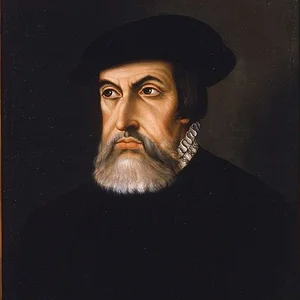
Hernán Cortés
1485 — 1547
Spanish conquistador (1485–1547) who conquered the Aztec Empire in the early 16th century. Setting out from Cuba in 1519, he led an expedition that culminated in the fall of Tenochtitlan in 1521, marking the beginning of Spanish dominance in Mesoamerica.
Huayna Cápac
1464 — 1525
Huayna Cápac was the eleventh Sapa Inca, ruler of the Inca Empire (Tahuantinsuyu) at its greatest territorial extent. He reigned from roughly 1493 to 1527 and expanded the empire northward as far as present-day Ecuador. His death, probably caused by an epidemic that arrived from Europe, triggered a war of succession between his sons Huáscar and Atahualpa.
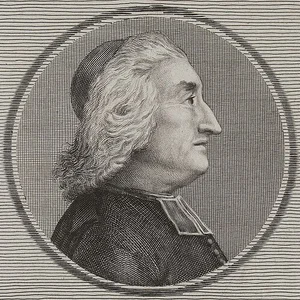
Jean Fleury
1480 — 1527
Jean Fleury, known as Florin, was a Norman privateer in the service of the Dieppe shipowner Jean Ango. In 1523, off the Azores, he seized part of the Aztec treasure that Hernán Cortés was shipping to Charles V, revealing to Europe the fabulous riches of the New World.
Joanna la Beltraneja
Castilian princess, acknowledged daughter of King Henry IV of Castile, claimant to the throne upon his death in 1474. Her contested legitimacy triggered a war of succession that pitted her against her aunt Isabella the Catholic. Defeated, she withdrew to Portugal where she ended her days.
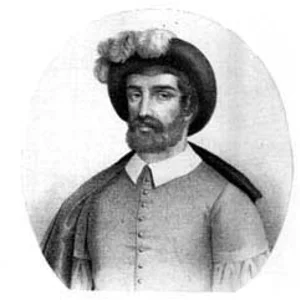
Juan Sebastián Elcano
1486 — 1526
Spanish navigator and sailor (c. 1476–1526), he took command of Magellan's expedition after the latter's death in the Philippines and completed the first circumnavigation of the globe in 1522, returning the Victoria to Seville.
Khayr ad-Dîn Barbarossa
A corsair of Greek origin who became commander-in-chief of the Ottoman fleet under Suleiman the Magnificent. He dominated the western Mediterranean in the 16th century and turned the Regency of Algiers into an Ottoman stronghold.
Lapu-Lapu
1491 — 1542
Lapu-Lapu was the datu (chief) of the island of Mactan in the Philippines. He is famous for defeating and killing the explorer Ferdinand Magellan at the Battle of Mactan on April 27, 1521, thus repelling the first Spanish attempt to conquer the Philippines.
Lapulapu
1492 — 1542
A warrior chieftain from the island of Mactan in the Philippines, Lapulapu is famous for defeating and killing the explorer Ferdinand Magellan on April 27, 1521. He is considered the first national hero of the Philippines for resisting European colonization.
Lê Thánh Tông
1442 — 1497
Fifth emperor of Vietnam's Lê sơ dynasty (r. 1460–1497), he promulgated the Hồng Đức legal code and carried out sweeping reforms of the administration, education, and military. He conquered the Kingdom of Champa in 1471, permanently extending Vietnamese territory southward. A prolific poet, he founded the Tao Đàn literary circle and left more than 350 poems in classical Chinese. [1]
Louis XII
1462 — 1515
King of France from 1498 to 1515, Louis XII was nicknamed “Father of the People” for his fiscal and judicial reforms. He waged numerous Italian Wars to assert his claims over Milan and Naples.
Ludovic Sforza
1452 — 1508
Duke of Milan from 1494 to 1499, nicknamed "il Moro" (the Moor), he was one of the most powerful princes in Renaissance Italy. A celebrated patron of the arts, he brought Leonardo da Vinci to his court and played a key role in the Italian Wars before being overthrown by Louis XII.
Luís de Camões
1524 — 1580
Luís de Camões (c. 1524–1580) is the greatest poet of the Portuguese language. A soldier and adventurer, he lived in Portugal, Africa, India, and Macau. His epic Os Lusíadas (1572) celebrates the Portuguese discoveries and remains a monument of world literature.
Maximilien II
Maximilien II (1527–1576) was Holy Roman Emperor from 1564 to 1576. The son of Ferdinand I, he pursued a policy of relative religious tolerance amid tensions between Catholics and Protestants, seeking to preserve the unity of the Empire during the height of the Reformation.
Naresuan
1555 — 1605
Naresuan the Great is the king of Ayutthaya who liberated the Siamese kingdom from Burmese domination at the end of the 16th century. A formidable strategist, he is famous for his elephant-back duel against the Burmese crown prince in 1593, a victory that sealed his people's independence.
Sayyida al-Hurra
1485 — 1561
Born into an Andalusian family exiled after the fall of Granada, Sayyida al-Hurra became governor of Tétouan in the early 16th century. An ally of the corsair Barbarossa of Algiers, she led privateering campaigns in the western Mediterranean against the Iberian powers and was one of the few women to rule as a sovereign in the Muslim world of her time.
Selim I
1470 — 1520
Ottoman sultan from 1512 to 1520, Selim I tripled the size of the Empire by conquering Egypt, Syria, and the Hejaz. Nicknamed “the Grim,” he crushed the Safavids at Chaldiran and made the Ottoman sultan the guardian of Islam’s Holy Sites.
Vasco Núñez de Balboa
1475 — 1519
Spanish conquistador born around 1475, Balboa was the first European to see the Pacific Ocean from the New World in 1513. He crossed the Isthmus of Panama at the head of an expedition and claimed the “South Sea” in the name of the Spanish Crown.
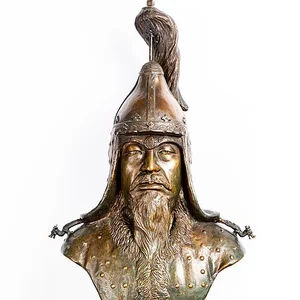
Yi Sun-sin
1545 — 1598
Korean admiral of the Joseon dynasty, regarded as one of the greatest naval strategists in history. He successfully defended Korea against the Japanese invasions of the late 16th century without ever losing a battle.
Spirituality(33)
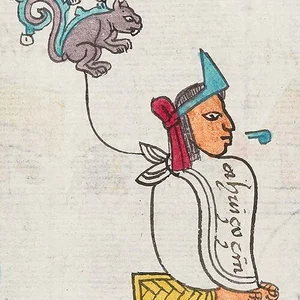
Ahuizotl
1450 — 1502
A legendary creature of Aztec mythology, the Ahuizotl is an aquatic monster resembling a small dog, with smooth black fur and a grasping hand at the tip of its tail. Lurking in lakes and ponds, it lures and drowns its victims to devour their eyes, teeth, and nails.
Akbar the Great
The third emperor of the Mughal dynasty, Akbar ruled over northern India from 1556 to 1605. A brilliant military strategist and administrator, he left his mark on history through his policy of religious tolerance toward Hindus and Muslims alike.
Anne Boleyn
1507 — 1536
Queen of England from 1533 to 1536, Anne Boleyn was the second wife of Henry VIII. Her marriage required England's break with Rome, giving rise to the Church of England. Mother of Elizabeth I, she was accused of adultery and beheaded at the Tower of London.
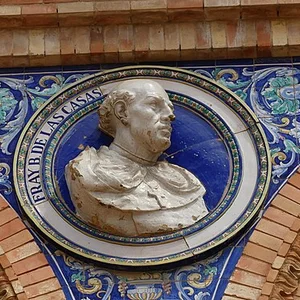
Bartolomé de las Casas
1484 — 1566
Spanish Dominican friar (1474–1566) who devoted his life to defending the rights of Indigenous peoples against the abuses of the conquistadors. He denounced the atrocities committed during the Spanish colonization of the Americas and argued for the humanity of Native peoples before the Spanish Crown.
Catherine Parr
1512 — 1548
Sixth and last wife of King Henry VIII of England, whom she married in 1543. A cultured woman with reformist convictions, she was the only one of the six wives to outlive the king. She served as Regent of England in 1544 during Henry VIII's French campaign.
Clement VII
1478 — 1534
Pope from 1523 to 1534, Clement VII was a sovereign pontiff from the powerful Medici family. His pontificate was marked by the Sack of Rome in 1527 and his refusal to annul the marriage of Henry VIII of England, which triggered the Anglican schism.
Ferdinand II of Aragon
1452 — 1516
King of Aragon, Ferdinand II married Isabella of Castile in 1469, uniting the two great Iberian crowns. Together, the “Catholic Monarchs” completed the Reconquista in 1492, financed Christopher Columbus's voyage, and laid the foundations of modern Spain.
Ferdinand II of Spain
King of Aragon and, through his marriage to Isabella of Castile, co-ruler of a unified Spain. He completed the Reconquista in 1492 and funded Christopher Columbus's voyages, laying the foundations of the Spanish colonial empire.
Filippo Lippi
1406 — 1469
Florentine painter of the Quattrocento (1406–1469), a Carmelite friar who became one of the masters of Italian religious painting. Celebrated for his Madonnas with tender, human features, he influenced Botticelli, whom he trained.
Girolamo Savonarola
1452 — 1498
Italian Dominican friar (1452–1498), Savonarola seized control of Florence after the expulsion of the Medici in 1494. A fiery preacher, he imposed a rigorist theocracy before being excommunicated and executed.
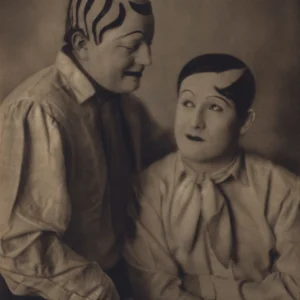
Golem
The Golem is a clay creature from Jewish folklore, shaped by human hands and brought to life through sacred formulas. Its most famous version, the Golem of Prague, is said to have been created in the 16th century by Rabbi Judah Loew (the Maharal) to protect the Jewish ghetto. Deprived of speech and a soul, it embodies the limits of human creation.
Gregory XIII
1502 — 1585
Gregory XIII was the 226th pope of the Catholic Church, from 1572 to 1585. Trained as a lawyer, he is best known for the calendar reform that bears his name, the Gregorian calendar, introduced in 1582 and still in use today.
Guru Nanak
1469 — 1539
Gurū Nānak (1469-1539) was an Indian mystic and poet, the founder of Sikhism. He preached the oneness of God, the equality of all human beings, and the rejection of castes and formal rituals. The first of the ten Sikh Gurus, his hymns lie at the heart of the sacred book, the Gurū Granth Sahib.
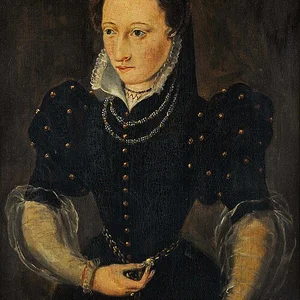
Idelette de Bure
1506 — 1549
Idelette de Bure was the wife of the reformer John Calvin. The widow of an Anabaptist who had converted to Calvinism, she married Calvin in Strasbourg in 1540 and accompanied him through the decisive years of the Protestant Reformation in Geneva.
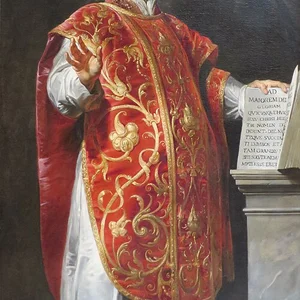
Ignatius of Loyola
1491 — 1556
Spanish soldier and religious figure (1491–1556), Ignatius of Loyola founded the Society of Jesus in 1540, a religious order central to the Catholic Counter-Reformation. Canonized in 1622, he embodies the Church's response to Protestant reforms.
Inti
Inti is the principal solar deity of the Inca pantheon, venerated as the father of the Incas and the source of all life. His cult was at the heart of the state religion of the Inca Empire (Tawantinsuyu). The Sapa Inca was considered his direct son on Earth.
Jami
1414 — 1492
Jami (Abd al-Rahman Jami, 1414-1492) is the last great classical poet of Persian literature and one of the greatest masters of Sufism. Born in Jam in Khorasan, he lived in Herat under the protection of the Timurid sultans. A poet, philosopher, and mystic of the Naqshbandi brotherhood, he left behind an immense body of work, blending divine love, wisdom, and literary beauty.
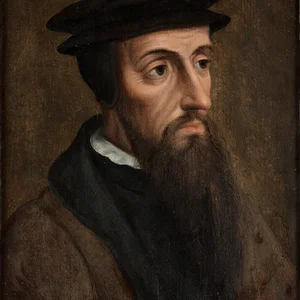
Jean Calvin
1509 — 1564
French Protestant reformer (1509–1564) who founded Calvinism, a major branch of the Protestant Reformation. He settled in Geneva, where he established a strict religious community and profoundly influenced European Protestantism.
Jeanne d'Albret
1528 — 1572
Queen of Navarre from 1555 to 1572, Jeanne d'Albret was one of the leading figures of the Protestant Reformation in France. Mother of Henry IV, she imposed Calvinism in her territories and played a decisive political role in the Wars of Religion.
John of the Cross
1542 — 1591
Spanish Carmelite friar, mystic, and poet of the 16th century. A reformer of the Carmelite Order alongside Teresa of Ávila, he is the author of major works of mystical literature such as the *Dark Night of the Soul* and the *Spiritual Canticle*. A Doctor of the Church.
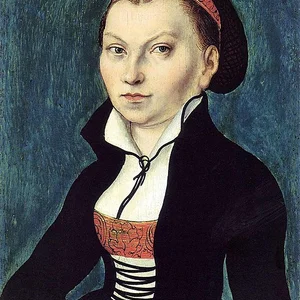
Katharina von Bora
1499 — 1552
A former Cistercian nun, Katharina von Bora escaped from her convent in 1523 and married Martin Luther in 1525. Running the Luther household, she became the model of the Protestant pastoral couple and of the pastor's wife.
Khoja Ahrar
1404 — 1490
Khoja Ahrar (1404-1490) was the most influential Naqshbandi Sufi master in Central Asia, wielding considerable political power over the Timurid sultans. From Samarkand, he interceded with princes to protect the population and amassed immense wealth, which he redistributed through pious foundations.
Leonora Galigaï
1568 — 1617
An Italian favorite and lady of the wardrobe to Queen Marie de' Medici, she wielded great influence at the French court during the regency alongside her husband Concino Concini. Accused of witchcraft, she was beheaded and then burned at the Place de Grève in 1617.
Marsilio Ficino
1433 — 1499
Italian philosopher and humanist of the Florentine Renaissance, a major figure of Neoplatonism. The first to translate the complete works of Plato into Latin, he led the Platonic Academy of Florence under the patronage of the Medici.
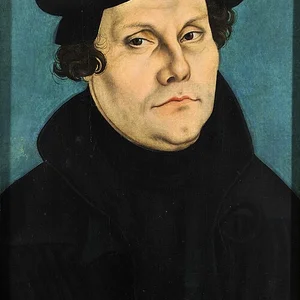
Martin Luther
1483 — 1546
German theologian and monk (1483–1546), Martin Luther is the founder of Protestantism. In 1517, he criticized abuses within the Catholic Church, particularly the sale of indulgences, triggering the Protestant Reformation and splitting Western Christianity.
Mary, Queen of Scots
1542 — 1587
Queen of Scotland at six days old, raised at the French court, Mary Stuart became Queen consort of France before ruling a Scotland torn apart by the Protestant Reformation. A Catholic in a kingdom that had embraced Calvinism, she abdicated in 1567 and sought refuge with Elizabeth I, who had her imprisoned for eighteen years before having her beheaded in 1587.
Mirabai
1498 — 1546
Mirabai was a 16th-century Rajput princess, mystic, and devotional poet dedicated to Krishna. Rejecting the conventions of her caste, she devoted her life to worship and composed hundreds of bhajans (devotional hymns) that have endured through the centuries. A major figure of the Bhakti movement, she embodies the spiritual quest freed from social hierarchies.
Paul III
1468 — 1549
Pope from 1534 to 1549, Alessandro Farnese was a major figure of the Catholic Counter-Reformation. He convened the Council of Trent, approved the Society of Jesus, and defended the dignity of the indigenous peoples of the Americas.
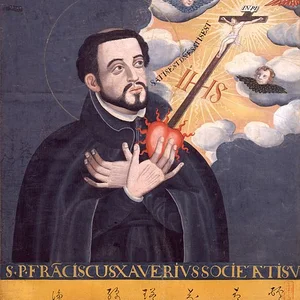
Saint Francis Xavier
1506 — 1552
A Navarrese Jesuit and co-founder of the Society of Jesus alongside Ignatius of Loyola, he was the first great Christian missionary in Asia. He evangelized India and Japan, and died at the gates of China in 1552.
Teresa of Ávila
1515 — 1582
Reformer of the Carmelite Order, mystic, Doctor of the Church
Thomas More
1478 — 1535
An English humanist and statesman, Thomas More served as Lord Chancellor to Henry VIII before opposing the Anglican schism. Author of Utopia (1516), he was executed for refusing to acknowledge the king as Supreme Head of the Church of England.
Tommaso Campanella
1568 — 1639
Tommaso Campanella was an Italian Dominican friar, philosopher, theologian, and poet of the late Renaissance. Imprisoned for nearly twenty-seven years for heresy and conspiracy against Spanish rule, he is the author of the utopia *The City of the Sun*.
Tulsidas
1532 — 1623
Hindu poet and saint from North India, a major figure of the bhakti devotional movement. He is the author of the Ramcharitmanas, a Hindi (Awadhi) retelling of the Ramayana epic, which popularized the worship of Rama among the common people.
Exploration(29)
Alexander VI
1431 — 1503
Spanish pope from 1492 to 1503, Alexander VI is one of the most controversial figures in the history of the papacy. Head of the powerful Borgia family, he blended politics, nepotism, and diplomacy in Renaissance Rome.
Amerigo Vespucci
1454 — 1512
Florentine navigator and explorer (1454–1512), Amerigo Vespucci made several voyages to the New World between 1499 and 1504. He was the first to understand that the lands discovered by Christopher Columbus formed an unknown continent, which was named after him: America.
Antonio de Beatis
1450 — ?
Secretary and chaplain to Cardinal Luigi d'Aragona, Antonio de Beatis is known for the travel journal he wrote during their European journey of 1517–1518. He left a particularly valuable account of his meeting with Leonardo da Vinci in Amboise.
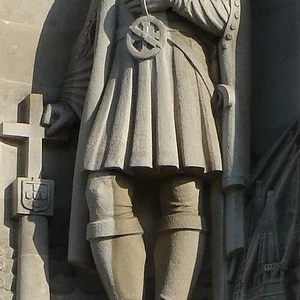
Bartolomeu Dias
1467 — 1500
Portuguese navigator Bartolomeu Dias was the first European to round the Cape of Good Hope in 1488, opening the sea route to India. His voyage marked a decisive milestone in the history of the Age of Discovery.
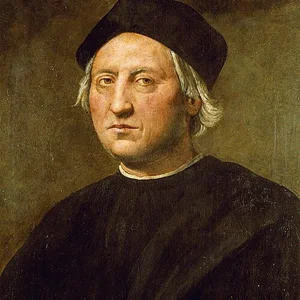
Christopher Columbus
1451 — 1506
Italian navigator and explorer (1451–1506) who in 1492 completed a transatlantic voyage funded by the Catholic Monarchs of Spain. Although he was seeking a route to Asia, his expedition led to the European discovery of the American continent and marked the beginning of the colonization of the Americas.
Donnacona
1500 — 1539
Chief of the St. Lawrence Iroquoians settled at Stadacona (present-day Quebec), Donnacona met Jacques Cartier during his voyages of 1534 and 1535. Taken to France by force by Cartier, he died at the court of King Francis I without ever seeing his homeland again.
Enrique
Magellan's Malay slave and interpreter, Enrique of Malacca took part in the circumnavigation expedition (1519–1522). He may have been the first human being to circumnavigate the globe, having left Malacca only to return to it from the west.
Ferdinand II of Aragon
1452 — 1516
King of Aragon, Ferdinand II married Isabella of Castile in 1469, uniting the two great Iberian crowns. Together, the “Catholic Monarchs” completed the Reconquista in 1492, financed Christopher Columbus's voyage, and laid the foundations of modern Spain.
Ferdinand II of Spain
King of Aragon and, through his marriage to Isabella of Castile, co-ruler of a unified Spain. He completed the Reconquista in 1492 and funded Christopher Columbus's voyages, laying the foundations of the Spanish colonial empire.
Francis Drake
1540 — 1596
Francis Drake was an English privateer and navigator of the 16th century, famous for being the second person to circumnavigate the globe by ship (1577–1580). Vice Admiral of the English fleet, he played a decisive role in the defeat of the Spanish Armada in 1588.
Francisco de Almeida
1450 — 1510
First Viceroy of Portuguese India (1505–1509), Francisco de Almeida consolidated the Lusitanian presence in the Indian Ocean. He won the decisive Battle of Diu (1509) against the Ottoman-Egyptian fleet, securing Portuguese maritime supremacy in Asia.
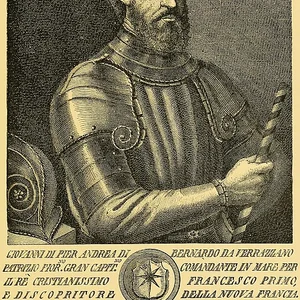
Giovanni da Verrazzano
1491 — 1528
Florentine navigator and explorer in the service of France, he was the first European to explore the eastern coast of North America, from Florida to Canada, in 1524. He entered New York Bay and named many territories.
Grace O'Malley
1539 — 1599
Irish clan chief and navigator of the 16th century, nicknamed the “pirate queen.” At the head of the Ó Máille fleet, she scoured the west coast of Ireland through raiding and tolls, and negotiated in person with Elizabeth I of England.
Henry the Navigator
1394 — 1460
A 15th-century Portuguese prince, son of King John I of Portugal. Although he himself rarely went to sea, he was the great organizer and patron of the expeditions along the coasts of Africa, ushering in the era of the great Portuguese discoveries.
Hernán Cortés
1485 — 1547
Spanish conquistador (1485–1547) who conquered the Aztec Empire in the early 16th century. Setting out from Cuba in 1519, he led an expedition that culminated in the fall of Tenochtitlan in 1521, marking the beginning of Spanish dominance in Mesoamerica.
Humabon
1500 — ?
Humabon was the raja of Cebu in the Philippines in the early 16th century. He welcomed Magellan's expedition in 1521 and converted to Christianity along with many of the island's inhabitants. He played a central role in the first contacts between the Philippine world and European explorers.
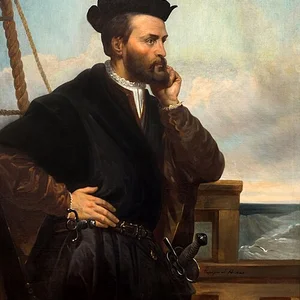
Jacques Cartier
1492 — 1557
French explorer and navigator (1492–1557) who undertook three major voyages to North America between 1534 and 1542. He explored the St. Lawrence River and the coasts of Canada, paving the way for French colonization of New France.
Jean Fleury
1480 — 1527
Jean Fleury, known as Florin, was a Norman privateer in the service of the Dieppe shipowner Jean Ango. In 1523, off the Azores, he seized part of the Aztec treasure that Hernán Cortés was shipping to Charles V, revealing to Europe the fabulous riches of the New World.
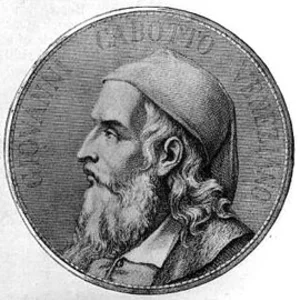
John Cabot
1450 — 1498
A Venetian navigator sailing in the service of England, John Cabot completed in 1497 the first crossing of the North Atlantic since Antiquity and reached the shores of North America. His voyage laid the groundwork for future English claims on the American continent.
Juan Sebastián Elcano
1486 — 1526
Spanish navigator and sailor (c. 1476–1526), he took command of Magellan's expedition after the latter's death in the Philippines and completed the first circumnavigation of the globe in 1522, returning the Victoria to Seville.
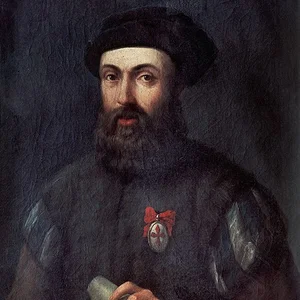
Magellan
1480 — 1521
Portuguese navigator and explorer in the service of Spain (1480–1521). Magellan organized the first expedition to complete the circumnavigation of the globe, proving the true extent of the Earth and the existence of a passage to the Pacific Ocean. He died in the Philippines in 1521, but his voyage revolutionized European geographical knowledge.
Martin Waldseemüller
1470 — 1520
A German Renaissance cartographer, he was the first to use the name “América” on a map, in 1507. His world map, printed in Saint-Dié-des-Vosges, depicts America for the first time as a distinct continent.
Pedro Álvares Cabral
1467 — 1520
Portuguese navigator and explorer (c. 1467–1520), Pedro Álvares Cabral is officially the first European to have reached Brazil in 1500. Commissioned by King Manuel I of Portugal, he claimed the land in the name of the Portuguese Crown.
Rodrigo de Triana
1469 — 1535
Spanish sailor aboard the Pinta during Christopher Columbus's first voyage. He was the first European to sight the shores of the Americas on October 12, 1492, crying "Tierra!" at dawn.
Ruy Faleiro
1500 — 1556
Portuguese cosmographer and astronomer of the 16th century, Rui Faleiro was Magellan's intellectual partner in planning the first circumnavigation of the globe. A specialist in navigation and cartography, he contributed to the theoretical design of the expedition but ultimately never set sail.
Saint Francis Xavier
1506 — 1552
A Navarrese Jesuit and co-founder of the Society of Jesus alongside Ignatius of Loyola, he was the first great Christian missionary in Asia. He evangelized India and Japan, and died at the gates of China in 1552.
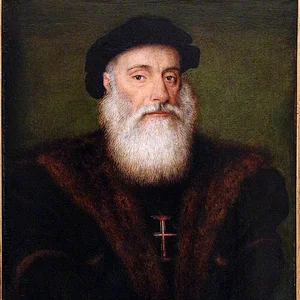
Vasco de Gama
1460 — 1525
Portuguese navigator (1460–1525) who established the first European sea route to India by sailing around Africa. His voyage of 1497–1499 marked a major turning point in the Age of Discovery and opened the way for European commercial expansion into Asia.
Vasco Núñez de Balboa
1475 — 1519
Spanish conquistador born around 1475, Balboa was the first European to see the Pacific Ocean from the New World in 1513. He crossed the Isthmus of Panama at the head of an expedition and claimed the “South Sea” in the name of the Spanish Crown.
Walter Raleigh
1552 — 1618
English explorer, poet, and courtier (1552–1618), a favourite of Queen Elizabeth I. He organised several expeditions to North America and searched for El Dorado in South America. Imprisoned and later executed under James I, he remains an iconic figure of English expansion.
Sciences(23)
Albrecht Dürer
1471 — 1528
German Renaissance painter, printmaker, and theorist (1471–1528), Dürer is considered the greatest Germanic artist of his time. He introduced Italian Renaissance ideals to Northern Europe and revolutionized the art of woodcut and copper engraving.
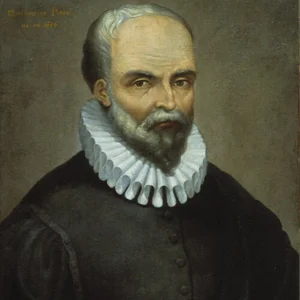
Ambroise Paré
1510 — 1590
French surgeon and anatomist (1510-1590) who revolutionized Renaissance surgery by abandoning brutal medieval practices. He laid the foundations of modern surgery through his anatomical innovations and more humane techniques.
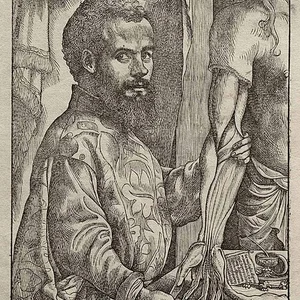
Andreas Vesalius
1515 — 1564
Flemish anatomist of the 16th century, Vesalius revolutionized the study of the human body through systematic dissection and direct observation. He is the author of De Humani Corporis Fabrica (1543), a founding work of modern anatomy that challenged the anatomical errors inherited from Galen.
Domenico Maria Novara
1454 — 1504
Italian Renaissance astronomer and mathematician, professor at the University of Bologna. He was the teacher and collaborator of Nicolaus Copernicus, with whom he carried out decisive astronomical observations.
Ferdinand II of Aragon
1452 — 1516
King of Aragon, Ferdinand II married Isabella of Castile in 1469, uniting the two great Iberian crowns. Together, the “Catholic Monarchs” completed the Reconquista in 1492, financed Christopher Columbus's voyage, and laid the foundations of modern Spain.
Ferdinand II of Spain
King of Aragon and, through his marriage to Isabella of Castile, co-ruler of a unified Spain. He completed the Reconquista in 1492 and funded Christopher Columbus's voyages, laying the foundations of the Spanish colonial empire.
Francis Bacon
1561 — 1626
English philosopher and statesman (1561–1626), Francis Bacon is the founder of the modern experimental method. Lord Chancellor of England under James I, he championed the idea that science must be based on observation and induction rather than authority.
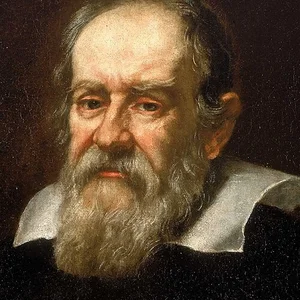
Galileo
1564 — 1642
Italian physicist, astronomer, and philosopher (1564–1642), Galileo revolutionized science by combining experimental observation with mathematics. Inventor of the astronomical telescope and champion of the heliocentric model, he laid the foundations of modern physics despite being tried by the Inquisition.
Georg Joachim Rheticus
1514 — 1574
Austrian mathematician and astronomer of the Renaissance. Copernicus's only disciple, he published the Narratio prima in 1540, the first printed account of the heliocentric system, and persuaded his master to publish De revolutionibus.
Giordano Bruno
1548 — 1600
An Italian Renaissance philosopher, cosmologist, and theologian, Giordano Bruno championed the idea of an infinite universe and a plurality of worlds. Condemned for heresy by the Inquisition, he was burned at the stake in Rome in 1600.
Giorgio Vasari
1511 — 1574
Giorgio Vasari was an Italian painter, architect, and writer of the Renaissance. Author of "Lives of the Most Excellent Painters, Sculptors, and Architects" (1550), he is considered the first art historian. He also designed the Uffizi Palace in Florence.
Gregory XIII
1502 — 1585
Gregory XIII was the 226th pope of the Catholic Church, from 1572 to 1585. Trained as a lawyer, he is best known for the calendar reform that bears his name, the Gregorian calendar, introduced in 1582 and still in use today.
Johannes Kepler
1572 — 1630
German astronomer and mathematician (1572–1630), Kepler formulated the three laws of planetary motion that revolutionized astronomy. A disciple of Tycho Brahe, he confirmed Copernicus's heliocentric model through precise mathematical calculations.
Leonardo da Vinci
1452 — 1519
Italian Renaissance painter, sculptor, architect, and engineer (1452–1519), Leonardo da Vinci embodies the ideal of the universal man. Creator of the Mona Lisa and The Last Supper, he revolutionized art through perspective and scientific observation, while pursuing research in anatomy, botany, and engineering.
Martin Waldseemüller
1470 — 1520
A German Renaissance cartographer, he was the first to use the name “América” on a map, in 1507. His world map, printed in Saint-Dié-des-Vosges, depicts America for the first time as a distinct continent.
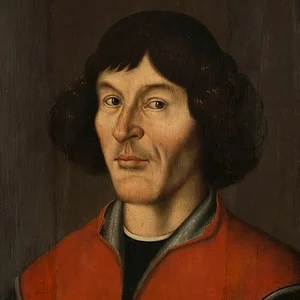
Nicolas Copernicus
1473 — 1543
Polish Renaissance astronomer, mathematician, and canon (1473–1543). He revolutionized our understanding of the universe by proposing the heliocentric model, placing the Sun at the center of the solar system rather than the Earth. His major work, De revolutionibus orbium coelestium, published shortly before his death, marks the beginning of the Scientific Revolution.
Nostradamus
1503 — 1566
A French physician and apothecary of the Renaissance, Nostradamus is famous for his Centuries, a collection of prophetic quatrains first published in 1555. He was also a respected practitioner during plague epidemics.
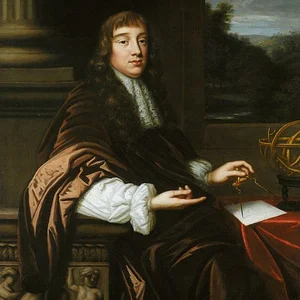
Robert Hooke
1635 — 1703
Robert Hooke was a 17th-century English polymath and scientist, a pioneer of microscopy. His work *Micrographia* (1665) revealed the microscopic world, and he introduced the term “cell.” He also formulated the law of elasticity that bears his name.
Ruy Faleiro
1500 — 1556
Portuguese cosmographer and astronomer of the 16th century, Rui Faleiro was Magellan's intellectual partner in planning the first circumnavigation of the globe. A specialist in navigation and cartography, he contributed to the theoretical design of the expedition but ultimately never set sail.
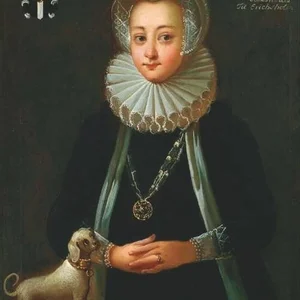
Sophie Brahé
A Danish astronomer and horticulturist of the 16th century, she actively collaborated with her brother Tycho Brahe in his astronomical observations. A passionate self-taught scholar, she also mastered chemistry, medicine, and genealogy.
Titian
1490 — 1576
Titian, whose real name is Tiziano Vecellio, is the undisputed master of the Venetian school of the Renaissance. A prolific painter famous for his revolutionary use of color, he dominated the art scene for over sixty years and was the official portraitist of the greatest sovereigns of Europe.
Tycho Brahe
1546 — 1601
A Danish Renaissance astronomer, Tycho Brahe is renowned for his astronomical observations of unmatched precision before the invention of the telescope. He discovered a supernova in 1572 and established that comets travel beyond the Moon, challenging Aristotelian cosmology.
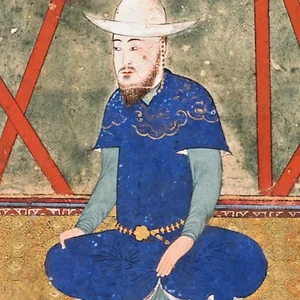
Ulugh Beg
1394 — 1449
Ulugh Beg, grandson of Tamerlane, was one of the greatest astronomers of the medieval Islamic world. As Timurid ruler of Samarkand, he turned his court into a thriving intellectual center, building an observatory whose star tables rivaled those of antiquity.
Philosophy(16)
Alexander VI
1431 — 1503
Spanish pope from 1492 to 1503, Alexander VI is one of the most controversial figures in the history of the papacy. Head of the powerful Borgia family, he blended politics, nepotism, and diplomacy in Renaissance Rome.
Baldassare Castiglione
1478 — 1529
Italian diplomat, writer, and courtier (1478–1529), Castiglione is the author of The Book of the Courtier, a treatise defining the ideal of the Renaissance court gentleman. Close to the great princes and artists of his time, he embodies the humanism of the court of Urbino.
Clement VII
1478 — 1534
Pope from 1523 to 1534, Clement VII was a sovereign pontiff from the powerful Medici family. His pontificate was marked by the Sack of Rome in 1527 and his refusal to annul the marriage of Henry VIII of England, which triggered the Anglican schism.
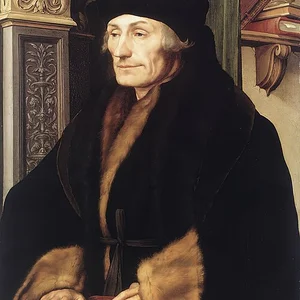
Erasmus
1466 — 1536
Dutch humanist and theologian (1466-1536), Erasmus is one of the major figures of the Renaissance. A champion of the critical study of ancient texts and religious tolerance, he embodies the humanist ideal of an education grounded in reason and wisdom.
Étienne de La Boétie
1530 — 1563
French Renaissance writer, poet, and statesman (1530–1563). Author of the celebrated Discourse on Voluntary Servitude, he questioned why people accept oppression. A close friend of Montaigne, he embodies the critical humanist thought of the 16th century.
Étienne Dolet
1509 — 1546
Humanist, printer, and philologist from Lyon (1509–1546), Étienne Dolet was one of the first great publishers of texts in French and Latin. A champion of the French language, he was condemned for heresy and burned at the stake on Place Maubert in Paris in 1546.
Giordano Bruno
1548 — 1600
An Italian Renaissance philosopher, cosmologist, and theologian, Giordano Bruno championed the idea of an infinite universe and a plurality of worlds. Condemned for heresy by the Inquisition, he was burned at the stake in Rome in 1600.
Guru Nanak
1469 — 1539
Gurū Nānak (1469-1539) was an Indian mystic and poet, the founder of Sikhism. He preached the oneness of God, the equality of all human beings, and the rejection of castes and formal rituals. The first of the ten Sikh Gurus, his hymns lie at the heart of the sacred book, the Gurū Granth Sahib.
Jean Bodin
1530 — 1596
Jean Bodin was a French jurist, philosopher, and political theorist of the Renaissance. He is famous for developing the modern theory of state sovereignty in *The Six Books of the Commonwealth* (1576).
Julius III
1487 — 1555
Julius III (Giovanni Maria Ciocchi Del Monte, 1487–1555) was the 221st pope of the Catholic Church from 1550 to 1555. He convened the resumption of the Council of Trent and was a patron of the arts, protector of Michelangelo and Palestrina.
Machiavelli
1469 — 1527
Florentine philosopher and statesman (1469–1527), Machiavelli is the author of The Prince, a treatise that laid the foundations of modern political realism. He analyzes power as it is actually exercised, not as it should be, revolutionizing political thought during the Renaissance.
Marie de Gournay
1565 — 1645
Marie de Gournay (1565-1645) was a French woman of letters, the first editor of Montaigne's Essays, whose “fille d'alliance” (adopted daughter) she became. An author and polemicist, she championed intellectual equality between the sexes.
Marsilio Ficino
1433 — 1499
Italian philosopher and humanist of the Florentine Renaissance, a major figure of Neoplatonism. The first to translate the complete works of Plato into Latin, he led the Platonic Academy of Florence under the patronage of the Medici.
Michel de Montaigne
1533 — 1592
French Renaissance writer and philosopher (1533–1592), Montaigne is the author of the Essays, a landmark work of French literature blending personal reflection and humanism. Mayor of Bordeaux, he contributed to the rise of modern critical thinking.
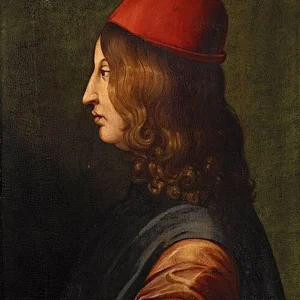
Pico della Mirandola
1463 — 1494
Italian Renaissance philosopher and humanist, a key figure of Florentine Neoplatonism. Author of the Oration on the Dignity of Man, he defends humanity's freedom to shape itself and attempts a synthesis of all knowledge.
Tommaso Campanella
1568 — 1639
Tommaso Campanella was an Italian Dominican friar, philosopher, theologian, and poet of the late Renaissance. Imprisoned for nearly twenty-seven years for heresy and conspiracy against Spanish rule, he is the author of the utopia *The City of the Sun*.
Culture(15)
Ahuizotl
1450 — 1502
A legendary creature of Aztec mythology, the Ahuizotl is an aquatic monster resembling a small dog, with smooth black fur and a grasping hand at the tip of its tail. Lurking in lakes and ponds, it lures and drowns its victims to devour their eyes, teeth, and nails.
Anne Boleyn
1507 — 1536
Queen of England from 1533 to 1536, Anne Boleyn was the second wife of Henry VIII. Her marriage required England's break with Rome, giving rise to the Church of England. Mother of Elizabeth I, she was accused of adultery and beheaded at the Tower of London.
Antonio de Beatis
1450 — ?
Secretary and chaplain to Cardinal Luigi d'Aragona, Antonio de Beatis is known for the travel journal he wrote during their European journey of 1517–1518. He left a particularly valuable account of his meeting with Leonardo da Vinci in Amboise.
Baldassare Castiglione
1478 — 1529
Italian diplomat, writer, and courtier (1478–1529), Castiglione is the author of The Book of the Courtier, a treatise defining the ideal of the Renaissance court gentleman. Close to the great princes and artists of his time, he embodies the humanism of the court of Urbino.
Cesare Ripa
1555 — 1622
Cesare Ripa (c. 1555–1622) was an Italian scholar and iconographer, author of the *Iconologia* (1593), an encyclopedic treatise that codified the allegorical representation of virtues, vices, and abstract concepts. His work became the essential reference for European artists and decorators from the 17th to the 18th century.
Ciriaco Mattei
1545 — 1614
Ciriaco Mattei (1545–1614) was a Roman nobleman and influential patron of the arts in the late Renaissance. A major collector of antiquities and paintings, he was one of Caravaggio's principal patrons in Rome.
Elizabeth I
Queen of England and Ireland from 1558 to 1603, daughter of Henry VIII and Anne Boleyn. Her reign, the “Elizabethan era,” marks a golden age of culture and the consolidation of Protestantism in England. She embodies the figure of the “Virgin Queen,” an absolute sovereign who never married any of her suitors.
Enrique
Magellan's Malay slave and interpreter, Enrique of Malacca took part in the circumnavigation expedition (1519–1522). He may have been the first human being to circumnavigate the globe, having left Malacca only to return to it from the west.
Étienne Dolet
1509 — 1546
Humanist, printer, and philologist from Lyon (1509–1546), Étienne Dolet was one of the first great publishers of texts in French and Latin. A champion of the French language, he was condemned for heresy and burned at the stake on Place Maubert in Paris in 1546.
Ferdinand II of Aragon
1452 — 1516
King of Aragon, Ferdinand II married Isabella of Castile in 1469, uniting the two great Iberian crowns. Together, the “Catholic Monarchs” completed the Reconquista in 1492, financed Christopher Columbus's voyage, and laid the foundations of modern Spain.
Ferdinand II of Spain
King of Aragon and, through his marriage to Isabella of Castile, co-ruler of a unified Spain. He completed the Reconquista in 1492 and funded Christopher Columbus's voyages, laying the foundations of the Spanish colonial empire.
Francesco del Giocondo
1460 — 1542
A Florentine merchant and magistrate of the Renaissance, Francesco del Giocondo is best known for having commissioned Leonardo da Vinci to paint the portrait of his wife Lisa Gherardini, known as the Mona Lisa. Born in 1465 in Florence, he was a prosperous silk merchant.
Golem
The Golem is a clay creature from Jewish folklore, shaped by human hands and brought to life through sacred formulas. Its most famous version, the Golem of Prague, is said to have been created in the 16th century by Rabbi Judah Loew (the Maharal) to protect the Jewish ghetto. Deprived of speech and a soul, it embodies the limits of human creation.
Mother Shipton
1488 — 1561
Legendary English prophetess and seer of the 16th century, born around 1488 in Knaresborough, Yorkshire. Famous for her prophecies in verse, she became a major folk figure of Tudor England. Her actual historical existence remains uncertain, as legend has far outgrown the facts.
Pocahontas
1596 — 1617
Daughter of Chief Powhatan, leader of the Algonquian confederacy of Virginia, Pocahontas (c. 1596–1617) is a central figure in the encounter between the Powhatan peoples and the English settlers of Jamestown. Her story, passed down through colonial written sources and her people's oral tradition, symbolizes both the dialogue and the tensions between two worlds.
Society(11)
Agnes Waterhouse
1502 — 1566
Agnes Waterhouse was the first woman executed for witchcraft in England, hanged in 1566 in Chelmsford. Her trial, one of the earliest documented witchcraft trials in England, illustrates the rise of persecution driven by fear of black magic during the Tudor period.
Anne of Cleves
1515 — 1557
A German princess of the House of La Marck, Anne of Cleves became the fourth wife of King Henry VIII of England in January 1540. The marriage, motivated by a diplomatic alliance with the Protestant princes, was annulled after six months.
Catherine of Aragon
1485 — 1536
A Spanish Infanta who became Queen of England, Catherine of Aragon was the first wife of Henry VIII. Her refusal to have their marriage annulled triggered the Anglican schism and England's break with Rome.
Girolamo Savonarola
1452 — 1498
Italian Dominican friar (1452–1498), Savonarola seized control of Florence after the expulsion of the Medici in 1494. A fiery preacher, he imposed a rigorist theocracy before being excommunicated and executed.
Isabel de Urbina
First wife of the Spanish writer Lope de Vega. Born into the Madrid nobility, she was abducted and then married by the playwright in 1588, and died young a few years later during her husband's exile.

Juana de Guardo
Wife of the Spanish writer Lope de Vega, born into a wealthy family of Madrid merchants. Her marriage in 1598 and her early death in 1613 deeply marked the playwright's life.
Katharina von Bora
1499 — 1552
A former Cistercian nun, Katharina von Bora escaped from her convent in 1523 and married Martin Luther in 1525. Running the Luther household, she became the model of the Protestant pastoral couple and of the pastor's wife.
Leonora Galigaï
1568 — 1617
An Italian favorite and lady of the wardrobe to Queen Marie de' Medici, she wielded great influence at the French court during the regency alongside her husband Concino Concini. Accused of witchcraft, she was beheaded and then burned at the Place de Grève in 1617.
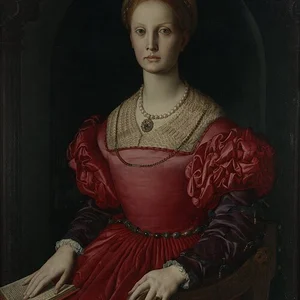
Lucrezia
First wife of Giovanni Pierluigi da Palestrina, the great master of Roman sacred polyphony. She shared the composer's life for nearly thirty years before dying in the plague epidemic that struck Rome in 1580.
Roxelane
A slave of Ukrainian origin, she became the legal wife of Suleiman the Magnificent — the first concubine ever to be officially freed and married by an Ottoman sultan. Her influence over the politics of the Sublime Porte was considerable throughout the 16th century.

Virginia Dormoli
The wealthy widow of a fur merchant (furrier), Virginia Dormoli married Bernardino Palissy in 1581. Her fortune helped improve the final years of the French craftsman-ceramist.
Music(8)
Anne Boleyn
1507 — 1536
Queen of England from 1533 to 1536, Anne Boleyn was the second wife of Henry VIII. Her marriage required England's break with Rome, giving rise to the Church of England. Mother of Elizabeth I, she was accused of adultery and beheaded at the Tower of London.
Ferdinand II of Aragon
1452 — 1516
King of Aragon, Ferdinand II married Isabella of Castile in 1469, uniting the two great Iberian crowns. Together, the “Catholic Monarchs” completed the Reconquista in 1492, financed Christopher Columbus's voyage, and laid the foundations of modern Spain.
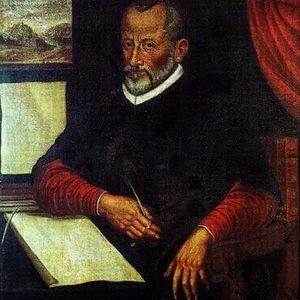
Giovanni Pierluigi da Palestrina
1525 — 1594
An Italian composer of the Renaissance, Palestrina is considered the master of sacred vocal polyphony. He spent most of his career in Rome in the service of the Catholic Church, notably as choirmaster at St. Peter's Basilica.
Henry VIII
1491 — 1547
King of England and Ireland from 1509 to 1547, Henry VIII is famous for breaking with the Catholic Church and founding the Church of England in order to annul his marriage. He married six wives and had two of them executed, leaving a lasting mark on England's political and religious history.
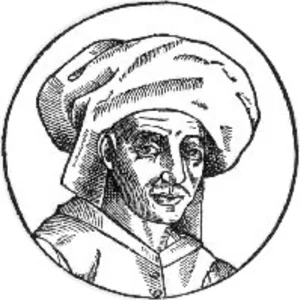
Josquin des Prez
1440 — 1521
Josquin des Prez was a Franco-Flemish composer and a major figure of Renaissance polyphony. An undisputed master of vocal music, he brought the art of counterpoint to a peak of expressiveness and influenced musicians across all of Europe.
Julius III
1487 — 1555
Julius III (Giovanni Maria Ciocchi Del Monte, 1487–1555) was the 221st pope of the Catholic Church from 1550 to 1555. He convened the resumption of the Council of Trent and was a patron of the arts, protector of Michelangelo and Palestrina.
Lucrezia
First wife of Giovanni Pierluigi da Palestrina, the great master of Roman sacred polyphony. She shared the composer's life for nearly thirty years before dying in the plague epidemic that struck Rome in 1580.
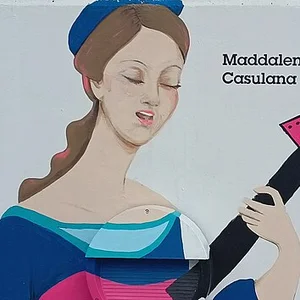
Maddalena Casulana
1544 — 1590
Maddalena Casulana (c. 1544 – c. 1590) was the first female composer to have her musical works published, notably two books of madrigals in 1568 and 1570. An Italian composer and singer, she explicitly asserted the artistic value of women in musical creation.
Economics(5)
Agostino Chigi
1466 — 1520
Agostino Chigi (1466–1520) was the greatest banker of the Italian Renaissance, financier to popes Julius II and Leo X. A lavish patron of the arts, he commissioned the construction and decoration of the Villa Farnesina in Rome, with frescoes by Raphael and his pupils.
Ciriaco Mattei
1545 — 1614
Ciriaco Mattei (1545–1614) was a Roman nobleman and influential patron of the arts in the late Renaissance. A major collector of antiquities and paintings, he was one of Caravaggio's principal patrons in Rome.
Francesco del Giocondo
1460 — 1542
A Florentine merchant and magistrate of the Renaissance, Francesco del Giocondo is best known for having commissioned Leonardo da Vinci to paint the portrait of his wife Lisa Gherardini, known as the Mona Lisa. Born in 1465 in Florence, he was a prosperous silk merchant.
Orazio Lomellini
Genoese nobleman and merchant of the 16th century, from the influential Lomellini family. The Lomellinis controlled major commercial networks across the Mediterranean, including the concession of the island of Tabarka for coral fishing and trade with North Africa.
Virginia Dormoli
The wealthy widow of a fur merchant (furrier), Virginia Dormoli married Bernardino Palissy in 1581. Her fortune helped improve the final years of the French craftsman-ceramist.
Mythology(5)
Ahuizotl
1450 — 1502
A legendary creature of Aztec mythology, the Ahuizotl is an aquatic monster resembling a small dog, with smooth black fur and a grasping hand at the tip of its tail. Lurking in lakes and ponds, it lures and drowns its victims to devour their eyes, teeth, and nails.
Golem
The Golem is a clay creature from Jewish folklore, shaped by human hands and brought to life through sacred formulas. Its most famous version, the Golem of Prague, is said to have been created in the 16th century by Rabbi Judah Loew (the Maharal) to protect the Jewish ghetto. Deprived of speech and a soul, it embodies the limits of human creation.
Inti
Inti is the principal solar deity of the Inca pantheon, venerated as the father of the Incas and the source of all life. His cult was at the heart of the state religion of the Inca Empire (Tawantinsuyu). The Sapa Inca was considered his direct son on Earth.
Mephistopheles
The demon of the Faustian pact, Mephistopheles is the Devil's agent tasked with seducing the scholar Faust. Made famous by Marlowe in Doctor Faustus (1592) and then by Goethe in Faust (1808), he embodies intellectual temptation and the corruption of the soul through the thirst for knowledge.
Mother Shipton
1488 — 1561
Legendary English prophetess and seer of the 16th century, born around 1488 in Knaresborough, Yorkshire. Famous for her prophecies in verse, she became a major folk figure of Tudor England. Her actual historical existence remains uncertain, as legend has far outgrown the facts.
Technology(5)
Ferdinand II of Spain
King of Aragon and, through his marriage to Isabella of Castile, co-ruler of a unified Spain. He completed the Reconquista in 1492 and funded Christopher Columbus's voyages, laying the foundations of the Spanish colonial empire.
Filippo Brunelleschi
1377 — 1446
Florentine architect and engineer (1377–1446), he is considered the father of Renaissance architecture. He is renowned for designing the dome of the Cathedral of Santa Maria del Fiore in Florence and for formalizing the laws of linear perspective.
Francis Drake
1540 — 1596
Francis Drake was an English privateer and navigator of the 16th century, famous for being the second person to circumnavigate the globe by ship (1577–1580). Vice Admiral of the English fleet, he played a decisive role in the defeat of the Spanish Armada in 1588.
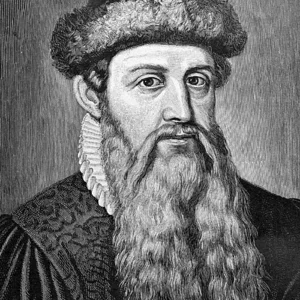
Gutenberg
1400 — 1468
German typographer and goldsmith (c. 1400–1468), Gutenberg is the inventor of movable type printing. His innovation revolutionized the spread of knowledge across Europe and marked the beginning of the Renaissance.
Johannes Kepler
1572 — 1630
German astronomer and mathematician (1572–1630), Kepler formulated the three laws of planetary motion that revolutionized astronomy. A disciple of Tycho Brahe, he confirmed Copernicus's heliocentric model through precise mathematical calculations.
Performing Arts(3)
Christopher Marlowe
1564 — 1593
English playwright, poet, and translator of the Elizabethan Renaissance. A contemporary and rival of Shakespeare, he revolutionized English theatre with his blank-verse tragedies before dying violently at the age of 29.

Elena Osorio
Spanish actress of the Golden Age, daughter of theatre company director Jerónimo Velázquez. She was the mistress of the young playwright Lope de Vega, who immortalized her under the name “Filis” in his poems.
Tu Long
Tu Long (1543-1605) was a Chinese scholar and playwright of the Ming dynasty. Known for his *chuanqi* plays and his essays, he embodies the figure of the scholar-artist of late sixteenth-century China.