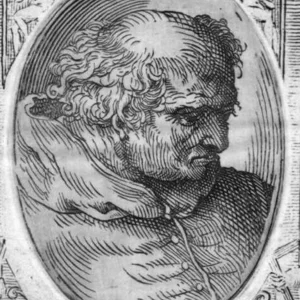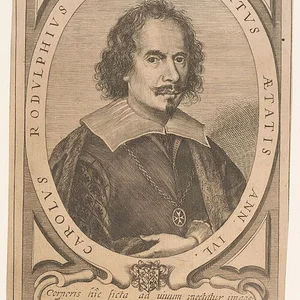

Italian Mannerist painter (1522–1591), born in Cremona. A pupil of Giulio Campi, he developed an elegant style influenced by Lombard Mannerism. He is best known for having been the master of Sofonisba Anguissola.
Bernardino Campi(1520 — 1591)
Bernardino Campi
7 min read
Frequently asked questions
Key Facts
- Born in 1522 in Cremona, into a family of artists
- Trained under Giulio Campi, a painter of the Cremonese school
- Master of Sofonisba Anguissola, one of the first widely recognized female painters in Europe
- Created important frescoes for churches in Cremona and Milan
- Died in 1591 in Reggio Emilia
Works & Achievements
An ambitious decorative program in the Sforza dynastic church, where Bernardino Campi painted religious scenes that reveal his mastery of large-scale mural work and his assimilation of Lombard Mannerism.
Altar paintings commissioned by confraternities and religious institutions, in which Campi combines the softness of Lombard coloring with the Mannerist elegance of his figures, in keeping with post-Tridentine guidelines.
Bernardino Campi was a sought-after portraitist among Cremonese noble families. These works reflect Spanish influence on Lombard society and demonstrate his skill in capturing the psychological depth of his subjects.
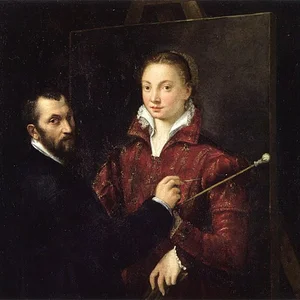
A celebrated painting by Sofonisba Anguissola showing her master Bernardino Campi in the act of painting her portrait — a remarkable mise en abyme that captures the pedagogical relationship between the two artists. Held at the Pinacoteca Nazionale in Siena.
Secular decorative commissions carried out for Cremona's leading families, combining mythological scenes and allegories in an elegant Mannerist style that was highly prized by noble patrons.
Anecdotes
Bernardino Campi welcomed the young Sofonisba Anguissola into his Cremonese workshop around 1546, the daughter of a local nobleman who was convinced of his daughter's exceptional talent. This decision was unusual for the time, when women rarely gained access to rigorous artistic training under a recognized master, and it speaks to Campi's open-mindedness.
Sofonisba Anguissola painted a striking work depicting her own master, Bernardino Campi, in the act of painting her portrait — a bold mise en abyme that testifies to her early mastery and to the trust her teacher placed in her. This work is now held at the National Picture Gallery in Siena.
Bernardino Campi worked under Spanish rule in Lombardy and received major commissions from prominent aristocratic families in Cremona. He had to adapt his output to the artistic and doctrinal requirements imposed by the Counter-Reformation, which strictly regulated religious iconography in the wake of the Council of Trent.
The Campi family — Giulio, Antonio, Vincenzo, and Bernardino — formed a true artistic dynasty in Cremona. Several members of the family worked together on the vast decorative program of the church of San Sigismondo, making it a genuine manifesto of Lombard Mannerism.
Primary Sources
Amilcare Anguissola entrusted his daughters to Bernardino Campi for their artistic training; his correspondence attests to the master-pupil relationship and the recognition of the Cremonese painter's pedagogical skill.
Archival documents attesting to commissions for religious paintings placed with Bernardino Campi by Cremonese confraternities and ecclesiastical institutions, specifying subjects, dimensions, and fees.
Vasari describes the Lombard artistic scene of the sixteenth century and mentions the Cremonese painters, offering essential context for understanding Bernardino Campi's place among his contemporaries.
Key Places
Bernardino Campi's birthplace and primary center of activity, Cremona was a leading artistic and intellectual hub in Lombardy. Throughout his career, he decorated numerous churches and palaces there.
A dynastic church founded by the Sforza family, San Sigismondo was the site of an ambitious Mannerist decorative program in which Bernardino Campi took part alongside other members of the Campi family, making it a showcase of Lombard Mannerism.
The capital of Spanish Lombardy, Milan was a hub of artistic commissions and contacts with the aristocracy. Campi maintained close ties with noble and artistic circles there.
Campi received commissions in this city in Emilia and spent time there, extending his activity well beyond his hometown alone and demonstrating his interregional reputation.
Typical Objects

A painter's essential tool, brushes of various sizes allowed Campi to render the fine details of faces and the broad flat areas of drapery. They were crafted by specialist artisans.

Colors were prepared by grinding minerals or plant-based substances with linseed oil. Campi mixed his own colors according to recipes passed down within the *bottega*, each workshop jealously guarding its formulas.

Before painting, the master would produce a full-scale preparatory drawing whose outlines were pierced with small holes. This *pouncing* technique allowed the composition to be transferred precisely onto the wall or panel.

On this oval surface, Campi arranged and mixed his colors before applying them to the canvas or panel. The layout of colors on the palette reflected each painter's individual expertise.

Supports were prepared with *gesso*, a gypsum-based coating, to achieve a smooth, non-absorbent surface. It was on this white ground that Campi built up his large religious compositions.

Every Renaissance artist kept a collection of anatomical drawings and compositional studies. This repertoire of forms served as a reference for devising figure poses and organizing narrative scenes.
School Curriculum
Vocabulary & Tags
Key Vocabulary
Daily Life
Morning
Bernardino Campi rose at dawn to make the most of natural light, essential for pictorial work. After morning prayer — a common practice in post-Tridentine Catholic Italy — he would join the bottega where his apprentices awaited him, ready to prepare pigments and surfaces.
Afternoon
In the afternoon, he worked on his large mural compositions or altarpieces, benefiting from stable, diffuse light. He also supervised his pupils' work, corrected preparatory drawings, and negotiated the details of upcoming commissions with his patrons.
Evening
In the evening, Campi reviewed the workshop accounts, replied to letters from his patrons, and sometimes engaged in discussions with other Cremonese artists and scholars. The *botteghe* were spaces of intellectual sociability where artistic ideas and new pictorial theories circulated freely.
Food
Like any prosperous craftsman in Cremona, Campi ate bread, pasta, vegetables, and meat on the days permitted by the Church. Lombard cuisine was renowned for its cheeses, cured meats, and slow-cooked dishes; the many fast days imposed by the religious calendar replaced these with fish and legumes.
Clothing
Bernardino Campi dressed as a respectable artisan-bourgeois: a doublet of wool or silk depending on the season, hose, and a short cloak. In the workshop, he wore an apron to protect his clothes from splashes, as shown in the painting by Sofonisba Anguissola depicting him at work.
Housing
Campi lived and worked in a combined house and workshop in Cremona, with the ground floor serving as the workspace and exhibition area, and the upper floors as family apartments. A large, well-oriented room provided the lighting necessary for painting, while storage rooms held pigments, oils, and surfaces.
Historical Timeline
Period Vocabulary
Liens externes & ressources
Références
Œuvres
Cycle de fresques de San Sigismondo, Crémone
années 1560-1570
Portraits de l'aristocratie lombardise
1550-1580
Décors de palais aristocratiques crémonais
1560-1580